What a rotary polisher is good for
A rotary machine spins on a single axis, so it can remove oxidation, sanding marks and heavier swirl patterns faster than a dual-action polisher. That extra bite is helpful on older paint, body shop work, stainless steel, aluminium and polished trim, but it also means the surface can heat up quickly if you stay in one place too long.
If you are working in Germiston, Johannesburg or Pretoria, you may see a lot of vehicle paint that carries dust nibs, wash marring and heat fade from parking outside. Along the coast in Cape Town or Durban, humidity and salty air can add another layer of oxidation. A rotary can help, but only if the pad and compound are matched properly and you keep the panel cool.
For beginners, the key is to buy a machine that gives you enough correction without feeling wild in the hand. A softer start, variable speed control and a side handle or D-handle are useful when you are still learning how the tool reacts.
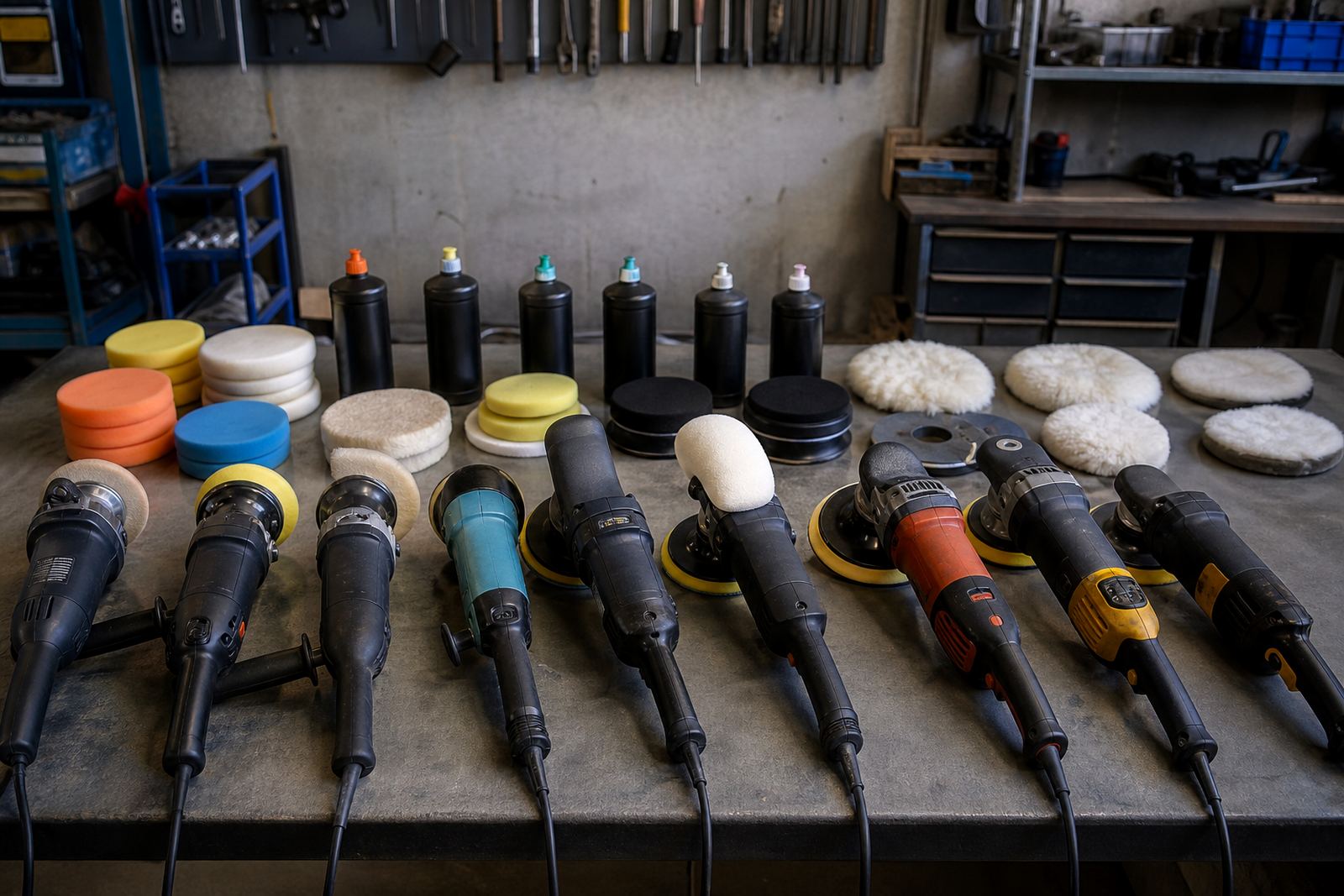
Choose the right machine size and speed range
Most first-time users do well with a standard rotary in the 150 mm class, because it accepts common pads and is practical for bonnet, door and bumper work. Smaller backing plates can help with tighter areas, while larger pads suit broad panels and metal surfaces. For car finishing, you want enough torque to maintain speed under pressure, but not a machine that jerks when you switch it on.
Look for a variable speed trigger or dial that lets you start low and build up slowly. Lower speeds are better for spreading compound and checking the finish, while higher speeds are used for cutting and refining. On thin paint, edges and body lines, slow is safer. On flat metal panels, you still need to move steadily because rotary heat builds fast.
- Check the weight, because a heavy machine becomes tiring on large jobs.
- Look for a soft start so the pad does not jump at switch-on.
- Confirm the handle can be fitted for left or right hand use.
- Make sure spare backing plates and carbon brushes are easy to source.
Pads and compounds you should buy with it
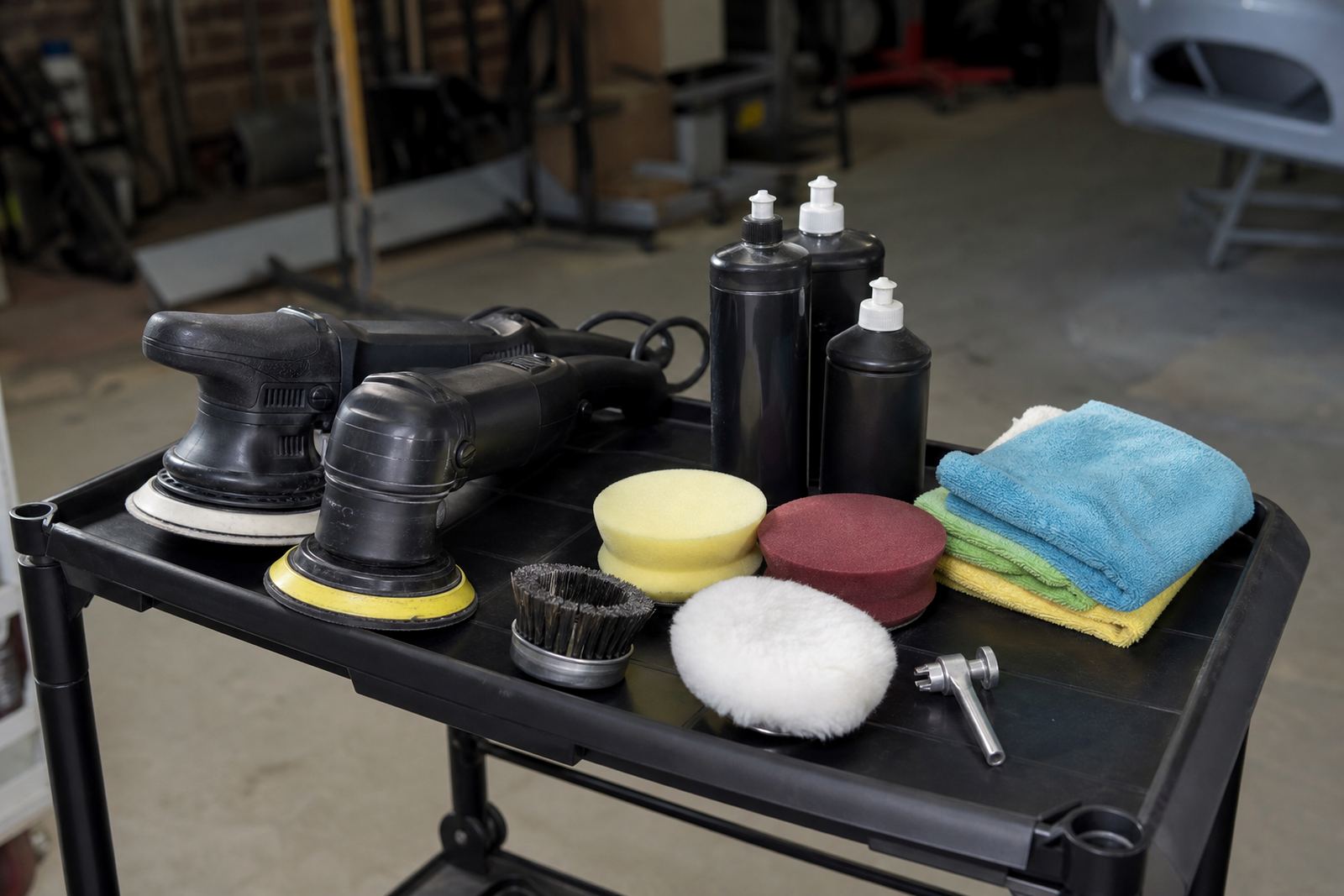
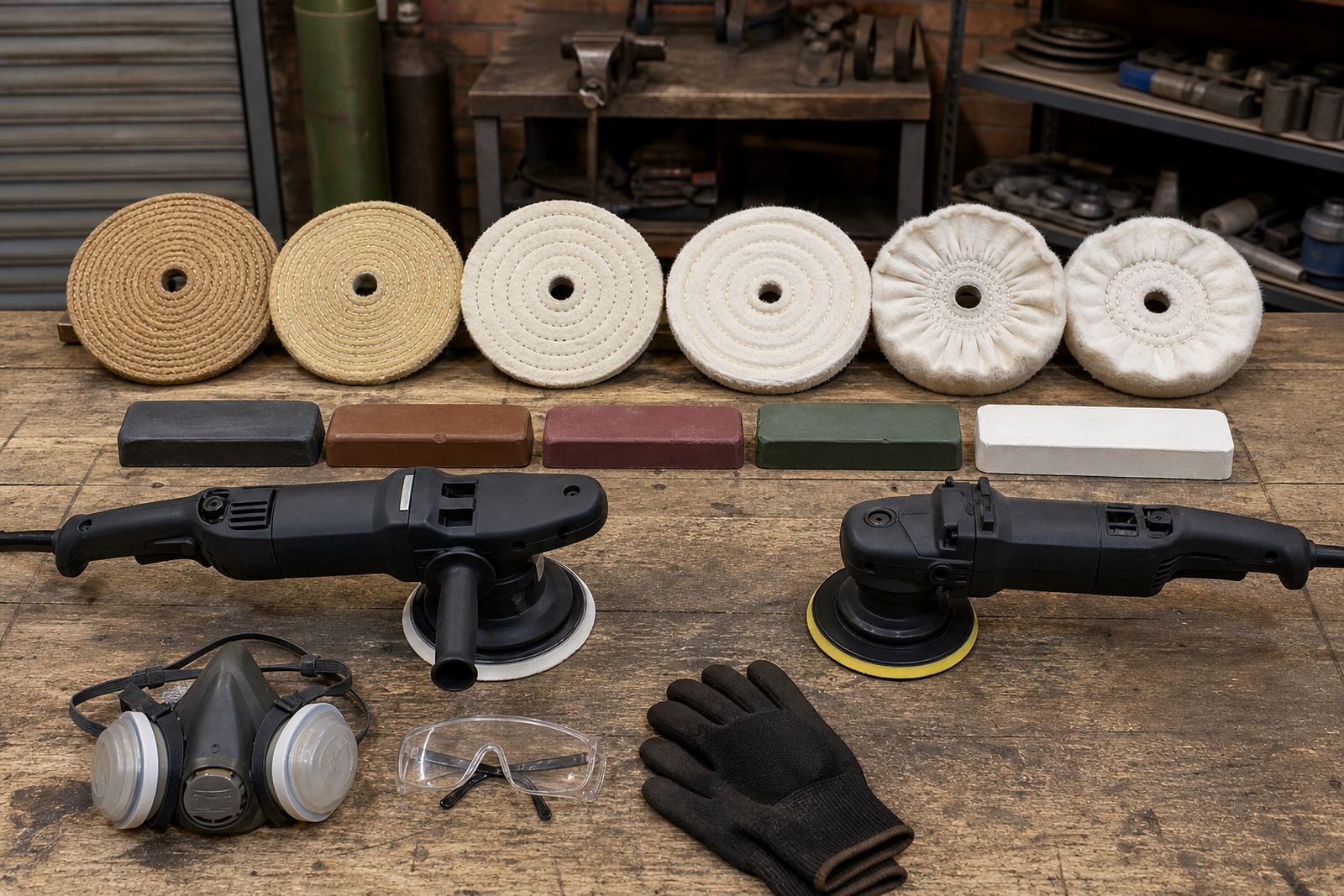
A rotary machine is only as useful as the pad and compound matched to the task. Cutting pads are firmer and remove heavier defects. Polishing pads refine the finish after the cut. Finishing pads are softer and help remove haze or light holograms left by the machine. For metal, you may need different buffing wheels and compounds than you would use on clear coat paint.
Start with a simple set rather than buying too many options. A small starter kit should cover cutting, medium polishing and finishing, plus a compound suitable for the material you work on most. On paint, test a small area first. On bare metal, use the least aggressive combination that still removes oxidation or marks. Too much pressure or an aggressive pad can leave trails and extra work later.
- Have at least one cutting pad, one polishing pad and one finishing pad.
- Keep separate pads for metal and paint to avoid cross-contamination.
- Use clean microfibre cloths for wipe-downs between stages.
- Replace pads that have hardened, torn foam or caked residue.
Safe first-use setup in the workshop or garage
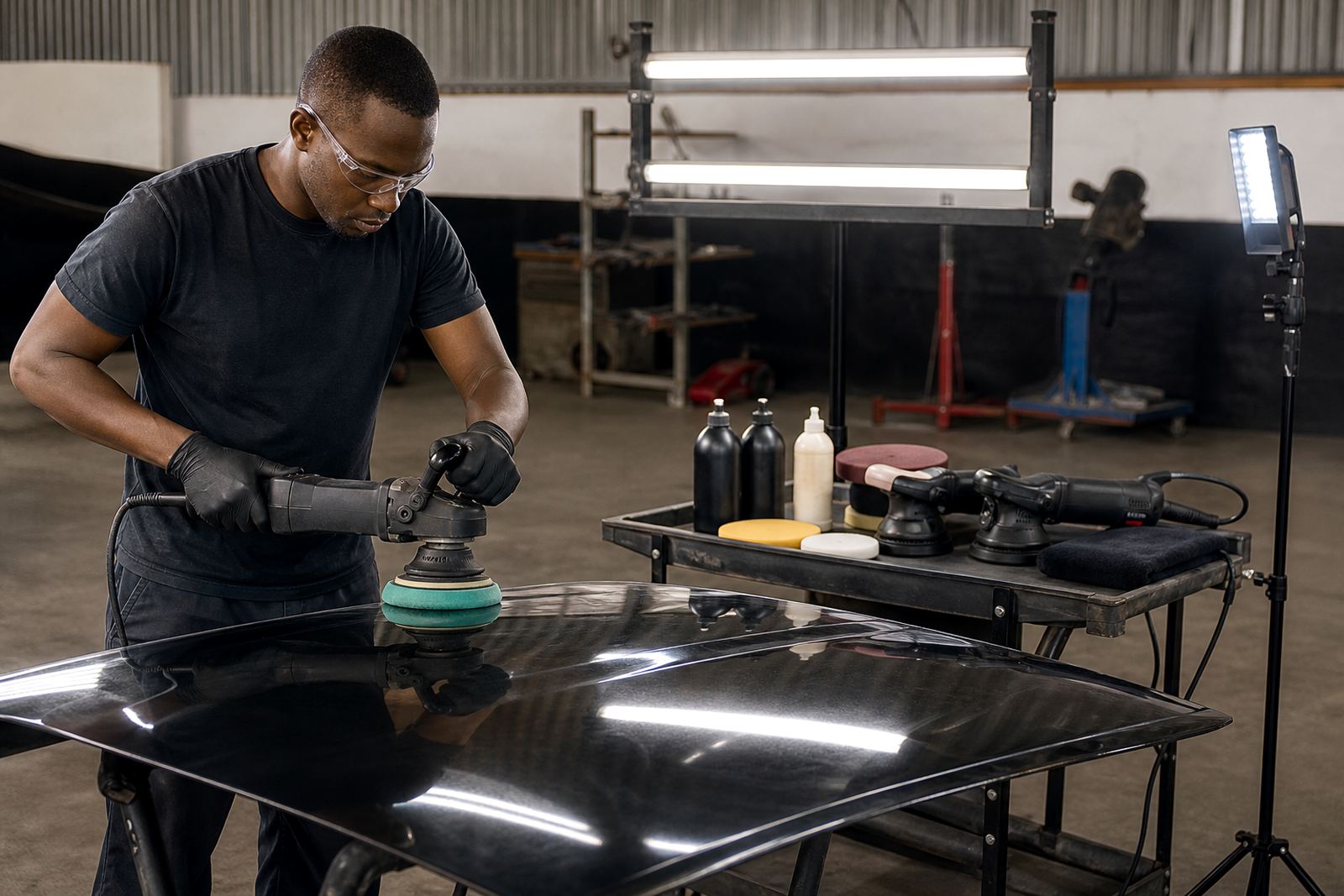
Before you switch on a rotary for the first time, clear the area and check the panel for loose dirt. Washing and claying beforehand reduces the chance of dragging grit across the paint. Tape off sharp edges, badges and plastic trim, because the pad can catch and damage them very quickly. If you are in a small garage in the East Rand or a workshop in Bloemfontein, good lighting is just as important as the machine itself.
PPE is not optional. Wear eye protection, a dust mask where needed, and gloves if the compound dries out your hands. Keep sleeves close fitting and tie back loose clothing. If you are working on metal, dust control matters because old paint residue and oxidised material can become airborne.
Always keep the pad flat on the surface before you start the machine, then work slow overlapping passes. Do not stop in one place with the trigger pulled. That is how burn marks happen. It also helps to keep a spray bottle with clean water or panel wipe nearby for checking the finish and cooling the pad where suitable.
A practical buying checklist for first-time users
If you are buying your first rotary, it helps to think in terms of how you will actually use it. A machine that feels manageable in your hands will teach you faster than one with too much force or a confusing control layout. For customers taking on both car finishing and metal polishing, the machine should be capable enough for correction yet steady enough for controlled finishing.
- Do you need it mainly for paint correction, metal buffing, or both?
- Will you work on large panels, tight spots, or a mix of jobs?
- Are you prepared to buy the correct pads, compounds and PPE at the same time?
- Can you store it cleanly and keep pads free from dust between jobs?
- Do you want starter guidance before you try it on a customer vehicle or a project piece?
A rotary is not the best first tool for everyone, but if you need stronger cutting ability it can save a lot of time once you know how to control it. The trick is to buy for the work you do now, not the work you hope to do after one weekend.
Training makes the machine easier to trust
Many first-time buyers think the machine is the hard part, but the technique is what really changes the result. A good beginner session should cover pad priming, compound loading, panel sections, trigger control, edge work and how to inspect the finish under strong light. For metal, it should also cover heat control, residue removal and when to switch from cutting to refining. Small mistakes on the first day can be expensive, so guidance pays for itself quickly.
At our Germiston base, we support buyers across South Africa with beginner polishing training, rotary skills sessions, pad and compound matching, starter kit consultation and machine care guidance. We also help with onsite team demos, safety and PPE briefings, and workshop setup advice for businesses building up a polishing bay. If you are unsure whether a rotary is the right start, the best next step is to ask for practical advice before you buy.
The aim is simple: choose a machine that suits your hands, your panels and your learning pace. Once that is in place, the rest gets easier, even on hot days, dusty jobs or power interruptions.