What a proper care kit should cover
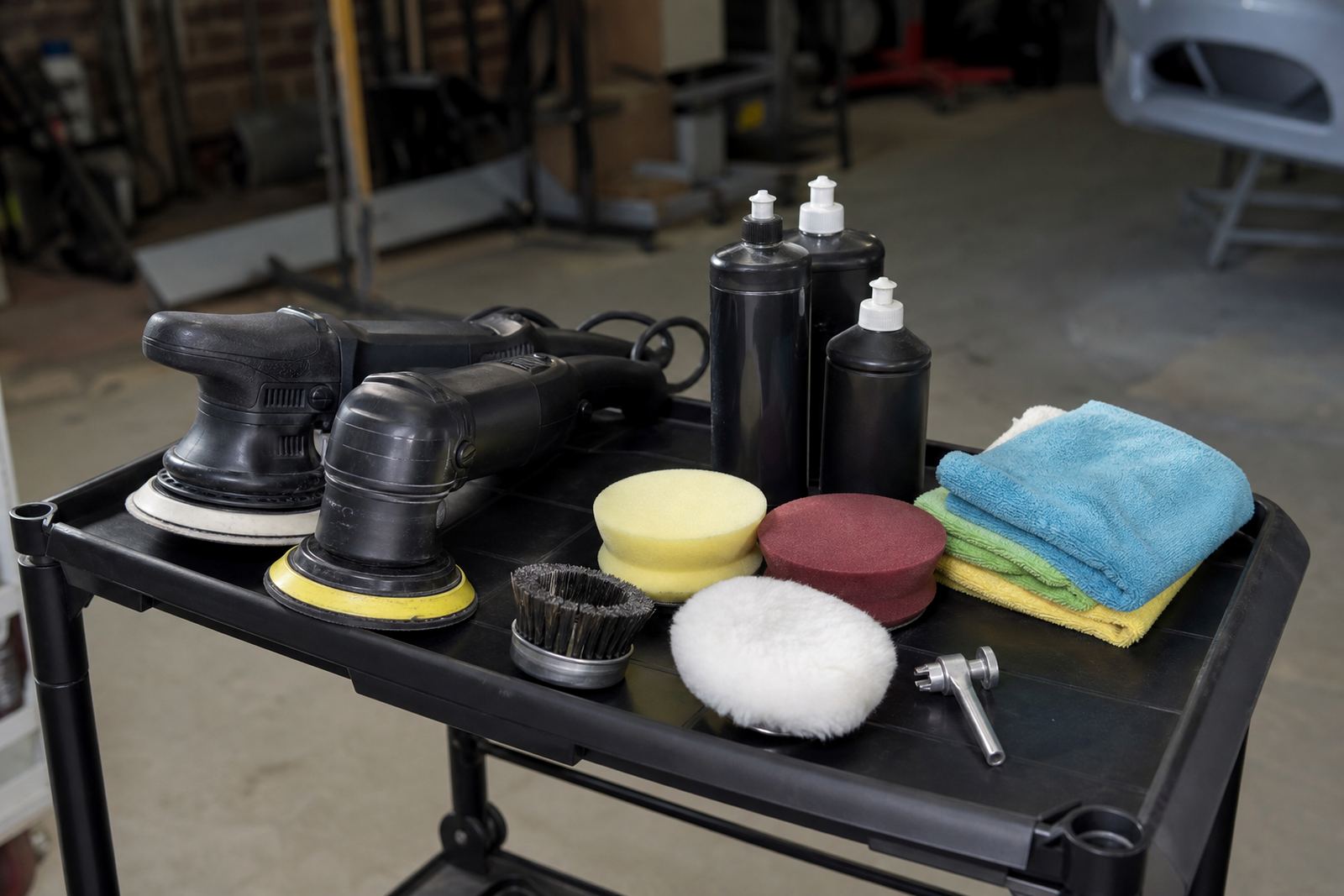
For metal and paint finishing, a care kit is there to protect the machine, keep pads in working order and make each pass more consistent. In Germiston, Johannesburg and across South Africa, many users keep a small kit beside the polisher so they are not hunting for tools once the panel is live. Start with the basics: a pad cleaning brush, microfibre cloths, a pad spur or pad comb for fibre pads, a spray bottle for light pad cleaning, a small organiser for compounds and a soft brush for vents and housings.
A sound kit also helps you work cleaner in dusty workshops, coastal humidity and busy spray booths. When pads are loaded with dried compound or old paint residue, they cut poorly and can mark the surface. The same applies to machines that gather dust around the vents. Care is not complicated, but it must be done regularly if you want a smooth finish and longer tool life.
Daily checks before the first pass
Before switching on a rotary or dual-action polisher, check the cable, plug, backing plate and handle for damage. Make sure the pad is seated properly and that the compound you plan to use suits the surface. On metal, especially stainless steel, mild steel or aluminium, surface prep matters as much as pressure. On painted panels, check for grit around badges, edges and rubber trims so you do not drag contamination across the work area.
- Inspect the pad face for hard spots, torn edges or caked compound.
- Check backing plate movement for wobble or uneven wear.
- Wipe the machine body so vents and switches stay clear.
- Set aside clean microfibre cloths for wipe-off only.
- Wear PPE, including eye protection, hearing protection where needed and a dust mask when dry residue is present.
If you are teaching a team or starting out, this routine is worth repeating every shift. A few minutes at the start prevents a great deal of rework later.
Keeping pads clean while you work
Pad maintenance during the job is one of the easiest ways to improve results. A clogged pad builds heat, reduces bite and can leave hazing or uneven cut marks. With foam pads, stop often and brush out residue. With wool or fibre pads, use a spur or comb carefully to lift out spent compound and paint dust. Do not let the pad stay saturated. A damp pad can behave unpredictably, especially on curves and edges.
For detailers working in Gauteng heat or in Durban where humidity can affect compound behaviour, it helps to have a few spare pads in the kit. Rotate them before they get overloaded. On larger panels, keep a second clean pad ready for finishing stages so you are not trying to rescue a tired one halfway through the job.
How to store compounds and consumables properly
Compounds, polishes and pad cleaners need simple storage discipline. Keep lids closed, avoid leaving bottles in direct sun and do not allow grit to fall into the product. Once contamination gets in, it spreads across every panel. Label your bottles clearly if you use multiple grades for cutting, refining and finishing.
- Store compounds upright in a cool dry place.
- Keep applicators and cloths separate from dirty pads.
- Check expiry dates and product separation before use.
- Use clean scoops or nozzles, never contaminated fingers.
- Replace cracked bottles or damaged spray heads quickly.
For workshops in Cape Town, Bloemfontein and Pretoria, where temperature shifts can be sharper between morning and afternoon, tidy storage makes product behaviour more predictable. That means less waste and fewer surprises on the panel.
Machine care between jobs
After use, unplug the machine and wipe down the housing, grip area and speed controls. Remove dust from vents with a soft brush or low pressure air, but do not force debris deeper into the motor. Check the backing plate for heat damage, cracking or adhesive failure. If the machine has a worn cord or unstable switch, remove it from service until it is inspected.
Rotary polishers need special attention because they generate more heat and can load pads quickly. Dual-action machines are more forgiving, but they still need clean vents, sound bearings and a good backing plate. A short machine care routine after each session keeps downtime low, which matters when you are running a busy shop or doing onsite team demos across the East Rand and Vaal Triangle.
Safety items that must not be left out
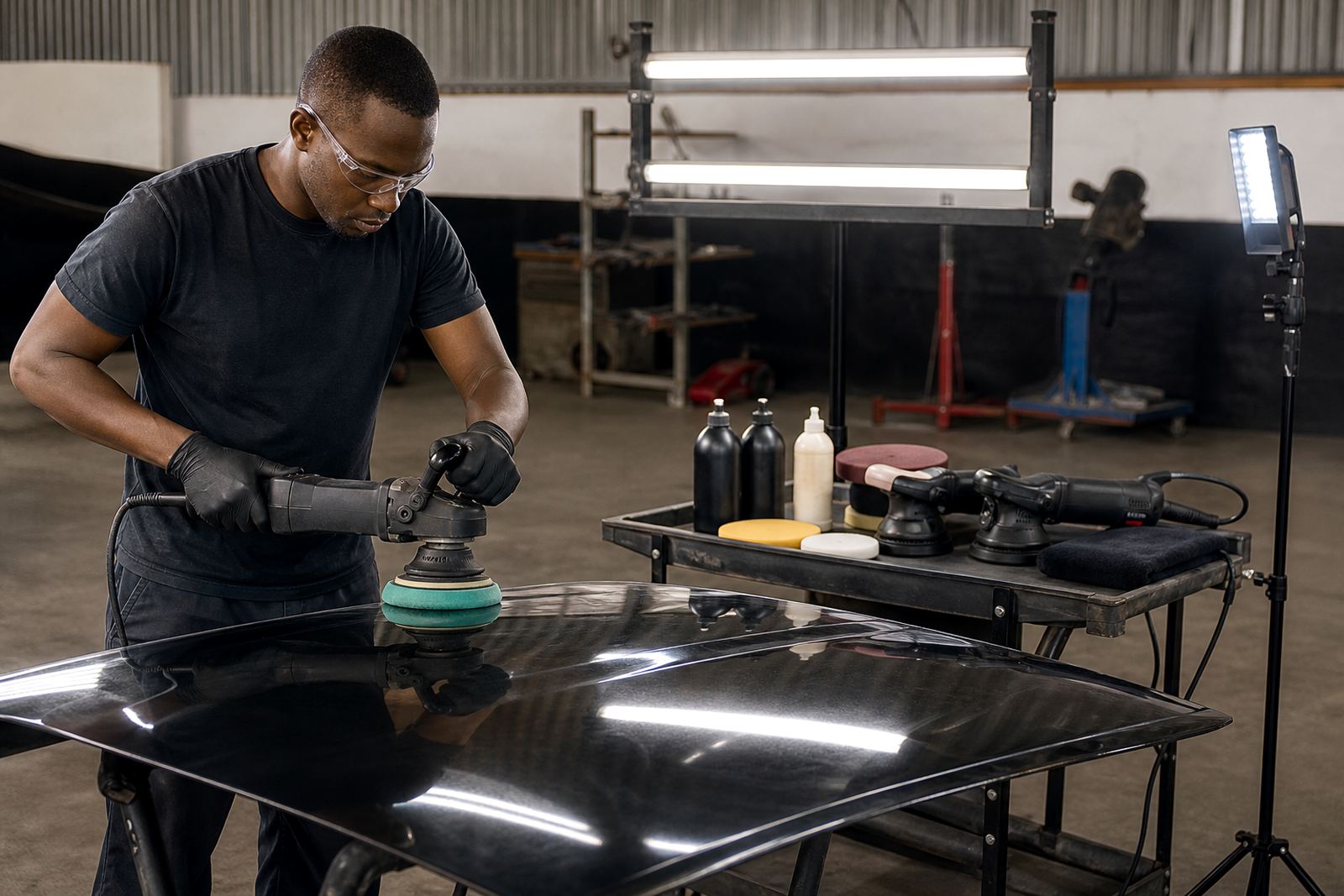
Polishing creates fine dust, paint residue and airborne particles from compounds and spent pads. That means safety should be built into the kit from the start, not added later. Wear eye protection, gloves where needed and a dust mask or respirator suitable for the task, especially during dry buffing or pad cleaning. If you are working indoors, make sure the area is well ventilated and that cables are routed away from trip points.
When polishing near edges, trims or metal seams, keep control of the machine at all times. Do not chase speed at the expense of heat or safety. On car panels, masking sensitive areas can save time and prevent accidental marking. On metal, especially in fabrication shops, remove loose dust before polishing so the pad does not pick up swarf or sharp grit.
A simple kit checklist for beginners and teams
If you are setting up a starter kit or refreshing a workshop kit, keep it practical. The goal is to have enough to work cleanly without overcomplicating the bench. Mandla Sipho Dlamini and the Polisher team in Germiston often advise customers to start with a solid core kit and then add items as the work changes from paint correction to metal finishing.
- Rotary or dual-action polisher in good condition.
- Backing plates matched to pad size.
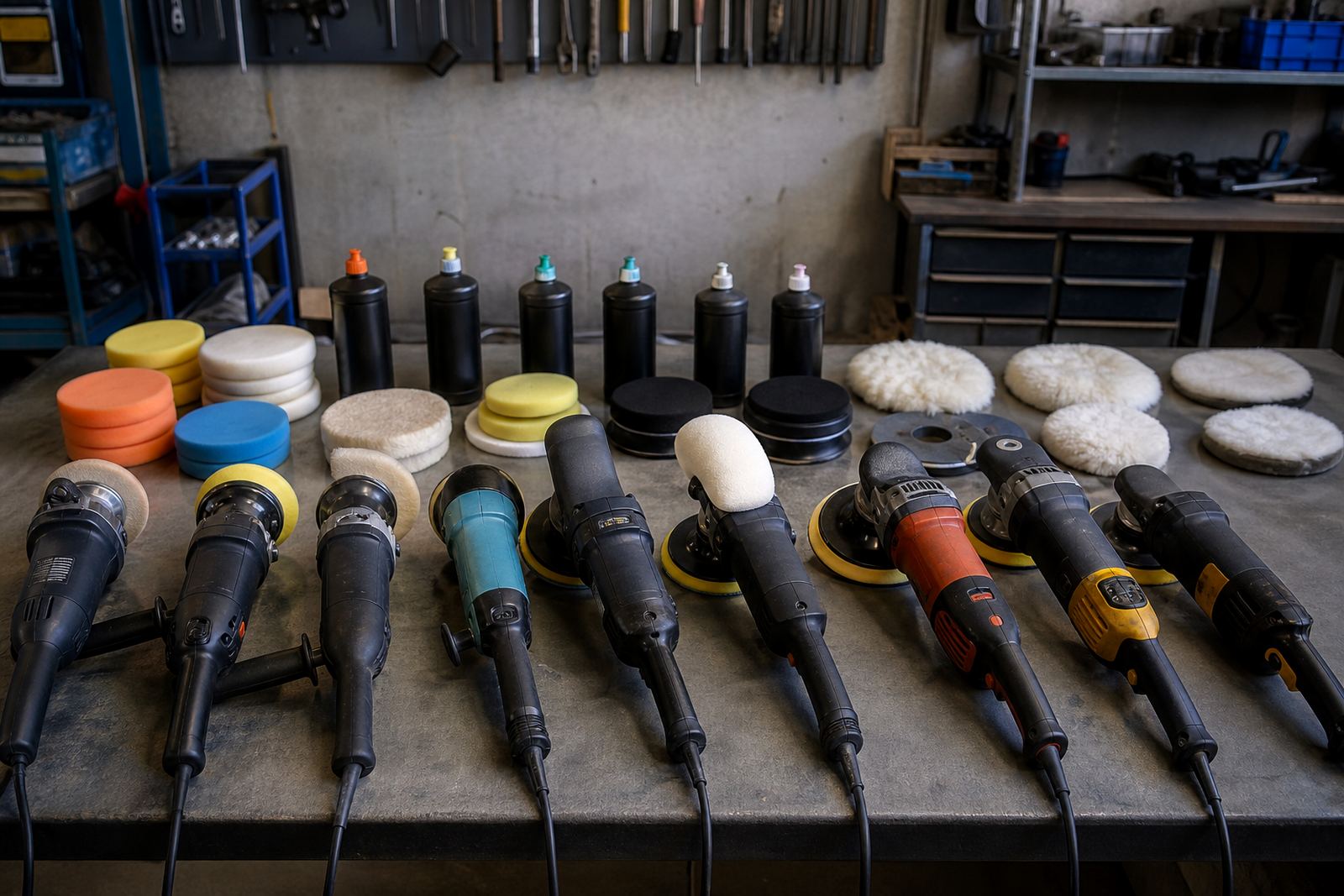
- Foam, wool or fibre pads in the grades you use most.
- Cutting and finishing compounds, clearly labelled.
- Pad brush, pad spur, microfibre cloths and spray bottle.
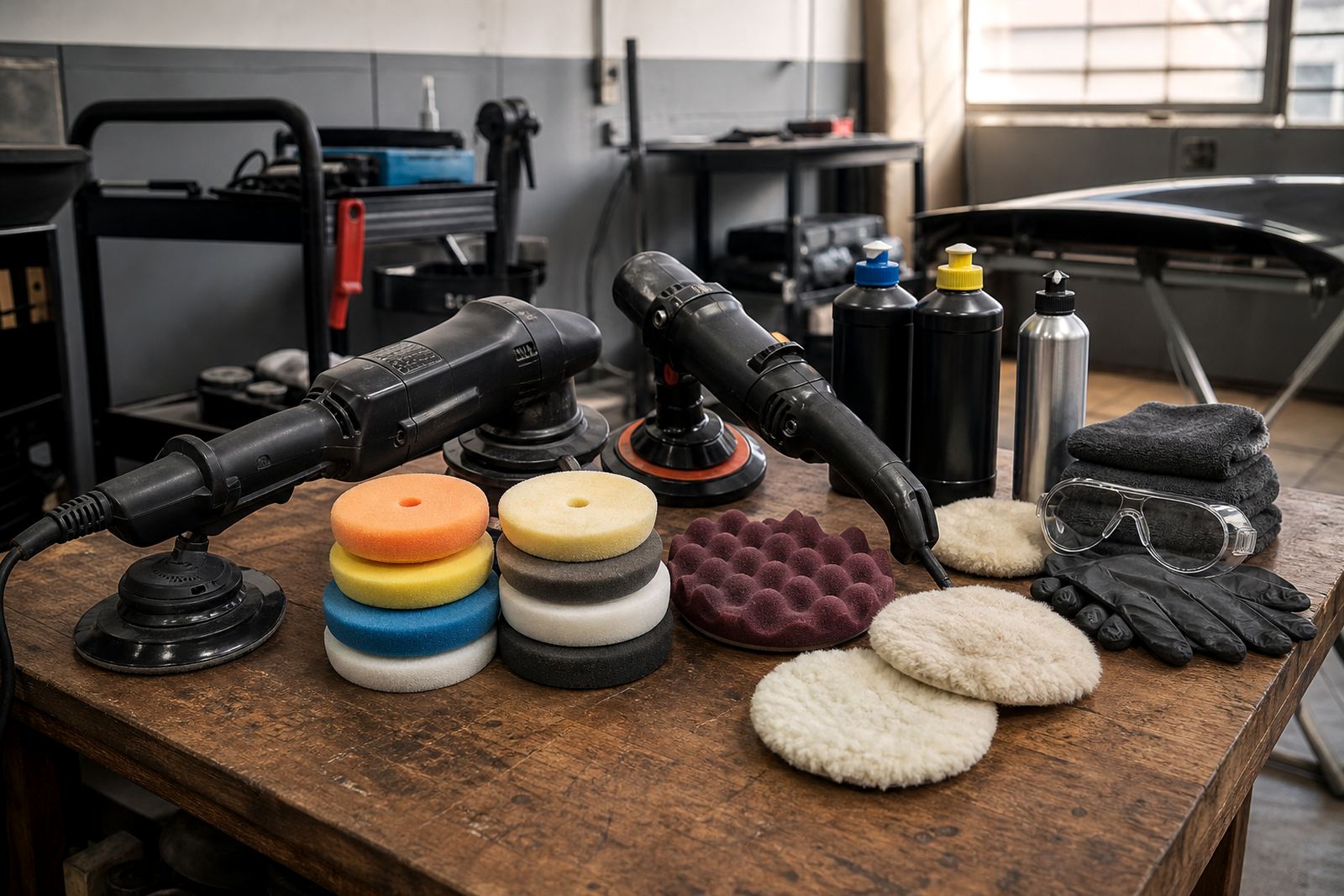
- Masking tape, PPE and a clean storage bag or box.
- Notebook for noting pad, compound and speed settings that worked well.
Keep the checklist near the machine bay or training bench so the whole team follows the same process. Good habits are easier to keep when the tools are laid out properly.