
Start With The Paint, Not The Machine
Before you choose a machine, look closely at the paintwork. Is the surface covered in light wash marks, oxidation, water spots, sanding marks, or deeper defects from poor washing and drying? A machine is only part of the job. The pad, compound, speed setting and your technique must match the paint condition.
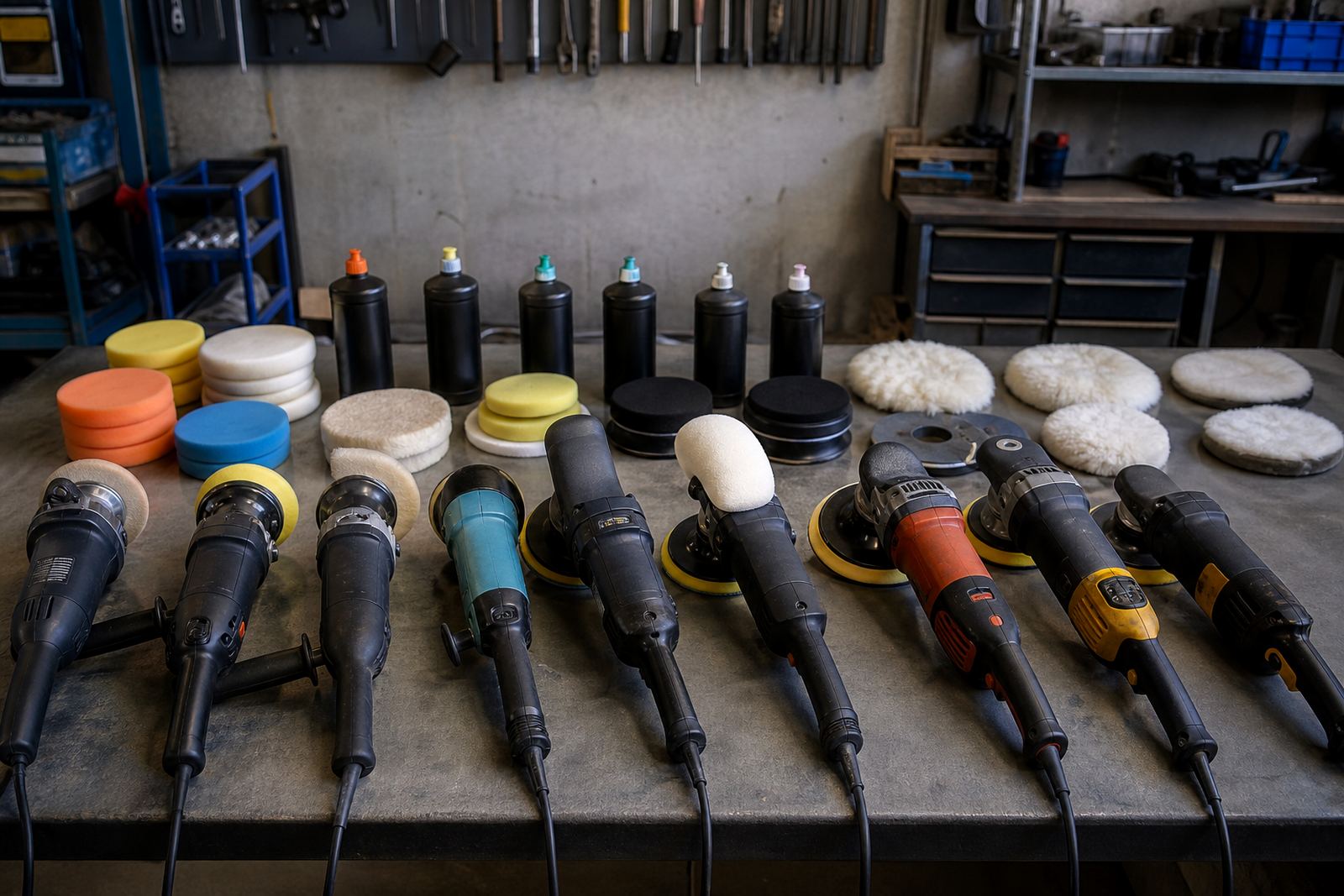
For most car finishing work, the safest starting point is a dual-action polisher with a suitable foam pad and a medium cut compound. It gives good control for beginners and is easier to keep moving on curved panels. A rotary machine removes defects faster, but it also builds heat more quickly and can mark the paint if you stay too long in one place. If you are working on a dark vehicle in summer or in a tin-roof workshop with poor airflow, heat control matters even more.
Ask yourself three questions before you buy or use a machine: what finish do I need, how much correction is required, and who will be using the machine? Those answers will point you toward the right type of tool and the right training support.
Rotary Polisher Or Dual-Action Polisher
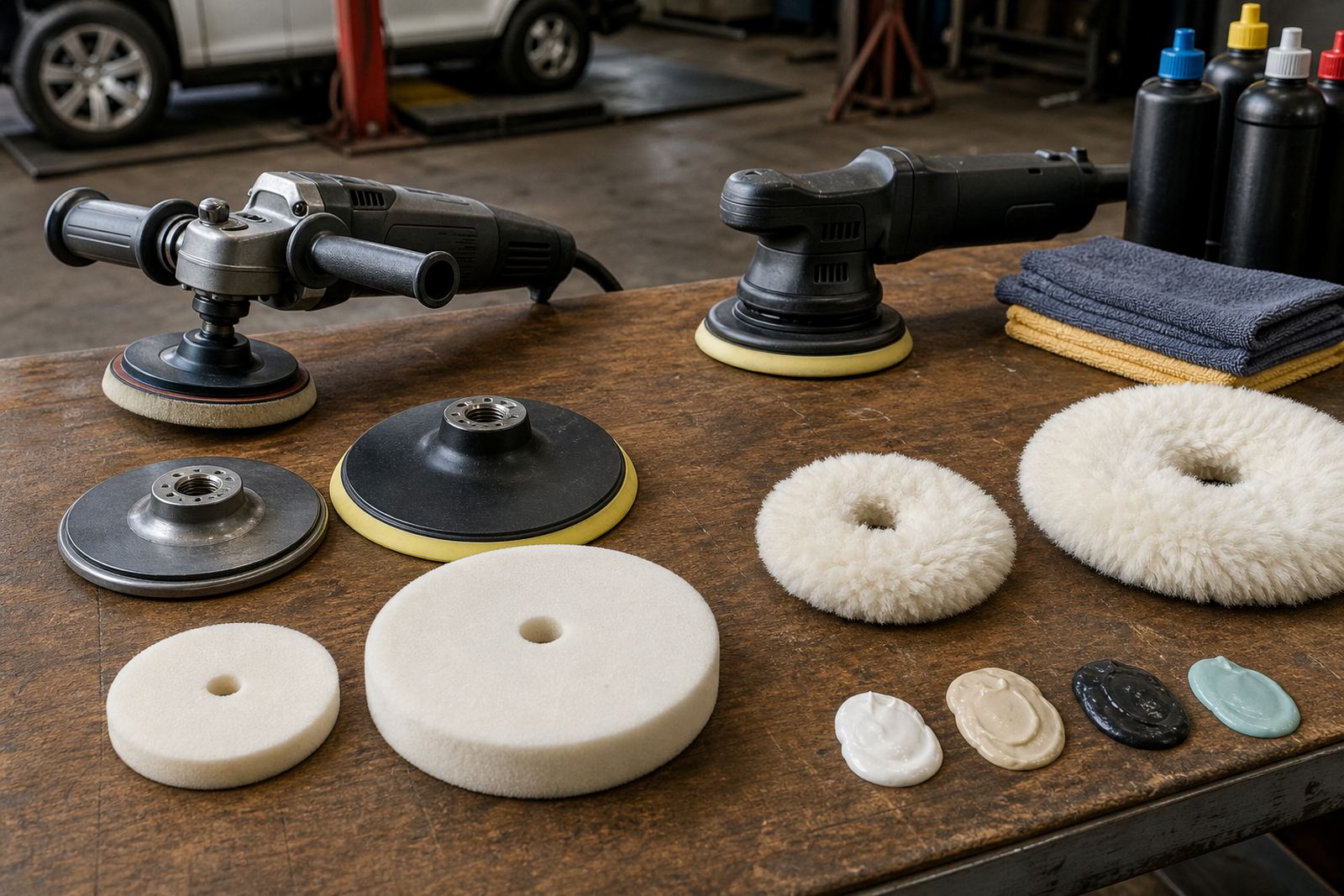
A rotary polisher spins on one axis. It is strong, direct and suited to experienced users who need fast cutting on paint or metal. It is useful for heavy oxidation, wet sanding marks, and more demanding correction work. Because the pad moves in a fixed circle, it can create swirl marks or heat build-up if handled poorly, so it needs a steady hand and proper practice.
A dual-action polisher moves in a combined orbit and rotation. This makes it more forgiving and better for general paint finishing, light correction and final refining. For hobby users, detailers and workshop teams training new staff, DA machines are often the better first machine. They are also a practical choice when you want a clean finish with less risk on softer paint systems.
- Choose rotary for stronger cutting, trained operators and heavier correction.
- Choose DA for safer day to day paint polishing and easier learning.
- Choose both when your team does heavy correction as well as final finishing.
If you only need one machine to begin with, a DA unit will suit more users. If you already know how paint responds and you need speed on tougher jobs, rotary can be a useful second tool. In both cases, keep the machine moving and never work a panel dry.
Match Pad And Compound To The Job
The machine alone will not tell you what finish you will get. Pad density, pad size and compound grit determine how much paint you remove and how fine the finish will be. For paint correction, start with the least aggressive combination that can still do the job. That saves time and reduces the chance of haze or excessive clear coat removal.
Foam pads are common for paint finishing because they spread product evenly and help control cut and gloss. Microfibre pads can cut faster on some systems, while wool pads are often used for stronger cutting on tougher surfaces. On a South African vehicle that has been parked outdoors in coastal humidity, you may find stubborn oxidation and bonded dirt around badges, roof edges and bonnet lines. Those areas need careful product choice and proper cleaning before polishing begins.
- Use a cutting pad with a stronger compound for heavier defects.
- Use a polishing pad with a lighter compound for refining haze.
- Finish with a soft pad and finishing polish if the paint needs extra gloss.
- Keep separate pads for cutting, polishing and finishing to avoid cross contamination.
Before you start check the panel with good light and clean the machine backing plate, pad face and paint surface. A small piece of grit can scratch the finish and undo good work very quickly.
Set Up For Safe And Consistent Results
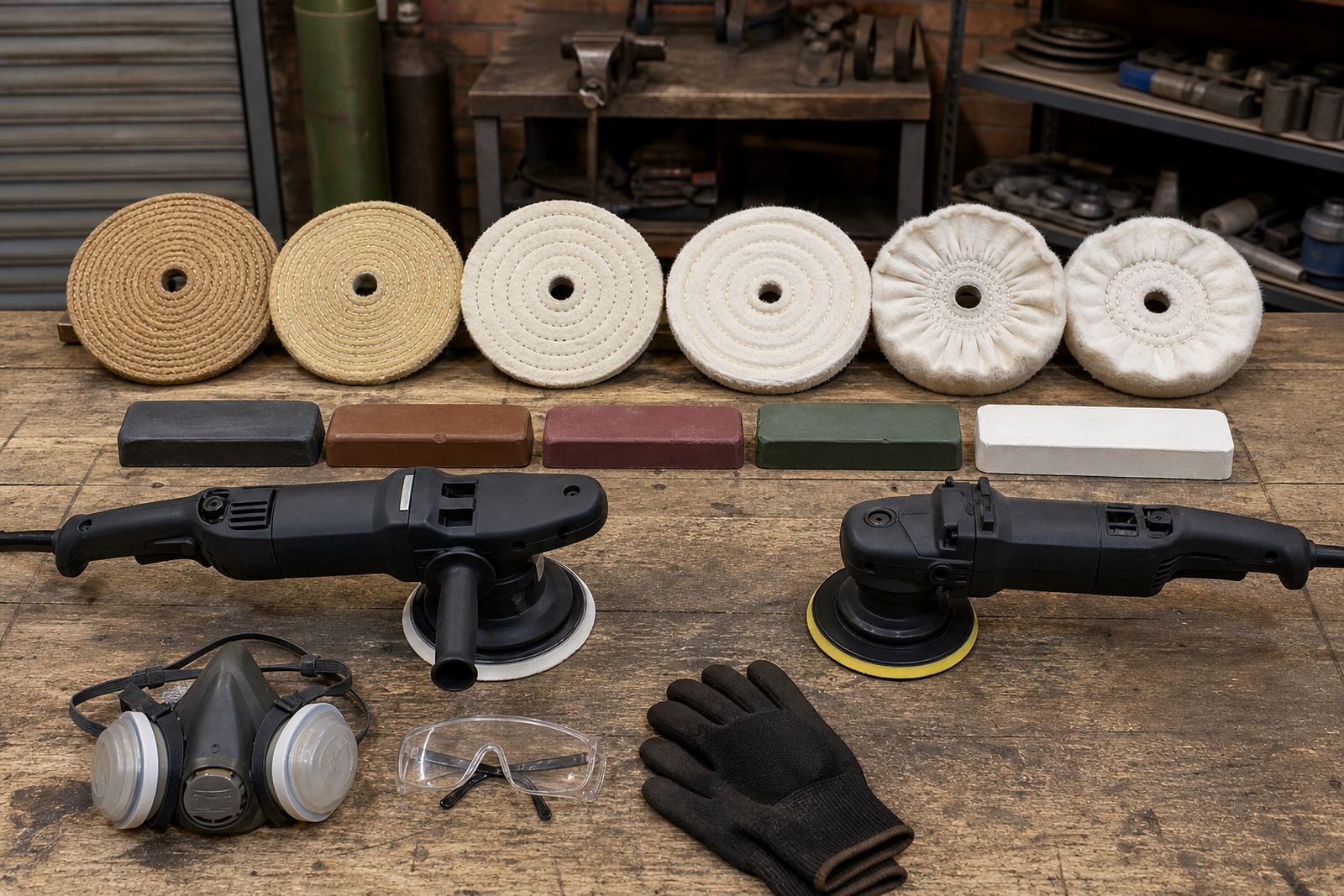
Good polishing is controlled work. Set your machine up properly and protect yourself before any panel touches the pad. Wear eye protection, a dust mask or suitable respirator when dry dust may be present, and gloves if the product or panel edges could irritate your skin. When working near sanding residue or old oxidation, keep dust under control so it does not spread through the workshop.
Check the machine cable, plug and switch before use. Make sure the backing plate is tight and the pad is seated squarely. If you are working in Germiston, Johannesburg, Pretoria, Durban or Cape Town, dust and moisture conditions can change quickly during the day, so inspect your working area before you begin. Use clean microfibre cloths, keep a bucket of clean water nearby for pad cleaning where suitable, and do not let compound dry on the surface.
- Inspect the paint for chips, sanding marks and raised edges.
- Mask rubbers, badges and sharp trim where needed.
- Test the product on a small area first.
- Work in overlapping passes and monitor heat by hand.
If the panel becomes too warm to hold comfortably, stop and let it cool. On a hot summer day, especially in a closed workshop, this is not optional.
A Practical Method For Paint Correction
Use a simple routine so you can repeat good results from one vehicle to the next. Start by washing and decontaminating the paint. Clay or decontaminate where needed, then dry the surface fully. Select your machine, pad and compound based on the panel test. Apply a small amount of product, spread it on low speed, then work the area with controlled pressure and steady passes.
Do not chase defects by pressing harder and harder. Let the pad and compound do the work. If the polish dusts too much, the pad may be overloaded or the speed too high. If the finish is hazy, your pad choice may be too aggressive or the compound may need refining. After the correction step, switch to a softer pad and a finishing polish if the paint needs extra clarity.
For cars with fresh paint, follow the curing advice from the paint system used by the panel shop and avoid overworking soft paint. For older vehicles, test every paint system carefully because repainted panels can react differently to factory paint. Paint on one door may be softer than the bonnet, so you cannot assume the whole car will behave the same.
What To Put In A Starter Kit
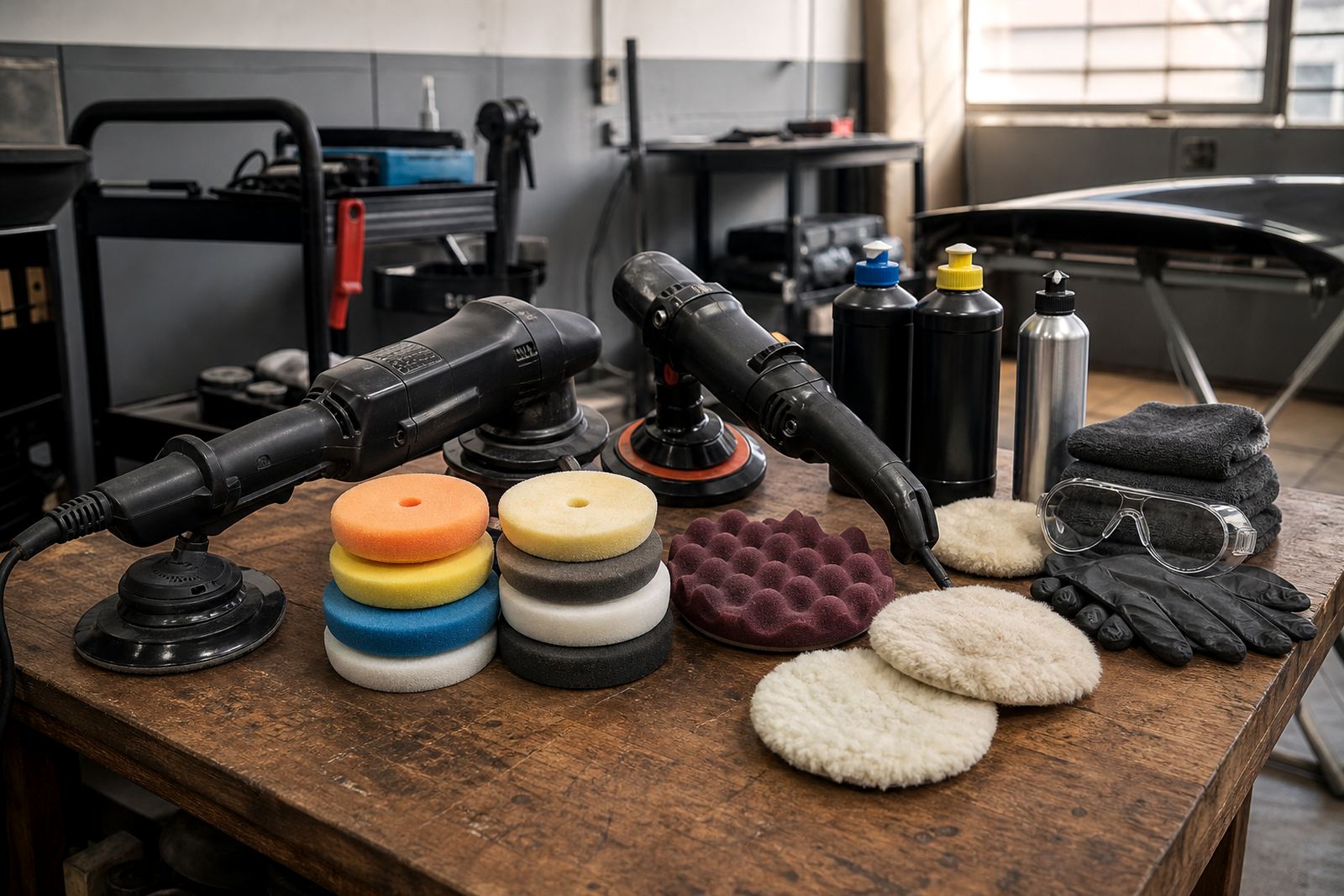
A sensible starter kit should make the learning process easier, not more complicated. The aim is to cover the most common jobs without filling the workshop with unused gear. Begin with one machine type, a few pad options and compounds that cover cutting, refining and finishing. Add cleaning tools and safety items so the operator can work properly from the first session.
- One rotary or one dual-action machine, depending on skill level.
- Cutting, polishing and finishing pads in suitable sizes.
- At least two compounds, one for correction and one for finishing.
- Pad cleaning brush, microfibre cloths and panel wipe.
- Masking tape, eye protection and dust protection.
If you are setting up a small workshop in Gauteng or building a mobile service for the Vaal Triangle, starter kit advice can save you buying the wrong combination first. The same applies if your team needs to keep machines in regular use and reduce downtime from worn pads, blocked foam or poor machine care. A little planning makes the work cleaner and more predictable.
When Training Makes The Difference
Many people can turn a machine on. Fewer people know how to read the paint and choose the right technique for the job. Training helps with pad choice, speed control, pressure, panel temperature and the difference between cutting and finishing. That matters whether you work on a family car in Bloemfontein or run a busy workshop in East Rand.
We support beginner polishing training, rotary skills sessions, DA skills sessions, paint correction coaching and onsite team demos. We also assist with pad and compound matching, machine care guidance, safety and PPE briefing, workshop setup advice and consumables restocking. If you are unsure which machine suits your finish goals, start with a proper consult and build from there. Good advice saves time, products and repaint risk.
For local support, clients reach us through the enquiry form on our contact page. From Germiston to Cape Town, Durban, Pretoria, Johannesburg and beyond, the right machine choice begins with the work you need to finish, not the biggest tool on the shelf.