What a first dual-action polisher should do for you
A dual-action polisher moves in two ways at once, with the pad spinning and orbiting. That makes it much easier to manage than a rotary machine, especially when you are learning on clear coat, a resprayed panel or older paint that can mark easily. For most first time users in Germiston, Johannesburg, Pretoria, Cape Town, Durban or Bloemfontein, the aim is not to remove every defect in one pass. The aim is to correct safely, finish neatly and avoid heat build-up.
Look for a machine that starts smoothly, holds a steady speed under light pressure and feels balanced in both hands. A first machine should be comfortable on horizontal panels and still manageable on pillars, bumpers and door edges. If your vehicle is stored outdoors, especially near the coast in places like Durban or Cape Town, you will often be dealing with salt film, light oxidation and stubborn road grime, so steady control matters more than raw power.
Choosing features that make learning easier
When comparing machines, think about practical features rather than marketing claims. Variable speed is useful because you can start low for product spread and move up for correction. Soft start helps reduce sling. A long enough cable saves you from dragging an extension across the floor. If the machine gets warm quickly, it is harder to work panel by panel on a hot day, and that can become a problem in a tin garage or outdoor bay.
- Comfortable grip that does not twist in your hands
- Variable speed with clear control markings
- Moderate orbit suitable for general paint correction
- Reliable backing plate size for common pad diameters
- Good ventilation around the motor housing
- Low vibration for longer sessions
For a first purchase, keep the setup simple. One machine, a small set of pads, a finishing polish and a light cutting compound is usually enough to begin. You do not need a large collection on day one. A neat starter list saves money and reduces mistakes, especially if you are learning after work and only have a few hours to spare.
Pads, compounds and the order of correction
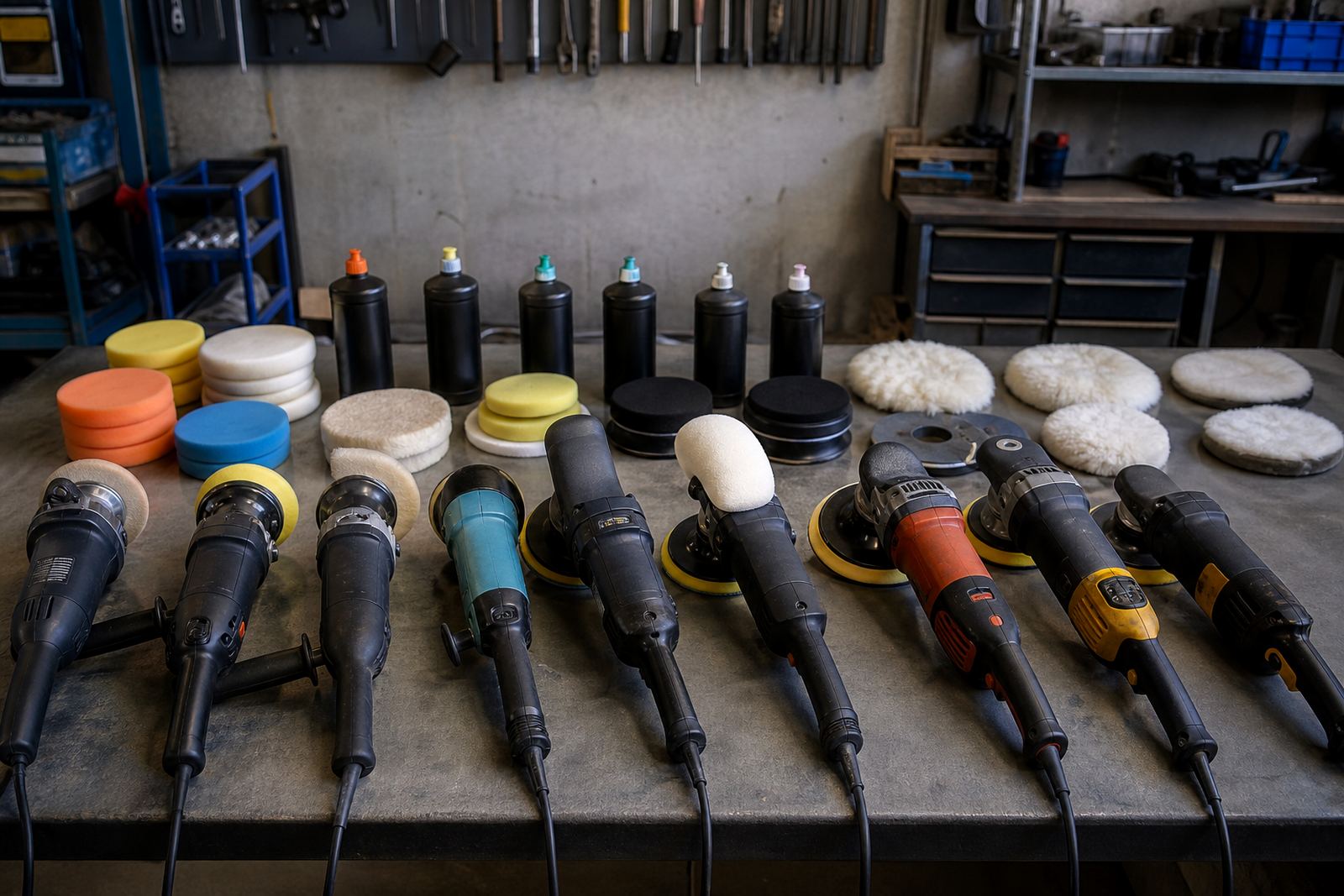
Most beginner problems come from using the wrong pad and compound together. A soft finishing pad with a light polish is good for gloss enhancement. A firmer foam pad with a medium compound is better for light swirls, wash marks and some oxidation. If the paint has deeper defects, you may need a more aggressive pad and compound, but only after testing on a small section first. This is where pad and compound matching becomes important, because a combination that works on one vehicle may haze another.
Work from least aggressive to more aggressive. Clean the panel first, then inspect the finish in direct light. Try a test spot on the bonnet or a rear quarter panel before you do the whole car. If the panel improves with one pass and the finish looks clear, stop there. If the surface mists or swirls remain, adjust your combination. A proper test spot saves time and prevents unnecessary cutting. It also shows you how the clear coat reacts, which is usefull when you are still learning.
- Wash and decontaminate before polishing
- Test one small area before committing to the full vehicle
- Use the least aggressive pad and compound that gets the result
- Wipe residue off often so you can inspect properly
- Check for heat around edges, badges and panel contours
How to use a DA safely on paint and metal
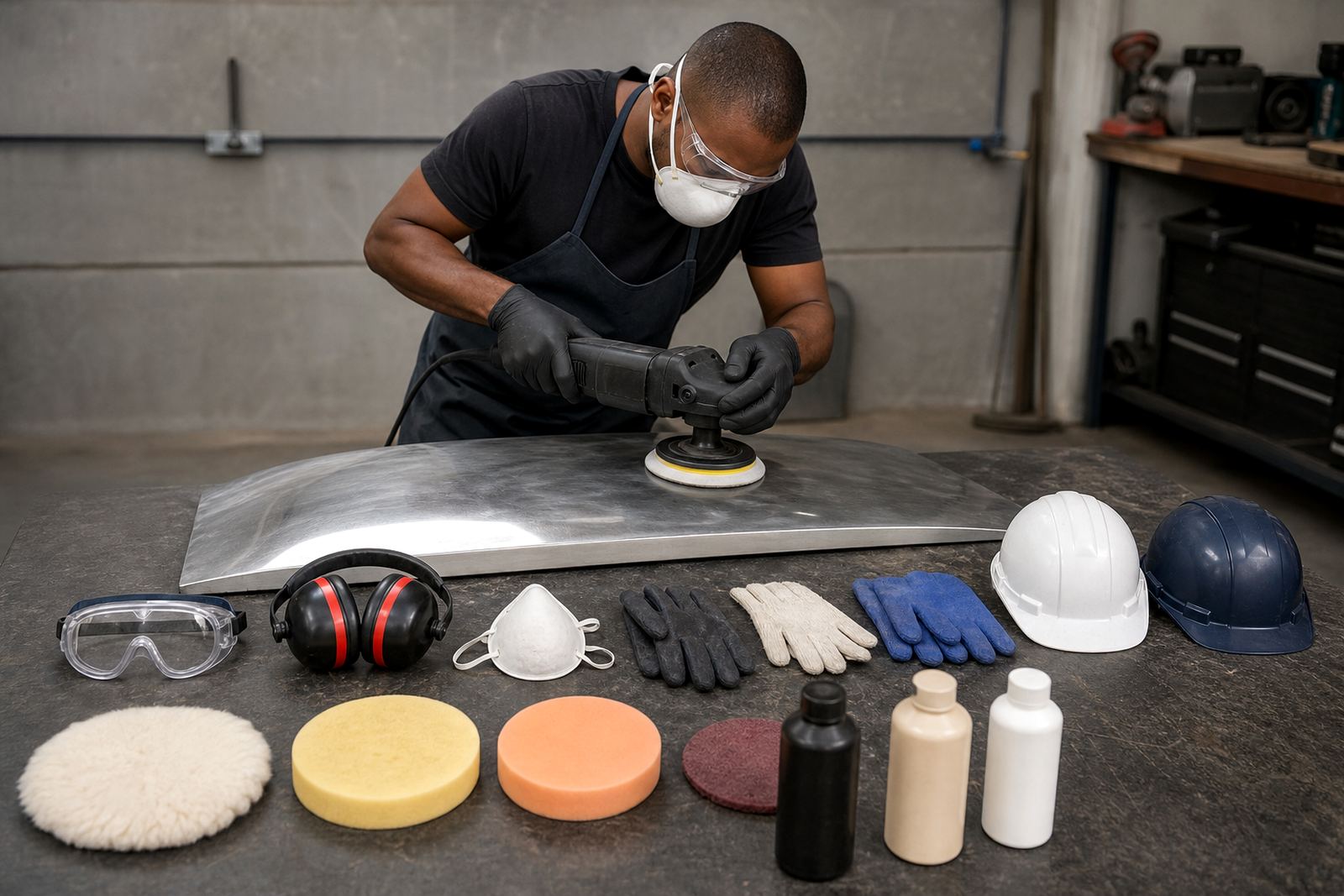
Safety starts with preparation. Wear eye protection, a dust mask when needed and gloves if you are handling compounds for long periods. Keep loose clothing, jewellery and cables away from the pad. If you are polishing near sanding residue or metal dust, clean the area first so you do not grind grit back into the finish. That same rule applies on polished metal parts, where fine dust can turn into scratches quickly.
Use light to moderate pressure and keep the pad moving. Do not sit in one place trying to force a result. That creates heat, especially on body lines, sharp edges and plastics. On older cars, and on repaired panels, the paint can be thinner than you expect. If the panel starts to feel hot stop and let it cool. A DA is forgiving, but it is not magic. Good technique still matters.
For metal finishing, the process is similar but the surface condition and residue are different. Stainless, aluminium and mild steel can all respond differently to compounds. Always check whether the metal has a coating, lacquer or clear protective layer before you start. If you are unsure, do a small test area.
A starter kit that matches a first-time buyer
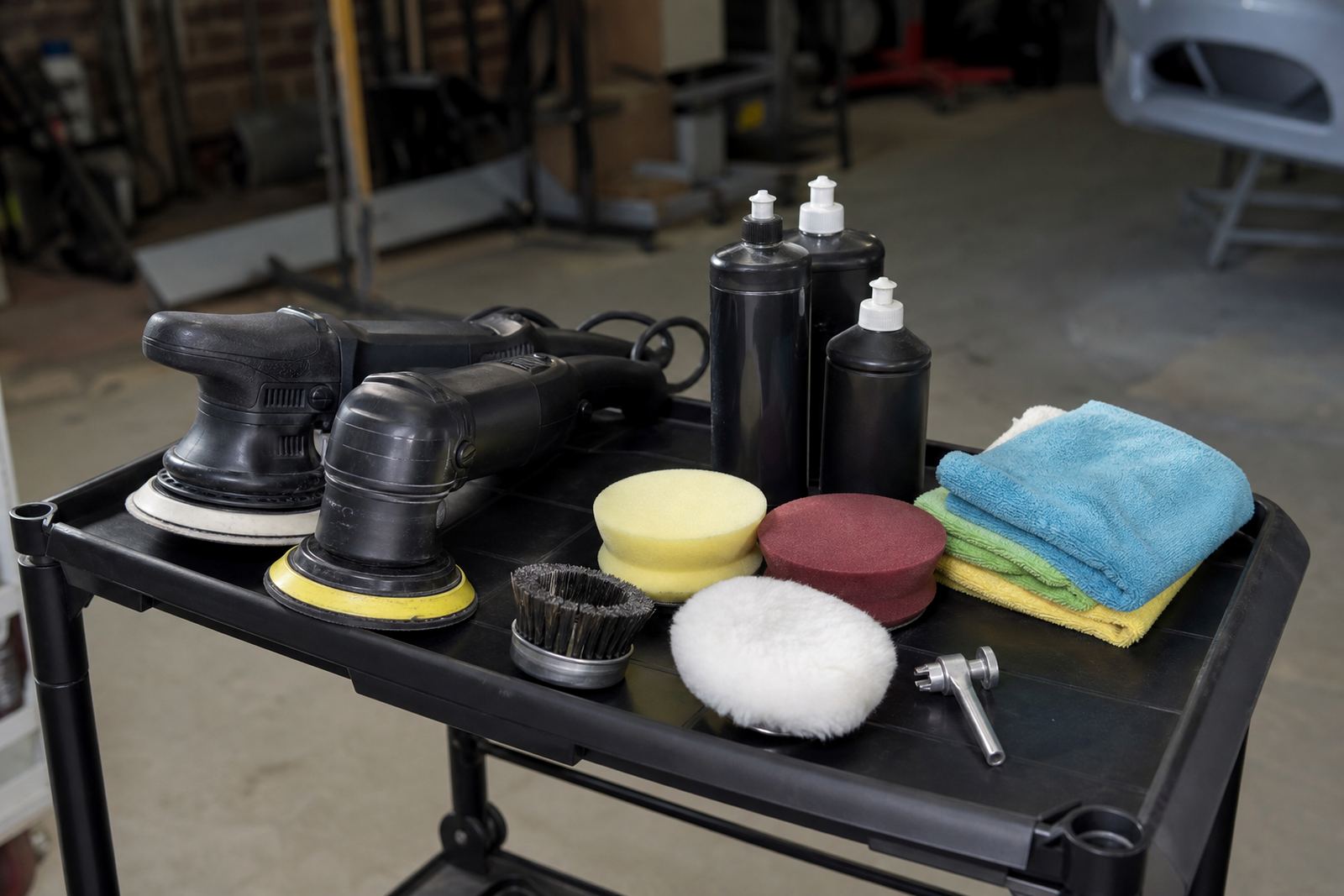
A sensible starter kit should help you learn without clutter. For most first-time buyers, the best kit includes one dual-action machine, a backing plate, two or three foam pads, a mild compound, a finishing polish and clean microfibre cloths. Add panel wipe, masking tape and a pad cleaning brush. If you are working from home or in a small workshop, keep everything labelled so you can repeat what works.
- Dual-action polisher with speed control
- Backing plate and a small pad selection
- Medium compound and finishing polish
- Microfibre towels for residue removal
- Masking tape for trims, edges and badges
- Panel wipe and pad cleaning brush
- PPE: eye protection, mask and gloves
It also helps to think about storage and care. Keep pads dry and dust free, and do not leave compounds in direct sun. If the machine is used on a regular basis, check the cable, backing plate and vents after each session. Good care extends tool life and keeps the machine ready for the next job. Small habits like this make a big difference over time, especially when you are learning at the same time as doing real work.
When to book training instead of guessing
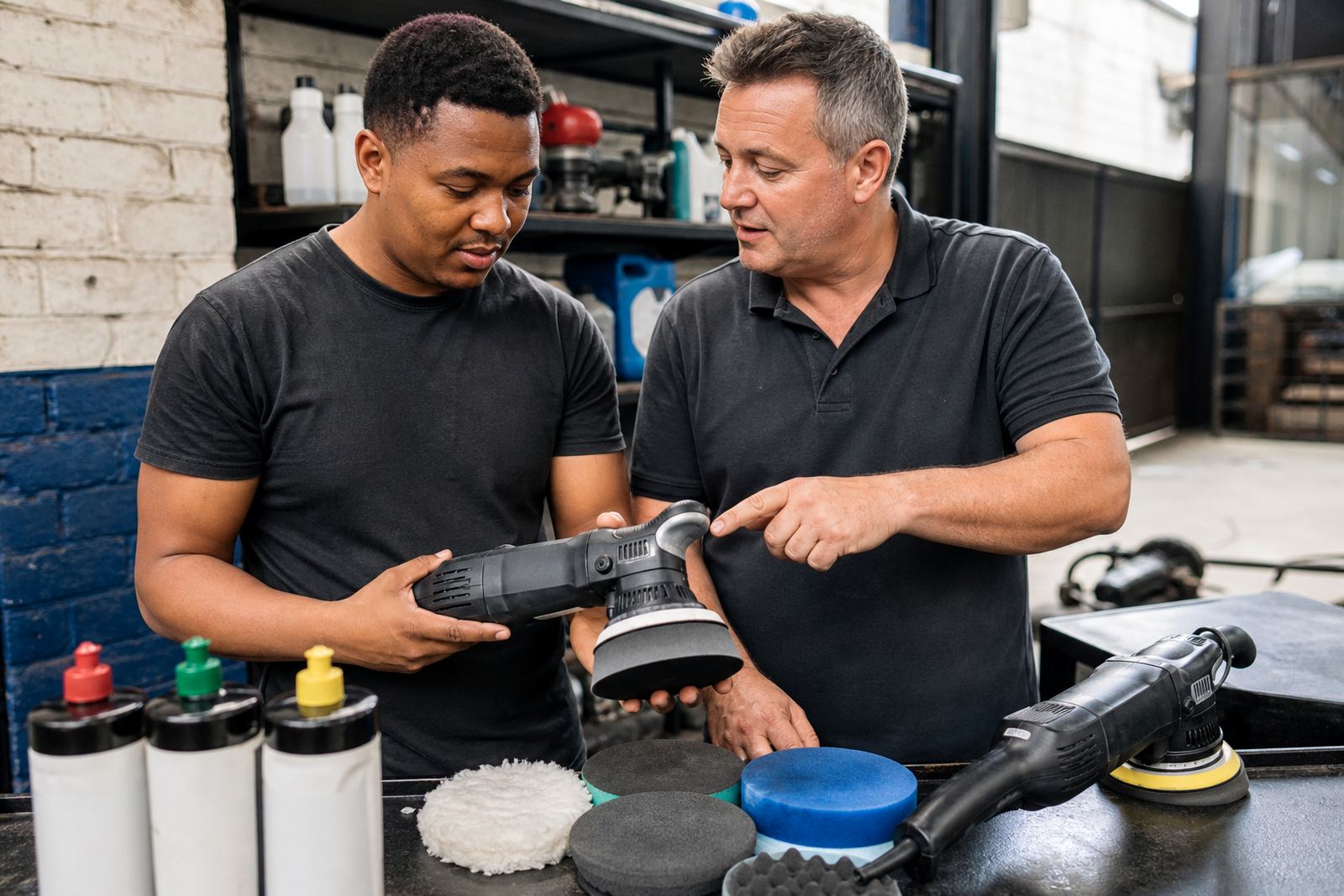
If you are unsure about speed settings, machine movement, paint condition or product choice, training is worth it. A short session on beginner polishing, DA skills, pad and compound matching or paint correction coaching can save panels, time and product. It also helps if you are setting up a small workshop or trying to decide whether a rotary or DA should come first. For many people, the right answer is to learn the DA first and build from there.
At Polisher in Germiston, we support buyers across South Africa, including Johannesburg, Pretoria, Cape Town, Durban, Bloemfontein, the East Rand and the Vaal Triangle. Clients usually reach us through the enquiry form on our contact page when they want help choosing a machine, checking a starter kit or planning a workshop setup. If you are buying your first DA, bring clear details about the vehicle, the paint condition and the kind of finish you want. That lets us guide you more accurately and avoid wasted purchases. A good start makes the rest easier, and the finish usually shows it.