
Start With the Job You Are Doing
Polishing is not one task. A rotary machine on oxidised paint throws a different risk profile to a dual-action machine used with a fine finishing pad, and metal buffing often creates more dry residue and sharper particles. Before you buy PPE, look at the material, the compound, the pad type and how much dust or mist the job creates.
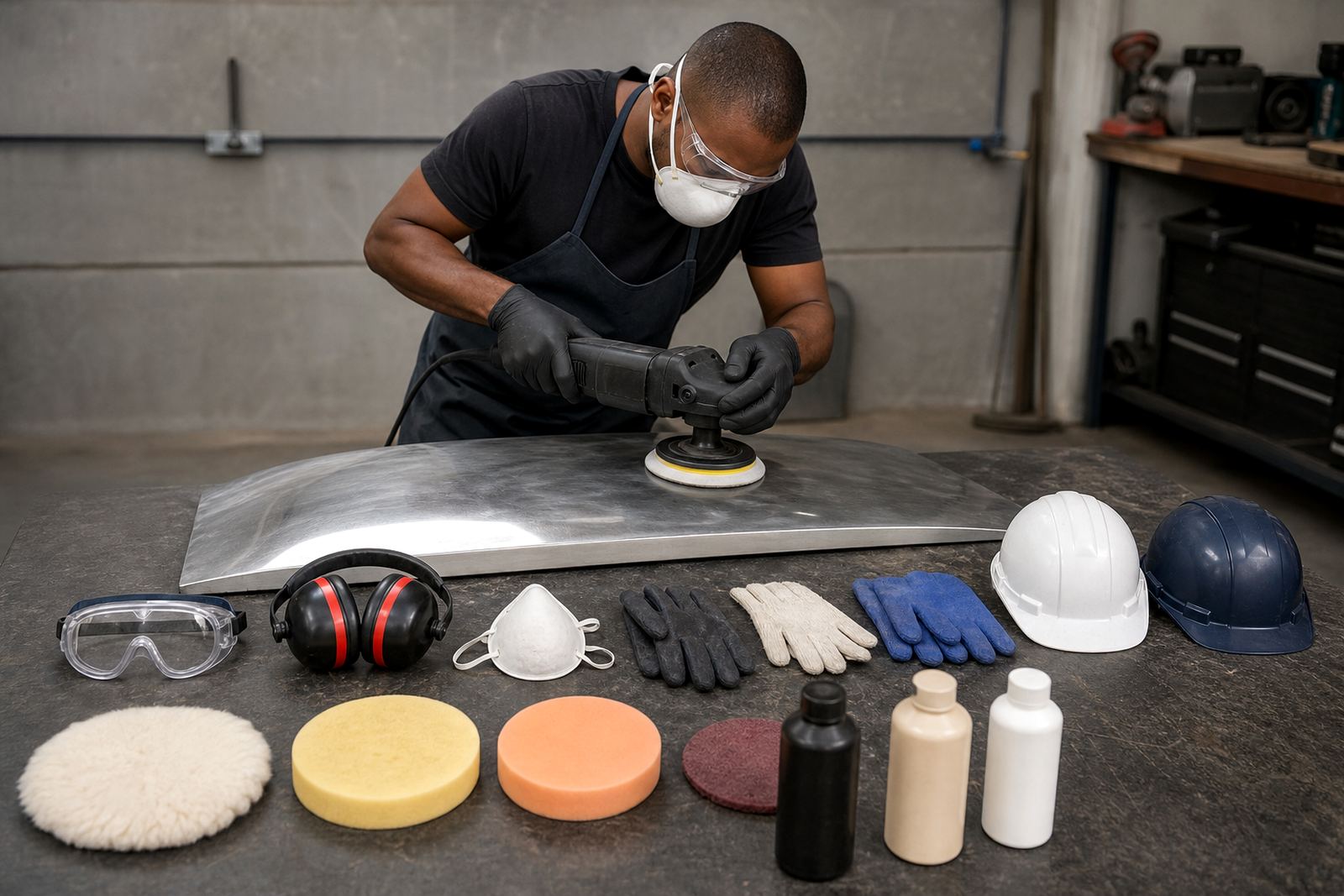
For most workshop and home jobs in Germiston, Johannesburg or Pretoria, you will need eye protection every time, hearing protection when machines run for long periods, and respiratory protection when compound residue, dust or old coating is being disturbed. If you work near spray, sanding dust or old paint, treat the task as a higher-risk job and choose better coverage. Do not rely on a cap, sunglasses or a cloth mask that leaves gaps at the sides.
Eye Protection That Stays in Place
Eyes are exposed to dried compound, metal particles and pad fibres. A good pair of safety glasses should sit close to the face, not bounce when you move your head or look into tight corners around a bonnet edge, mirror housing or stainless rail. Clear lenses work well indoors and in shaded workshops. If you work outside in bright Cape Town or Durban sun, consider tinted safety lenses for glare control, but keep clear glasses nearby for indoor finishing.
Look for wraparound coverage, side shields and a shape that does not fog too badly when you wear a mask. If you wear prescription glasses, choose over-glasses safety eyewear or have prescription safety lenses made. Replace scratched lenses because they reduce visibility when you are trying to inspect holograms, swirl marks or a clean metal finish.
- Choose full side protection, not open frames
- Check that the glasses do not slip when you bend forward
- Keep a spare pair in the workshop bag
- Clean lenses with a soft cloth, not a dusty rag
Hearing Protection for Rotary and DA Machines
Polishers may not sound as loud as grinders, but regular exposure still adds up. Rotary machines can produce a steady high-pitched sound, while a dual-action machine adds vibration and motor noise over longer sessions. In a small garage with concrete walls the sound bounces, so the workshop feels louder than it does outside. If you are polishing for several hours, hearing protection is worth using every time.
Foam ear plugs suit short sessions and can be carried in a pocket. Reusable plugs are better if you move between tasks during the day. Ear muffs are useful when a workshop is noisy already, or when the machine is being used near compressors and extractors. Make sure the seal sits properly around the ear, and that glasses arms do not break the fit too much.
- Use hearing protection for long polishing sessions
- Replace worn ear muffs with cracked cushions
- Keep plugs clean and dry after use
- Do not share plugs between workers
Respiratory Protection for Dust, Fumes and Compound Residue
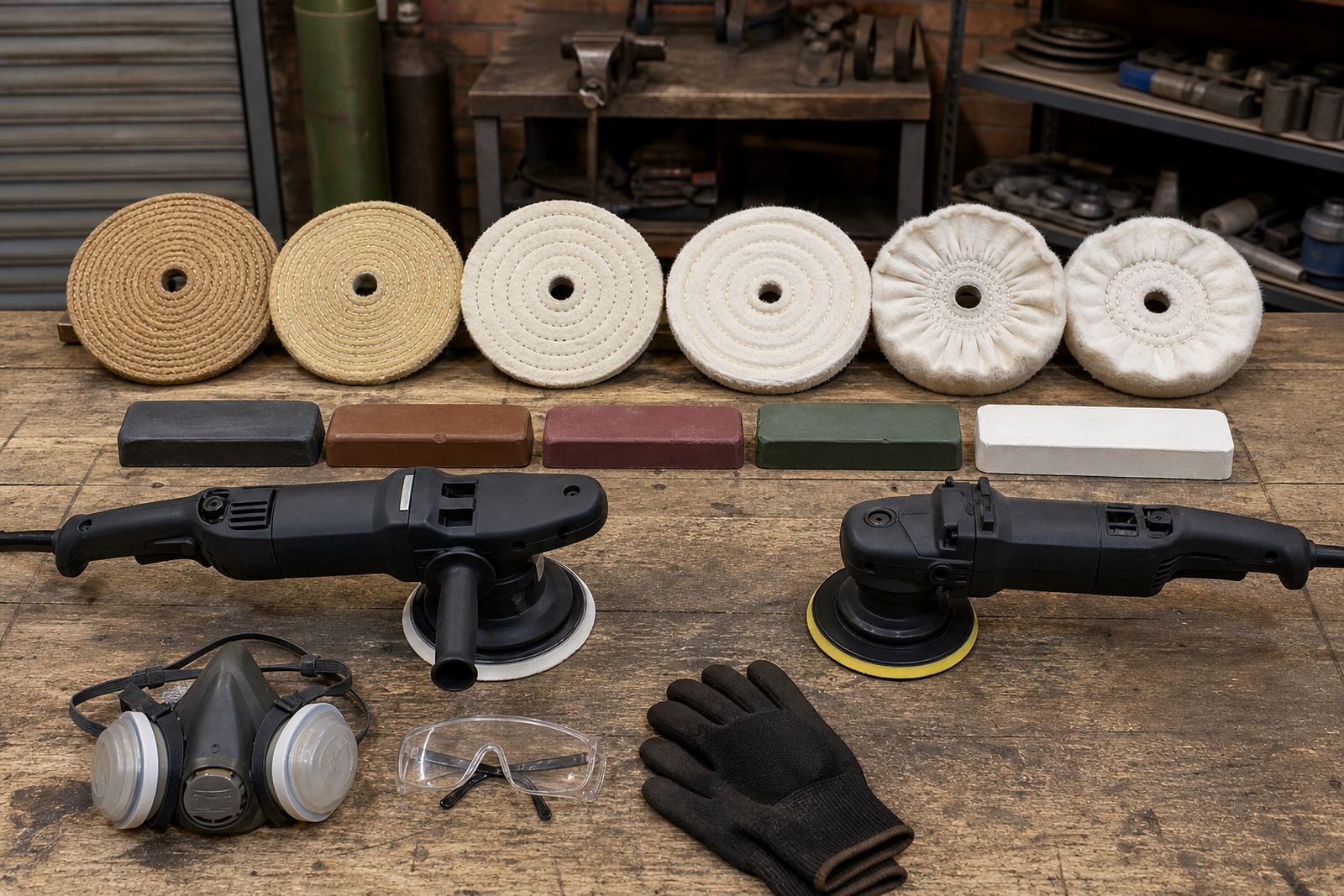
Respiratory protection matters whenever dry dust is present. Old paint, sanding residue, metal oxide and fine polishing compound can enter the nose and throat very easily. For light finishing work, a well fitted disposable respirator may be suitable if it seals properly on the face. For more frequent work, choose a reusable half-mask type with the correct particle filters, then change the filters as soon as breathing becomes harder or the mask starts smelling contaminated.
If you are working on a surface that may have unknown coatings, or if the area has poor airflow, step up your protection and improve ventilation as well. Open doors, use extraction where available, and avoid polishing in a closed room with the vehicle running. In humid coastal towns the air can hold residue longer, while in dusty inland yards a breeze can move particles straight back into the work area. Never polish in a cloud and hope for the best.
For any task that creates dust, also think about wet wiping between stages, sealing nearby surfaces and keeping the compound area tidy. PPE works best when the workspace is organised and the air is moving.
Fit, Comfort and Sizing Before You Buy
PPE that is too tight will end up in a drawer, and gear that is too loose gives poor protection. Try on masks, glasses and hearing protection with the same type of cap or visor you normally wear. Bend, turn your head and look down at a panel edge to check that nothing shifts out of position. This matters on a long paint correction day just as much as it does during metal buffing on gates, rails or automotive parts.
When choosing a mask, check how it seals on the cheeks, nose and chin. Facial hair can reduce the seal, so plan around that if you are buying for a team. If the PPE feels hot in Gauteng summer weather, it will probably not get used. Comfort is not a luxury, it is part of proper protection.
- Test the fit before the first job
- Check compatibility with glasses and earmuffs
- Choose sizes that suit different staff members
- Keep spare straps and replacement pads on hand
Care, Replacement and Safe Workshop Habits
PPE needs maintenance. Wipe safety glasses after every shift, wash reusable masks according to the maker’s instructions, and store hearing protection away from polishing residue and open solvent containers. If a mask is damp, torn or no longer seals, replace it. If a pair of glasses has deep scratches or a cracked frame, take them out of service immediately.
Safe habits matter just as much as the kit. Stop the machine before checking the pad, keep loose clothing out of the spindle area and never blow dust off yourself with compressed air.Check your gear, check the pad and check the surface before the machine starts.
- Inspect PPE before each shift
- Replace damaged items straight away
- Store gear in a clean, dry container
- Keep a simple checklist near the work area
A Simple Buying Checklist for Polishing Work
Use this checklist when you are choosing PPE for a starter kit, a workshop team or your own garage. It keeps the purchase practical and avoids buying items that look fine but do not help once the polishing begins.
- Eye protection with side coverage and a comfortable seal
- Hearing protection for long sessions and noisy workshops
- Respiratory protection matched to dust, residue and airflow
- Sizes that work with glasses, masks and caps
- Spare filters, spare plugs and a storage pouch
- Easy cleaning and replacement parts
- Enough comfort for regular use, not just one job
If you are unsure what to choose, it helps to match the PPE to the machine, the surface and the amount of dust the job creates. That approach keeps both beginners and experienced operators safer while they learn better technique, work cleaner and protect their finish.