
Start With The Right Machine For Your First Jobs
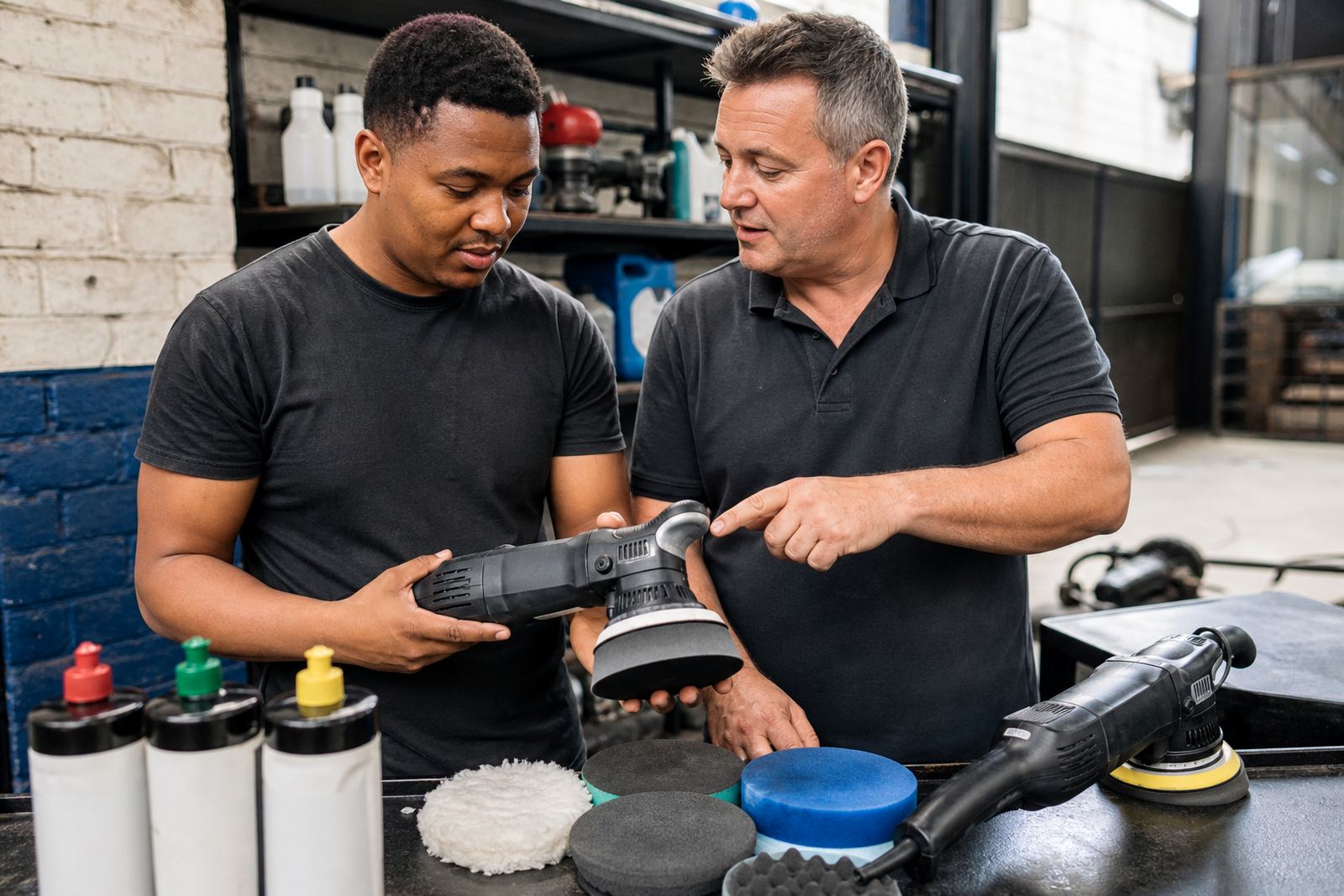
For a beginner, the machine is the main decision. A dual-action polisher is usually easier to control on paint because the head moves in two motions, which lowers the risk of burning through a clear coat or leaving heavy swirl marks. A rotary polisher cuts faster on metal and can be useful for more experienced users, but it demands steadier hands and a better understanding of speed, pressure and heat.
For home use in Germiston, Benoni, Kempton Park or anywhere else in Gauteng, choose a machine you can hold comfortably for a full panel or a small metal section.Keep the cord clear of puddles, damp floors and sharp edges.
- 1 dual-action polisher for paint work or light finishing
- Optional rotary machine only if you plan to work on metal or learn advanced technique
- Extension lead, heavy enough for workshop use
- Soft grip, side handle or support handle if the machine allows it
Pads, Buffs And Backing Plates You Actually Need
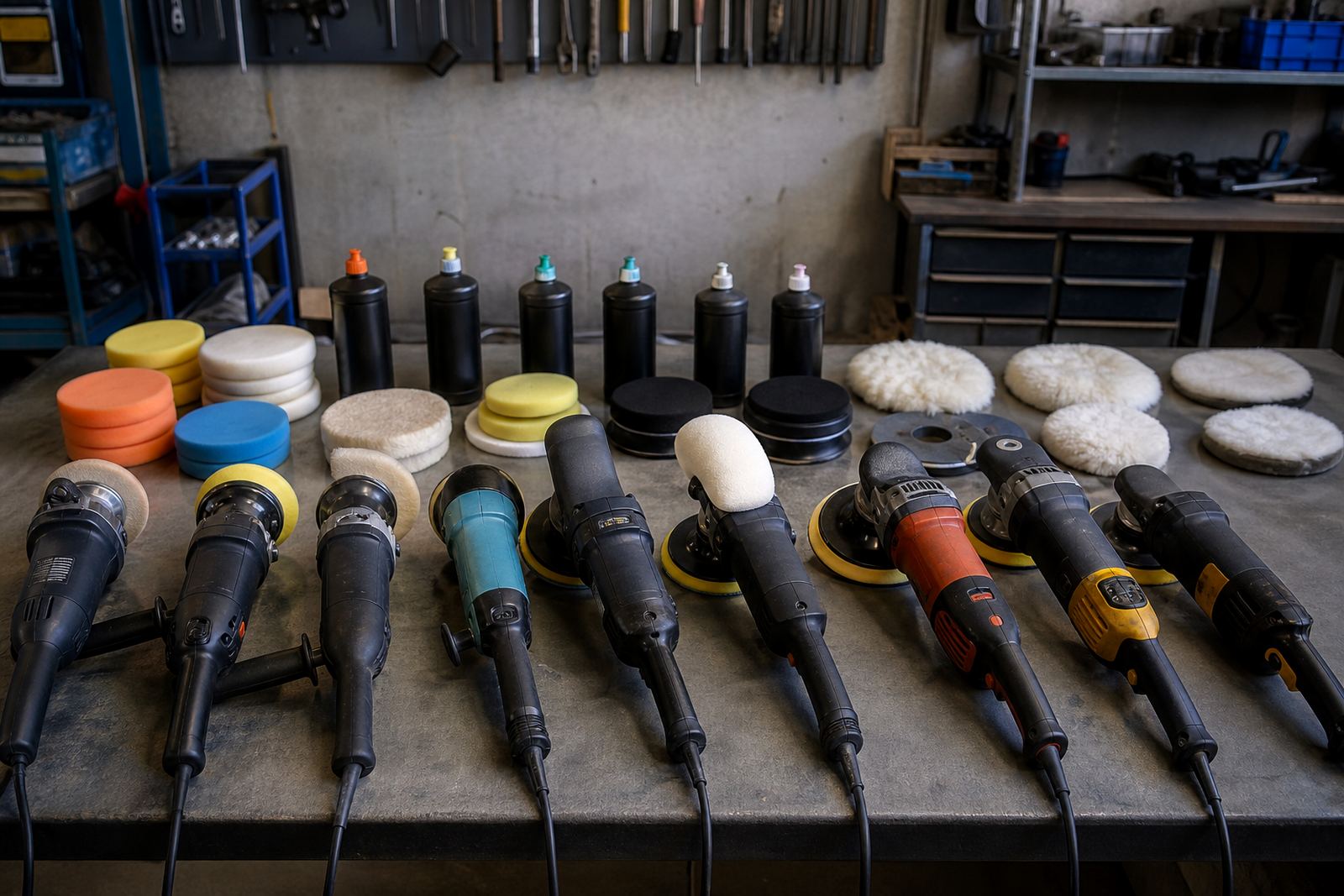
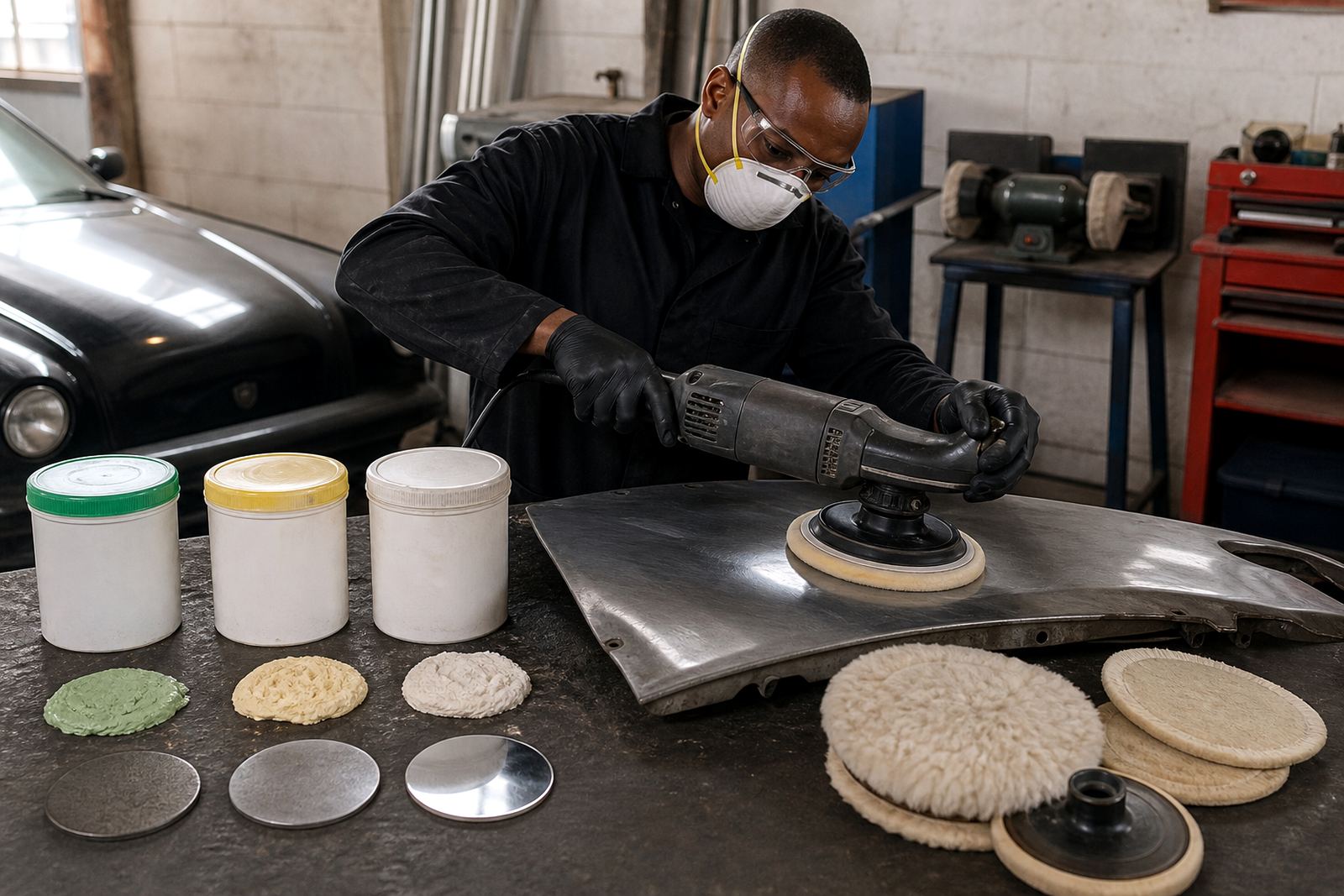
Many beginners buy too many pads. A small set is better because it is easier to learn what each one does. Foam pads are commonly used on paint for cutting, polishing and finishing. Microfibre pads can remove defects faster but they can also build heat more quickly. For metal, buffs made from stitched cloth, loose cotton or specialised polishing fabric are often used with compounds to bring up shine on aluminium, stainless steel and mild steel.
Match the pad size to the machine and the panel. On smaller car panels or tight corners, a smaller pad gives better control. On larger flat areas, a bigger pad can save time but it is harder to keep flat. The backing plate should suit the pad size exactly, otherwise the machine can run unevenly and leave a patchy finish.
- Cutting pad for heavier marks or oxidation
- Polishing pad for refining haze and light swirls
- Finishing pad for final gloss on paint or metal
- Buffing wheel or cloth buff for hand guided metal finishing
- Spare pads so you can swap when one loads up with residue
Compounds And Cleaners To Keep The Job Controlled
Your starter kit should not be packed with every compound on the shelf. Begin with one cutting compound and one finishing polish, then add more only when you know what surface you are working on. Paint systems vary from older single stage paint to modern clear coat finishes, and metal surfaces vary just as much. A compound that works well on a bumper may behave very differently on polished aluminium or pitted stainless steel.
Always read the label and test on a small section first. Use only a little product, because too much compound creates sling, waste and extra clean-up. Wipe residue with clean microfibre cloths and change cloths often so you do not drag grit back over the surface. In coastal towns like Durban or Cape Town, metal can tarnish faster because of humidity, so surface prep is important before you start.
- One cutting compound for correction work
- One medium or finishing polish
- Panel wipe or pre-cleaning solution where suitable
- Microfibre cloths for removal and final inspection
- Soft brushes for cleaning pad face between passes
Safety And PPE You Should Not Leave Out
Polishing creates dust, mist and flicking residue, especially if you are working on old paint, oxidised metal or dried compound. Wear eye protection, a dust mask or respirator suited to the task, and gloves if your hands will be in contact with chemicals for long periods. Closed shoes are a must. Loose clothing, jewellery and untied cords can catch in a spinning pad.
Work in a well lit area with good airflow and keep the floor clean. If you are doing metal work, especially on rusty or rough edges, take care with sharp burrs and hot surfaces. If you are polishing near a vehicle on a driveway in Pretoria or Boksburg, do not let dust drift onto fresh paint, wet sealant or neighbouring vehicles.
- Eye protection
- Dust mask or suitable respirator
- Gloves for chemical handling
- Closed shoes and fitted clothing
- Clean lighting, airflow and a tidy floor
A Simple Starter Workflow For Paint Or Metal
Begin with a wash or degrease, then dry the surface fully. On paint, clay or wash away bonded dirt first if needed, then mask off trim, badges and sharp edges. On metal, remove loose dirt, corrosion and residue before you bring in the machine. The cleaner the surface, the easier it is to judge your result.
Work a small area at a time, usually no bigger than half a door or a small panel section. Spread the compound first on low speed, then increase only as needed. Keep the pad flat, move slowly and overlap your passes. Do not press down hard, because extra pressure builds heat and can leave haze or distortion. After each section, inspect under good light before moving on.
- Wash or degrease the surface
- Dry and inspect for defects
- Mask delicate edges and trim
- Prime the pad with a small amount of compound
- Work one small section at a time
- Wipe clean and check the finish
What To Put In The Kit Bag On Day One
A starter kit should be easy to carry and easy to restock. Keep the tools you use most often together so you are not hunting around the garage for pads or cloths halfway through a job. For home users in Johannesburg, Bloemfontein or the East Rand, a tidy kit also makes it easier to store items away from dust and damp when not in use.
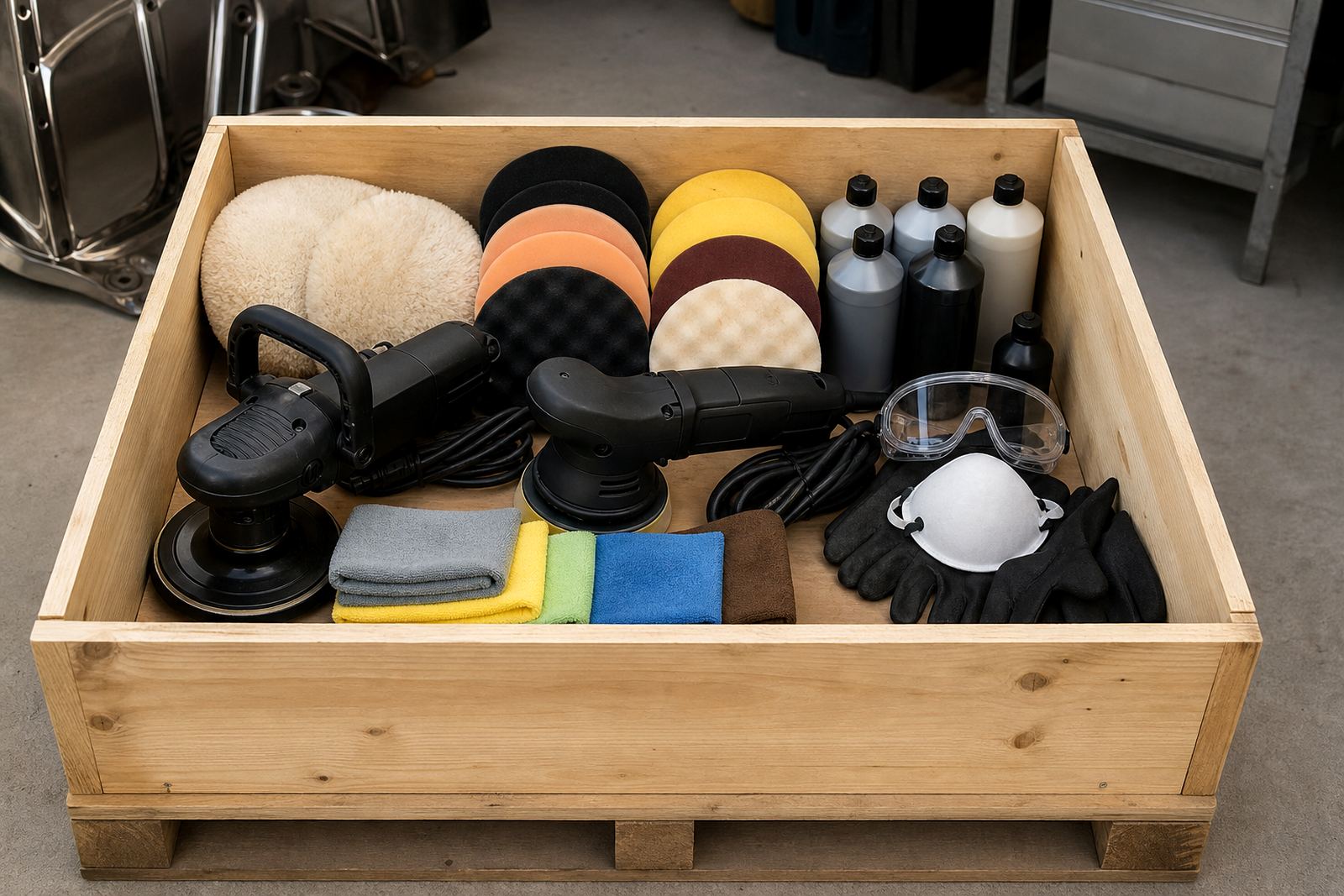
As a practical minimum, keep this set ready before you begin. It will cover basic paint correction and light metal finishing without overcomplicating the process. Once you understand the results each item gives you, then you can add extra pads, specialist compounds or stronger lighting.
- Machine suitable for your main task
- Two or three pads or buffs
- One cutting compound and one finishing polish
- Microfibre cloths and a pad cleaning brush
- Masking tape, PPE and a carry bag or storage box
- Extension lead and spare clean cloths