
Start With The Surface, Not The Bottle
Before you open a compound, look closely at the job. A dull bonnet with light haze needs a different approach from oxidised aluminium, sanding marks, water spots, or deep swirl marks left by poor washing. The compound stage should match the level of correction required, because starting too aggressive can leave extra work for the finishing stage.
In practice, many jobs in Germiston, Johannesburg and Pretoria begin with a quick test spot. That means choosing one small section, then checking whether a medium compound and the correct pad can clear the defect without unnecessary cutting. If not, move up to a cutting compound. If the surface responds too quickly and starts to look dry or cloudy, step down.
- Check the depth of the defect under strong light
- Feel for roughness before you polish
- Test the least aggressive option first
- Inspect after each pass before changing compound stage
Cutting Compound For Heavy Correction
Cutting compound is used when the surface needs stronger correction. On metal, that can mean removing oxidation, heavier tarnish, light sanding marks or old machining haze. On paint, it can help with deeper swirl marks, moderate scratches and tired clear coat where the finish has lost clarity.
Use this stage with care. A rotary machine works faster and generates more heat, so keep the pad moving and avoid sitting on an edge or body line. A dual-action polisher is slower, but it is easier to control and is often a better choice for beginners or for panels where heat build-up is a concern. In South African summers, and especially on dark vehicles, panel temperature can rise quickly so work in smaller sections.
- Use a firm pad suited to the material and defect level
- Work a small area at a time, about 40 cm by 40 cm or smaller
- Keep the pad flat where possible
- Wipe and inspect before repeating the pass
Medium Compound When You Need Balance
Medium compound sits between heavy cut and fine finishing. It is useful when the surface needs correction but not aggressive removal. This stage is often the best starting point for well kept paint with swirls, or for metal that has lost brightness but is not heavily marked. It can save time because it removes less material than a heavy cut, yet still levels the surface enough for a cleaner finish.
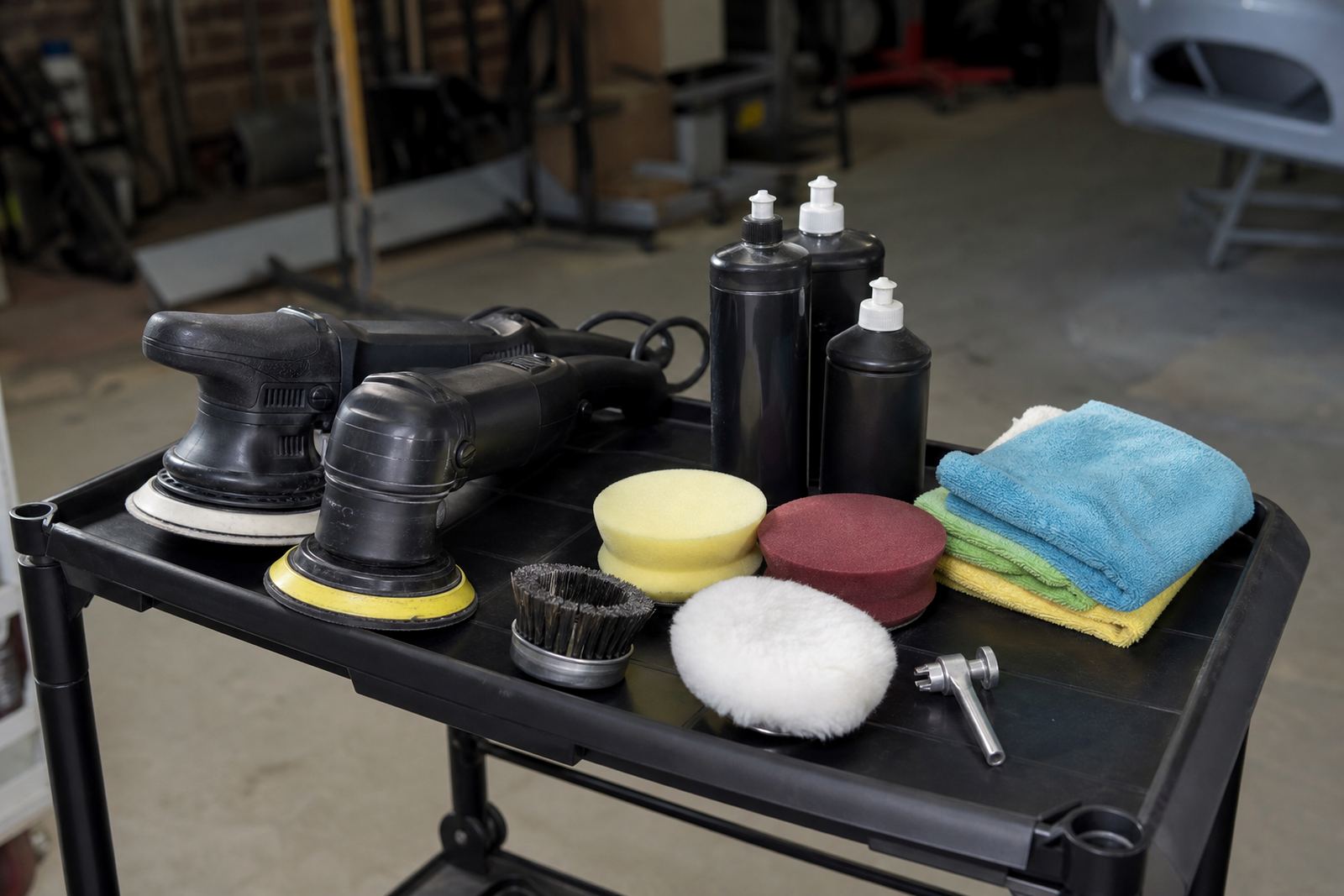
For workshops and mobile teams across Gauteng, medium compound is often the most flexible product to keep in the trolley. It works well as a first pass on mixed-condition panels, then the result can be refined with a finishing compound if needed. The key is to watch the residue and the clarity. If the surface still shows haze or micromarring after wiping, you may need a second stage.
- Good for moderate swirls and light oxidation
- Useful as a first pass on mixed-condition surfaces
- Often paired with a softer pad for refinement
- Less likely to leave heavy haze than a strong cutting compound
Finishing Compound For Clarity And Gloss
Finishing compound is used to refine the surface after correction. It removes fine haze, light buffer marks and the soft dulling that can remain after cutting. On paint, this is the stage that helps bring back crisp reflections. On polished metal, it helps lift the final shine and make the surface look more even.
This stage rewards patience. Use light pressure, a clean soft pad and a slow, controlled machine speed. If the compound dries too quickly, you may be working in direct sun, using too much product or moving too fast. In Durban and other humid coastal areas, residue can behave differently, so keep pads clean and avoid loading them with excess compound. A good finishing pass should leave the panel clear, not sticky or dusty.
Match The Compound To The Pad And Machine
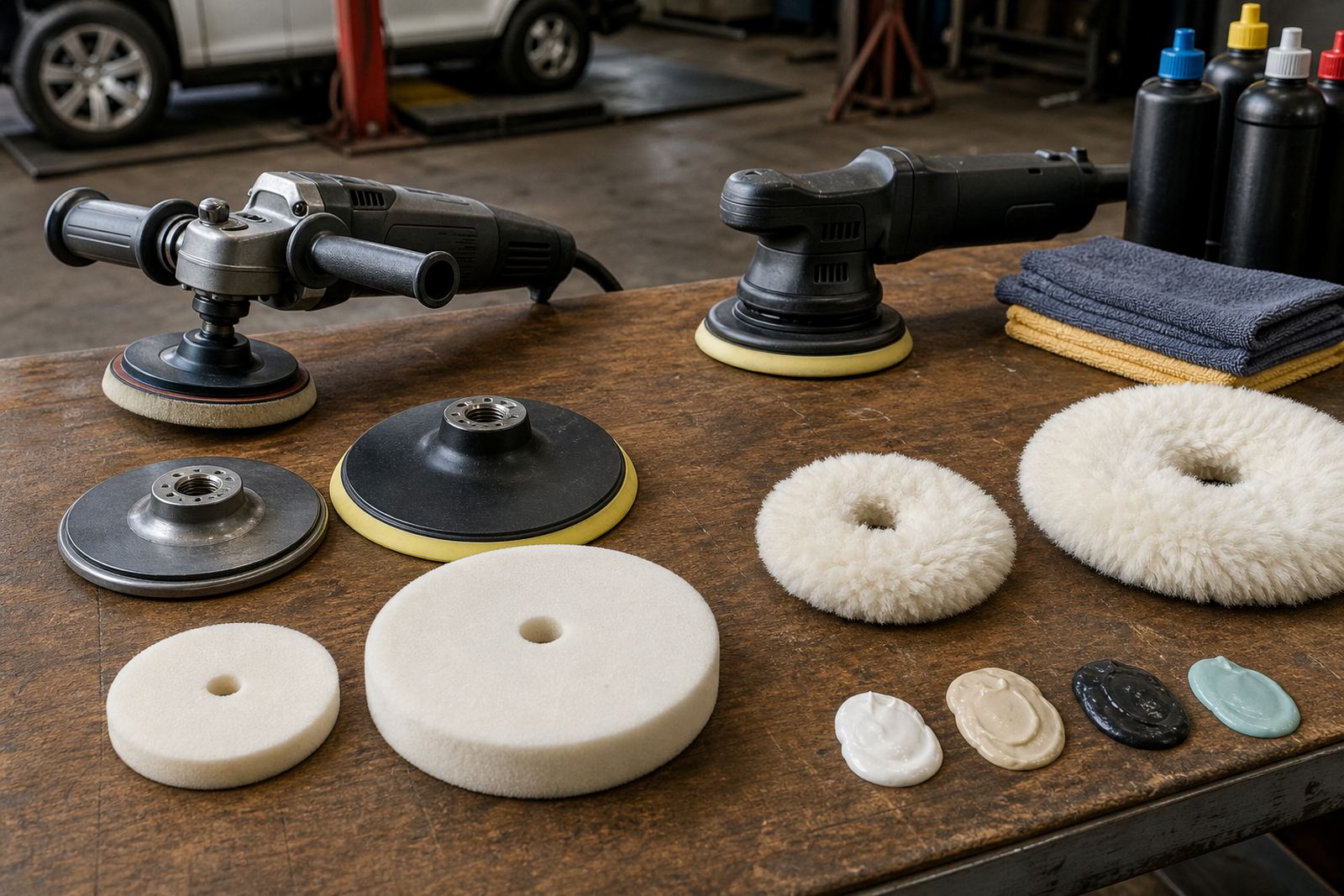
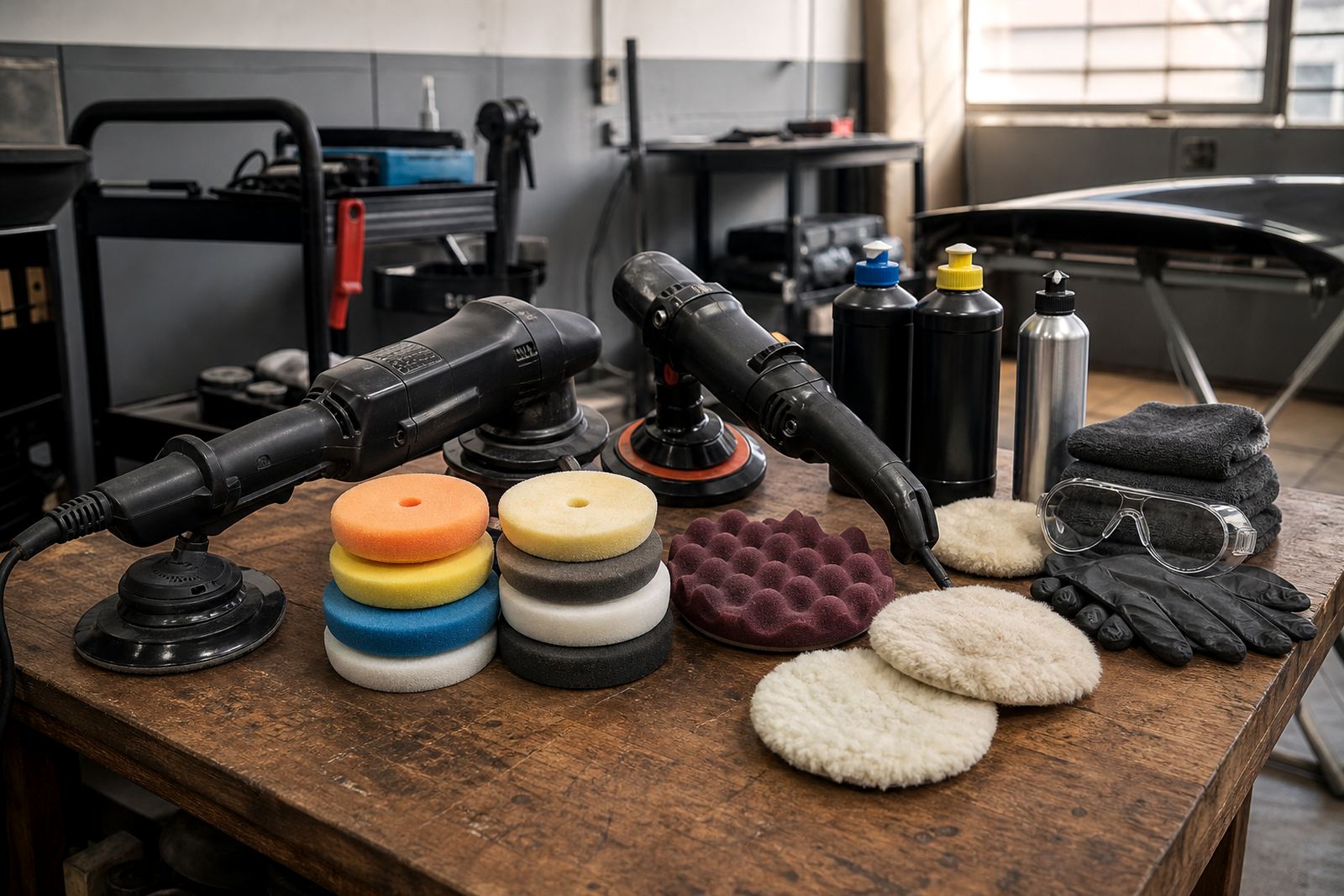
Compound stage is only one part of the system. The pad and machine choice change the result a great deal. A cutting compound on a wool or firm foam pad will remove more than the same compound on a softer pad. A rotary machine increases correction speed but also increases the risk of heat and holograms if used badly. A dual-action polisher is more forgiving and is often preferred for final refinement.
When training new users, we usually remind them that compound does not work alone. Pressure, speed, arm movement and pad cleanliness all matter. If the pad is clogged with spent compound and paint residue, the machine can start to drag and the finish will suffer.
- Choose wool or firmer foam for heavier correction
- Choose softer foam for refinement and gloss
- Keep pads clean during the job
- Adjust pressure and speed to suit the stage
Simple Sequence Checklist Before You Start
A good polishing sequence protects time, materials and the surface. Whether you are polishing alloy trim in Bloemfontein, restoring a car bonnet in the East Rand or training a team in Cape Town, the same planning steps apply. The best sequence is usually: wash, decontaminate, test spot, select compound stage, correct, refine, then inspect in proper light.
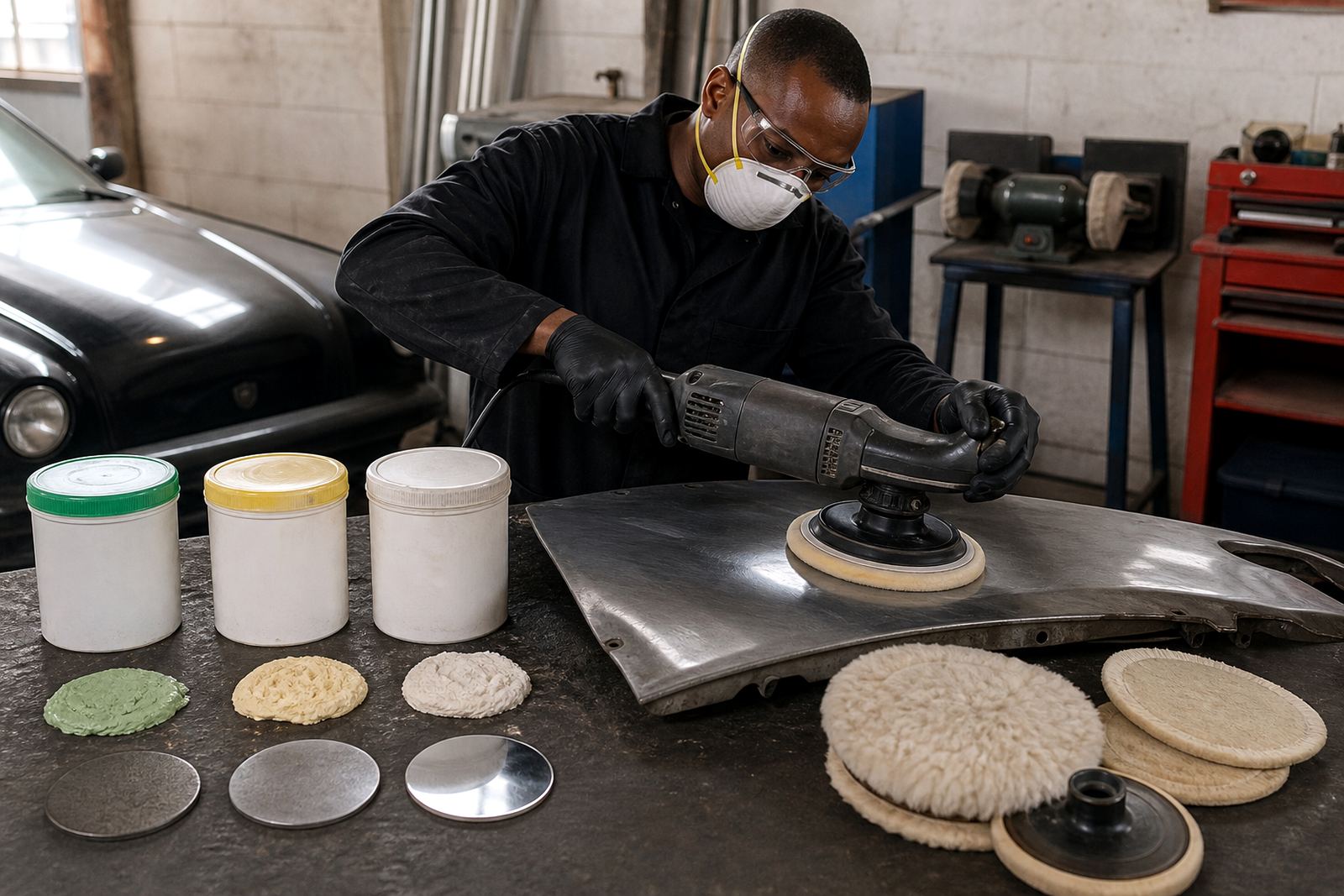
Before you begin, check your personal protection as well. Wear eye protection, a dust mask where dry residue is present, and gloves if the job involves sharp edges, metal dust or strong cleaners. Keep the area ventilated and take extra care around sanding residue, because fine dust can spread onto nearby panels and floors.
- Wash and dry the surface first
- Remove bonded contamination before polishing
- Run a small test spot before committing to a full panel
- Use PPE and keep the work area clean
- Inspect under bright light before moving to the next stage