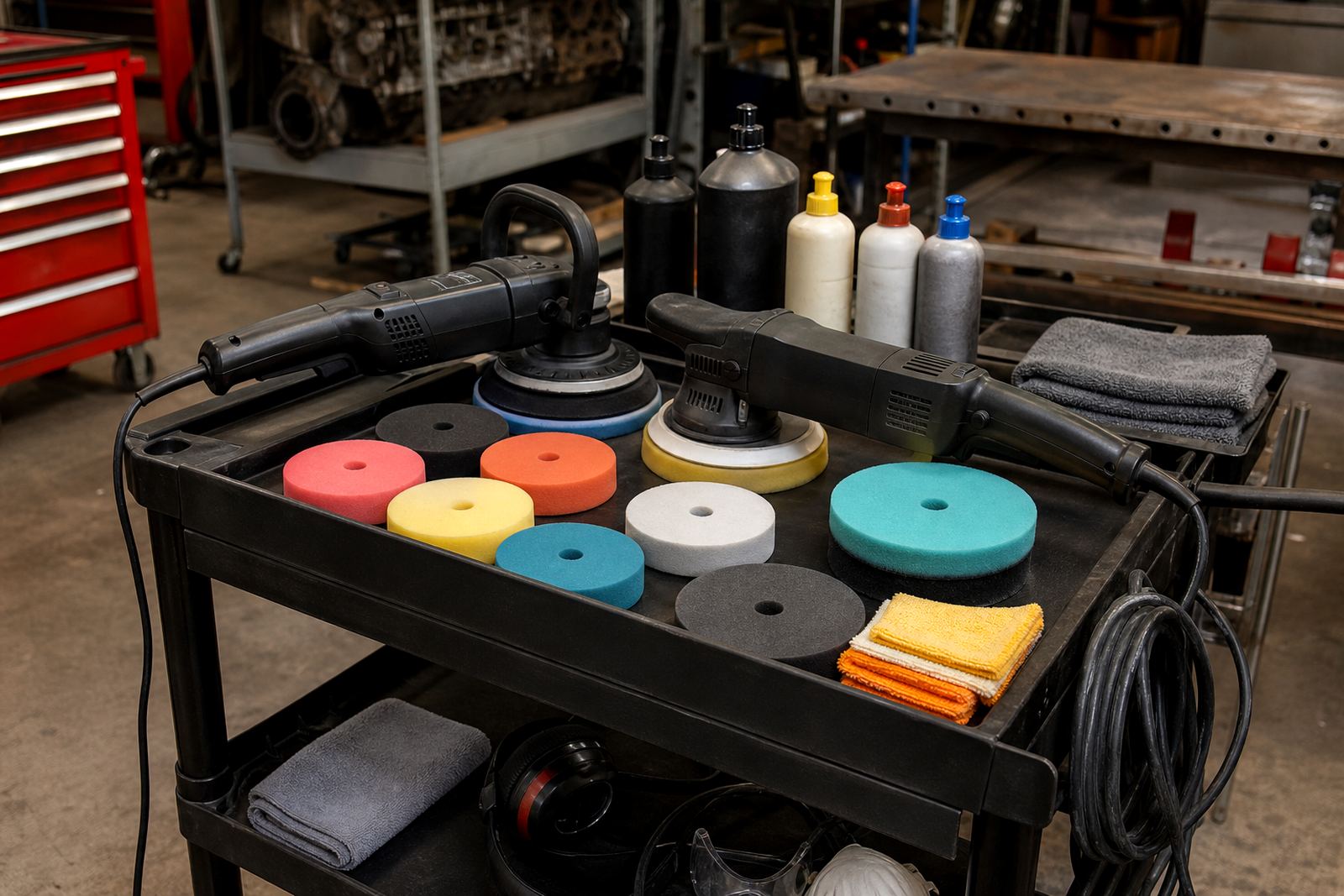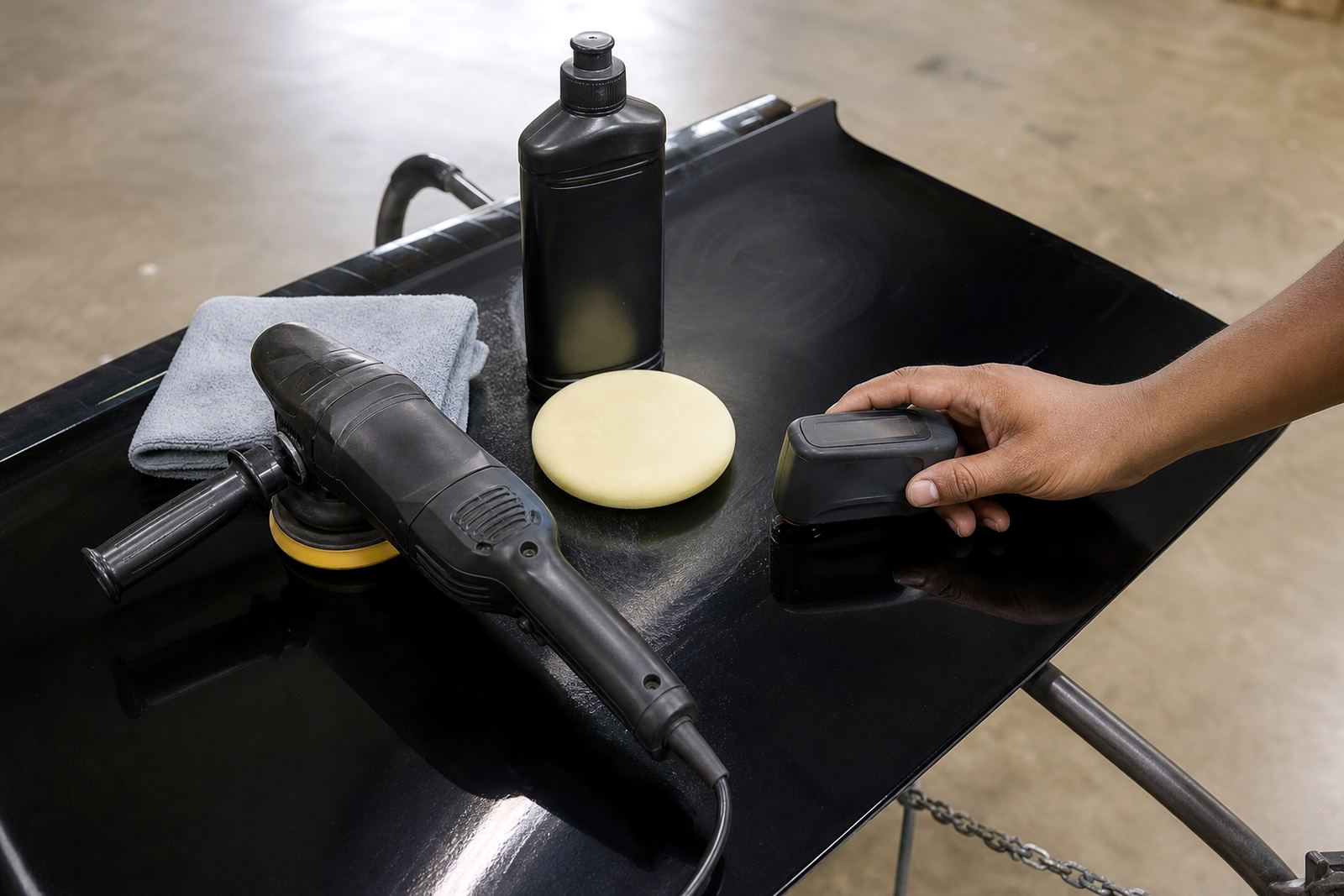
What a Variable Speed Polisher Does
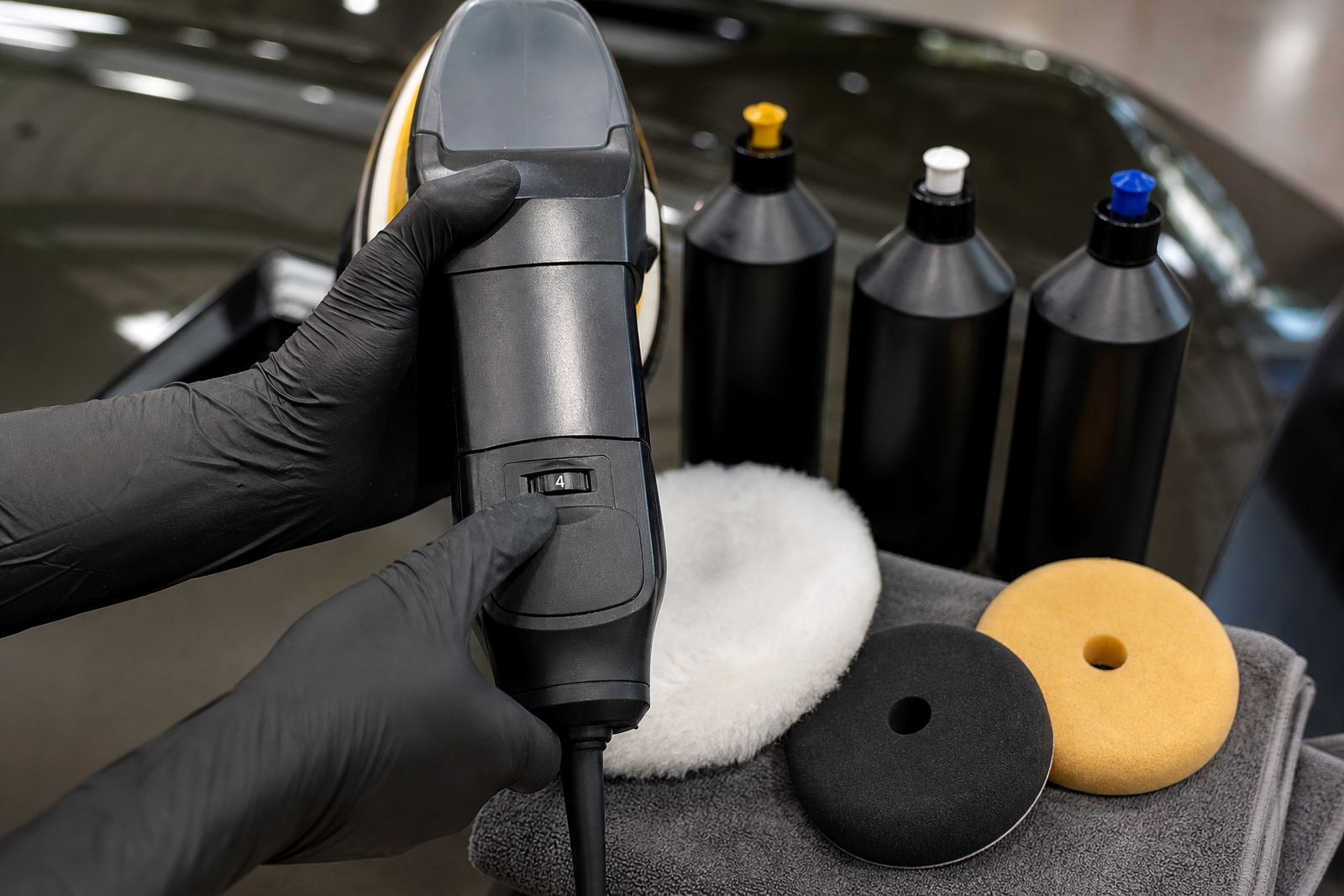
A variable speed polisher is a machine with adjustable speed control so you can match the tool to the surface and the stage of the job. Lower speeds help spread compound, work around edges and reduce heat build-up, while higher speeds are used for faster cutting and more active polishing on suitable surfaces. That control is important on automotive paint, polished aluminium, stainless steel and other metal finishes where too much speed can burn through product or mark the surface.
In practical terms, this type of machine helps the operator move from heavy correction to fine finishing with one tool. A rotary machine gives direct drive and strong cut, which suits experienced users on metal and harder paint defects. A dual-action machine adds a random orbit, so it is more forgiving on clear coat and useful for finishing work, maintenance polishing and safer learning. Both are part of proper polishing work, but the right choice depends on material, pad, compound and the result you need.
For South African workshops, mobile detailers and hobby users, variable speed matters because conditions are not always ideal.Having control over machine speed helps you manage all of that with less guesswork.
Sizes, Machine Types and Common Options
Variable speed polishers are usually chosen by pad diameter, power range and the style of work they are meant to do. Smaller machines are easier to control on narrow panels, motorcycle parts, trim and tight metal sections. Larger machines cover more area on bonnets, doors, tanks and boat fittings, but they need steadier handling and better pad discipline.
- Compact machines: suitable for tight spaces, badges, mirrors and localised paint work
- Mid-size machines: a practical choice for most car finishing and general metal polishing
- Large head units: used where faster coverage is needed on broad panels or larger metal surfaces
- Rotary polishers: strong cutting action, ideal for trained users and heavier correction
- Dual-action polishers: safer for beginners and finishing work on paint, with lower risk of holograms
Most variable speed models include a soft-start function, trigger lock or speed dial, and a side handle or loop handle for better control. A backing plate sized to the pad is important because the wrong match can cause vibration, uneven pressure or premature pad wear. If you are working in a body shop in Germiston, a panel beating bay in Pretoria or a detailing bay in Cape Town, the machine should suit the size of the job and the skill level of the operator.
Where This Polisher Suits Best
This product suits a wide range of finishing tasks. On vehicles, it is used for paint correction, swirl removal, oxidation cleanup and final gloss work. On metal, it helps refine stainless steel, aluminium, brass and painted or coated surfaces where a cleaner finish is needed. It is also useful for restoration work on vehicle parts, tanks, toolboxes, marine fittings and decorative metal.
In many workshops the same machine is used for more than one stage, but the pad and compound must change with the task. A cutting pad with an aggressive compound can remove sanding marks or oxidation, while a medium pad and finishing compound can bring up the final shine. When working on automotive paint, the safest approach is to test a small section first, check residue, and keep the machine moving so heat does not build too fast. On metal, use a steady pattern and inspect the surface in good light before moving on.
This is a practical choice for hobby users who want better control than a basic fixed-speed machine, and for professionals who need a dependable unit for daily use. Whether you are polishing at home in Bloemfontein or running a workshop on the East Rand, variable speed gives you more control over the process and the finish.
Power, Setup and Workshop Use
Most variable speed polishers run on standard mains power rather than gas. In a workshop, make sure the supply is steady and that any extension lead is suited to the load. An erratic feed can lead to poor output, speed changes or overheating.
Before use, inspect the cable, plug, backing plate and pad. Fit the correct pad size, then apply a small amount of compound rather than loading the pad too heavily. Start at a low speed and increase only as needed. Keep the tool flat enough to work evenly, and avoid letting the edge of the pad dig into corners or raised body lines. On curved panels, use lighter pressure and shorter passes.
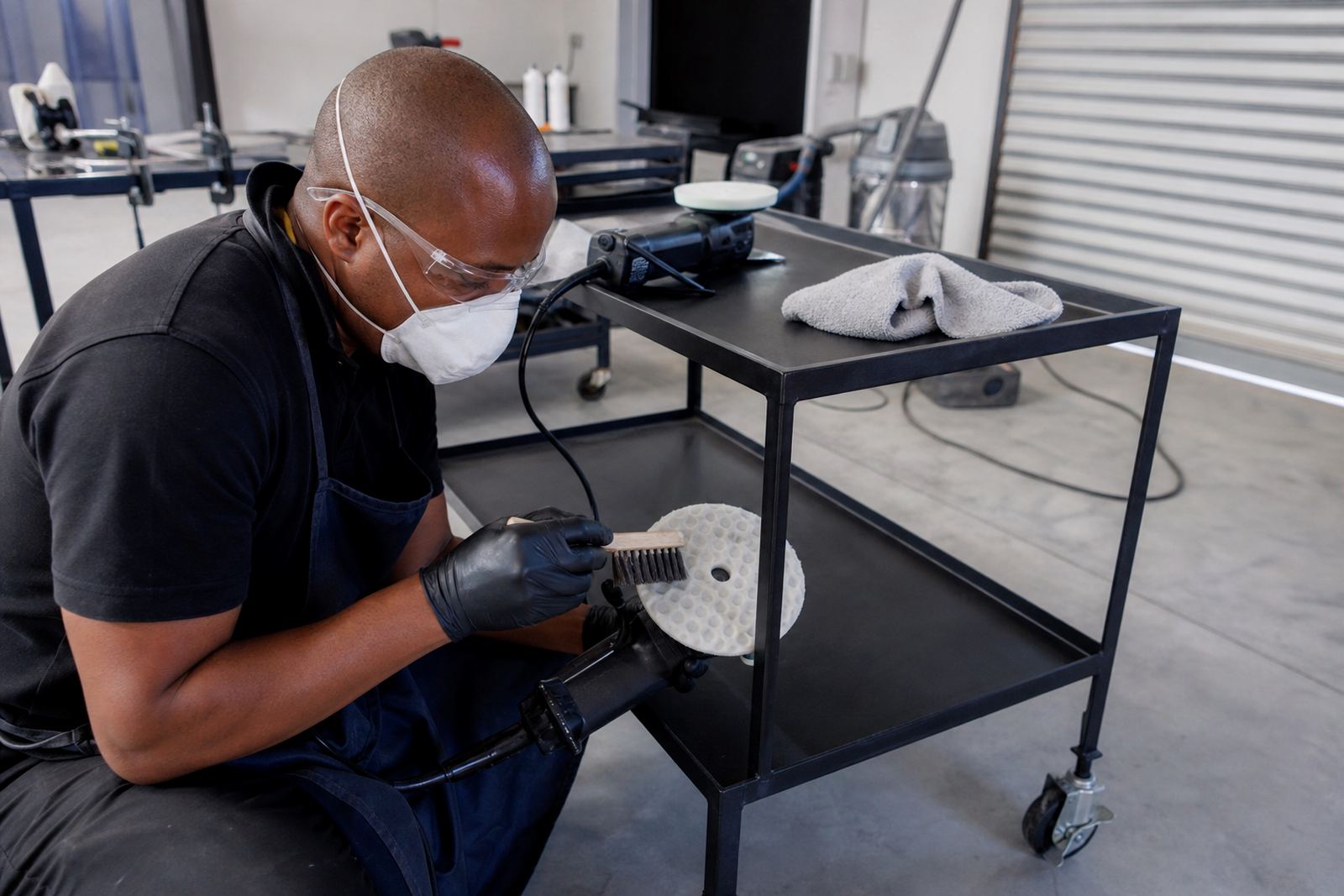
- Use PPE such as eye protection, a dust mask or respirator, and gloves where suitable
- Keep loose clothing and cords clear of the rotating pad
- Work in a well ventilated area to reduce dust and compound mist
- Clean pads often so dried residue does not scratch the surface
For paint correction and metal finishing in busy Gauteng workshops, good lighting and a clean bench area make a big difference. A small slip in preparation can cost time later, so surface cleaning matters before the first pass.
Care, Servicing and Long-Term Use
A variable speed polisher lasts better when it is cleaned after every job. Brush or blow out dust, wipe the housing, and check the pad face for build-up. If the backing plate starts wobbling, the machine sounds rough, or the speed control feels uneven, stop and inspect it before the next session. Bearings, brushes and switches wear with use, especially in shops that run the machine every day.
Pad care is just as important as machine care. A clogged pad can make the tool run hotter and finish poorly. Wash foam pads properly, keep wool or microfibre pads free of dried compound, and store them so they do not pick up grit. For metal work, residue left on the pad can mark the next panel, so a clean pad is not optional.
If the machine is used in a coastal area such as Durban or Cape Town, wipe away moisture and store it in a dry place to reduce corrosion. In humid conditions, cords and fittings need a quick inspection more often. We also advise customers on basic machine care guidance, because a simple routine helps the tool stay consistent and reduces avoidable downtime.
What to Check Before You Order
When choosing a variable speed polisher, check the work you want to do, the surface type and the skill level of the operator. A beginner may be better with a dual-action unit, while a trained user doing heavy defect removal on metal may prefer a rotary machine. The pad size, machine weight, speed range and handle style all affect comfort and control.
- Speed range and whether it includes a low enough setting for finishing
- Backing plate and pad compatibility
- Machine weight for overhead work or long sessions
- Cable length and power requirements for your bay or mobile setup
- Availability of matching buffs, compounds and spare consumables
- Support for training, setup advice and workshop use
We help customers across Johannesburg, Pretoria, Cape Town, Durban and Bloemfontein with product selection, pad and compound matching, starter kit consultation and practical training. If you are not sure which machine fits your job, send an enquiry through the contact page and we can talk through the surface, the finish level and the type of work you do. That saves time and helps you order the right unit first time, instead of guessing and hoping it will do the job.
Key facts
| Machine type | Variable speed rotary or dual-action polisher |
|---|---|
| Speed control | Adjustable dial for low to high operating speeds |
| Power source | Mains power, no gas line |
| Common pad sizes | 125 mm and 150 mm backing plate options |
| Typical use | Paint correction, metal polishing and finishing work |
| Included support | Training guidance, pad matching and starter kit advice |