
What A Pad Cleaning Brush Does In Daily Polishing Work
A pad cleaning brush is a hand tool used to remove loaded compound, paint residue, metal polish and fine dust from the face of a polishing pad while the pad is in use or after a pass. When a pad becomes clogged, it stops biting evenly and can leave hazy marks, heat spots or an inconsistent finish. Clearing the pad keeps the contact surface open so the fibres, foam cells or wool strands can do their work properly.
In practical terms, it supports better control on both rotary and dual-action polishers. On a rotary machine, a clean pad helps manage cut and finish by keeping product spread more even. On a DA machine, it reduces pad matted-up build-up that can slow down correction and make the machine feel grabby. For body shop work, detailing, and metal finishing, that matters because a clogged pad can force you to do extra passes and waste compound.
The brush is not a replacement for pad washing, but it is the quickest way to keep the pad open between sections. It is especially useful on long jobs, on hot days in Gauteng, or where dust from cutting compounds can settle onto the pad and interfere with the finish.
Pad Types, Sizes And Options To Match Your Machine
Pad cleaning brushes are usually hand-held and come in compact sizes that fit easily into a trolley, toolbox or detailing bag. Most workshops use one brush for foam pads and another for wool or fibre pads because each pad type responds differently. Foam pads need light brushing to lift residue without tearing the surface. Wool pads can take firmer brushing to release spent product from deep within the fibres.
A polishing brush is a simple non-electric support tool that helps keep the job moving in a busy workshop or mobile setup. It is easy to use, easy to maintain, and does not take up a plug point.
- Compact brush for spot cleaning pads between passes
- Firm bristle version for wool and heavy cut pads
- Softer bristle version for foam finishing pads
- Ergonomic handle for gloved use
- Lightweight body for carry bags and workshop drawers
Some users prefer a brush with a shaped grip, while others want a straight handle that is easy to flick across the pad face. Either way, the aim is the same: remove residue without damaging the working surface.
Where It Suits Metal And Paint Polishing Jobs
This tool suits a wide range of finishing work, from vehicle paint correction to stainless steel, aluminium and mild steel polishing. In car work, it helps when moving from one panel to the next, especially where compound starts to dry on the pad. In metal work, it is useful during buffing stages where black residue, oxidation and polishing paste can quickly load the pad.
It suits workshops, valeting teams, coachbuilders, fabrication shops, restorers and hobby users who want cleaner results. In humid coastal areas like Durban and Cape Town, residue can behave differently from inland workshops, so keeping the pad clear becomes even more important. The same applies when working in a dusty spray booth or outside in windy conditions where airborne particles can settle onto the pad face.
For beginners, the brush also helps build better habits. Instead of forcing a loaded pad harder onto the surface, you clean it and continue with more even pressure. That reduces sling, lowers heat and gives a more predictable finish, which is important when learning paint correction or metal buffing technique.
- Paint correction and gloss finishing
- Metal buffing and final shine work
- Foam, wool and microfibre pad maintenance
- Workshop training and demo sessions
- Mobile detailing and onsite team support
How To Use The Brush Without Damaging The Pad
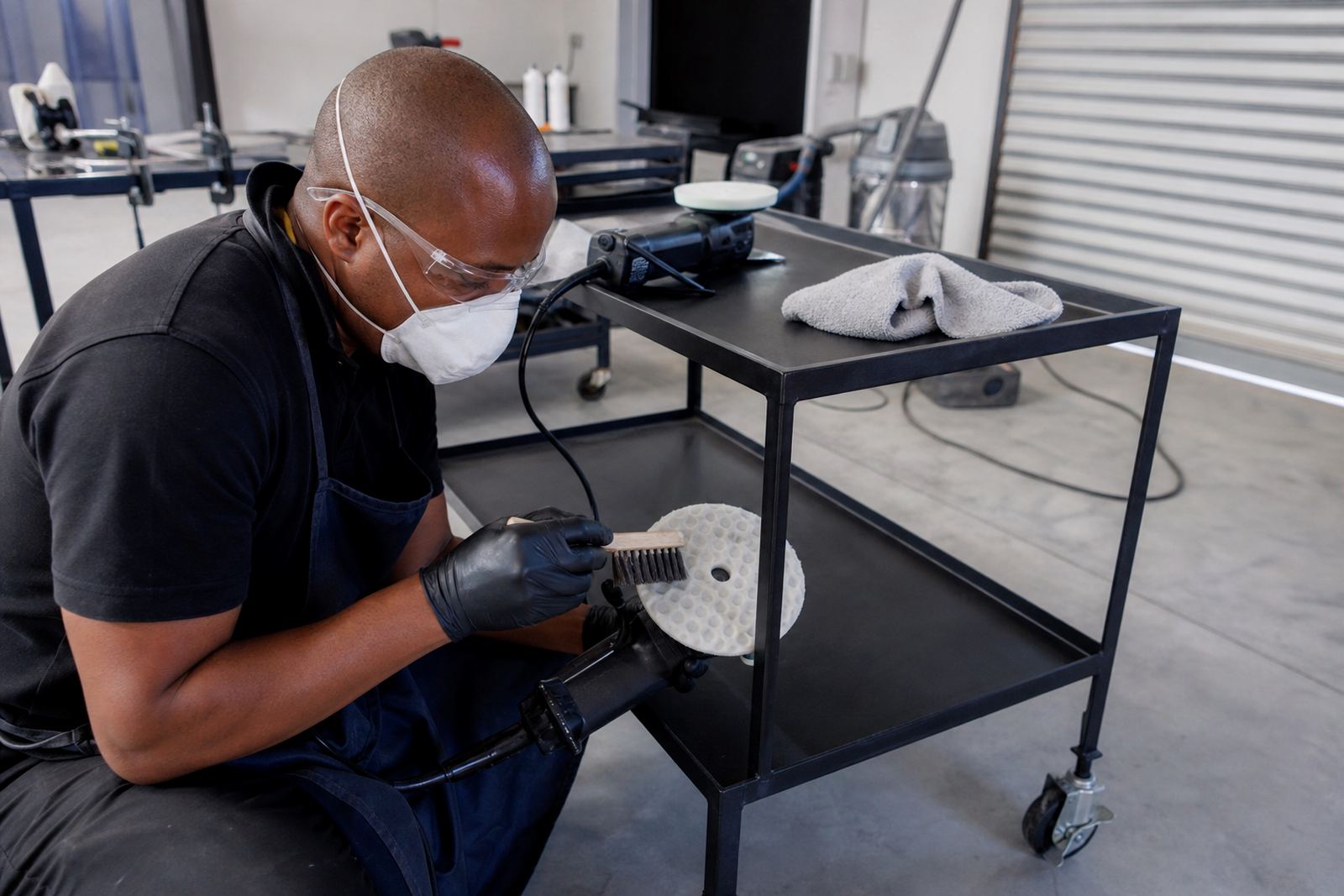
Use the brush with light, controlled strokes across the pad face while the machine is stopped. If the pad is very loaded, tap out loose residue first, then brush from the centre outward. For foam pads, a few passes are usually enough. For wool pads, work methodically through the fibres until the surface opens up again. Do not force the bristles into the backing plate edge or into the centre hole where you may damage the pad or the hook-and-loop backing.
On some polishing tasks, the pad can be briefly cleaned while still on the machine, but only when the machine is off and disconnected from power. Safety first. Keep loose sleeves, jewellery and cloths away from the pad and never brush a moving machine. Wear basic PPE such as eye protection, a dust mask when dry residue is airborne, and gloves where the product or surface is sharp. Dust and compound residue should not be blown around the workshop because it can settle on fresh paint or get into bearings and trim.
A small missing point that matters is timing: clean the pad before it becomes fully matted. Waiting too long makes it harder to recover the cut and can make the work feel more tiring.
Care, Storage And Workshop Cleaning Practice
The brush itself needs very little servicing, but it should be kept clean and dry. Shake off residue after use and store it away from wet compounds, rinse water and solvent spills. If the bristles pick up heavy polish build-up, wipe them down with a clean rag or a light detergent solution, then let them dry fully before storing. That helps prevent hardened residue from scratching softer pads later.
In a workshop, keep the brush in the same place every day so the team can reach it quickly between sections. If you are running multiple machines, label brushes for different pad types or job types. This avoids cross-contamination between metal polishing and paint finishing, especially where darker residues from metal work could mark a light-colour paint pad.
- Keep dry and out of direct spray
- Do not soak wooden or glued handles
- Replace when bristles become bent or uneven
- Keep separate brushes for paint and metal work if possible
- Store with other pad care items for quick access
Good pad care saves time on the next job and supports more consistent finishing across the week.
What To Check Before You Order A Pad Cleaning Brush
When ordering, check the pad types you use most often, the size of the brush head and whether you need a soft or firm bristle option. Also consider how the handle feels in a gloved hand and whether the brush needs to fit into a compact detailing kit or a larger workshop trolley. If your team works on both paint and metal, ask for guidance on which brush suits each stage of work.
It is also worth matching the brush to your local workflow. A busy Johannesburg supply team may need a more durable option for daily use, while an onsite trainer in Bloemfontein may want a lightweight brush that travels well with a starter kit. For customers in Germiston, Pretoria, Cape Town, Durban and the East Rand, the right choice usually comes down to pad type, frequency of use and how much residue you deal with on each job.
When you send an enquiry through the contact page, include the machine type, pad material, and whether you use the brush mainly for cutting, refining or final finishing. That helps us point you toward the right option and avoid buying a brush that is too soft for wool pads or too aggressive for delicate foam.
Key facts
| Product type | Hand-held pad cleaning brush |
|---|---|
| Use | Removes spent compound and residue from polishing pads |
| Suitable pads | Foam, wool and microfibre polishing pads |
| Power requirement | None |
| Electrical requirement | None |
| Typical use | Rotary and dual-action polishing, paint correction and metal buffing |