What a polishing apron does on the workshop floor
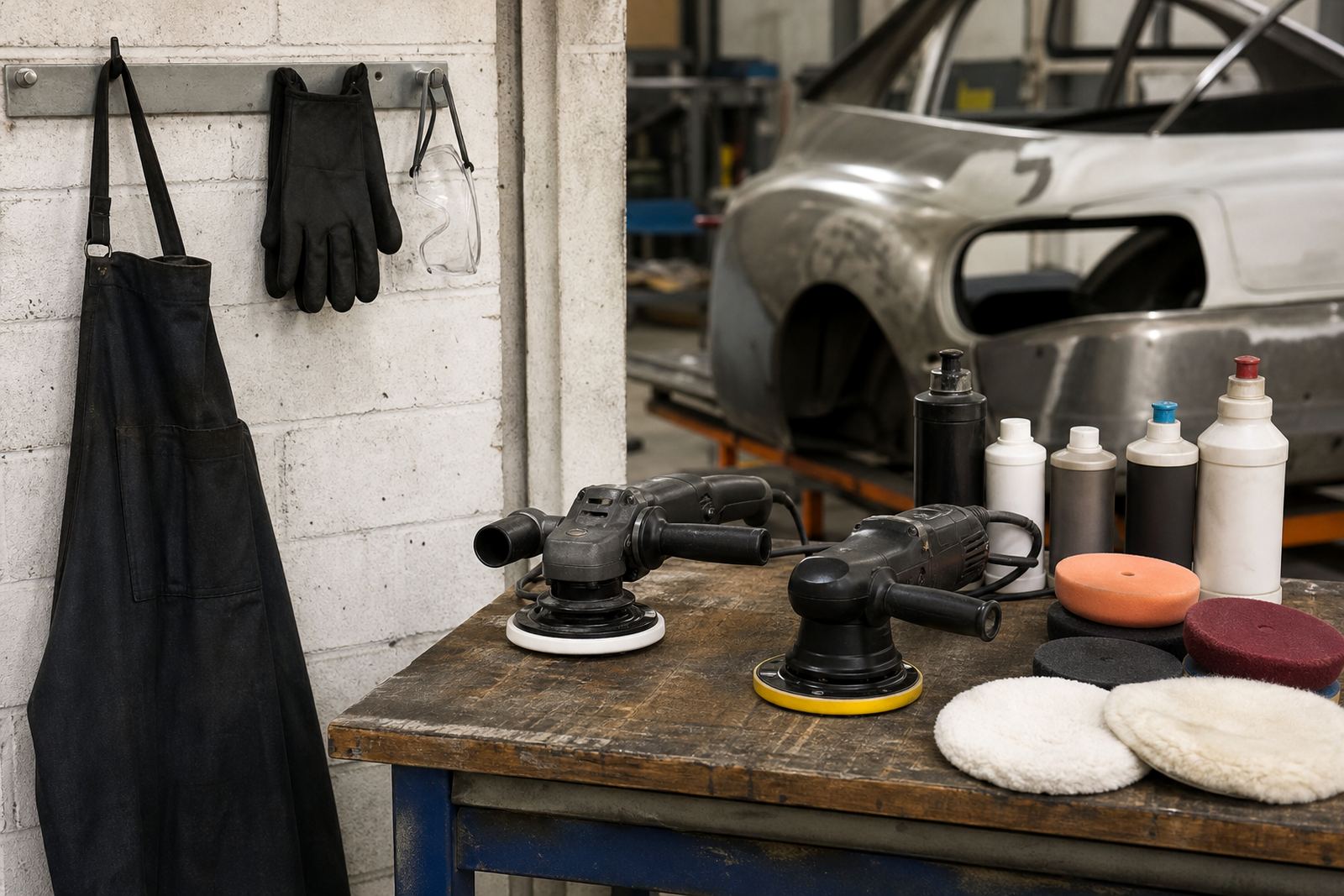
A polishing apron is a practical protective layer worn over normal work clothes during buffing, machine polishing and hand finishing. It helps stop compound splash, residue and fine dust from moving from one panel or metal part to the next, which is important when you are chasing a clean finish on paint, stainless steel, aluminium or plated parts.
That extra barrier is useful around compound tubs, pads and treated parts where stray grit can mark a surface. It does not replace PPE, but it does add another simple line of defence.
Sizing, fit and apron options to look for
Most polishing aprons are chosen for coverage rather than fashion. A good fit should cover the chest, stomach and thighs without hanging so low that it catches on machine cords, stands or moving parts. Adjustable neck and waist straps help different operators use the same apron across a team, and heavier fabric is often better for workshop use than a thin lightweight option.
- Short apron: better for quick hand work and light compound use
- Mid-length apron: common choice for general polishing and buffing
- Full coverage apron: suits busy workshops, training rooms and repeat cleaning jobs
- Adjustable straps: useful when more than one operator uses the same kit
For metal finishing, choose a style that can handle oily residue and fine swarf. For paint correction, a smoother surface finish on the apron is helpful because it sheds residue more easily and is simpler to wipe down between vehicles.
Where it suits best in Germiston and beyond
This product suits metal fabrication shops, detailing bays, training workshops and mobile operators working across Germiston, Johannesburg, Pretoria, Cape Town, Durban and Bloemfontein. It is especially helpful where people handle both rough and fine finishing jobs in the same day, because contamination control becomes much harder when one apron is used across multiple tasks.
It also helps in coastal conditions where humidity can make residue cling to clothing and tools. In inland areas such as Gauteng, dust from open workshop doors and yard movement can still settle onto work clothes and then onto polished surfaces. A clean apron gives operators one less thing to worry about before they start the next pass.
- Metal buffing benches
- Paint correction bays
- Training sessions and starter kits
- Mobile jobs on site or in client yards
Installation, use and power needs
There is no electrical installation to arrange. A polishing apron is worn, adjusted and put into service straight away. No power supply or compressor connection is needed. That makes it easy to add to a starter kit, workshop pack or mobile service bag without changing the rest of the setup.
For best use, put the apron on before handling compound or touching freshly prepared surfaces. Keep pockets clear of loose pads, coins and abrasive fragments, and avoid leaning your front against a finished panel. If the work area uses rotary or dual-action polishers, the apron should sit close enough to the body to avoid snagging but loose enough for comfortable movement. A good operator still needs gloves where appropriate, eye protection and a dust mask when dust is present.
Care, cleaning and service life
Clean the apron after compound work before the residue hardens. Most aprons can be wiped down after each shift and washed regularly depending on the fabric. If the apron carries heavy metal dust, blow off loose debris in a safe area first, then wash it away from clean finishing gear so grit does not move back onto pads or soft cloths.
Check straps, stitching and pocket seams often. A torn seam can catch on machine cords or allow residue to drop onto a panel. Replace an apron when it no longer covers properly or when the fabric becomes stiff with built-up compound. In busy Gauteng workshops, an apron that is used daily may need more regular inspection than one kept for training days only.
- Wipe off fresh compound before it dries
- Keep it separate from clean polishing cloths
- Wash it away from finishing parts and pads
- Inspect straps, seams and pocket edges often
What to check before placing an order
Before ordering, check the size, fabric weight, coverage and strap layout. If your team works on both paint and metal, confirm whether the apron is smooth enough to reduce lint and easy enough to clean after oily work. Also check whether you need a single operator apron or a batch for training and workshop use.
For buyers setting up a finishing bay, it helps to match the apron with your compounds, buffs and machine type. Rotary work often throws more residue, while dual-action work can create more fine dust in some stages, so the apron should support the full process rather than only one task. If you are unsure what suits your setup, use the enquiry form on our contact page and ask for practical guidance based on your work area and material type.
- Coverage across chest, lap and thighs
- Straps that suit different body sizes
- Fabric that handles compound and dust
- Pockets that do not trap grit or loose items
- Easy care for daily or weekly cleaning
For teams in South Africa, the right apron is a small purchase that can save time on cleanup and help keep finishing work consistent. It is one of those items that only gets noticed when it is missing, especially during long buffing sessions or when a job needs to move from prep to final polish without contamination getting in the way.
Key facts
| Product type | Protective polishing apron for compound, buffing and finishing work |
|---|---|
| Main use | Reduces contamination transfer and keeps operators cleaner during polishing |
| Material options | Heavy-duty workshop fabric or wipe-clean finishing fabric, depending on setup |
| Fit | Adjustable neck and waist straps for single or shared use |
| Coverage | Chest to thigh coverage, with longer options for workshop use |
| Power need | None, worn manually with no electrical connection required |