What this finishing compound is for
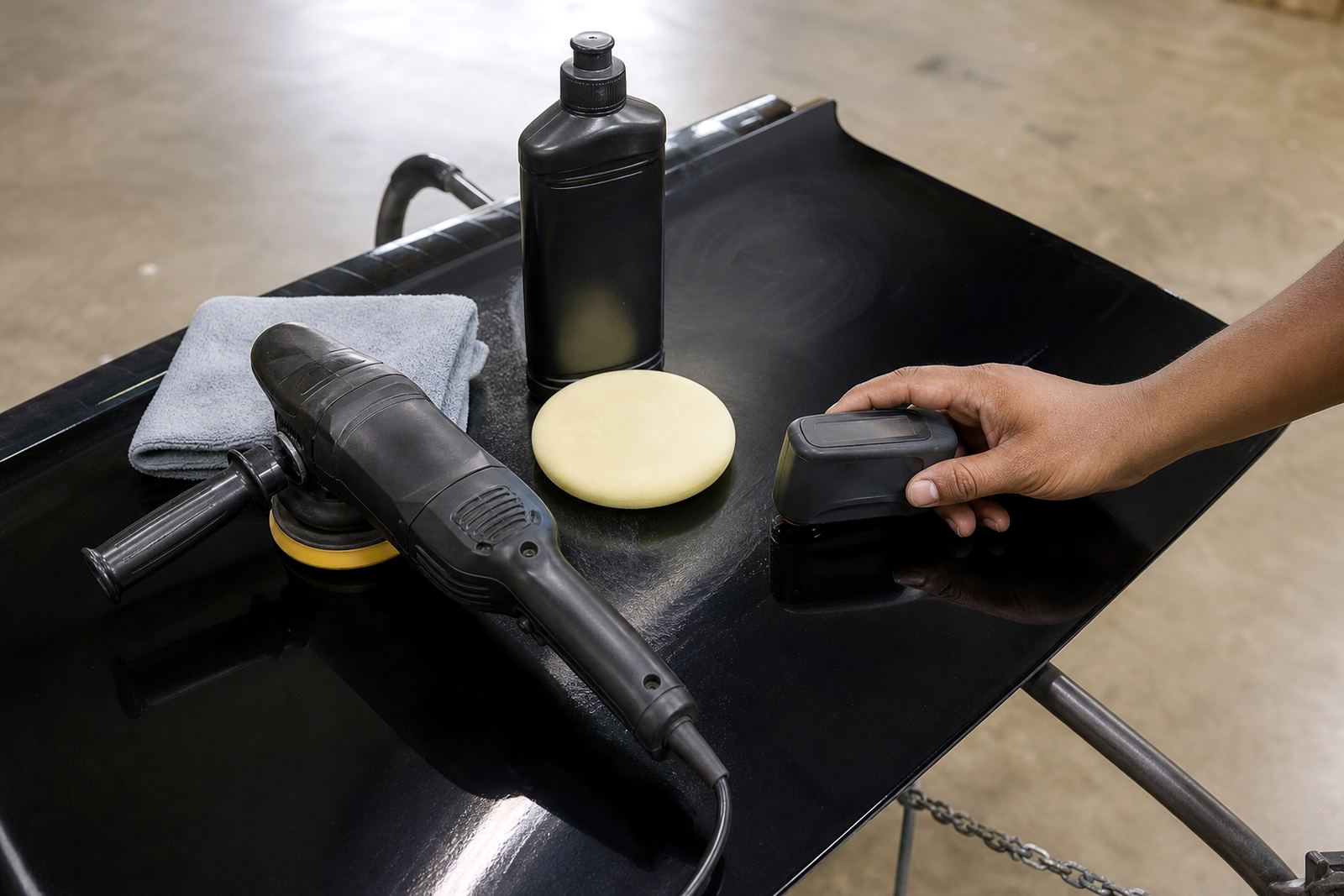
A finishing compound is the last polishing step after heavier cutting or correction has already done the hard work. It uses a finer abrasive cut to remove light holograms, micro-marring, buffer trails and the soft haze that can remain on clear coat, gel coat or polished metal. The aim is not heavy correction but a cleaner, brighter finish with less texture in the surface.
In normal workshop use, this type of compound suits paint correction on passenger cars, bakkies and motorcycles, as well as metal finishing on stainless steel, aluminium and brass where a clean sheen is required. It is also useful when a surface has already been sanded and needs refinement before sealing, waxing or coating. For many users, this is the point where the job starts to look proper.
Because South African conditions vary from coastal humidity in Durban to dry, dusty work in Gauteng, the final polish needs to be controlled. Too much pressure or a pad that is too aggressive can leave haze, so the operator has to watch heat, pad movement and residue removal carefully, especially on dark paint where defects show up fast.
How it works with rotary and dual-action machines
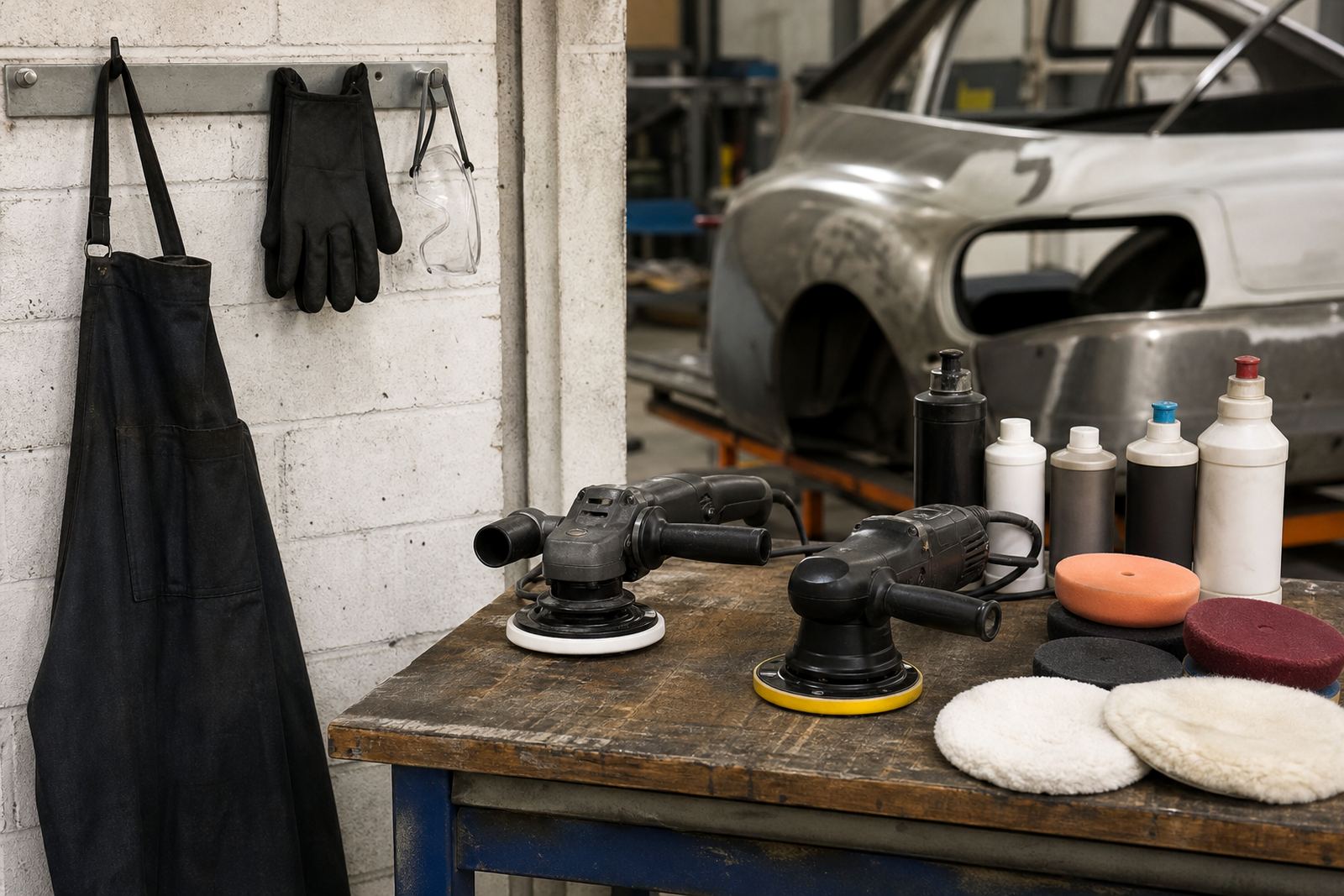
This compound can be used with a rotary polisher for experienced operators who want direct control and a higher level of surface correction. A rotary turns in one direction and can generate more heat, so it is suited to users who understand pad selection, machine speed, working area size and the risk of burning edges or sharp body lines. On metal, rotary work is common where a consistent finish is needed over a larger flat area.
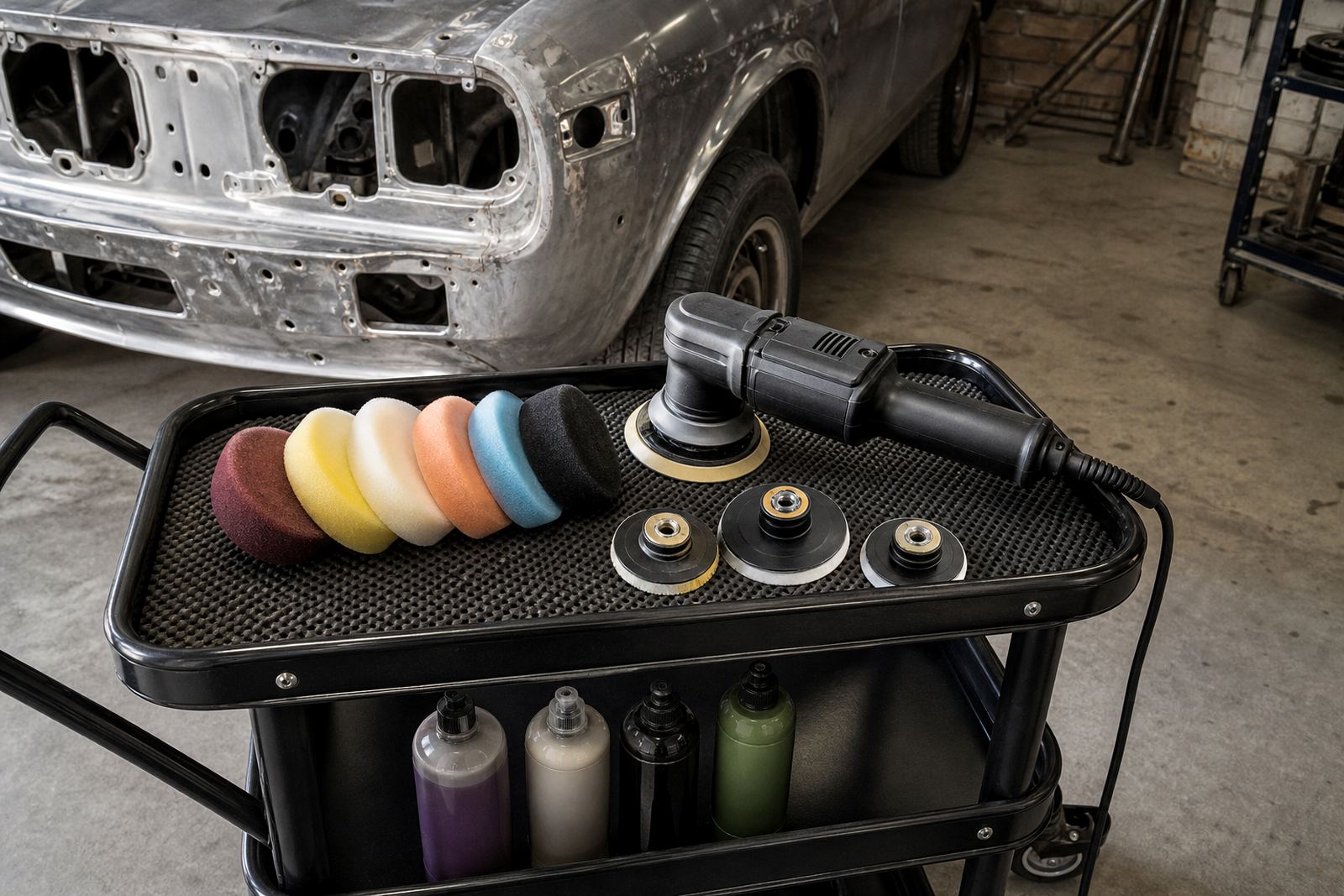
It also works well with a dual-action machine, which combines orbit and rotation to reduce the chance of marking the surface. For beginners and mixed workshop teams, a DA machine is often easier to manage on modern clear coat. It is a good choice for final glossing on vehicles that have already been corrected with a medium compound or a finishing polish. The result depends on technique, not just the bottle.
- Use a clean finishing pad matched to the machine type
- Work small sections at a time, usually 40 cm by 40 cm or smaller
- Keep pads flat to the surface, especially on curves and edges
- Wipe residue before it dries hard on the panel
- Do a test spot first to check cut and gloss before committing to the whole vehicle
Typical sizes, pack options and workshop fit
Finishing compound is usually ordered in sizes that suit both hobby users and proffessional workshops. A smaller container is useful for one-off correction jobs, while larger packs suit detailers, panel shops and metal finishing teams that use compound daily. In practice, the right size depends on your monthly use, the number of vehicles or items you process, and whether you are correcting paint, polishing bare metal, or doing both.
At Polisher in Germiston we help customers choose a pack that fits their workflow. A starter user in the East Rand may only need enough for a few cars and some practice panels, while a workshop in Johannesburg or Pretoria may use more product on a weekly basis.
- Smaller pack: suitable for trial use, training and occasional detailing
- Mid-size pack: practical for regular private use or a small workshop
- Bulk pack: better for repeat finishing work and team use
- Batch choice: useful where the same product must be kept consistent across jobs
Where it suits best on paint and metal
This product suits final-stage work on fresh correction, after sanding marks have been reduced and the surface only needs refinement. On automotive paint, it is used to improve gloss after compounding, especially on darker colours where buffer trails and light haze can be seen under strong sun. On metal, it helps refine stainless steel, aluminium trims, decorative panels and fabricated parts that need a cleaner finish before protection.
It is also useful in body shops, accessory fitting bays and metalwork workshops where the goal is a neat, even finish rather than heavy material removal. If you are working near the coast, wiping down properly after polishing matters because humidity and salt in the air can affect the final look if residue is left behind. For indoor workshops, dust control is just as important, because fine dust can scratch the panel again after all that effort.
For best results, the surface should already be clean, dry and free of loose grit. Mask edges, badges and plastic trim where needed. If the job involves fresh paint, confirm that the coating has cured enough for polishing before starting. Rushing a young finish can mark it fast, and once the surface is dull you are backtracking.
Setup, power needs and safe working practice
The compound itself has no power needs, but the machine and work area do. Rotary and DA polishers usually run on mains electricity, so workshop users should check cable condition, plug safety and extension lead rating before starting.
Good polishing practice matters as much as the product. Use eye protection, a dust mask when sanding residue or dried compound may be airborne, and gloves if the job involves sharp edges or solvent cleaners. Keep loose clothing clear of rotating pads. Never polish next to open grinding dust, and avoid working on unstable stands or uneven surfaces. A clean bay saves time and reduces rework.
- Check the backing plate and pad fit before switching on
- Inspect power leads, switches and speed control settings
- Keep a separate towel for final wipe-downs
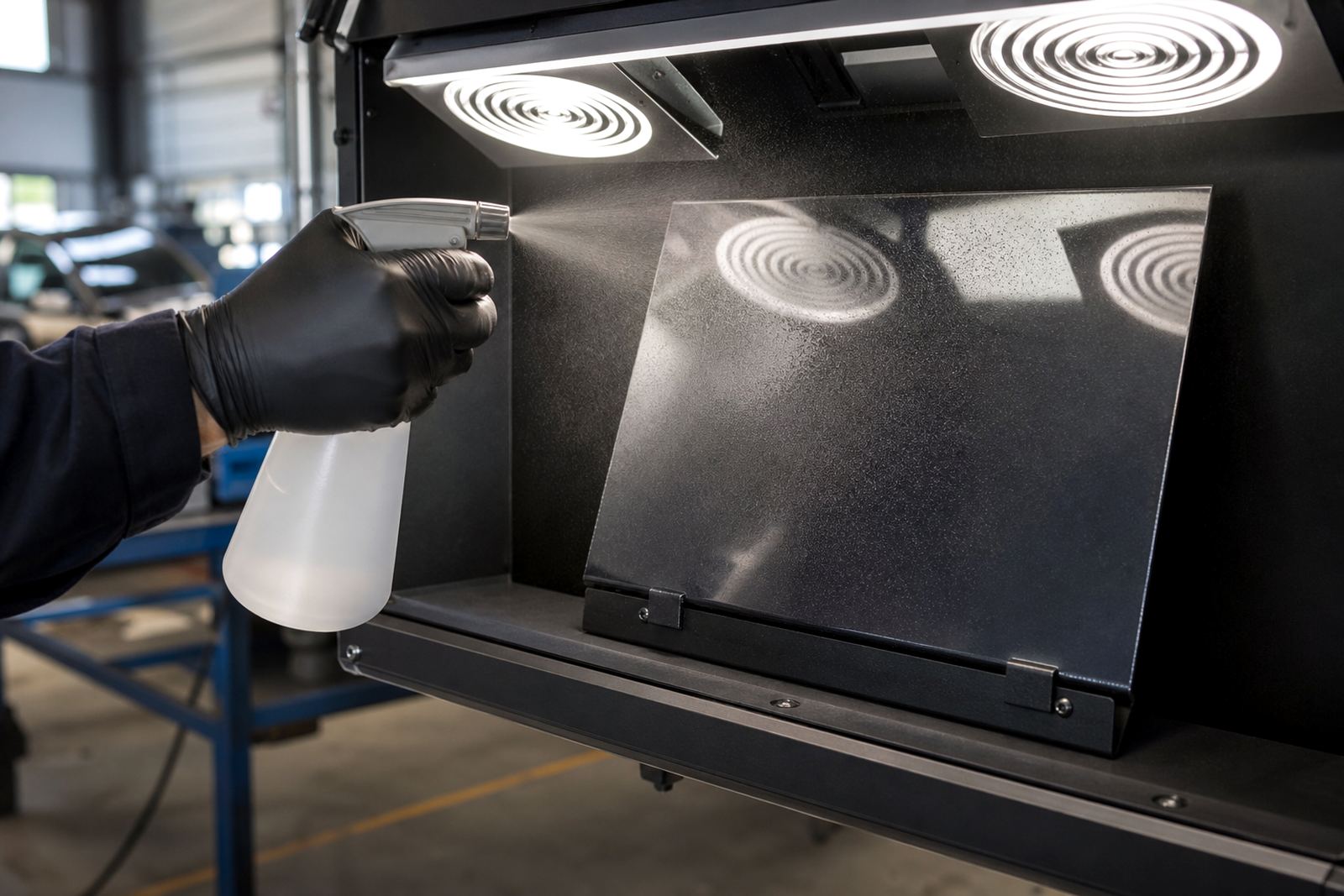
- Use lighting that shows swirls from different angles
- Allow the panel to cool between passes if heat builds up
Care, servicing and ordering checks
To keep the compound performing well, close the lid after use and store it away from direct sun and heat. Do not let water enter the container, and do not mix old residue back into the product because grit can spoil the finish. If a batch has thickened or separated badly, do not use it on a final-stage job. The pad also needs care, since a dirty pad can leave haze even when the compound is still good.
When ordering through our enquiry form, check the finish you want to achieve, the type of machine you use, and whether the job is on paint or bare metal. It also helps to confirm the container size, the surface area you need to cover, and whether you need advice on pad matching or starter kit selection. If you are training staff in Johannesburg, Pretoria, Cape Town, Durban or Bloemfontein, we can also help with practical setup advice so everyone uses the same process.
Our Germiston base has supported South African users with compound selection, training and consumables planning. Mandla Sipho Dlamini leads the business with Karen van Wyk, Thabo Ngwenya, Ayesha Mokgatle, Johan Liebenberg and Lerato Hartnick working across supply, technical support and training. If you need a cleaner final finish and clear guidance on how to get there, this is the compound stage to get right.
Key facts
| Product type | Fine finishing compound for final gloss refinement |
|---|---|
| Use stage | After cutting or correction, before sealant or wax |
| Compatible machines | Rotary polisher and dual-action polisher |
| Suitable surfaces | Automotive paint, clear coat, stainless steel, aluminium and other finished metal |
| Key effect | Improves gloss, reduces haze and light marring |
| Application note | Best used with a clean finishing pad on small sections |