
Compact Dual-Action Control for Tight Panels
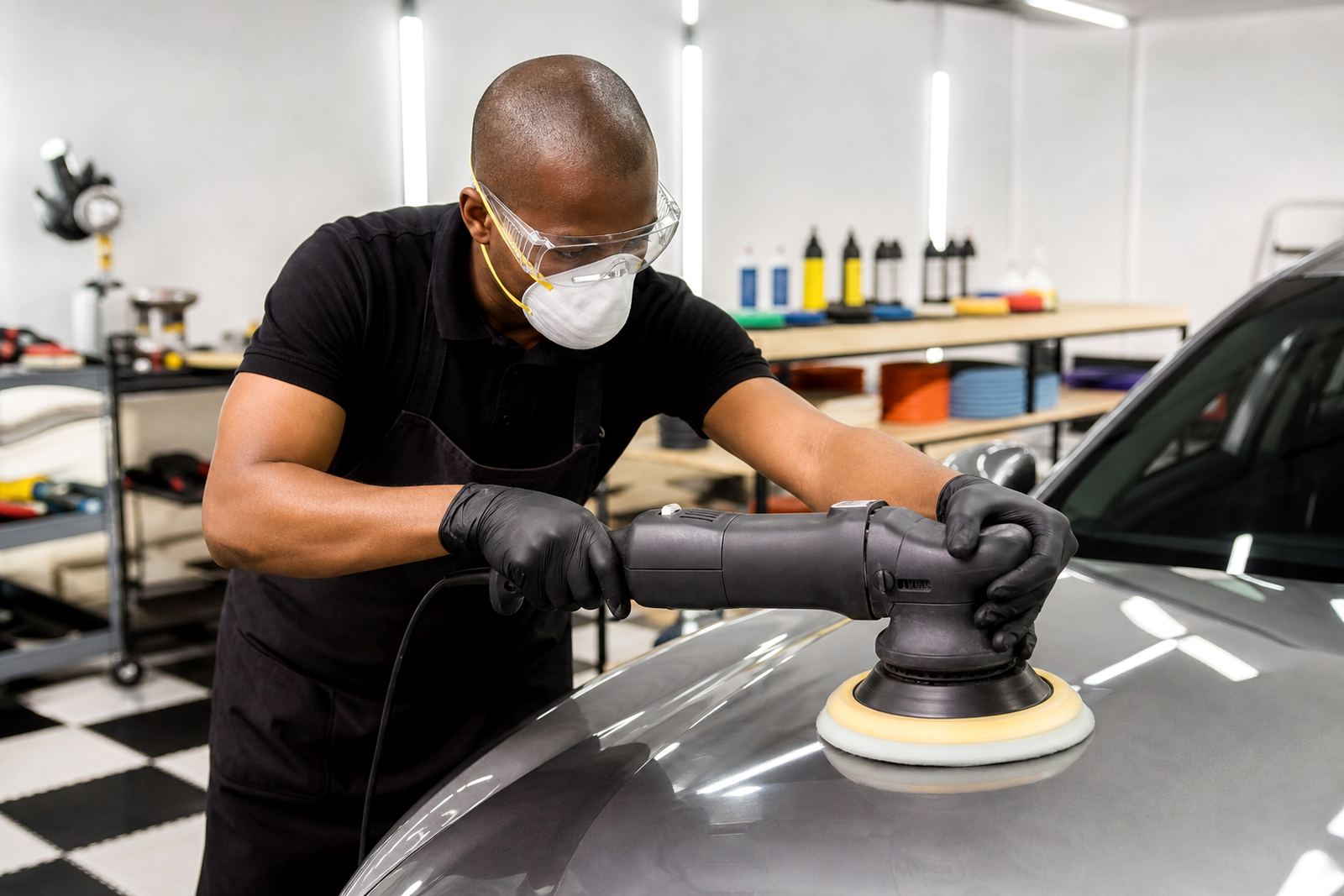
A mini dual-action polisher uses a small orbiting backing plate to move the pad in a random pattern while reducing the risk of heat marks and strong buffer trails. That makes it useful on narrower sections where a rotary machine can be too aggressive, especially on fresh paint, clearcoat touch-ups and curved body lines. For Germiston workshops and mobile operators working across Johannesburg, Pretoria or the East Rand, the smaller head gives better access around grilles, wheel arches and side mouldings.
On a car, this type of machine is usually chosen for bumpers, A and B pillars, spoilers, mirror caps, bonnet vents and the narrow strips around trims. On metal finishing work it can also help on smaller stainless, brass or aluminium sections where control matters more than pressure. It is not a heavy cutting tool, so the best results come from patient passes, the right pad and a matched compound or polish.
Typical Sizes, Pads and Machine Options
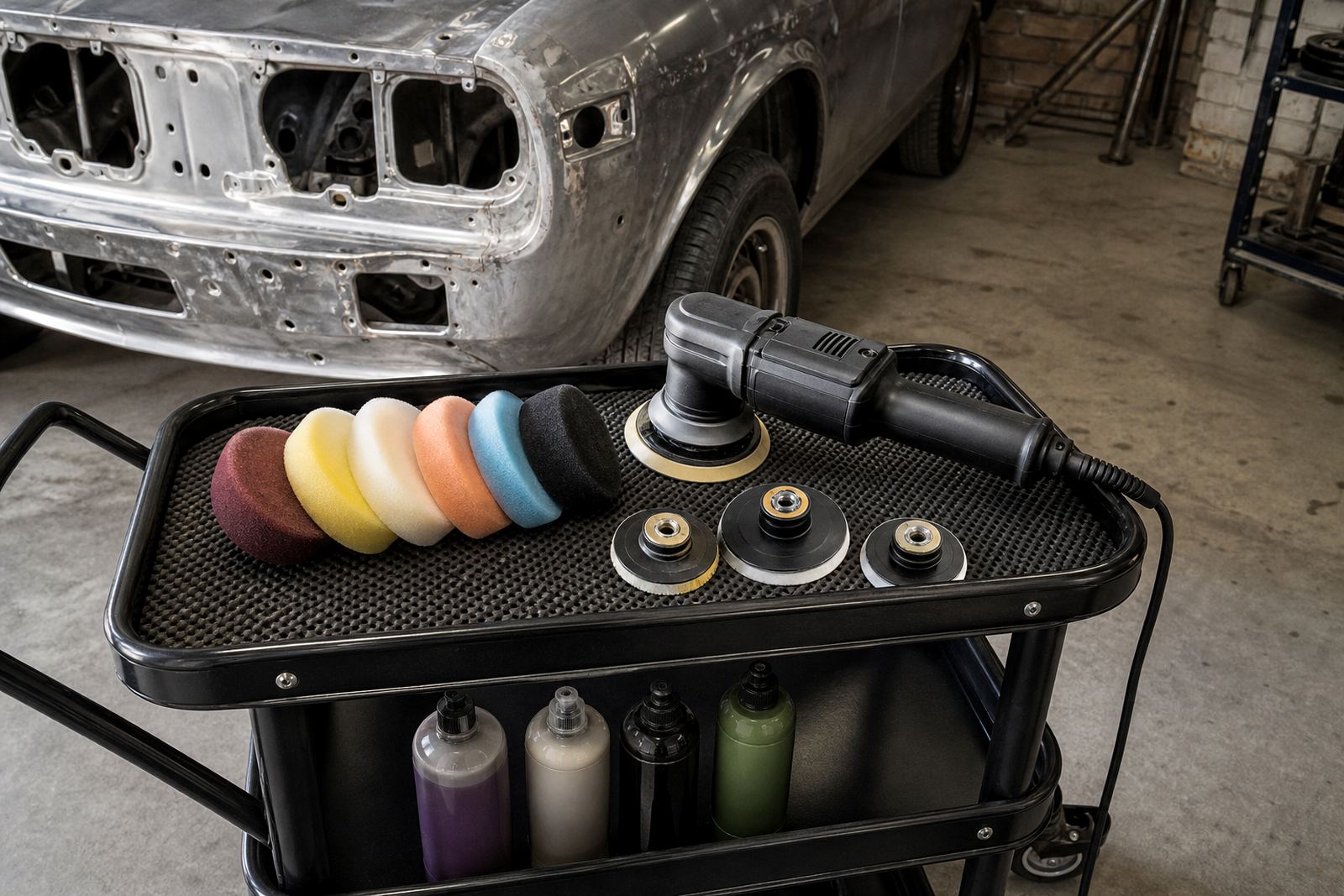
Mini DA polishers are commonly supplied with backing plates in the 2 inch to 3 inch range, with matching foam, microfibre or wool pads. A smaller pad works better on tight curves and edges, while a slightly larger pad covers more area on flat sections and can speed up work on doors or boots. When choosing a unit, look at orbit size, speed range, handle layout and how easy it is to change pads during a job.
- Backing plate sizes: 2 inch, 2.5 inch or 3 inch, depending on the panel shape
- Speed control: variable speed for finishing, light correction and compound work
- Orbit: small throw for control on narrow painted areas
- Grip: side handle or compact body for one-handed balance on awkward curves
- Pad types: foam cutting, polishing and finishing pads, plus microfibre options for selected jobs
For most users, a mini DA works best as a support machine alongside a larger polisher. It fills the gap when a full-size pad cannot sit flat or when a detail section needs local correction without touching the full panel.
Where It Suits in Bodyshops and Detailing Work
This machine suits paint correction on smaller sections where precision matters. It is useful on bumpers after repair, on spoilers that sit close to bodywork, and on pillars where you need to work around rubber trims and badge surrounds. In coastal towns such as Durban and Cape Town it is also practical for maintaining gloss on exposed edges that pick up road film and salt sooner than the main panels.
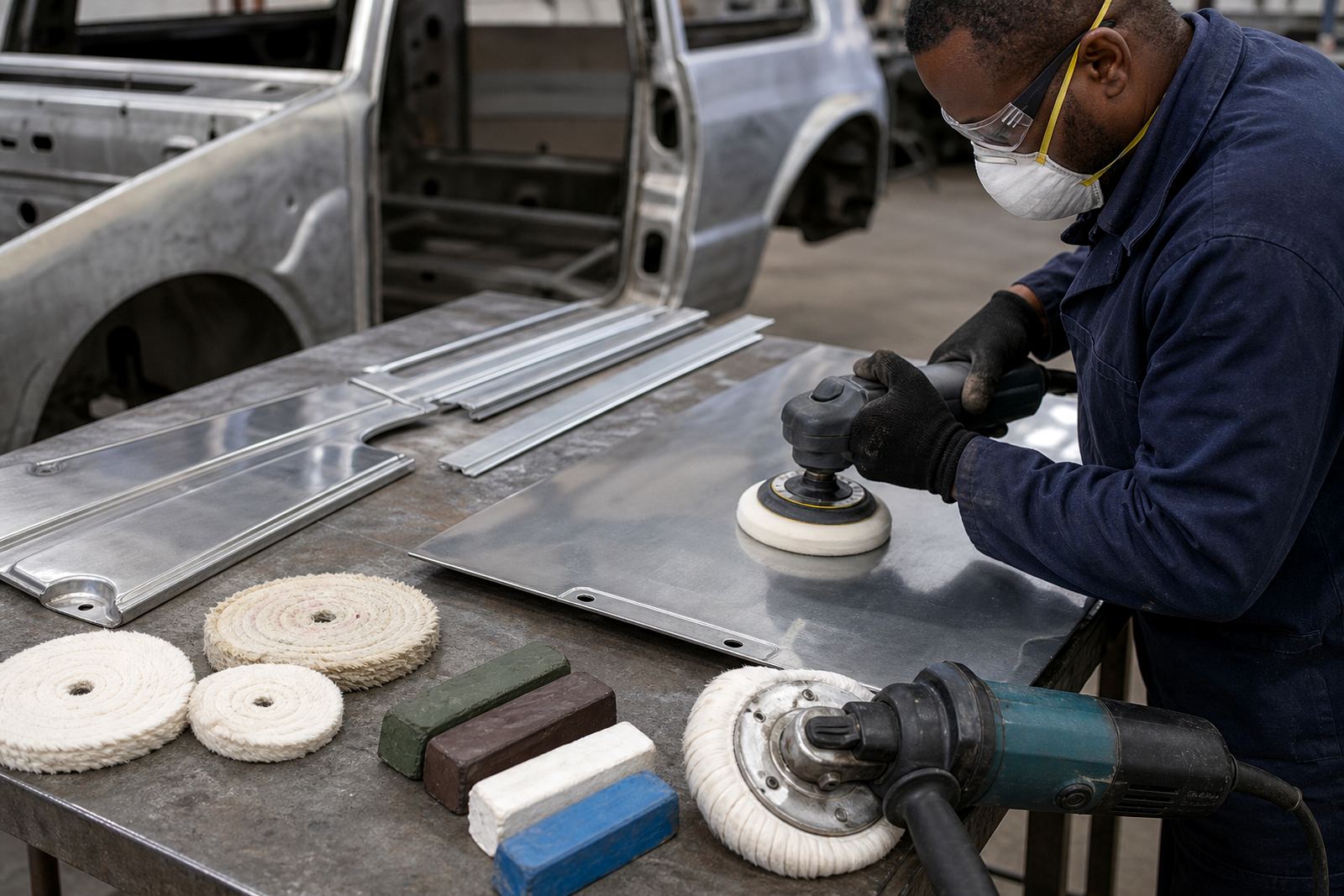
For metal finishing, the same machine can be used on selected decorative parts, brackets and covers where a controlled finish is needed without flattening detail. Good results depend on clean surfaces, correct pad choice and careful technique. Do not force the machine into sharp corners or across exposed edges, because that can thin paint quickly. A small slip here can save a costly respray later.
- Best for bumpers, spoilers, mirror caps, pillars and vent surrounds
- Useful on small repaired areas and localised scratch refinement
- Suited to paint correction, light finishing and final gloss work
- Handy for detailers, panel shops and careful home users
Power Needs, Workspace Setup and Practical Use
The Mini DA Polisher is an electric tool and needs a suitable mains supply or a proper workshop power point.Use a grounded supply where possible, keep cables clear of wet floors and make sure the work area has enough light to see swirls, haze and sanding marks. Onsite work should also factor in compressor use, battery chargers and other machines sharing the same circuit.
No supply is required. A clean, dry workspace helps performance and extends pad life, especially in humid coastal conditions where compounds can grab or pads can load up faster. Before starting, wash and decontaminate the panel, dry it properly and tape off sharp edges, badges and textured trims. For best control, start at low speed and build up only as needed.
- Runs from standard electrical power, with no air line needed
- Works best on clean, dry panels with good lighting
- Use masking tape on sharp edges and adjacent trims
- Allow for with backup lighting or planned work windows
Care, Cleaning and Servicing Between Jobs
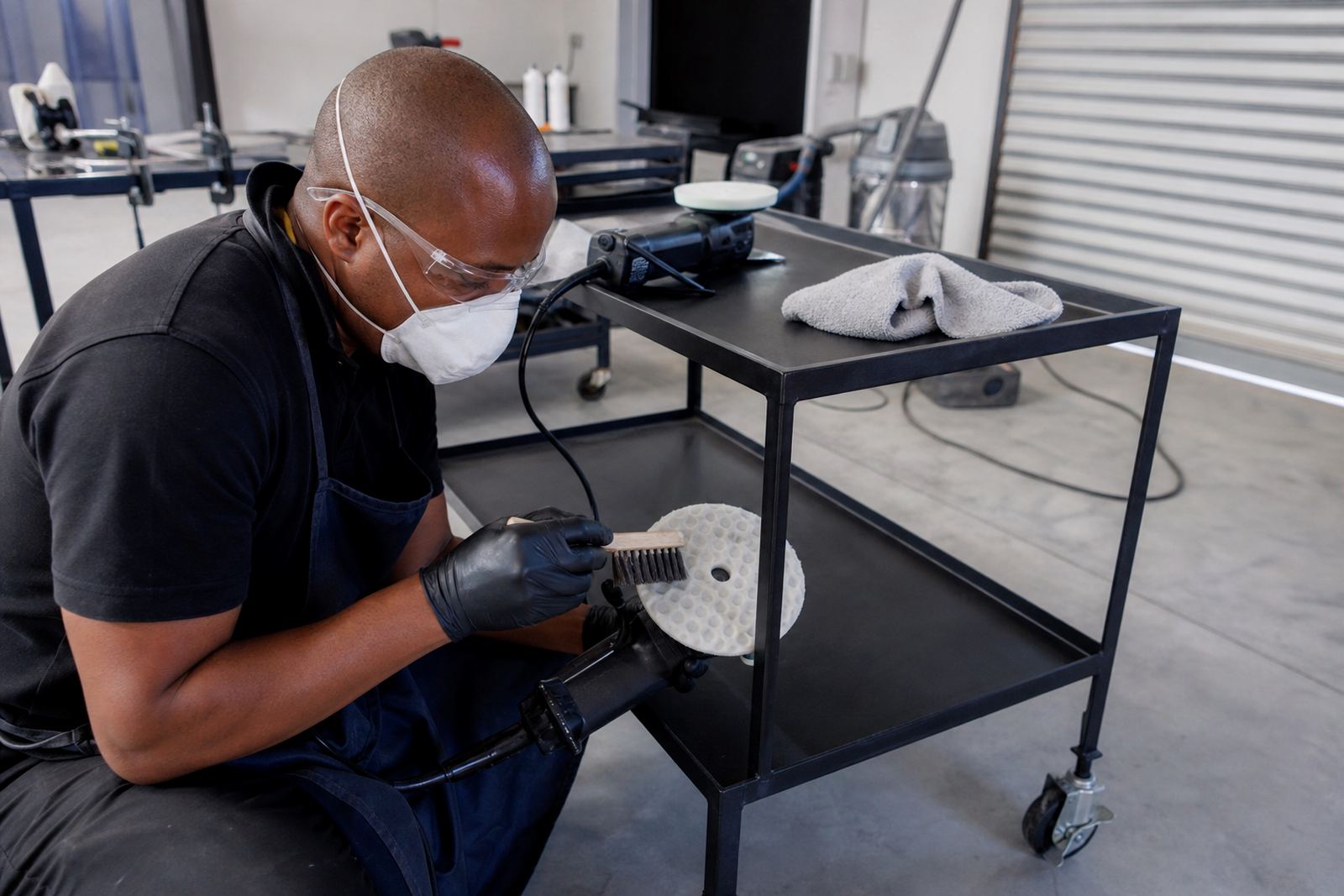
Pad care matters as much as machine care. Clean pads during use to reduce dusting and keep cutting action consistent, then wash them after the job if they are washable. Let the tool cool before storing it, and check the backing plate, hook and loop face, bearings and cord for wear. If the machine starts to vibrate more than usual or the speed control feels uneven, it should be checked before the next job.
Do not let compound build up around the spindle or cooling vents. Wipe the body down after use and store the unit in a dry case or shelf away from grit. In workshops around Germiston, Boksburg and the Vaal Triangle, that small bit of maintenance makes a big difference when machines are used daily. Keep pads separated by grit level so coarse residue does not end up on a finishing pass.
What To Check Before You Order
When ordering a mini DA polisher, confirm the intended use, the panel size and the level of correction you want to achieve. A machine suited to paint finishing on bumpers may not be ideal for aggressive defect removal on hard clearcoat. Also check whether you need only the machine or a starter kit with pads, compounds and basic training support.
- Backing plate size and compatible pad range
- Orbit size and speed control for your work type
- Weight and grip comfort for longer sessions
- Power lead length and plug suitability for your workshop
- Whether you need pads, compounds and safety gear together
- Support for technique, pad matching and machine care guidance
For buyers across South Africa, the right setup depends on the panel, the paint system and the finish standard expected. A mini DA is a useful specialist tool, but it works best when paired with the correct compound and a careful hand. PPE still matters too: use eye protection, a dust mask where needed and gloves when handling compounds or sharp panel edges.
Key facts
| Tool type | Mini dual-action polisher |
|---|---|
| Backing plate size | Typically 2 inch to 3 inch |
| Orbit | Small throw for controlled correction |
| Speed control | Variable speed for polishing and finishing |
| Power | Electric mains supply |
| Best use | Bumpers, spoilers, pillars and narrow painted surfaces |