
What Aluminium Compound Does On Bare Metal
Aluminium compound is a polishing paste or bar used to improve the look of aluminium after sanding, scuffing or light oxidation removal. It helps reduce fine marks and haze so the surface can move toward a brighter, more even finish. On softer metal like aluminium, the aim is not to cut too aggressively, because that can leave waves, heat marks or a smeared look.
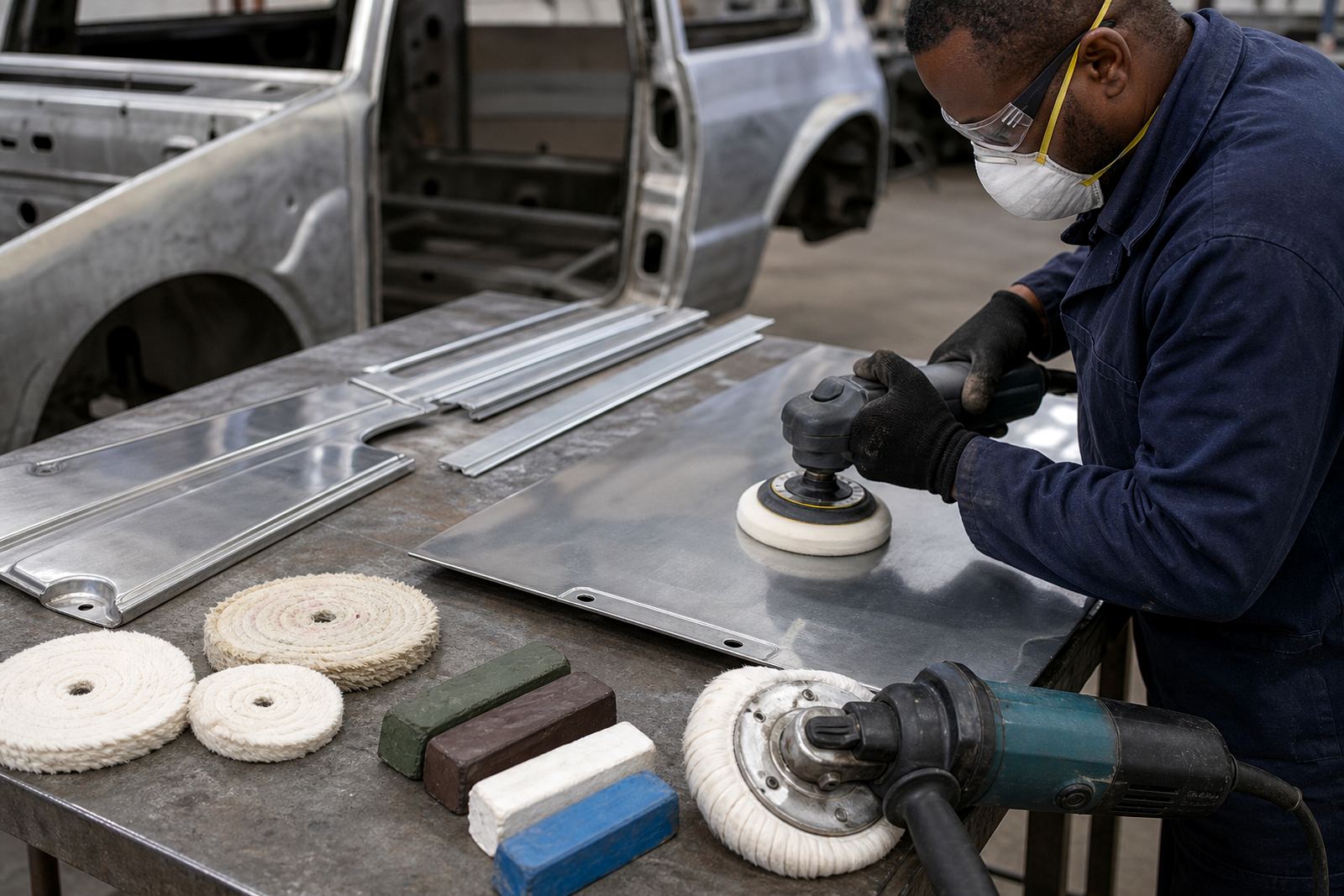
In practical use, the compound works with a buffing wheel, mop or pad to lift the surface finish step by step. Good results come from the right match between compound, buff type and machine speed. A compound intended for aluminium is usually chosen for brighter finishing and scratch refinement, especially on extrusions, trims, rims, panels and fabricated parts.
- Used after sanding or pre-polish preparation
- Suitable for brightening dull or oxidised aluminium
- Helps refine light scratches and buff marks
- Can be used on hand-held or bench polishing setups
Where This Compound Suits Best
This product suits workshops handling decorative aluminium, vehicle parts, stainless and aluminium trim, fabrication items and restoration work. It is useful in Johannesburg and Germiston workshops where metal finishing jobs often involve mixed materials and different levels of oxidation. It also suits customers in coastal areas such as Cape Town and Durban, where humidity can leave aluminium looking tired sooner than expected.
For automotive work, aluminium compound is commonly used on engine covers, polished trims, accessories, motorcycle parts and wheel-related components where the surface must look clean and consistent. It can also suit light industrial jobs, display items and architectural hardware. If the part has a coating, check first whether the finish is bare metal or painted, because compound choice changes a lot between those surfaces.
- Bare aluminium parts and trims
- Restoration and maintenance work
- Vehicle accessories and polished details
- Workshop finishing, repair and final presentation
Machine Match, Speed And Power Needs
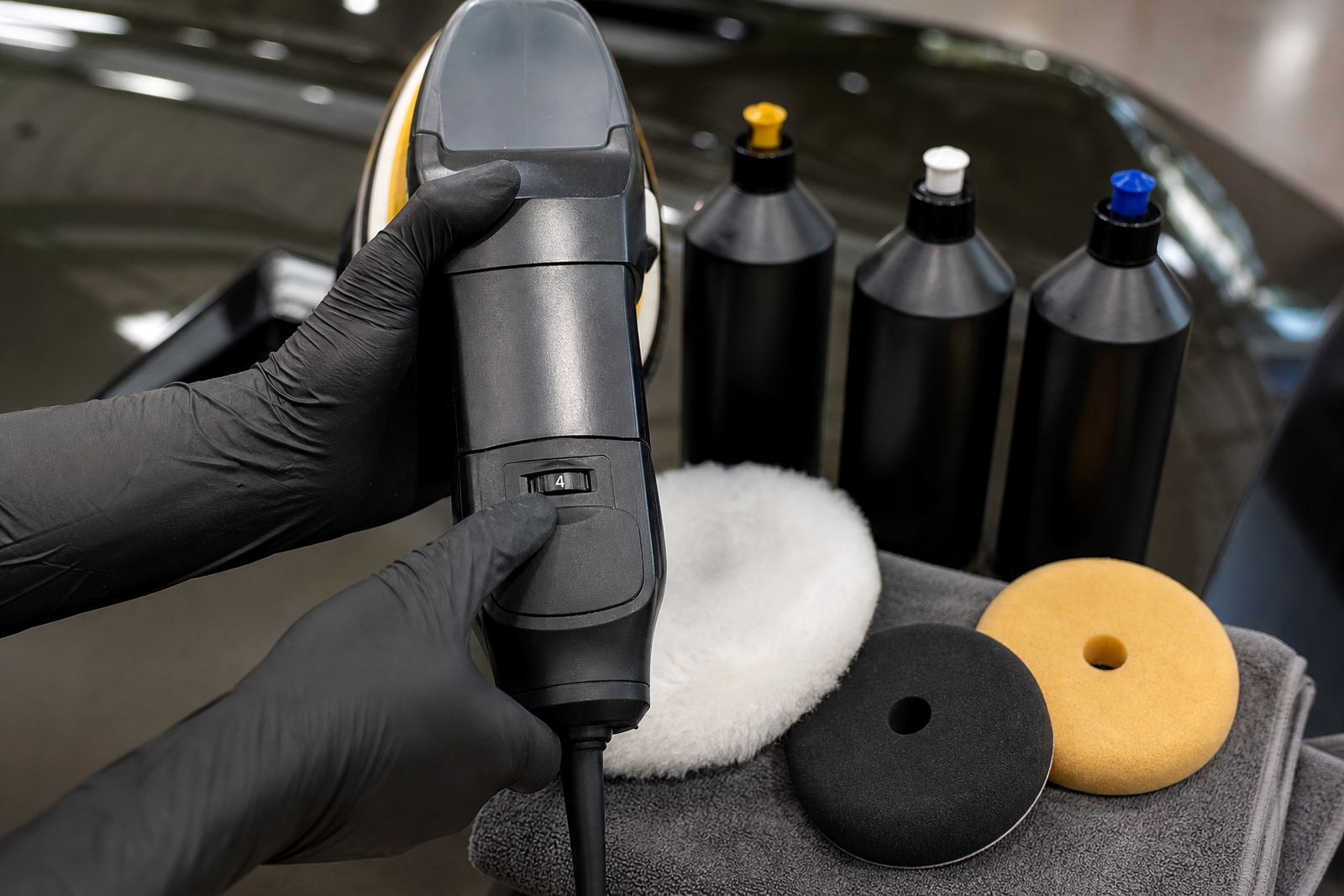
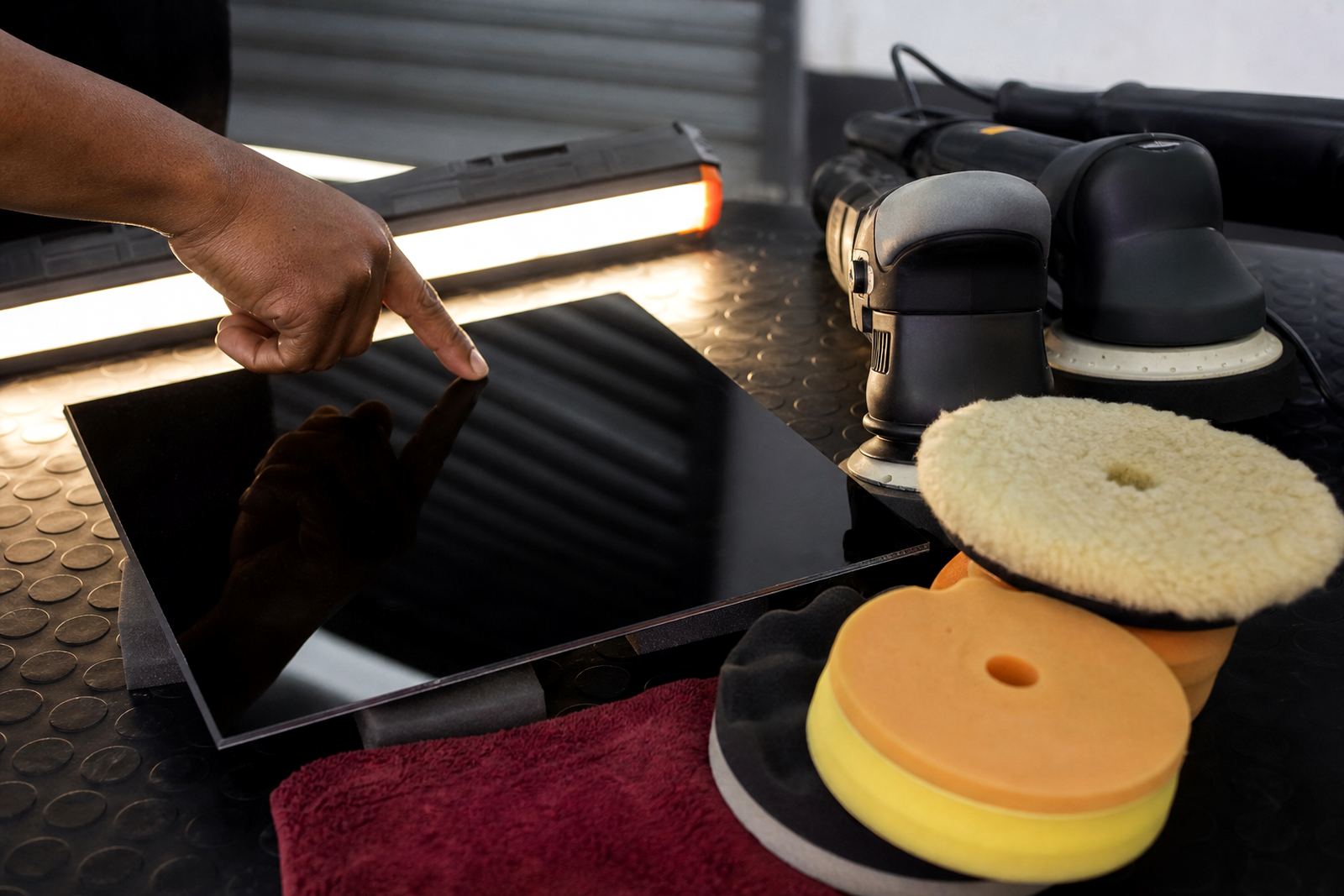
Aluminium compound can be used with rotary polishers, slower speed machines and some bench buffing setups, depending on the form of the compound and the job. Rotary machines are common for controlled cutting and faster correction, while dual-action polishers are better for lighter finishing and reduced risk of heat build-up. For aluminium, the operator must keep a steady hand and avoid lingering in one spot.
For aluminium polishing, a corded polisher suits long sessions, while a cordless model is useful for mobile work away from plug points.
- Rotary machines for faster cut and correction
- Dual-action machines for gentler finishing work
- Bench buffing setups for small parts and repeated jobs
- Choose a corded polisher for long polishing sessions near a plug point, or a cordless model for mobile work where power access is limited.
Sizes, Forms And Selection Options
Aluminium compound is usually supplied in different forms to suit workshop volume and application style. Some users prefer bars for buffing wheels, while others prefer paste or packed compound for easier control on smaller jobs. The right option depends on the machine, the part size and how often the compound will be used. A small workshop in Pretoria may need a different pack size to a busy East Rand repair bay.
When ordering, check how the compound is intended to be applied and whether it suits a cut stage, refinement stage or final brightening stage. For some jobs, a single compound is enough. For others, it is better to pair it with another grade and use separate buffs. If the aim is a cleaner final finish, ask for guidance on the best sequence rather than trying to force one product to do everything.
- Bar format for mop and wheel application
- Paste or packed form for direct use and easier handling
- Different pack sizes for home use or workshop use
- Selection should match machine type and finish level
Care, Safety And Clean Working Practice
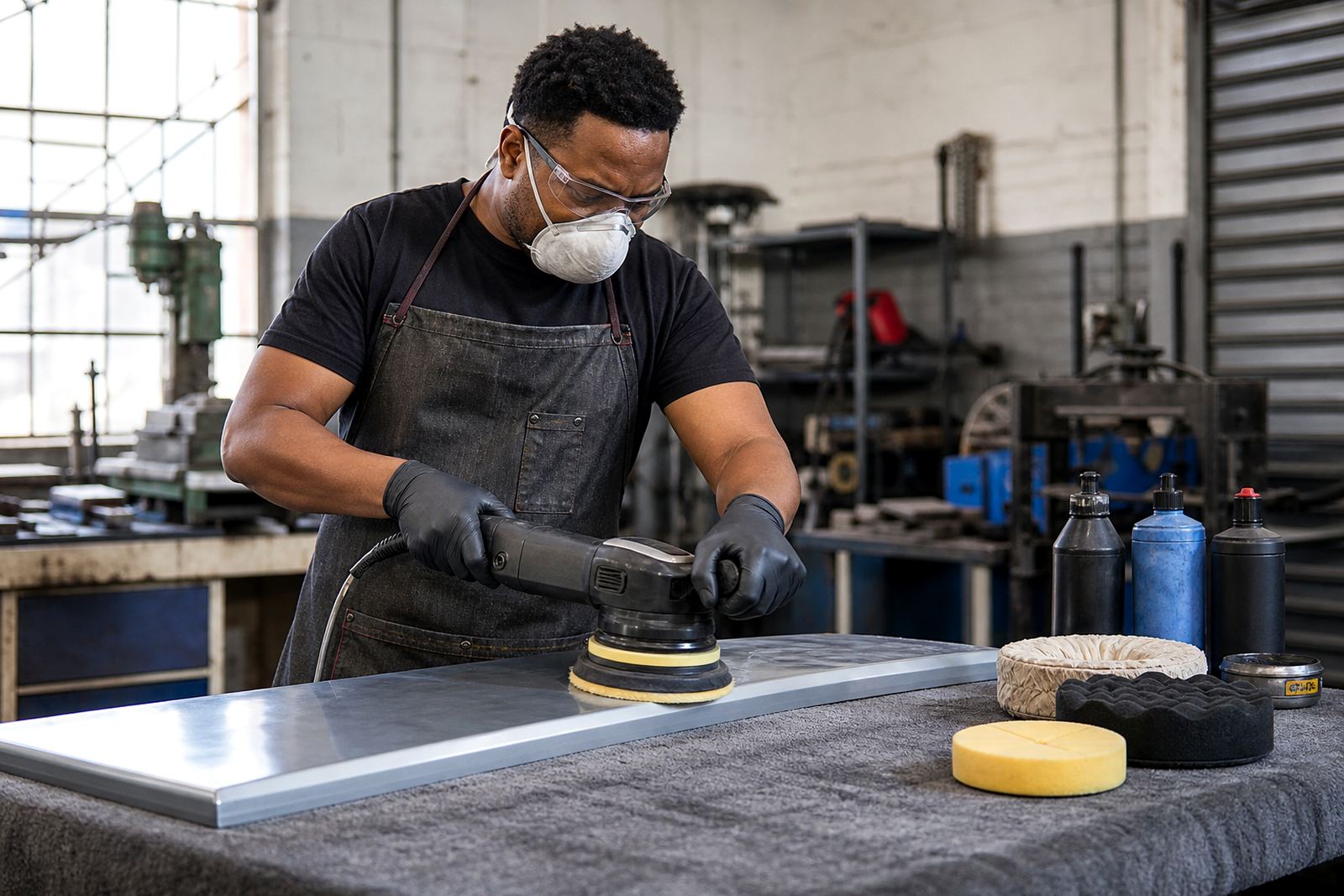
Polishing aluminium creates residue, fine dust and spent compound, so PPE matters. Gloves, eye protection and a suitable mask should be used when dust or residue can become airborne. Good ventilation is important, especially in enclosed workshops or in Bloemfontein where dry conditions can throw residue around quickly. Keep loose clothing clear of rotating buffs and do not polish near unstable work holding.
For best results, clean the workpiece before starting and remove grit from the surface. If coarse contamination stays on the metal, the buff can drag it across the part and leave deeper marks. After use, clean pads and buffs so they do not harden with old compound. Store the product in a dry place away from direct sun, moisture and workshop spill. If the container is exposed to heat, the texture can change and application becomes less even.
- Wear eye protection and a suitable dust mask
- Use gloves and secure loose clothing
- Keep the work area clean and well ventilated
- Store compound dry and sealed after use
What To Check Before You Order
Before ordering aluminium compound, check the metal type, the current surface condition and the finish you want. A heavily scratched part may need sanding first, while a lightly dull part may only need a refinement stage. It is also important to confirm whether the job is on bare aluminium, painted metal or a mixed surface, because one compound will not suit every finish. For car work, the body line and panel shape can affect how much pressure is safe to use.
You should also confirm the size of the machine pad or buff, the expected speed range and the amount of material you work through in a month. A one-man shop in Germiston may only need a small starter quantity, while a team doing regular polishing across Johannesburg or Durban may need repeated restocking. If you are unsure, use the enquiry form on the contact page and ask for product matching, starter kit guidance or machine care advice.
- Check whether the surface is bare aluminium or painted
- Match the compound to your buff or pad size
- Confirm the machine speed range and job volume
- Ask for starter kit or restocking advice if needed
Key facts
| Product type | Aluminium polishing compound for metal finishing |
|---|---|
| Typical use | Brightness improvement and fine scratch refinement on bare aluminium |
| Application method | Used with rotary polishers, dual-action machines or buffing wheels |
| Available forms | Bar, paste or packed compound depending on the job |
| Suitable surfaces | Bare aluminium, trims, fabricated parts and restoration components |
| Power needs | Electric polishers in corded and cordless options |