
What A Foam Finishing Pad Does On Paint And Metal
A foam finishing pad is made for refinement rather than correction. It helps remove light haze, soft machine marks and the very fine micromarring that can be left after heavier compounding or sanding. On car paint it is commonly used at the final stage after a cutting pad, while on metal it can help bring out a cleaner, brighter finish once the heavier work is done.
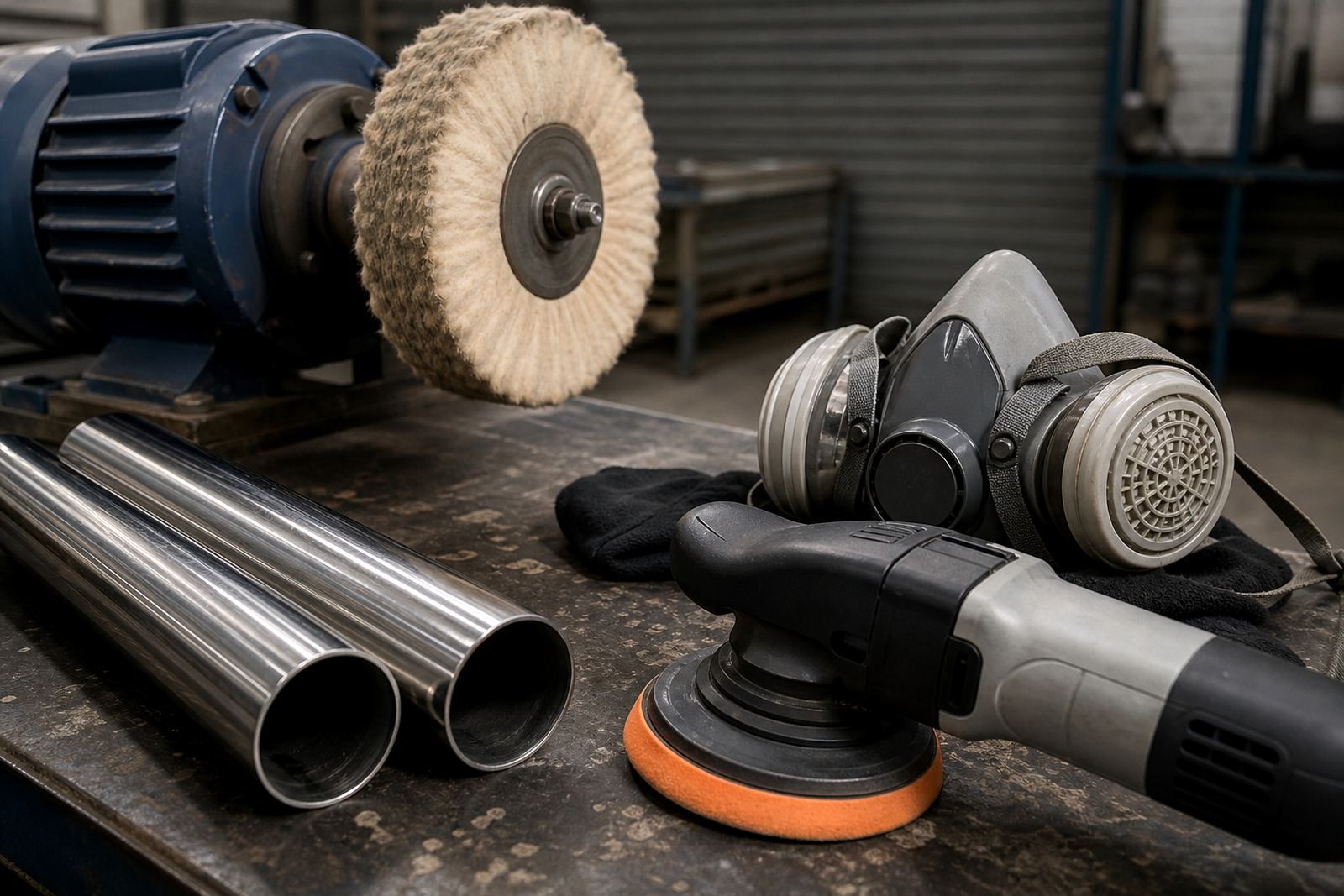
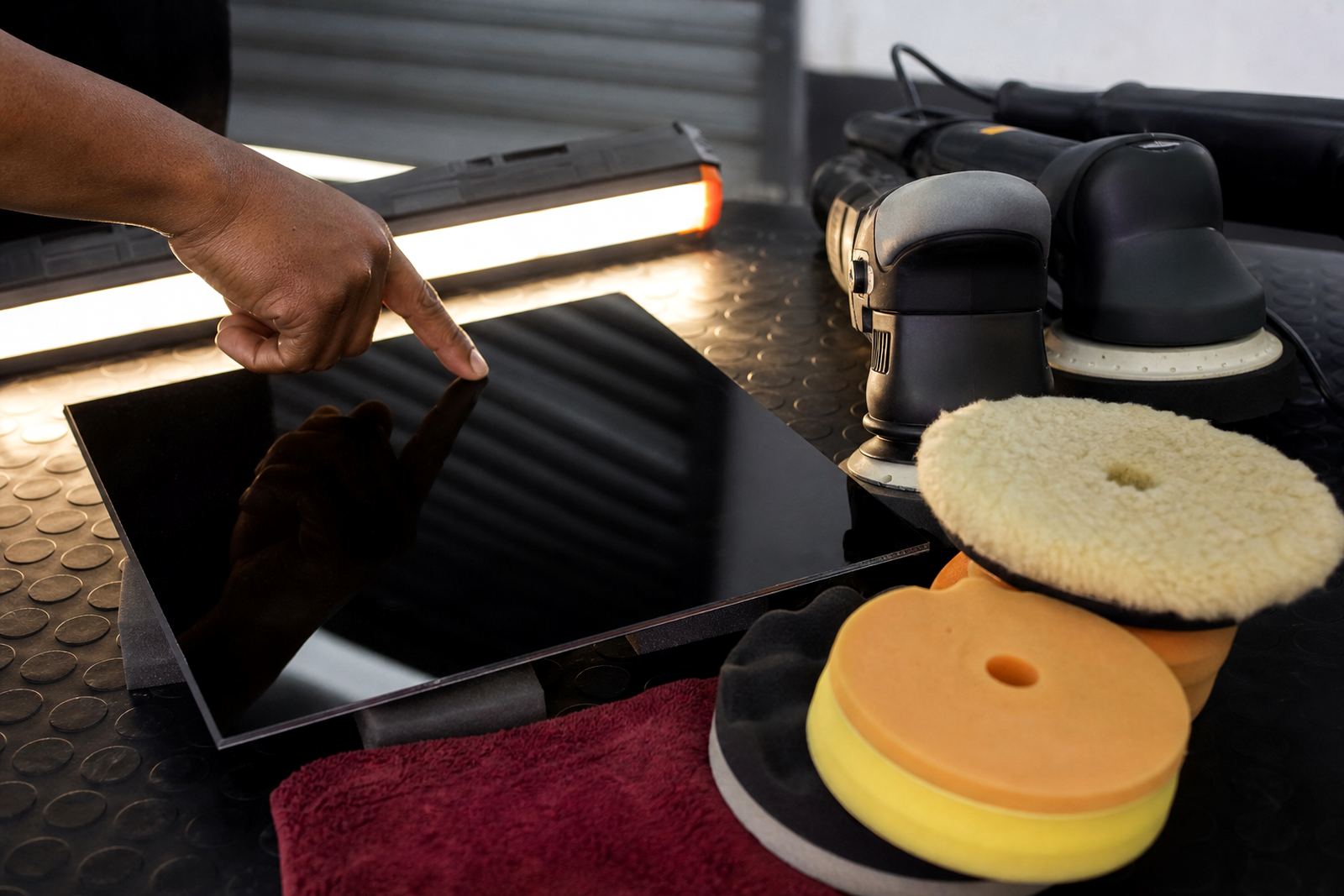
The open-cell foam structure holds a thin layer of polish and spreads it evenly across the surface. That gives better control when working on clear coat, lacquer, stainless steel, aluminium and other polished metals. It is not the pad for deep scratches or oxidation. It is the pad for the last pass, when the goal is clarity, depth and a smooth reflection.
Used with the correct compound or finishing polish, a foam finishing pad allows slower work with less heat build-up. That matters on fresh paint, thin clear coat and edges where heat can burn through quickly. For hobby users and pro detailers alike, it is a practical pad to keep in the kit because final finish work often decides the result.
Sizes, Backing Types And Pad Options
Foam finishing pads are usually chosen by machine size and backing plate size. Common diameters include 75 mm for tight areas, 125 mm for general body panels, and 150 mm for larger flat surfaces. Smaller pads are easier to control on mirrors, bumpers and curved panels, while larger pads suit bonnets, doors and larger metal surfaces.
Most pads are fitted to a hook and loop backing system so they can be changed quickly between stages. The pad face may be flat, slightly domed or profiled depending on the machine and the type of finish work required. Softer foams are better for delicate finishing, while medium-soft foams give a little more stability on slightly uneven areas.
- 75 mm pad for spot work, edges and tight contours
- 125 mm pad for most vehicle panels and general finishing
- 150 mm pad for broad surfaces and quicker coverage
- Hook and loop backing for fast pad changes
- Soft or medium-soft foam grades for final gloss work
If you are matching a pad to a machine, check the backing plate size first. A pad that is too large can slow the machine and make control harder, while one that is too small may not cover enough area for efficient work. On rotary machines the pad size and foam softness both affect heat, so a sensible match helps keep the finish even and clean.
Where It Suits Workshops, Detailers And DIY Users
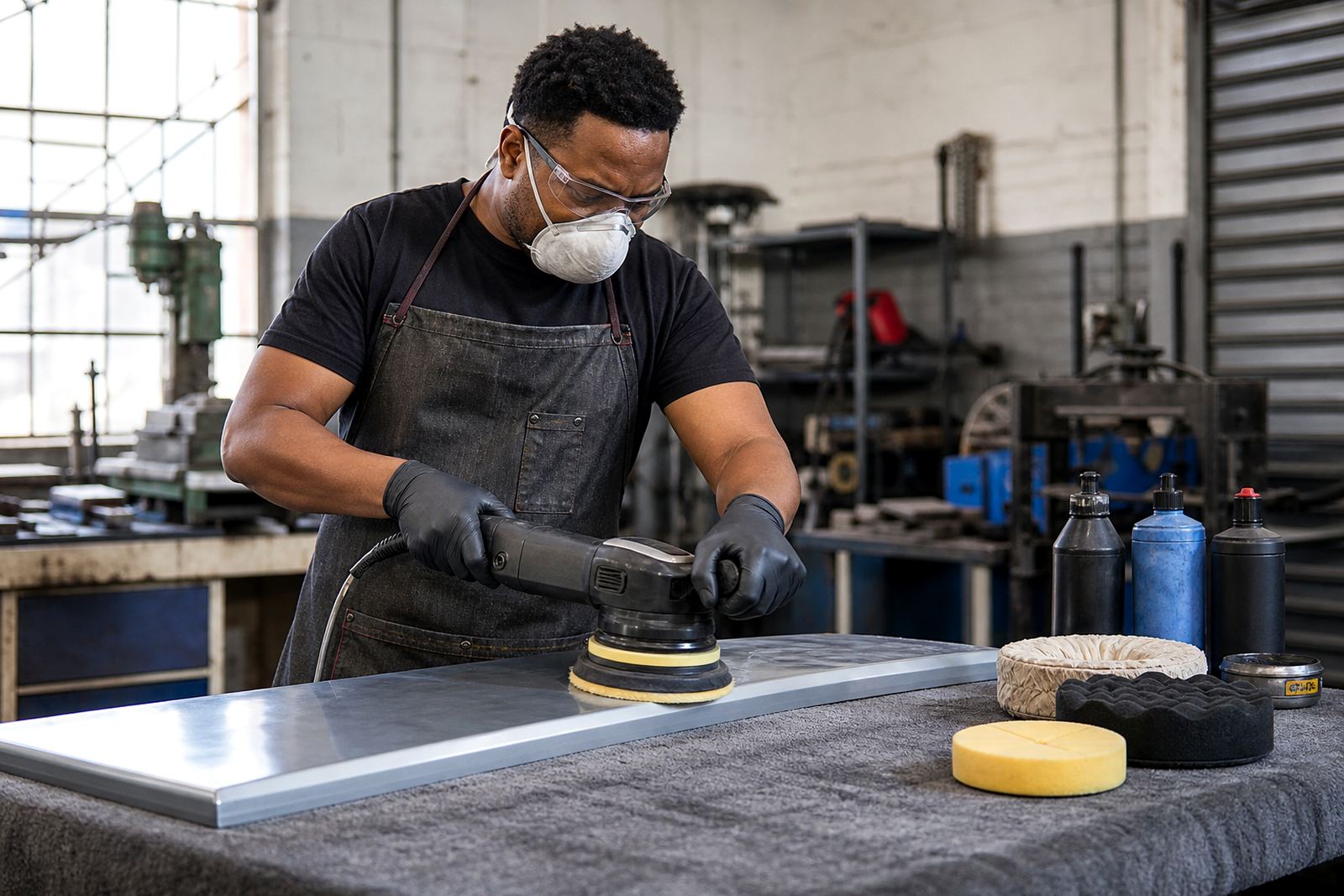
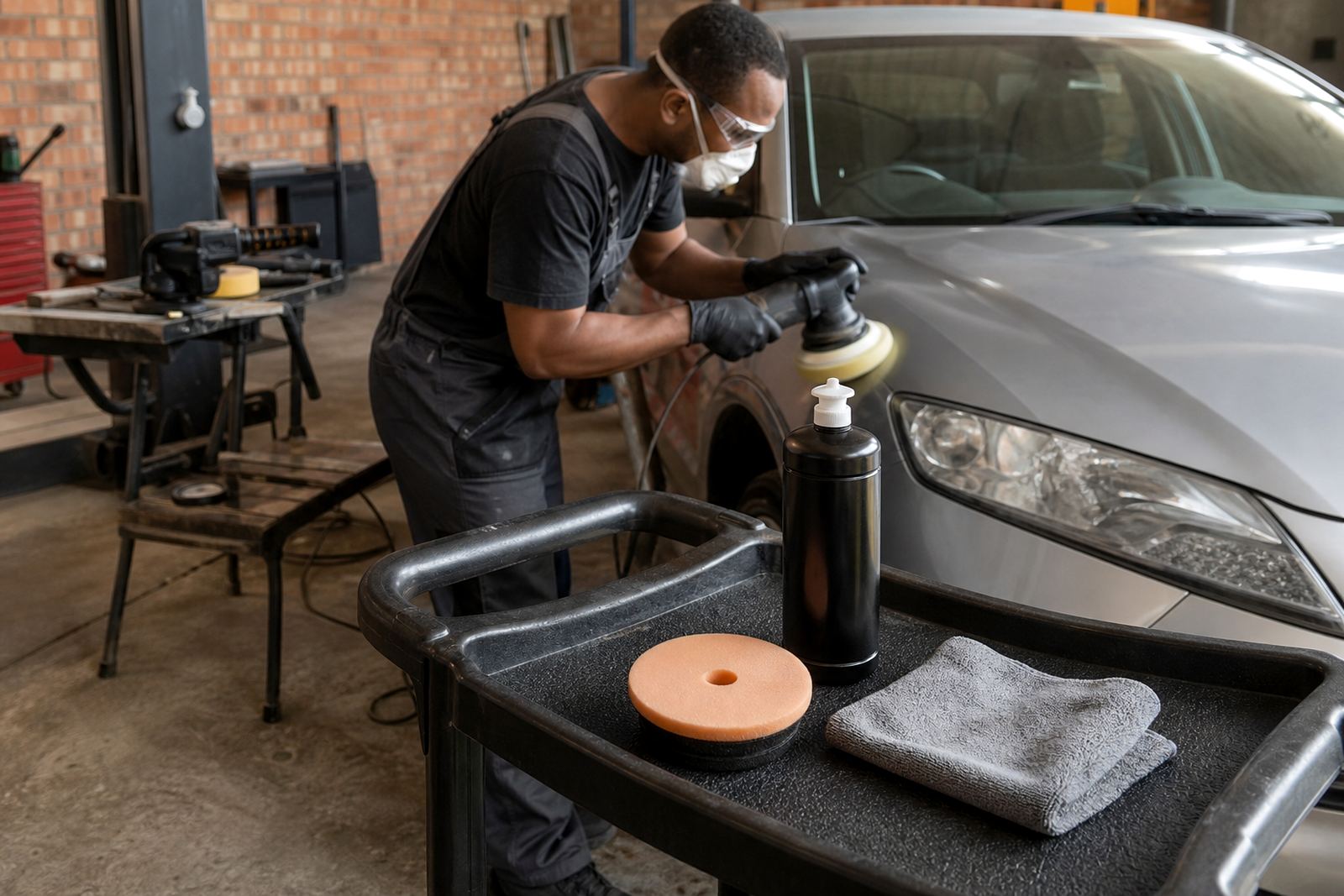
This pad suits final-stage polishing on clear-coated vehicles, show cars, restored classics and refinished panels. It is also useful on stainless trim, alloy parts and other decorative metal surfaces where a bright, low-haze finish is wanted. In a bodyshop or detailing bay, it is often paired with a light finishing polish after defect removal has already been done.
For rotary polishers, the foam finishing pad works well when the operator keeps pressure light and movement steady. For dual-action polishers, it is a safe and useful choice for finishing passes because the machine action is gentler and easier to control on mixed surfaces. Either way, a small test area is worth doing first, especially on fresh paint or older finishes that may have been resprayed and are not fully cured.
- Final gloss enhancement on car paint
- Light jewelling on solid surfaces and clear coat
- Finishing after compound stages on metal
- Useful for hobby users learning machine control
- Suitable for workshops, restoration jobs and valet work
For outdoor work in Gauteng or along the coast, keep the surface clean before starting. Dust, sand and salt can mark a soft pad quickly, and once the foam loads up it can start dragging instead of finishing. A clean panel and a clean pad make a big difference.
How To Fit And Use It Safely
Before fitting the pad, check that the backing plate is clean, centred and in good condition. The pad should sit square on the plate with full hook and loop contact. If the pad is warped, torn or lifting at the edge, replace it before use. A damaged pad can cause wobble, uneven pressure and hot spots on the surface.
For best results, apply a small amount of finishing polish or compound to the pad or panel, then spread it at low speed before increasing slightly. Keep the pad flat, use light pressure and move in overlapping passes. On paint, avoid lingering on an edge or body line. On metal, keep the work area free of abrasive dust because that can turn a finishing pass into a scratch pass very quickly.
- Check backing plate size and machine fit before starting
- Prime the foam lightly with product, do not soak it
- Use low to medium speed for finishing work
- Keep pressure light and movement consistent
- Work in a clean, shaded area where possible
Wear eye protection, gloves and a dust mask where dry residue may become airborne. If you are polishing after sanding, vacuum or wipe the area properly first. A foam finishing pad is gentle, but the surface prep around it still matters.
Care, Cleaning And Pad Life
A finishing pad needs regular cleaning to keep its cut level and finish quality steady. During use, blow out or brush off residue often so the foam does not clog. If it becomes saturated with polish, wipe it clean and let it dry fully before packing it away. A damp pad stored in a sealed box can pick up smell, harden or break down faster.
After the job, wash the pad with mild soap and lukewarm water, then rinse until the residue is gone. Do not wring it too hard, and do not leave it near strong heat or direct sun for long periods. Foam can harden if overheated, which shortens its working life. If the face starts to crumble, the edges tear or the pad no longer gives an even finish, it is time to replace it.
In busy workshops around Germiston, Johannesburg or Pretoria, it helps to keep separate pads for finishing and heavier work. That way a finishing pad stays clean and does not pick up coarse residue from cutting stages. A small bit of organisation saves a lot of rework later.
What To Check Before Ordering Your Pad
When ordering a foam finishing pad, start with the machine type, pad diameter and backing plate size. Then check whether you need a soft pad for delicate jewelling or a slightly firmer foam for better control on larger panels. The shape of the work matters too. A bonnet panel, a curved bumper and a stainless trim piece all behave differently under the machine.
Also think about the polish or compound you plan to use. A finishing pad is usually paired with a fine polish, not a heavy cutting compound. If you are unsure, it helps to match the pad to the stage of work rather than to the surface alone. The wrong combination can leave haze, sling or poor correction and that usually costs more time than the pad itself.
- Machine type: rotary or dual-action
- Backing plate size and pad diameter
- Softness level needed for the finish stage
- Paint, clear coat or metal surface type
- Whether you need one pad or a full set for staged work
Customers in South Africa can use the enquiry form on our contact page to ask about pad matching, starter kits, training support or consumables restocking. From Germiston, we supply foam finishing pads and related polishing gear to Johannesburg, Pretoria, Cape Town, Durban, Bloemfontein and surrounding areas, with practical advice for workshop work, mobile detailing and careful home use.
Key facts
| Product type | Soft foam finishing pad for final gloss and light jewelling |
|---|---|
| Typical diameters | 75 mm, 125 mm, 150 mm |
| Backing system | Hook and loop |
| Best paired with | Fine finishing polish or light compound |
| Suitable machines | Rotary polishers and dual-action polishers |
| Primary uses | Paint finishing, light haze removal, metal gloss work |