
What Stainless Compound Does in a Polishing Sequence
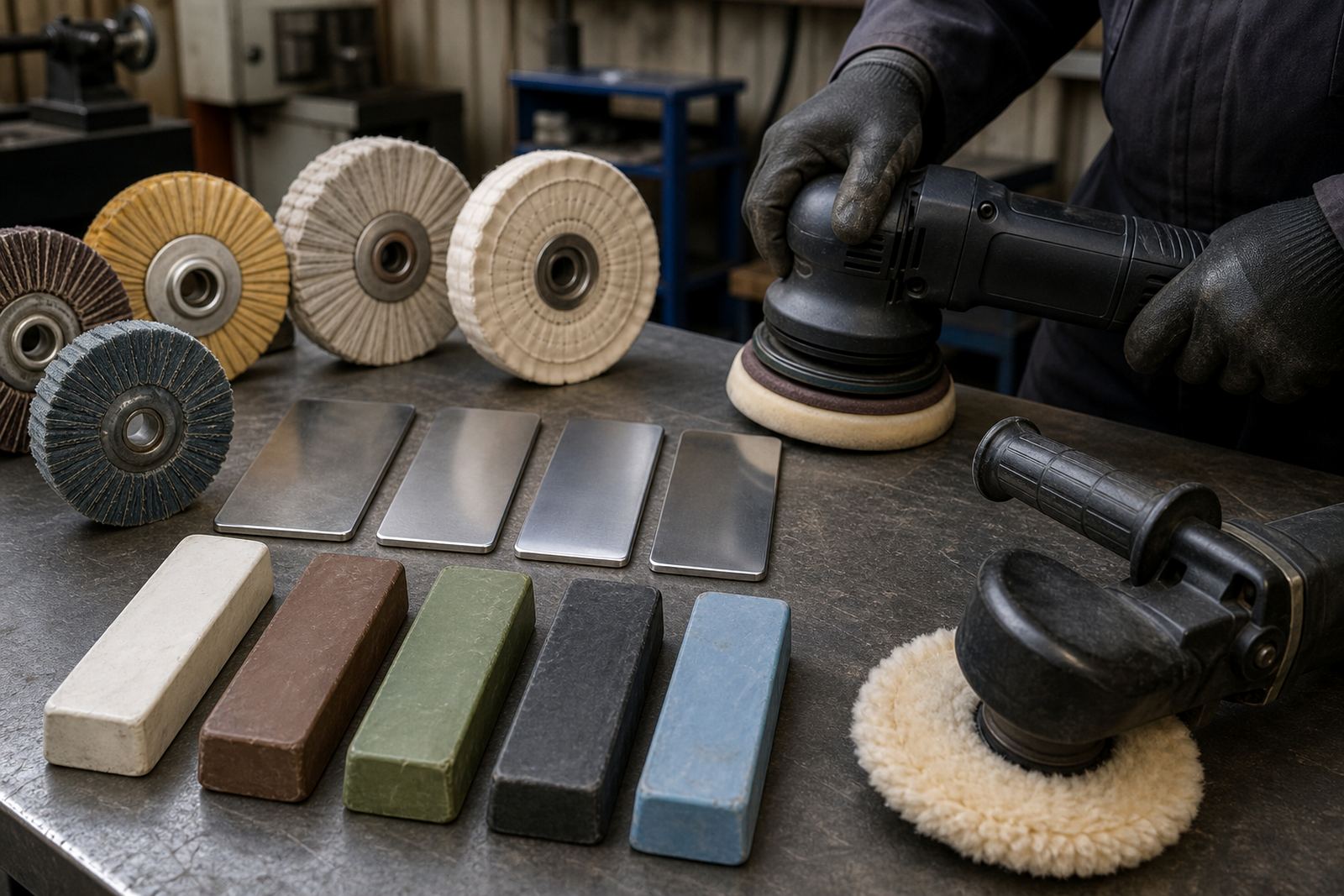
Stainless compound is used with a buffing wheel or polishing mop to remove fine sanding marks, light oxidation and surface dullness from stainless steel. It sits in the middle of a polishing process, after heavier correction and before final finishing or cleaning. The aim is to keep the cut consistent so the operator can work in manageable passes without loading the wheel too quickly.
On stainless steel, a good compound should leave a cleaner surface with less smear and less drag on the workpiece. That helps on fabricated items with weld lines, folded edges, tubing and flat panels, where you need the compound to spread evenly and not leave heavy black build-up. It is commonly used on 304 and 316 type stainless, as well as similar metal surfaces that need a controlled shine.
Where This Compound Suits Workshop and Site Work
This product suits metal finishing shops, fitment teams, stainless fabricators, maintenance crews and vehicle detailers who work on chrome-like stainless trims. It is useful on stair rails, balustrades, prep tables, trolleys, extractor housings, marine fittings and decorative metal parts. In Gauteng, it is often chosen for indoor workshop work where dust control matters and you want a compound that cleans up without too much residue left on the item.
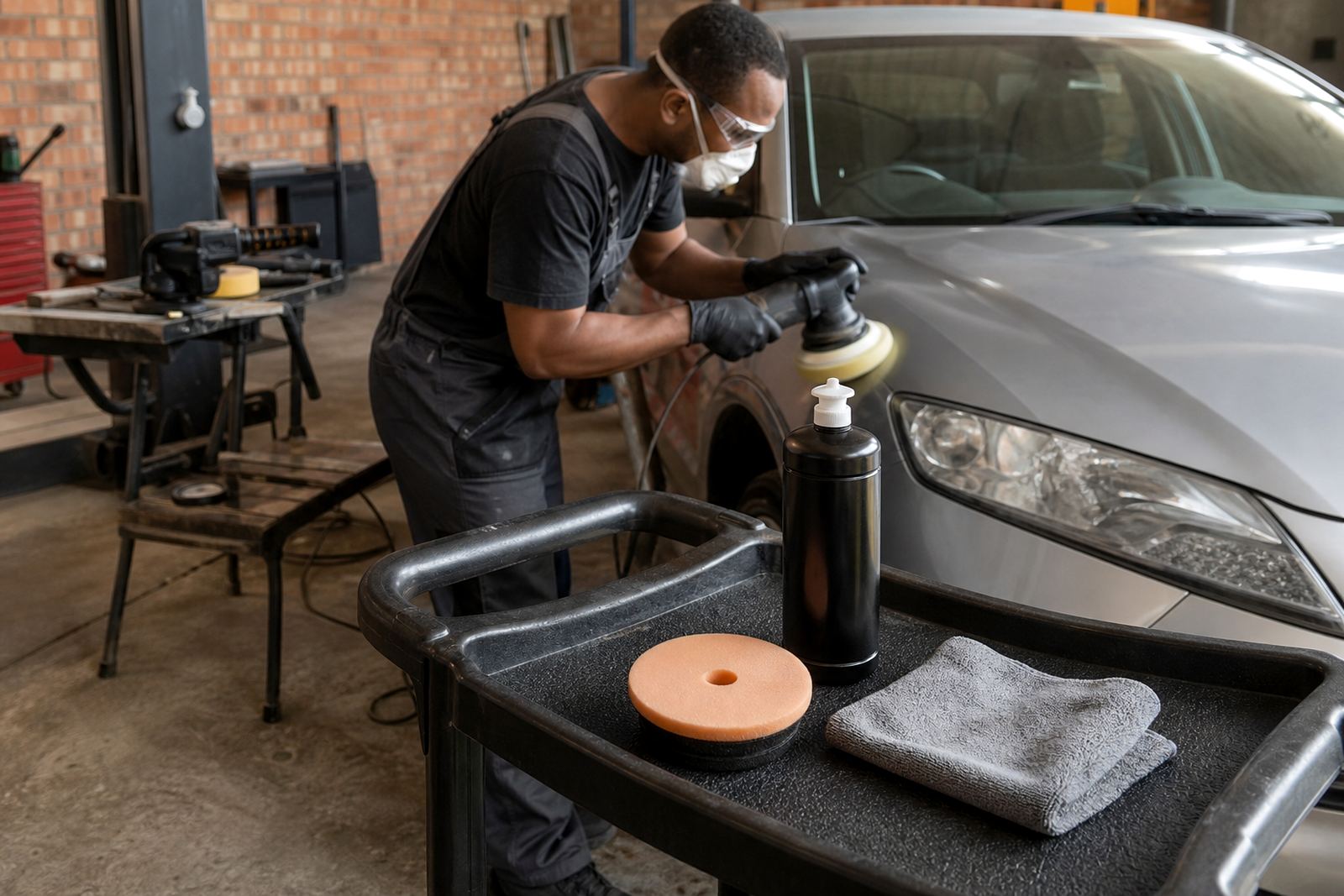
It can also be used on car-related stainless parts, trim pieces and accessory fittings where the finish must look even from all angles. For best results, the surface should already be prepared with the correct grit stage. Compound will not fix deep scratches on its own, so the first pass should be matched to the condition of the metal.
- Suitable for stainless steel, prepared metalwork and decorative trims
- Useful for handrails, balustrades, tubing and fabricated fittings
- Works best after sanding or pre-polish prep has been completed
Machine Use, Wheel Choice and Power Needs
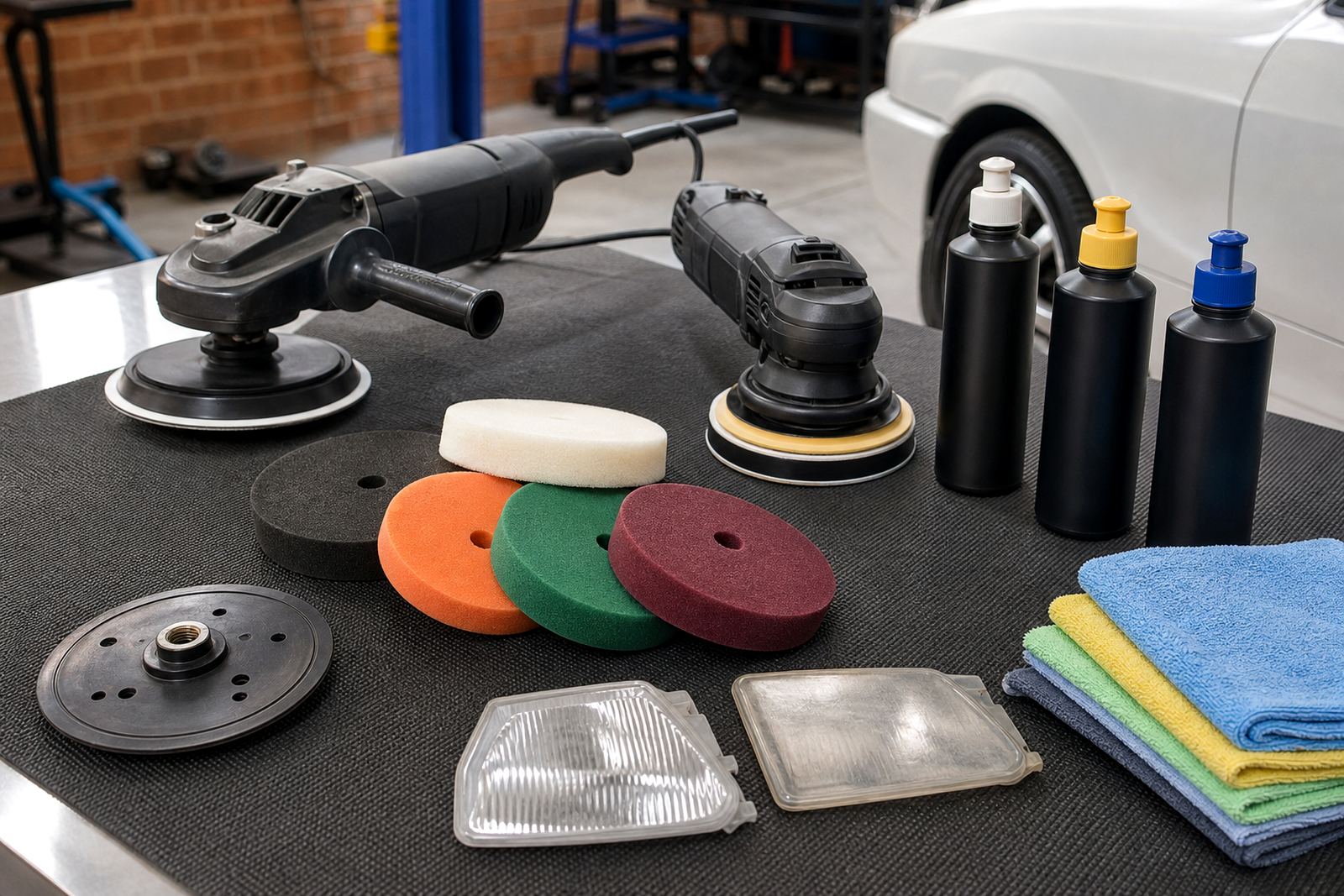
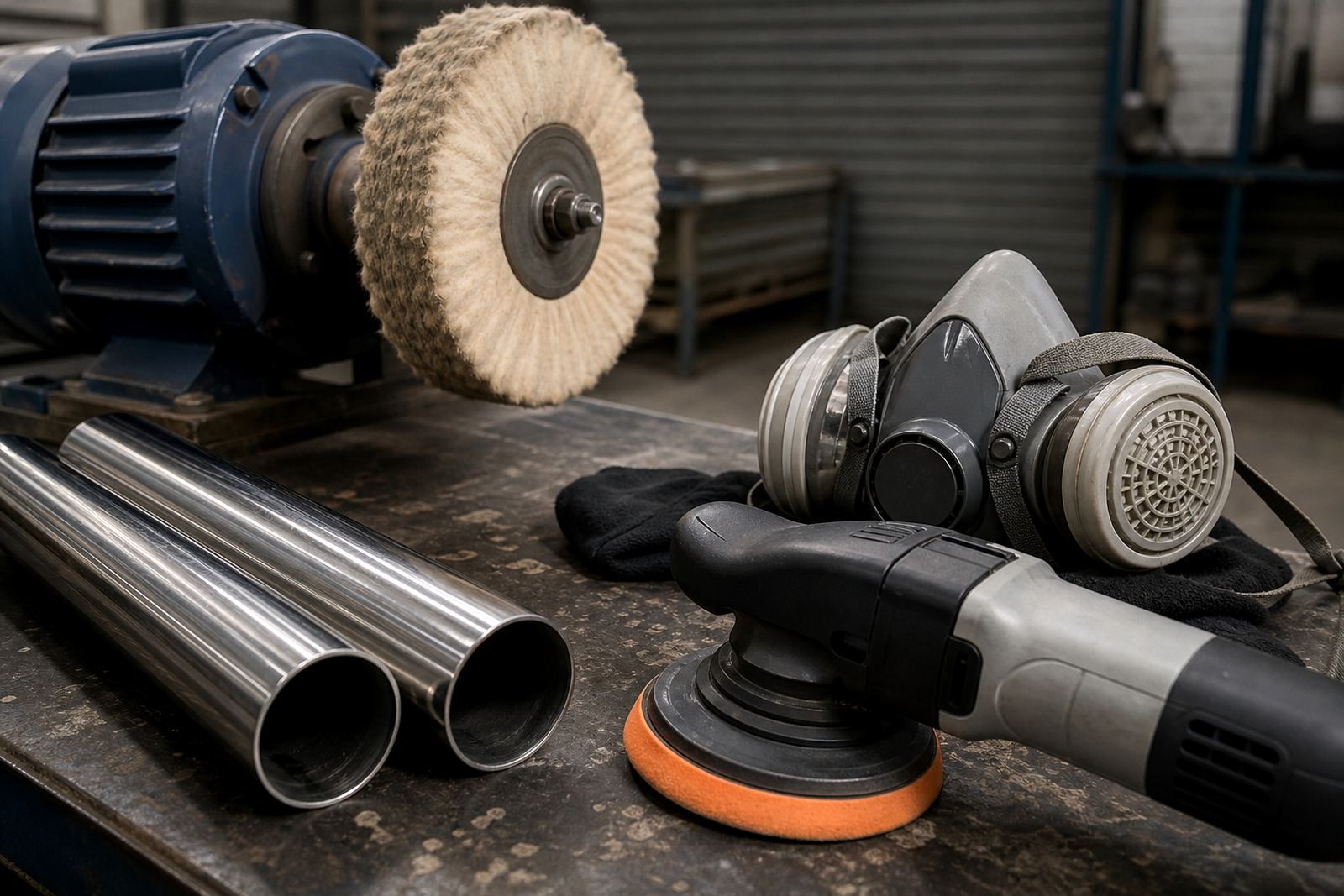
Stainless compound works with rotary polishers, bench polishing machines and, for smaller areas, careful hand use. Use the right machine with the correct buff or mop, and keep your work area tidy with enough space to move safely. For smaller jobs away from plug points, a cordless polisher can be practical, while a corded machine suits longer polishing sessions.
A rotary polisher gives more direct cutting action and is usually preferred for metal finishing because it keeps contact steady. A softer buff can be used for cleaner finishing, while firmer buffs may suit the earlier cut. Keep the work moving to avoid heat spots, particularly on thinner stainless sections. If the metal is thin-walled, let it cool between passes. Excess pressure can mark the surface and throw compound unevenly.
- Use on rotary machines or polishing systems with the right arbor or backing setup
- Check motor condition, cable safety and ventilation before starting
Sizes, Pack Options and Ordering Choices
Stainless compound is typically supplied in workshop-friendly bars or blocks for repeated use on a buffing wheel. When ordering, choose the size that matches your workload. Small teams and training rooms often prefer compact packs for controlled use and easier storage. Larger fabrication shops and service teams usually want larger blocks for regular throughput, especially if several operators use the same compound during the week.
When placing an order, it helps to know what metal you are working on, the type of machine you use and the stage of finish you want. If you are building a starter set, ask about pairing the compound with the right buff and a basic cleaning routine. For teams in Johannesburg, Pretoria, Cape Town, Durban, Bloemfontein and the East Rand, we can help match the product to local workshop conditions, from dusty inland sites to coastal humidity where metal can show marks faster if it is left unprotected.
- Choose based on job size and expected usage
- State the metal type and finish level needed
- Match the compound with a buff that suits the cut and final sheen
Care, Cleaning and Safe Handling on Site
Keep the compound dry, covered and stored away from direct heat. In humid areas, especially near Durban or other coastal workspaces, seal it properly so it does not pick up moisture and soften in storage. Do not leave it in a hot vehicle or next to a machine that runs continuously. A clean compound gives better consistency, so avoid cross-contamination with other polishing bars or grit from sanding papers.
Use PPE during application. Eye protection, gloves and a dust mask or suitable respirator are important when working on metal that has been sanded or when airborne residue is present. Work with extraction where possible, especially indoors. Stainless polishing can create fine airborne dust and spent compound, so keep the area swept and wipe down surfaces after use. If the compound picks up grit, replace it rather than trying to press through the contamination.
What to Check Before Ordering
Before ordering, check the finish stage you are at, the size of the item and the machine setup in your workshop. The wrong compound for the job can leave streaks, slow down the work or overheat a thin section. It is also worth checking whether your team is polishing by hand, with a rotary machine or on a fixed setup, because that changes the buff choice and how the compound should be loaded.
We often guide customers through pad and compound matching, starter kit consultation and machine care guidance for stainless work. If you are setting up a small team in Germiston or opening a new polishing bay in Pretoria, ask for advice before buying bulk stock. That helps avoid mismatched consumables and saves time once the work starts.
- Confirm the machine type and buff style
- Confirm the metal grade and the current surface condition
- Decide if you need a fine, medium or more aggressive polishing stage
Key facts
| Product type | Stainless steel polishing compound for buffing and finishing |
|---|---|
| Use case | Pre-finish and intermediate polishing on stainless and similar metal surfaces |
| Application | Used with rotary polishers, bench polishers and suitable buffing wheels |
| Electric or motor needs | Use corded polishers for longer jobs near a plug point, or cordless models for mobile work and jobs away from power. |
| Available options | Workshop sizes suited to single users, teams and training use |
| Storage | Keep sealed, dry and away from heat, dust and moisture |