What the Headlight Pad Kit Is For
This kit is put together for headlight lens correction with a polisher, using a controlled sequence of cutting, refining and finishing. The goal is to remove oxidation, fine UV damage and surface dullness from clear plastic lenses so the light output and appearance improve without forcing the job. It is a practical choice for workshops, detailers and owners who want a more consistent process than using random pads and compounds.
The kit is also useful where the same vehicle needs repeat work in different conditions, such as fleet cars in Johannesburg traffic, coastal vehicles in Durban, or older vehicles that sit outside in the sun. A measured approach matters because headlights can overheat quickly if you stay in one area too long or use too much compound.
Pad Build, Sizes and Machine Options
Headlight work is normally done with smaller pads than full body polishing. The common pad size is 75 mm to 125 mm depending on the machine, the shape of the lens and how much control you need around edges, grilles and bumper lines. Smaller pads suit tighter areas and curved housings, while 125 mm pads cover broader lenses faster where access is good.
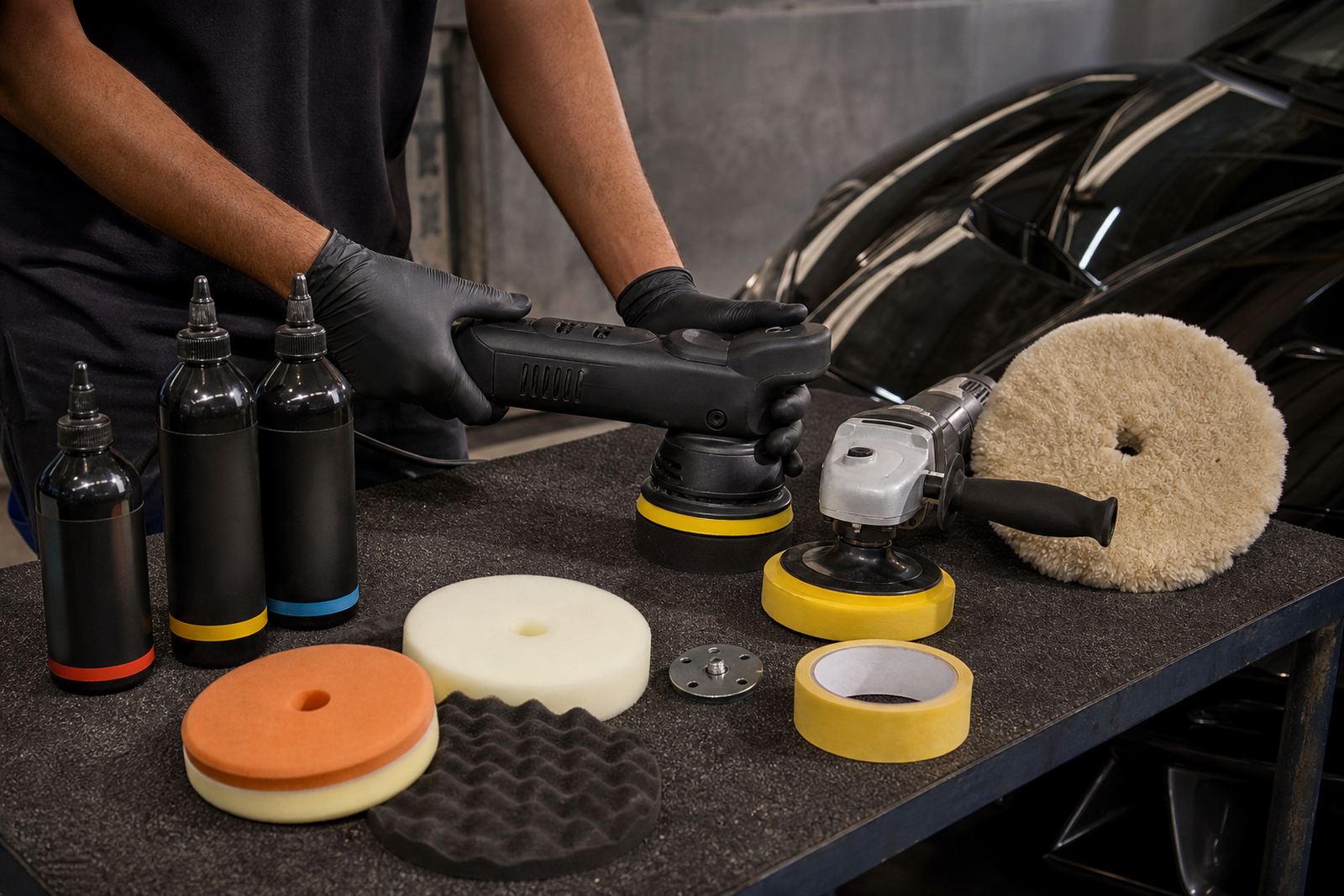
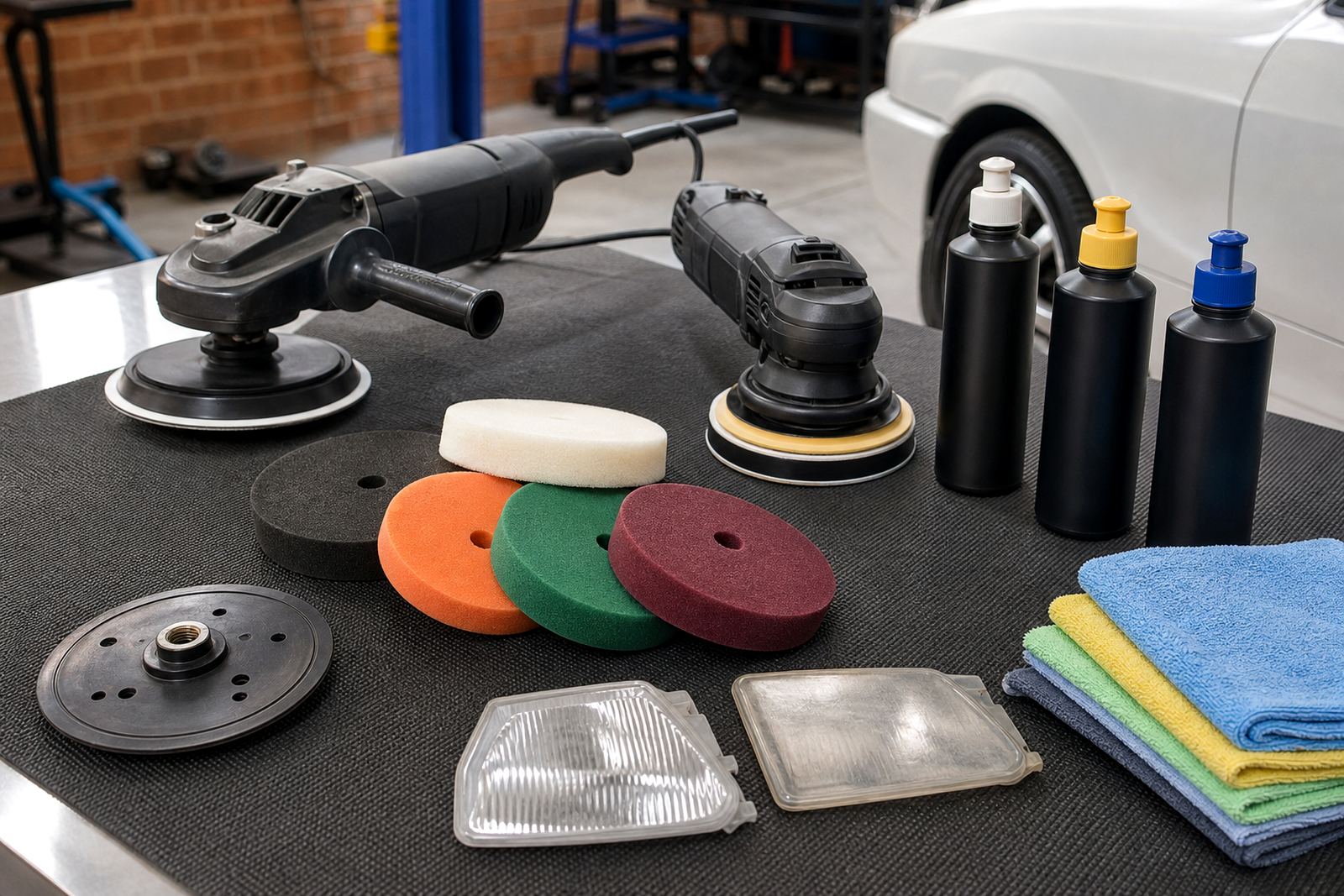
- Rotary polishers are suited to experienced users who need direct correction and careful speed control.
- Dual-action polishers are better for safer, lower-heat work and are often the first choice for training and general use.
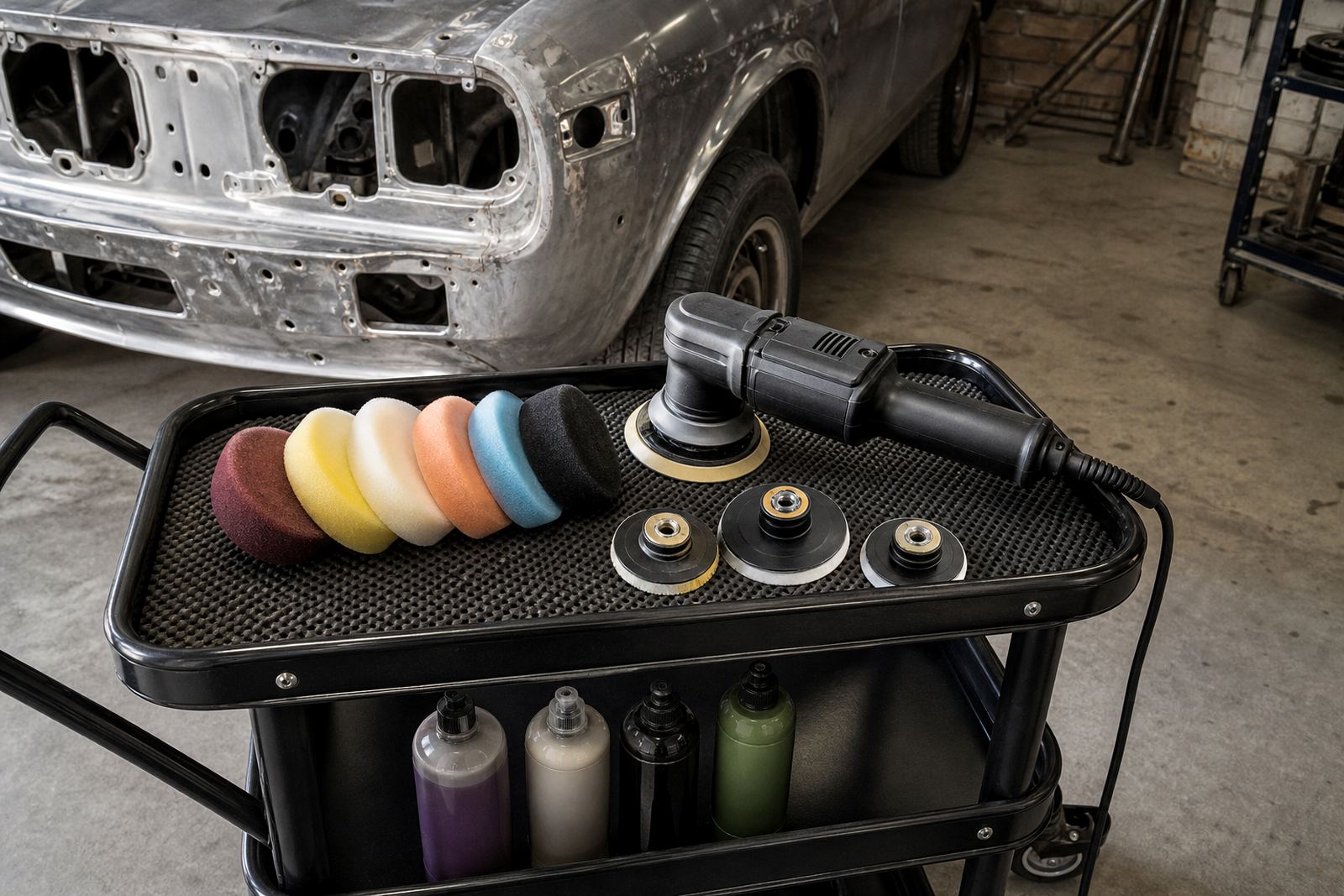
- Foam cutting pads help remove oxidation and heavier haze.
- Foam polishing pads refine the finish after the first pass.
- Microfibre or softer finishing pads can be used where the lens only needs light refinement.
The exact pad and machine combination should match the condition of the lens, the hardness of the plastic and the time available on the job. On a tired lens, do not expect one pass to do everything, the staged method is what gives a cleaner result.
When This Kit Suits the Job
This kit suits vehicle detailing, used car preparation, panel shop finishing, dealership reconditioning and home workshop headlight restoration. It is especially useful where the lenses have a yellowed, chalky or patchy surface but are not cracked through or badly heat damaged. If the lens is severely pitted or the internal reflector is failing, polishing may improve the outer surface but it will not fix internal damage.
It also works well on vehicles that are regularly exposed to dust, coastal humidity or strong sun. In South Africa that can mean daily use in Gauteng, long distance work out of Bloemfontein, or stop-start traffic in Pretoria where lenses age faster than owners expect. The kit is for controlled surface correction, not for repairing broken housings or water-filled lamps.
- Suitable for plastic headlight lenses, not glass lamps.
- Useful on light to moderate oxidation and surface haze.
- Best for vehicles that still have enough clear lens material for polishing.
- Can be used before sealing or protective coating steps.
How to Use It Properly
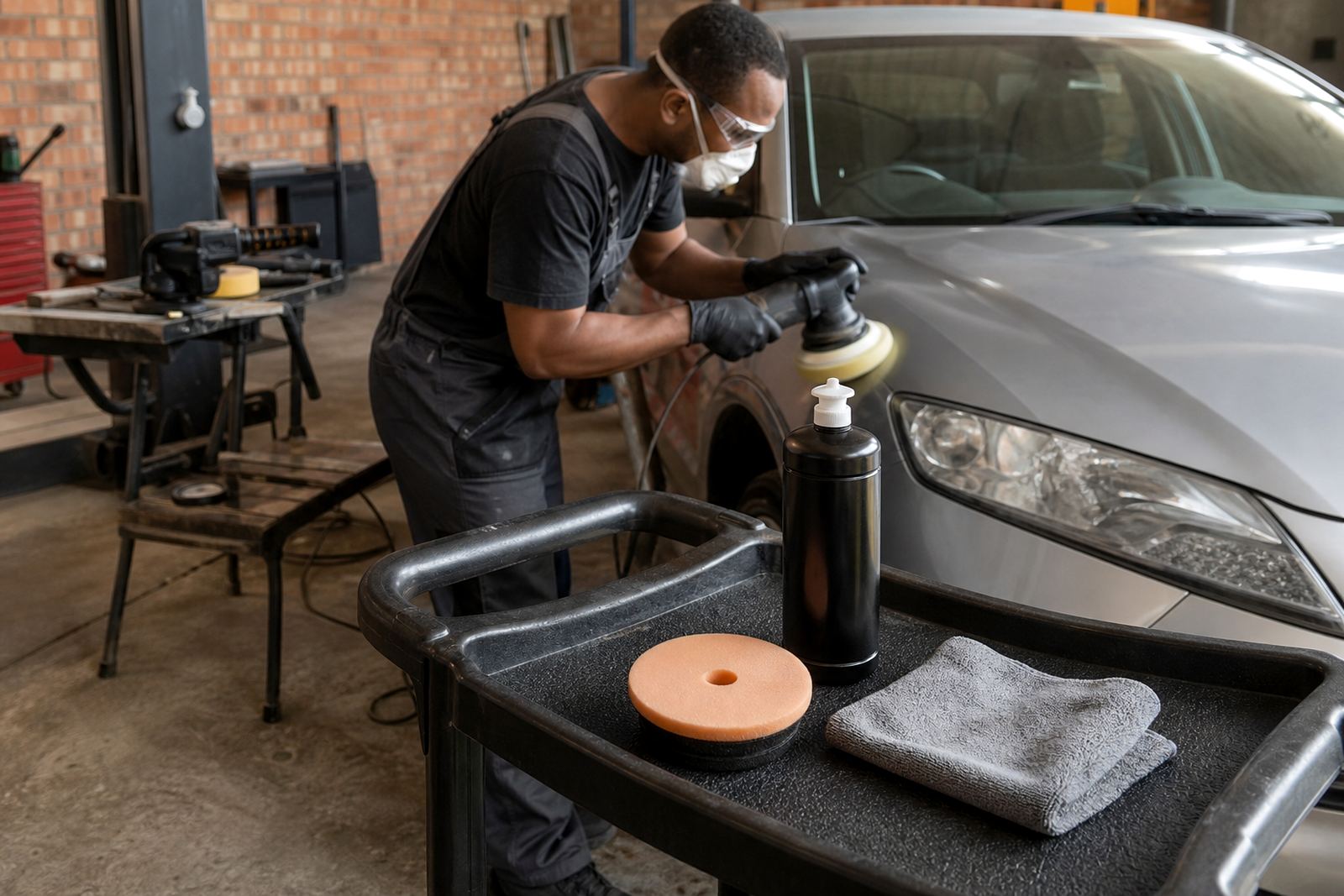
Start by cleaning the lens thoroughly and masking the paint, trim and rubber edges around the lamp. Inspect for stone chips, cracks and signs of deep UV breakdown. Apply the compound lightly, then work a small area at a time with steady passes and moderate pad pressure. Keep the machine moving so the plastic does not build up heat in one spot.
For many jobs the process runs in stages: a cutting step, a refining step and then a final finishing pass if required. Wipe down between stages so you can see the true condition of the lens. If the pad loads up with old plastic residue or dried compound, stop and clean it before continuing. A dirty pad can cause haze and swirls instead of clearing the surface. You need patience here, not brute force.
Power, Setup and Workshop Requirements
Most headlight pad kits are used with electric polishers. The main requirement is a machine with steady speed control and a clean backing pad that matches the pad size. A dual-action polisher is often easier for newer users because it reduces the risk of burning edges, while a rotary polisher gives more direct correction in experienced hands. Cordless polishers suit mobile work away from plug points, while corded machines are better for longer polishing sessions.
- Use a sound workshop feed and inspect extension leads before you start polishing.
- Keep cables clear of the bonnet, wheel arch and the floor to avoid scuffing.
- Work in a shaded bay where possible, because direct sun makes the plastic warmer and harder to read.
- Wear eye protection, gloves and a dust mask where old coating residue or dry dust is present.
For training sessions, we often advise setting up a clean bench, a water source for wipe downs and a dedicated place for used pads. That keeps the job organised and helps prevent cross contamination from compound to trim or paint.
Care, Servicing and Consumable Control
Pads should be cleaned after use and stored dry so they do not harden or pick up grit. Compounds must be kept tightly closed and away from contamination. If a pad starts to lose shape, tear at the edge or clog repeatedly, replace it rather than trying to force more life out of it. A tired pad can ruin a fine finish quickly.
For ongoing work, check the backing plate regularly and inspect the hook and loop grip before each job. If the pad sits off-centre or the machine vibrates, sort it out before touching the lens again. Headlight work is small area work, but it still needs discipline. A clean pad and a properly balanced machine give much better control and save time over the course of a busy day.
We also recommend keeping a few pad grades on hand for different levels of oxidation, especially where vehicles come in from different towns with different exposure. A car from the coast may need a different approach to one that has spent years under highveld dust and strong UV.
What To Check Before You Order
Before placing an order, confirm the pad size, the machine type and the level of correction you want to achieve. Check whether your work is mainly light haze removal, heavier oxidation or a full staged correction. If you are unsure, match the kit to the worst condition you expect to handle, then keep a finer option for final finishing.
- Lens type and condition, including cracks, chips or deep yellowing.
- Pad diameter and machine backing plate size.
- Whether you need rotary, dual-action or both.
- Which compound grade will be used in the first and second stages.
- Whether your team needs starter kit guidance or safety and PPE briefing.
- How often you will restock pads, compound and cleaning consumables.
If you are setting up a new process in Germiston, the East Rand or further afield in Cape Town, Durban or Bloemfontein, it helps to order with the full workflow in mind. The right kit should save time, reduce rework and make each headlight job easier to repeat.
Key facts
| Product type | Headlight pad kit for machine correction work |
|---|---|
| Pad sizes | Typically 75 mm to 125 mm |
| Machine compatibility | Rotary polishers and dual-action polishers |
| Use case | Staged correction of weathered plastic headlight lenses |
| Consumables | Pads, compounds and cleaning support items |
| Power need | Works with corded or cordless DA polishers |