What A Dual Action Polisher Does On Paint
A dual-action machine moves the pad in two ways at once, with rotation and an orbiting motion. That movement helps spread compound more evenly and lowers the chance of burning paint compared with a straight rotary machine, especially on thinner panels, sharp edges and re-sprayed sections.
It is widely used for swirl reduction, haze removal after heavier cutting and final gloss work on clear coat. For hobby users it is a practical step up from hand polishing, while workshops use it for controlled finishing on passenger cars, bakkies and light commercial vehicles. On older paint or fresh resprays, test first and work slowly because panel condition varies a lot.
In metal finishing, a dual-action machine can help with fine refinement on non-porous surfaces, but the compound and pad choice matters more than speed. Always clean the panel first and remove grit, because trapped dust can cut fresh marks into the surface.
Size Options And Typical Setups
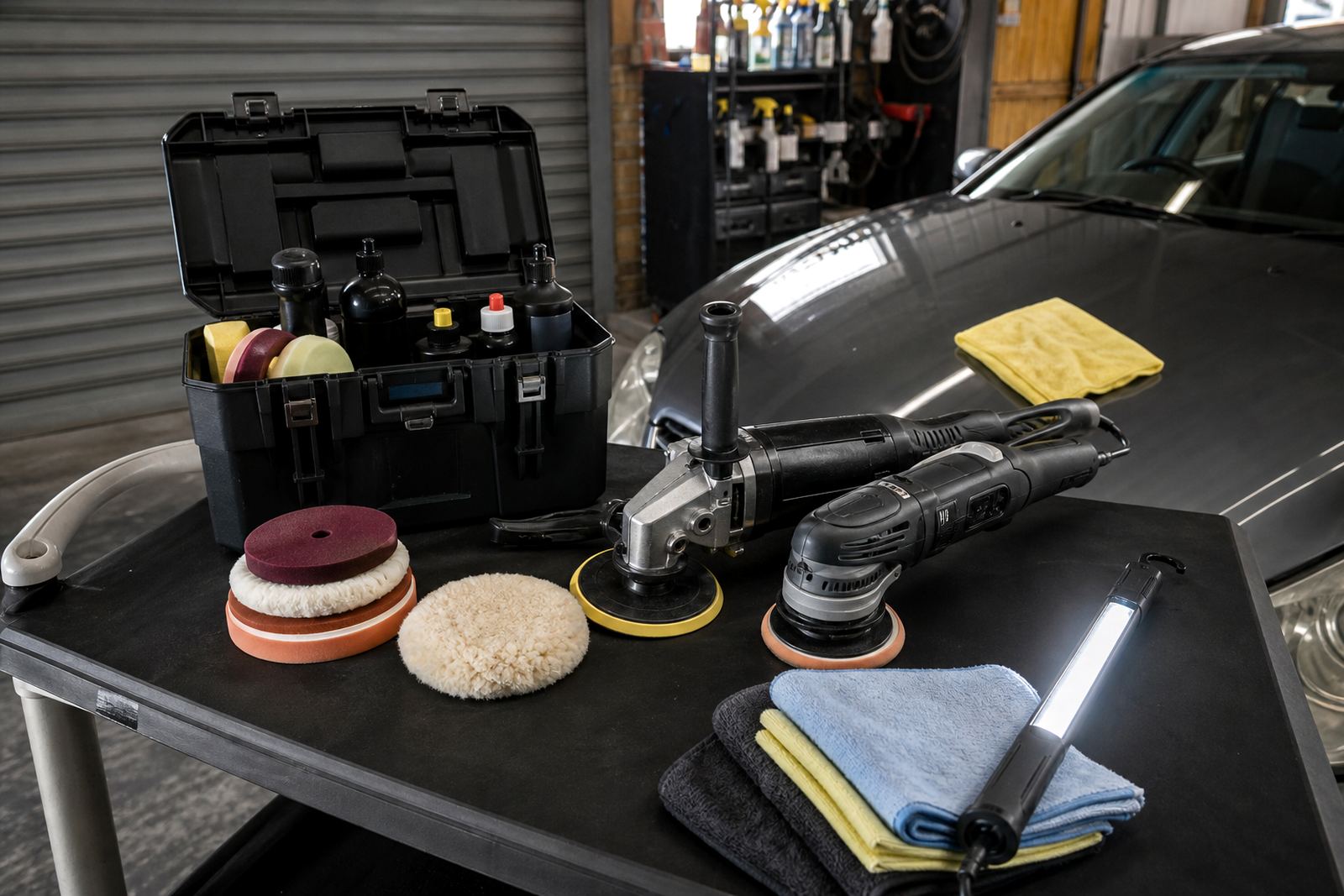
Dual-action polishers are commonly supplied in a few pad sizes, usually around 75 mm, 125 mm and 150 mm backing plate formats. Smaller units suit tight areas such as mirrors, bumpers, pillars and motorcycle panels. Mid-size machines are the everyday option for bonnets, doors and boots, while larger pads cover broad panels faster on fleet work and panel shop finishing.
Speed control is important. A variable-speed trigger or dial gives better control when you are spreading compound, doing a correction pass or finishing out with a softer pad. A soft start helps avoid sling at switch-on, which saves clean-up time in dusty workshop conditions and keeps product where it belongs.
- 75 mm mini units for corners, tight edges and localised work
- 125 mm general-purpose units for most car polishing jobs
- 150 mm larger units for quicker coverage on bigger panels
- Variable speed control for cutting, refining and finishing
- Hook-and-loop backing plate for quick pad changes
For small businesses in Germiston, Kempton Park and the East Rand, a mid-size machine is often the most practical starting point. It handles enough work to justify the purchase, but still gives enough control for careful finishing on modern paint systems.
Where It Works Best In South African Workshops
This type of machine is well suited to body shops, detailing bays, used car preparation, fleet cleaning and enthusiast garages. In Johannesburg and Pretoria, it is commonly used for correcting daily-driver paint that has picked up wash marring, bug marks and light oxidation. In coastal areas like Durban and Cape Town, the same machine can help restore gloss after salt air, tar spots and faded clear coat.
It also suits operators who want a lower-risk learning curve than a rotary machine. The orbiting action makes it easier to keep moving without digging into one spot, although technique still matters. Keep the machine flat, use moderate pressure and let the pad and compound do the work.
- Light to moderate paint correction
- Swirl mark reduction after washing or towel drying
- Final gloss finishing after cutting steps
- Mobile detailing and on-site vehicle prep
- Workshop use where a steady hand is still developing
For aluminium, mild steel and stainless parts, the same principles apply: clean surface, correct pad, suitable compound and careful pressure. If the surface has sharp edges or heat-sensitive coatings, work in shorter passes and check the panel often.
Power Needs, Setup And Safe Use
Most dual-action polishers run on standard mains electricity, which makes them practical for South African workshops and home garages. Check the rated voltage, wattage and plug type before ordering, and make sure the extension lead is heavy enough for the machine load.
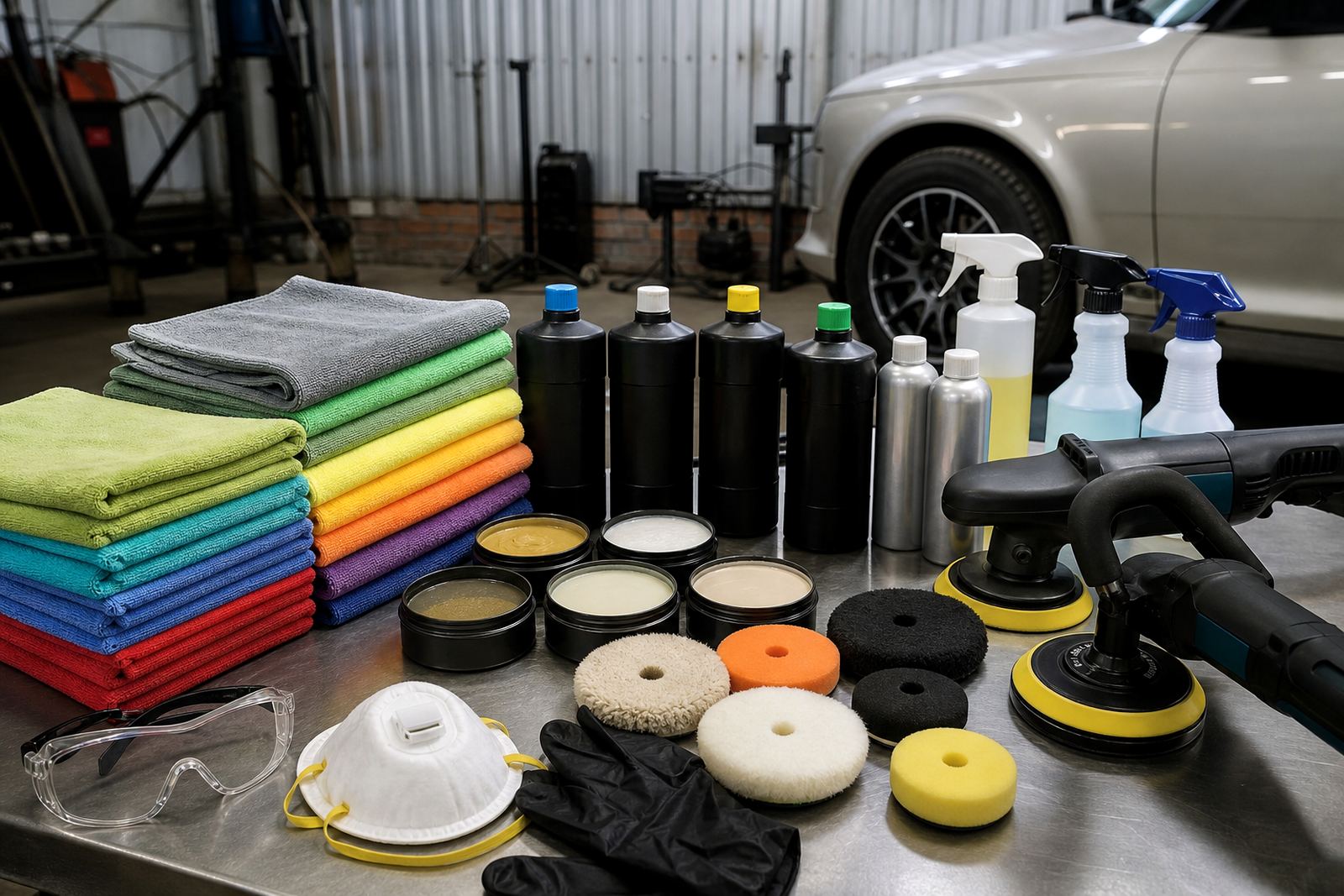
Keep the work area clear and dry. A polished floor may look tidy, but stray compound and dust can make it slippery. Use PPE that suits the job: eye protection, a dust mask when compounding dry surfaces, and gloves if your hands are in and out of strong cleaners or metal prep chemicals. Ear protection is sensible on louder units or during extended use.
- Check mains voltage and plug fit before first use
- Use a suitable extension lead with enough current capacity
- Keep the cord away from the pad and hot panels
- Work in a ventilated area when compounds produce fine dust
- Do not use near standing water or wet floors
No gas is needed for this machine. If you plan to run it from a generator, check that the output is steady enough for startup and continuous polishing, because an uneven supply can affect performance and shorten motor life.
Care, Servicing And Pad Maintenance
Good care starts after each job. Blow or brush dust from the vents, wipe the housing clean and inspect the cable for cuts or crushed sections. Check the backing plate for wobble, as a loose plate can affect finish quality and create vibration that tires the operator. If the machine starts running rough, stops under light pressure or makes a new noise, stop and inspect it before more work is done.
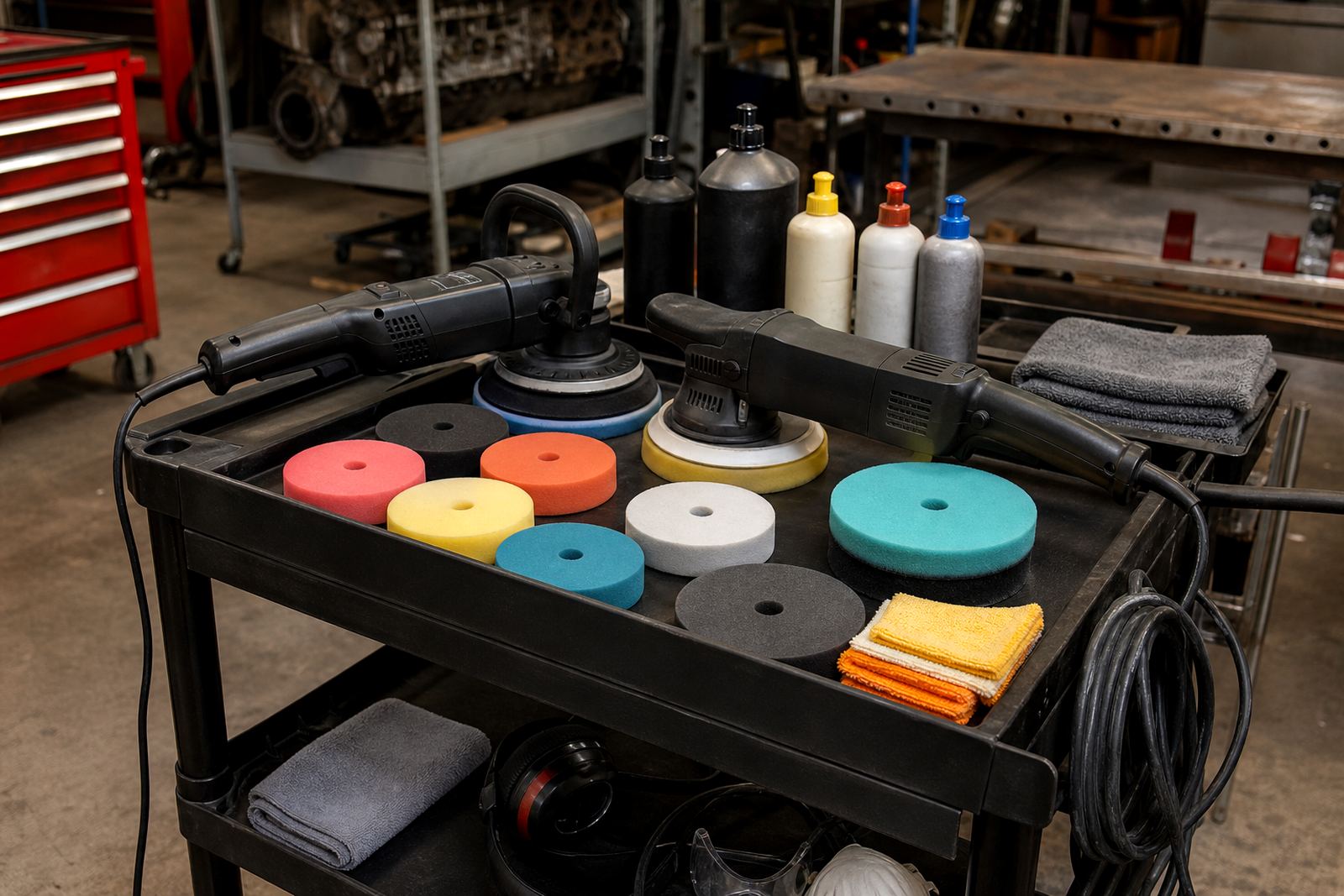
Pads need regular cleaning too. Foam pads should be washed out and left to dry flat, while microfibre or wool style pads need thorough cleaning to remove dried compound. A clogged pad generates heat and will leave a poor finish, so it is worth swapping pads before the job goes downhill.
- Clean vents and housing after each session
- Inspect cable, switch and backing plate regularly
- Wash pads and allow them to dry fully
- Store machine and pads away from moisture and dust
- Replace worn pads before they mark the surface
For shops in humid coastal areas, storage matters even more. Keep the machine off a damp floor and out of direct moisture so the motor, bearings and fasteners stay in better condition over time.
What To Check Before You Order
When you are choosing a dual-action polisher, start with the job list. If you mainly work on family cars and bakkies, a mid-size machine with variable speed is usually the best fit. If you deal with heavy correction, headlights, tight body lines or mixed metal work, ask about pad sizes, backing plate options and compatible compounds before placing the order.
It also helps to confirm whether you need a single machine or a starter bundle with pads and compounds matched to your target finish. Beginners often need practical guidance on how to pair a machine with the right cut and finishing stages. That saves time, lowers waste and reduces the chance of buying products that do not suit the paint or metal in front of you.
- Backing plate size and pad compatibility
- Speed range and soft-start function
- Cord length and plug type
- Weight and grip style for longer sessions
- Pad and compound matching for your work type
Our Germiston team supports customers across Johannesburg, Pretoria, Cape Town, Durban and Bloemfontein, with enquiry handling through the contact page form. If you need help choosing between rotary and dual-action work, or want a starter kit and a safety briefing at the same time, ask for advice before you order. It saves a lot of trial and error, which is always better than polishing a panel twice.
Key facts
| Machine type | Dual-action polisher for paint finishing and light correction |
|---|---|
| Pad sizes | Commonly 75 mm, 125 mm and 150 mm formats |
| Speed control | Variable speed with soft-start preferred |
| Power supply | Mains electric, standard workshop supply |
| Best use | Swirl reduction, finishing and controlled correction |
| Safety | PPE, ventilation and dust control recommended |