A practical starter kit for real-world paint correction
This detailing starter kit brings together the main items needed for controlled polishing on clear coat, painted panels, chrome trim and some light metal finishing work. It is put together for users who want to move beyond a single machine and trial-size products, and into a proper working set that makes sense for weekly valeting bays, home garages and small detailing rooms in Germiston, Johannesburg and Pretoria.
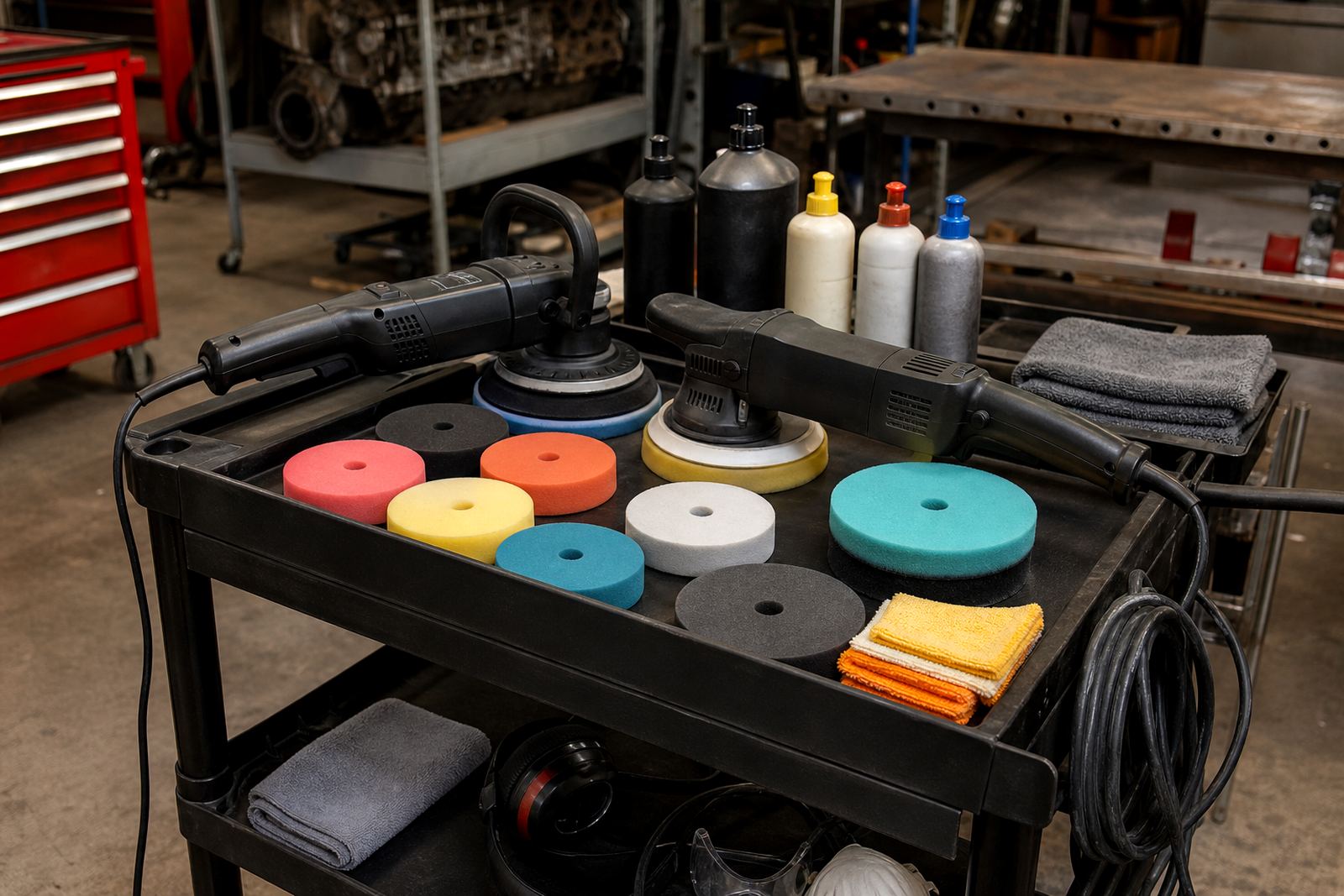
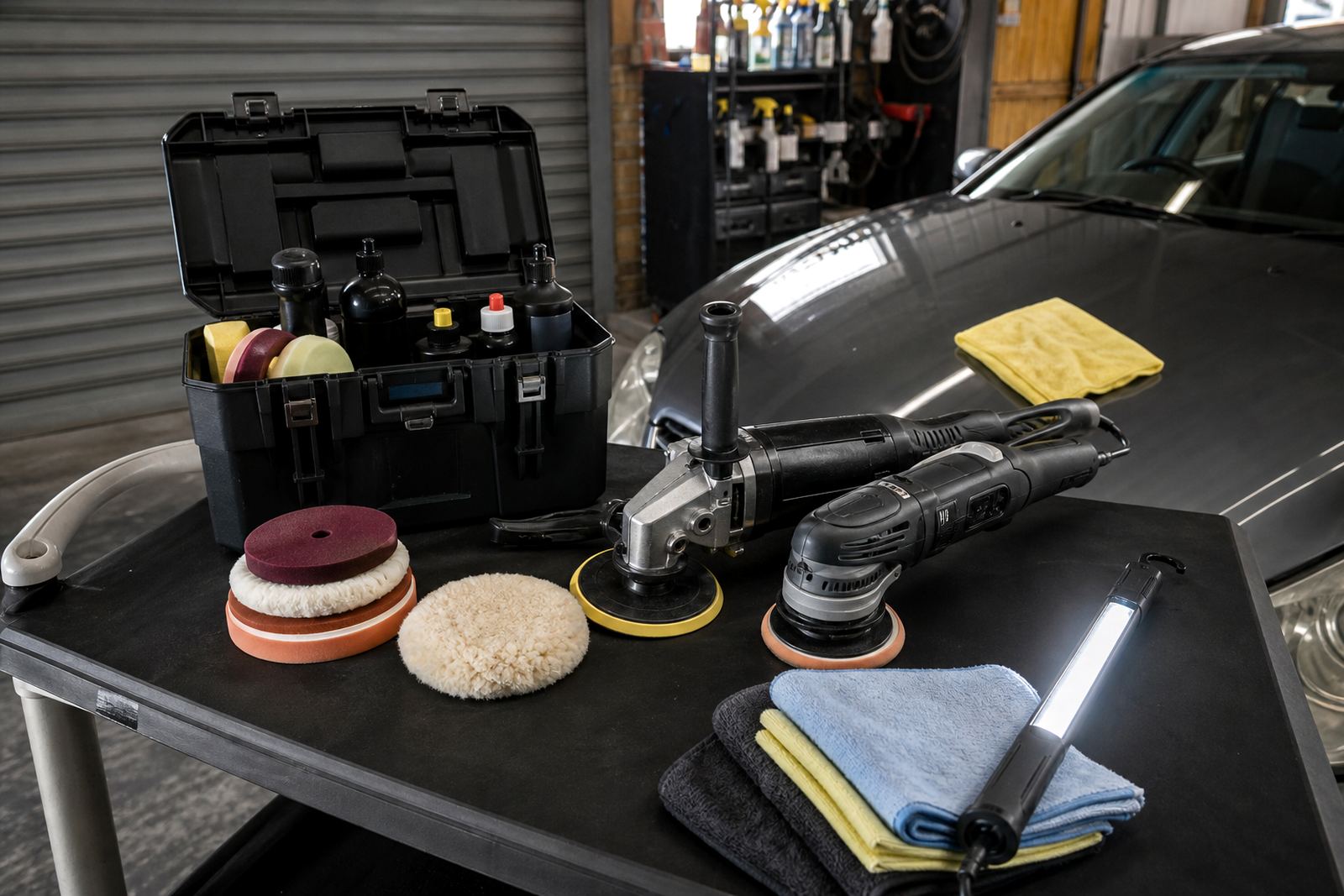
The kit generally centres on a polishing machine, a selection of foam or microfibre pads, cutting and finishing compounds, applicator accessories and basic care items. Depending on the order, it can also include a backing plate, masking tape, pad cleaning brush and a simple starter guide on pad choice. The aim is to give you a straightforward route through correction, refining and finishing without having to guess what goes together.
- Rotary polisher for faster defect removal on experienced hands
- Dual-action polisher for safer general use on paintwork
- Cutting pad, polishing pad and finishing pad options
- Compound range for heavy cut, medium correction and final gloss
- Basic cleaning and pad maintenance items for repeat use
Machine choice: rotary or dual-action
The machine you choose changes how the kit performs. A rotary polisher spins on a single axis and removes defects quickly, which is useful for heavily swirled paint, oxidised panels and metal where a stronger bite is needed. It does demand more control, since heat builds faster and the pad can mark edges if you linger in one spot.
A dual-action polisher moves in a random orbit as it spins, which makes it friendlier for most car owners and newer users. It is commonly used for swirl removal, light oxidation, wax and sealant preparation, and finishing after a heavier cut. In Gauteng summers, where panels can warm up quickly, the DA machine is often the better daily choice for safety and consistency.
- Rotary: stronger correction, higher skill requirement
- Dual-action: safer on modern clear coat and curved panels
- Both need the correct pad, speed and compound pairing
- Both work best when the surface is clean, dry and decontaminated
What the kit includes and the sizes that suit your work
A sensible detailing starter kit should match the size of your work area and the kind of vehicles you handle. For passenger cars, a 125 mm backing plate is common because it balances coverage and control. Smaller 75 mm pads are useful for bumpers, mirrors, door handles and tight body lines. On larger bakkies, SUVs and fleet vehicles, you may want a broader pad set so you are not spending unnecessary time on open panels.
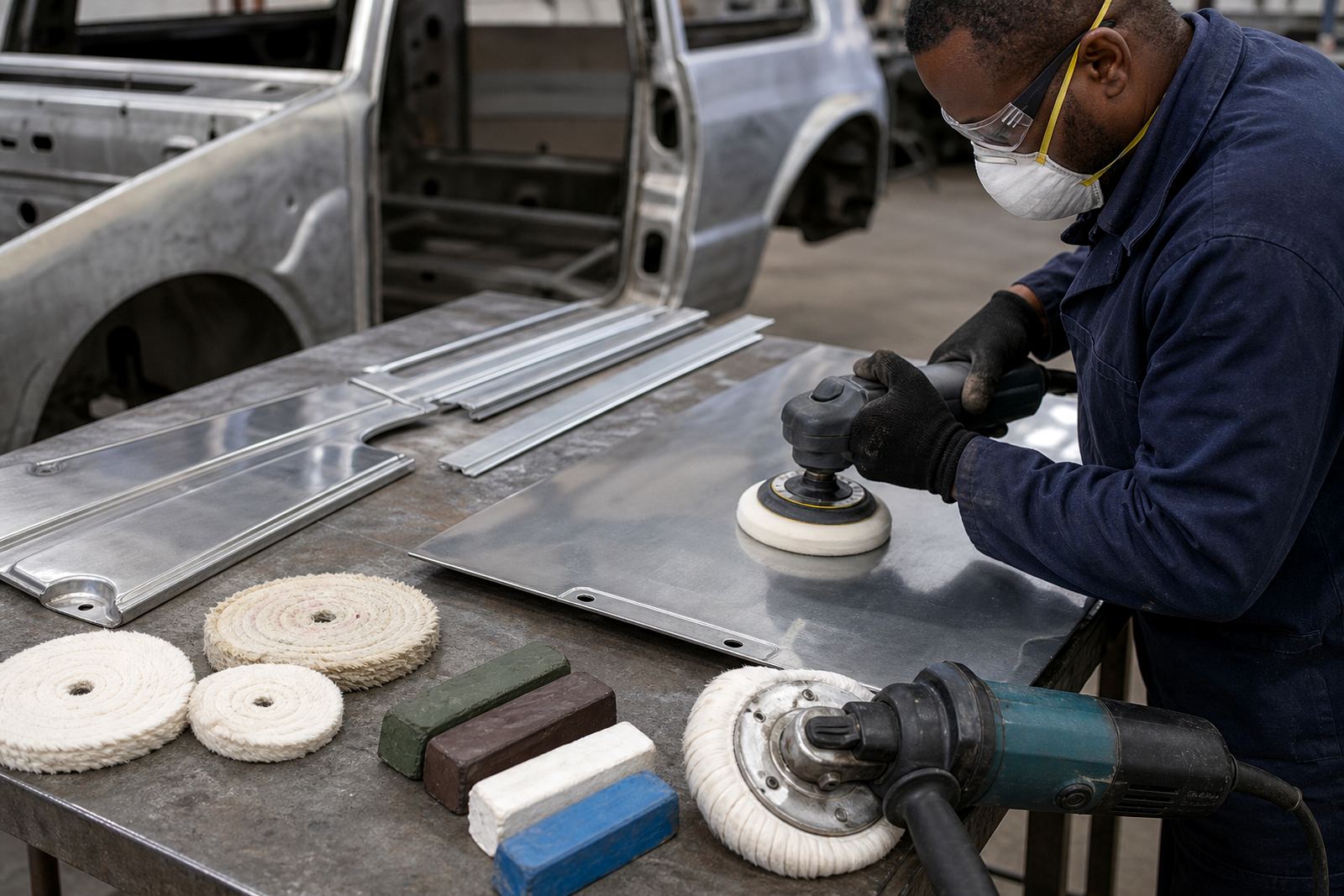
Compound choice is also important. Heavy-cut compounds remove deeper swirls and oxidation, while medium compounds refine the surface before finishing. A finishing polish is then used to bring up clarity and reduce haze. For metal parts, softer compounds and the right pad are usually better than forcing a coarse cut. The starter kit can also be configured with one or two machine options, depending on whether you are building a home setup or a small workshop in the East Rand.
- Machine sizes from compact units for tight spaces to full-size models for larger panels
- Pad diameters commonly around 75 mm, 125 mm and 150 mm
- Compound stages: cutting, refining and finishing
- Optional extras: pad washer, backing plate, microfibre cloths and masking tape
Where this kit works best
This kit suits users who want to correct paintwork properly, not just glaze over marks. It is suitable for used-car prep, private vehicle care, light restoration work, show car detailing and training sessions. It also works well for people who polish motorcycle parts, metal trims and polished accessories where a cleaner finish is needed before handover or display.
In coastal areas like Durban or Cape Town, humidity and salt air can leave surfaces dull quicker, so regular finishing and protection matter. In inland towns such as Bloemfontein and Pretoria, dust and heat can make paint look tired after a season of daily use. The starter kit gives you the tools to deal with both conditions, provided you wash properly first and avoid polishing over grit.
- Home garages and enthusiast setups
- Small detailing businesses and mobile operators
- Workshop bays handling pre-sale or pre-delivery preparation
- Training use for beginners learning pad pressure and speed control
Installation, electrical supply and workshop setup
Most machines in this kit are corded. Plug straight into a sound wall socket or a heavy-duty extension lead, and pick a cordless polisher if most of your work happens away from plug points.
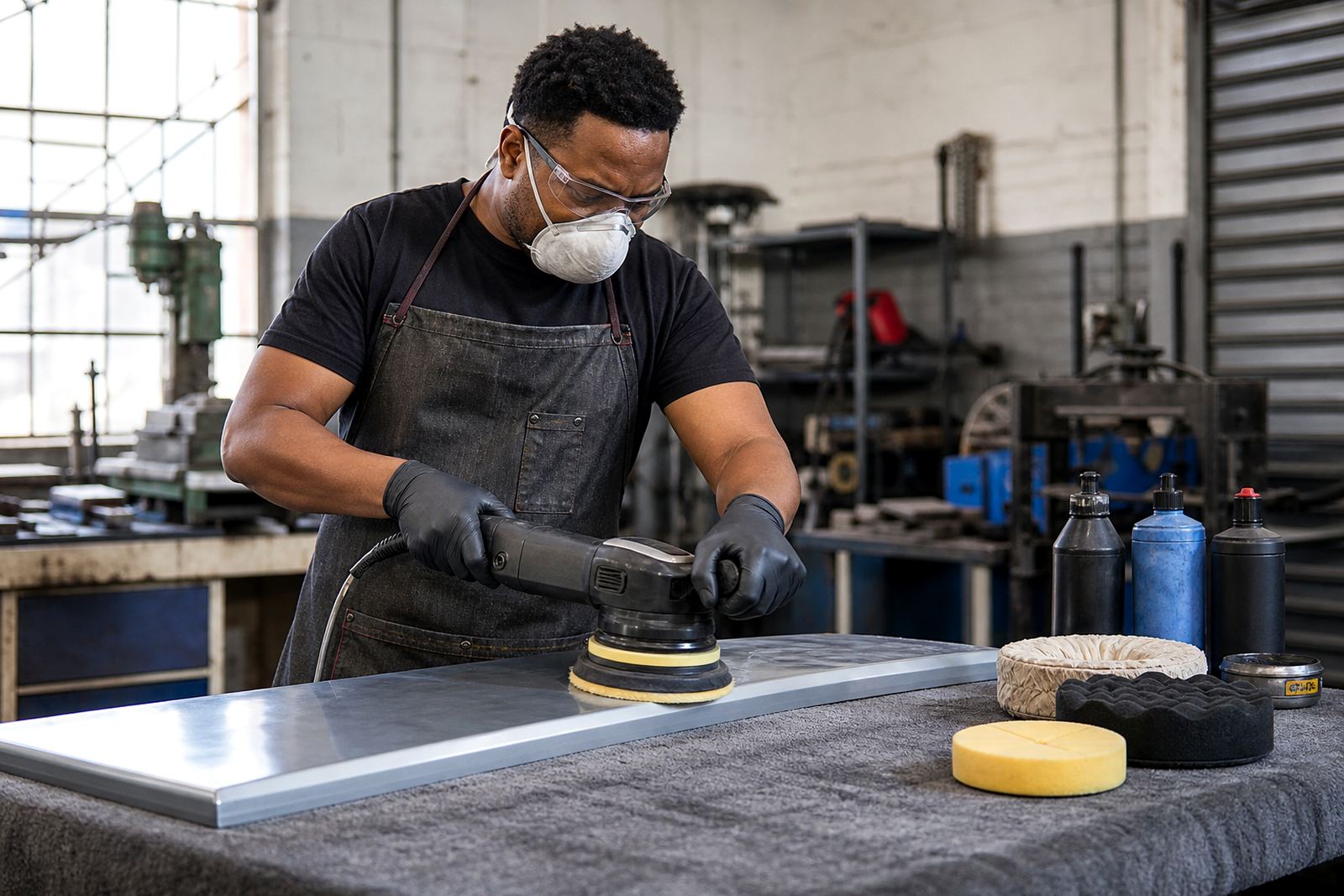
A starter polishing setup needs a tidy bench, safe storage for pads and compounds, and enough room to move around the vehicle without catching leads on panels. For mobile work away from plug points, a cordless polisher is practical. For longer polishing sessions, a corded polisher is usually the better choice. Keep cords clear of damp floors and wear PPE, especially eye protection and a dust mask when compounding or cleaning pads.
- Extension lead should be rated for workshop use
- PPE: gloves, eye protection, dust mask and hearing protection where needed
Care, servicing and ordering checks
Polishing gear lasts longer when the pads are cleaned after use, the machine vents are kept free of dust and the backing plate is checked for wear. Foam pads should be washed gently and left to dry flat. Microfibre pads need careful cleaning so the fibres do not mat down. If a machine starts vibrating, running hot or sounding uneven, it should be inspected before the next job.
Before you order, check what level of correction you actually need and whether the kit should lean more towards cutting or finishing. It also helps to confirm the size of the cars you work on, the condition of the paint and the space you have in your workshop. If you are unsure, ask for pad and compound matching so you do not end up with a set that is too aggressive for daily use or too mild for hard work.
- Check machine type: rotary or dual-action
- Confirm pad sizes and compound stages
- Look at the backing plate size and thread compatibility
- Ask whether starter kit items suit paint, metal or mixed work
Key facts
| Machine type | Rotary or dual-action, depending on kit selection |
|---|---|
| Mains supply | 220 V to 240 V AC mains power |
| Pad sizes | Commonly 75 mm, 125 mm and 150 mm |
| Use cases | Paint correction, finishing, light metal polishing and training |
| Included stages | Cutting, refining and finishing compounds with matching pads |
| Safety | Eye protection, dust mask, gloves and good ventilation required |