What a spur wheel cleaner does on wool pads
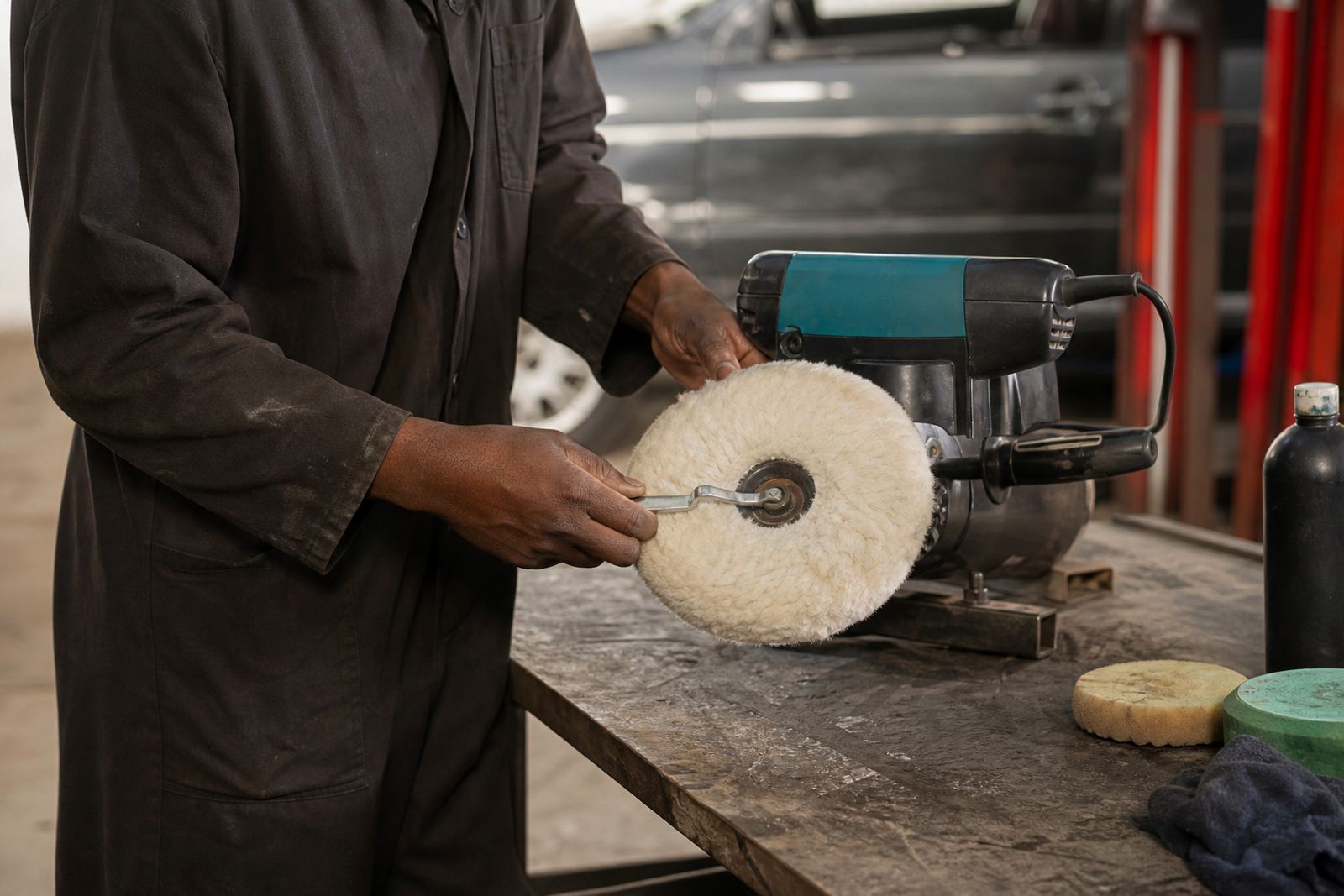
A spur wheel cleaner is used on wool polishing pads to loosen dried compound, paint residue and fine metal dust that gets packed into the fibres during use. By lifting that build-up, the pad regains its fluff and stays more consistent across the panel or section you are working on.
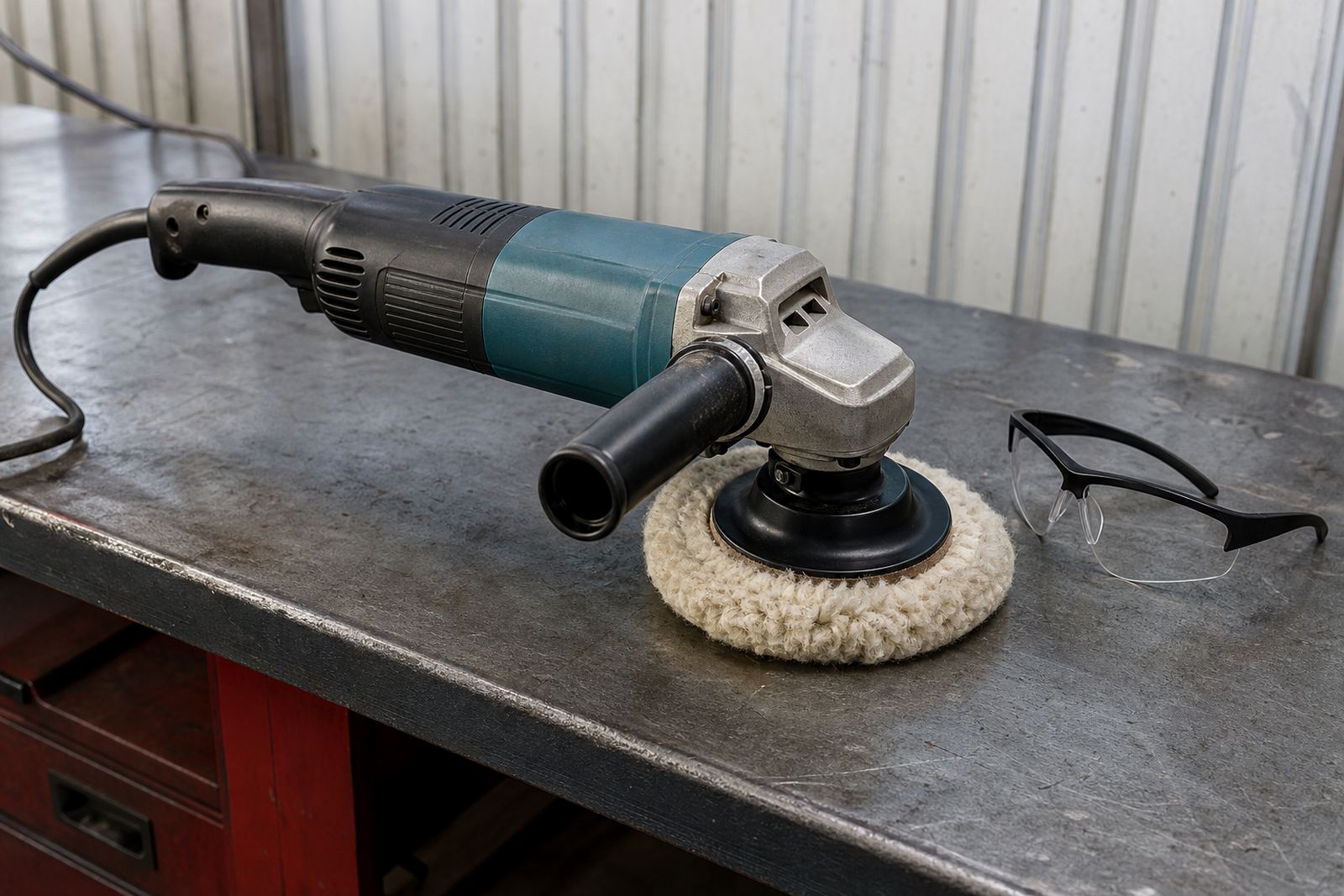
On rotary polishing work, wool pads can load quickly when you are correcting oxidised paint, polishing stainless steel, aluminium, brass or painted body panels. A spur wheel is run lightly across the pad face while the machine is stopped. It is not for aggressive scraping. The aim is to open the fibres, not damage the backing or pull the pad apart.
For South African workshops, this matters on jobs where dust, heat and long polishing runs are part of the day. In Germiston, Pretoria or Durban, a loaded pad can drag, mark the finish and waste compound. On coastal work, moisture can also make residue cling more stubbornly, so a clean pad makes the process steadier.
Sizes, grip styles and workshop options
Spur wheel cleaners are usually supplied in compact hand-held formats, with a toothed wheel mounted to a handle. Some have a longer grip for more reach, while others are short and easy to keep near the machine. The right choice depends on how often the tool is used and whether it will be kept in a vehicle, workshop trolley or training kit.
Common options to look at include:
- Compact hand spur for quick pad clearing between passes
- Longer handle style for better reach and a firmer hold
- Fine toothed wheel for regular wool pad maintenance
- Heavier duty wheel for more stubborn compound build-up
- Single tool units for starter kits or small shops
- Workshop pack options where several operators need their own tool
Suitable for mobile detailers, panel shops and metal finishing teams across Gauteng, the Cape, KZN and the Free State. Choose cordless polishers for work away from plug points, or corded models for longer polishing sessions.
Where it suits metal finishing and paint correction
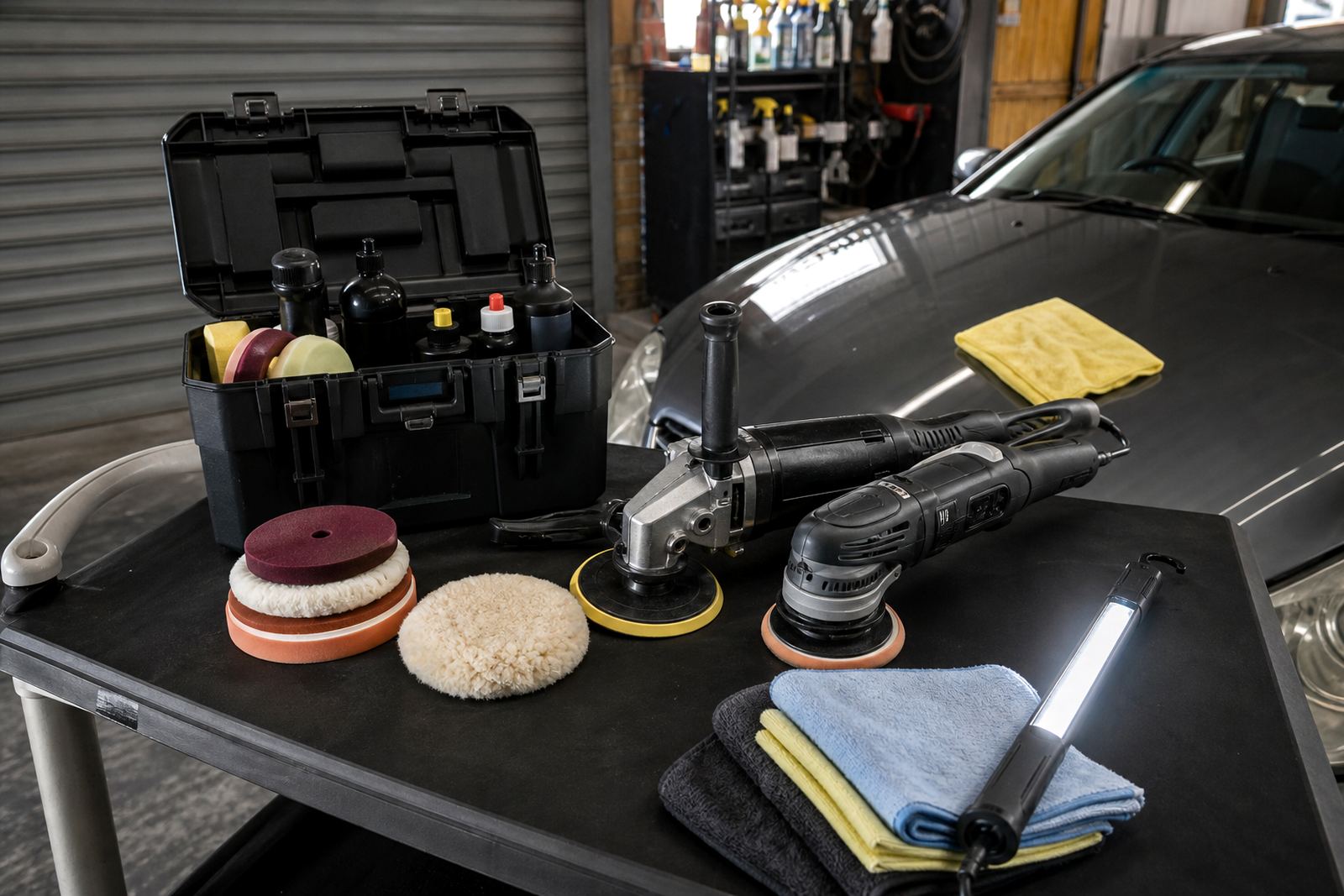
This type of cleaner suits wool pads used on rotary polishers for heavier correction work and for cutting back dull surfaces. It is also useful where a dual-action machine is used with wool or fibred pads that need regular cleaning to keep their bite. In both cases, a clean pad helps reduce the chance of hopping, dragging or patchy polishing.
It suits a wide range of tasks:
- Paint correction on cars, bakkies and fleet vehicles
- Polishing stainless steel, aluminium and other metal surfaces
- Removing compound build-up during cutting and refining stages
- Workshop training where learners need to see proper pad care
- Mobile work where pads need to be refreshed between sections
For beginners, it is a practical accessory because it helps them learn the difference between a pad that is merely dirty and one that is no longer suitable for the job. For experienced users, it saves time and keeps the finish more predictable, especially on long panels, curved bodywork and larger metal items.
How to use it safely with pads and polishers
Use the spur only when the machine is off and the pad has stopped moving. Hold the pad firmly with one hand if needed, then run the wheel lightly across the wool fibres. Short passes are usually enough. Do not dig into the backing plate or force the teeth deep into the pad, as that can shorten pad life.
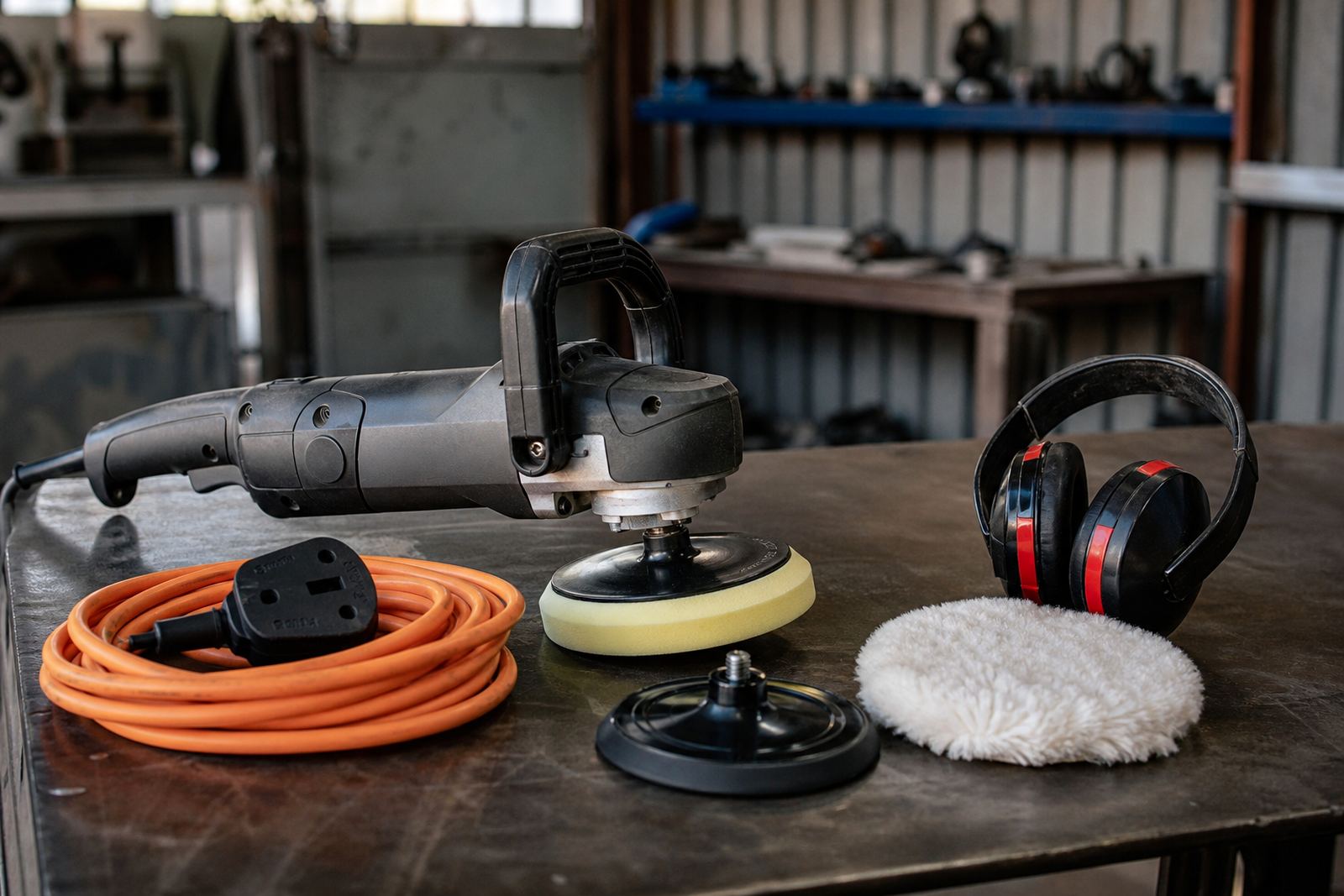
Good PPE matters on any polishing job. Wear eye protection, a dust mask where dry residue is present, and gloves if the compound or edge of the pad is rough. Keep loose clothing away from rotating tools and make sure the machine is unplugged or the battery removed before handling the pad. If dust is being created from dried residues, clean the area before the next pass so you are not grinding debris into the finish.
Practical use points include:
- Stop the machine before cleaning the pad
- Brush or tap off loose residue first if needed
- Use light pressure only, do not force the wheel
- Inspect the pad face for tears, flat spots or heat damage
- Replace pads that have lost too much loft or are shedding fibres
Care, servicing and pad life
A spur wheel cleaner itself needs little servicing, but it should be kept clean and dry. Wipe off compound residue after use and check that the wheel turns freely. If the wheel becomes bent, loose or rough in the hand, it should be replaced before it starts damaging pads.
Pad life depends on heat, pressure and how often the fibres are cleaned. Wool pads last longer when they are spurred regularly instead of being left to clog. On hot days in Johannesburg or Pretoria, pads can dry with hardened residue if they are not cleaned soon after use. In coastal air, keep them dry and covered so they do not pick up moisture and dust before the next job.
Store the tool with the rest of the polishing kit, away from sharp edges and solvent spills. If you are running a small workshop, it is worth keeping one spur per bay so there is less mix-up between clean and worn pads.
What to check before placing an order
When ordering a spur wheel cleaner, check the wheel width, handle length and overall feel in the hand. The tool should suit the size of the wool pads you use most often. A compact unit may be enough for detail work, while a longer handle can be easier if several operators are using it through the day.
Also confirm the following:
- Compatibility with the wool pads in your kit
- Whether you want a light duty or heavier duty wheel
- Use for personal kits, workshop stock or training packs
- Any need for extra pad care guidance or starter kit advice
- Delivery requirements to Germiston, Johannesburg, Pretoria, Cape Town, Durban or Bloemfontein
If you are unsure, it helps to match the cleaner with your machine type, pad size and the kind of work you do most. We can assist with pad and compound matching, starter kit consultation, workshop setup advice and safety and PPE briefing so the tool is used correctly from day one.
Practical specs for workshop and mobile use
A spur wheel cleaner is a simple manual tool, but the details still matter when you are choosing one for daily polishing work. The points below are the usual checks before you add it to your kit.
- Tool type: Manual wool pad cleaning spur
- Primary use: Removing residue and restoring loft on wool pads
- Power requirement: None
- Typical use: Rotary and dual-action polishing support
- Suitable environments: Workshop, mobile detailing, training use and onsite demos
For teams in Germiston and the East Rand, the tool is a small but useful part of day-to-day pad care. It helps keep polishing moving, which matters when you are working to a deadline or dealing with different paint systems and metal surfaces in one shift.
Key facts
| Product type | Manual wool pad cleaning tool |
|---|---|
| Main function | Lifts residue and restores pad loft |
| Power needed | None |
| Power source | None |
| Compatible use | Rotary and dual-action polishing setups |
| Typical application | Metal finishing and paint correction support |