What a Spiral Sewn Buff Does on Metal and Paint
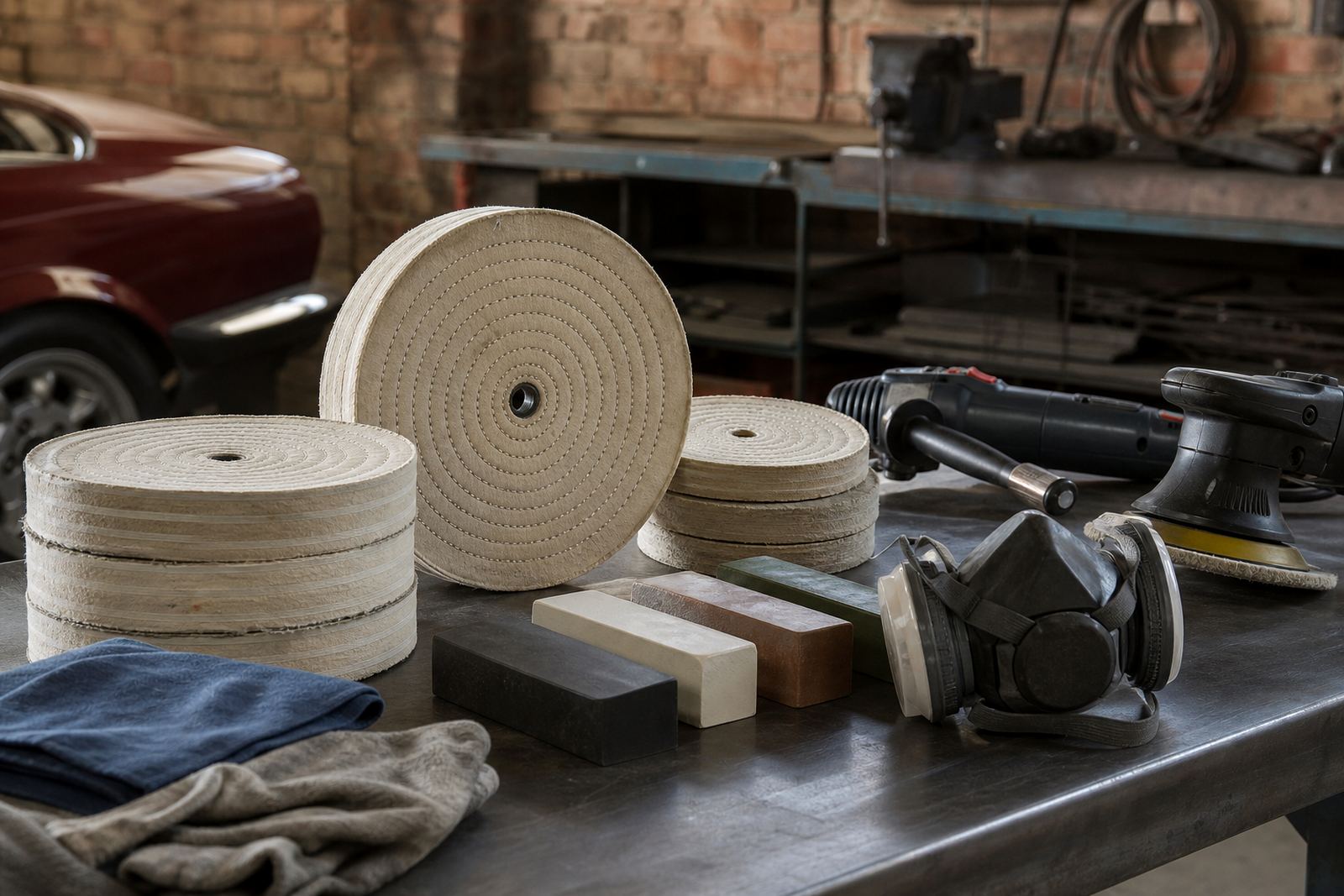
A spiral sewn buff is stitched in concentric lines so the wheel stays firmer than a loose cotton buff. That tighter construction helps the wheel keep an even face, pick up compound properly and cut more consistently on flat or slightly curved surfaces. On stainless steel, aluminium, brass and similar metals, it is commonly used after heavier correction work to bring the surface closer to a bright, even finish.
For paint, the same firm face can help with refinement when paired with the right polish and a light hand, but it is not the first choice for every panel. Heat control matters. If the pad is loaded too heavily or the machine is run too fast, you can create haze, sling compound or mark the surface. Keep the work area clean, use enough compound to lubricate, and stop often to check the temperature by hand.
This product is best treated as a controlled cutting and finishing tool, not a general purpose scrub pad. It suits users who already understand how compound breaks down, how a rotary machine behaves, and how to read the surface instead of forcing it. That is why we often recommend it for customers moving from beginner work into more precise polishing on workshop benches, trolleys, trims and components.
Sizes, Stitch Patterns and Common Build Options
Spiral sewn buffs are usually supplied in a few practical diameters so they can match the machine and the job. Smaller sizes are easier to manage on detail areas while larger wheels cover broader panels and metal sections more quickly. The most important thing is to match the buff to the backing plate and spindle size so the wheel runs true and does not wobble.
- Diameter options commonly used: 4 inch, 6 inch, 8 inch and 10 inch
- Bore and spindle fitment: check your machine shaft or arbor size before ordering
- Construction: spiral sewn layers for a firmer face and better compound carry
- Material: cotton or blended fibre, depending on the cutting feel needed
- Profile: flat face for even contact, or slightly rounded edge for controlled edge work
In South African workshops, a 6 inch wheel is often the most practical all round size for bench work, small panels and moderate metal surfaces. Larger wheels suit body panels, tanks, decorative sheet metal and wider sections, especially where the operator needs steady coverage and a smoother finishing pattern. A smaller wheel can be easier to manage on curved trim or tighter workshop spaces where a full size unit feels clumsy.
Where This Buff Fits in the Polishing Process
Think of the spiral sewn buff as part of the middle to finishing stages of the process. It is normally used after sanding marks have been reduced and before the final soft finishing wheel, if one is needed. On metal, it can help remove finer scratches, brighten the surface and carry compound into the work rather than just smearing it across the panel. On paint, it can be useful for targeted correction, but only with the correct compound and a very light touch.
This wheel is well suited to:
- Intermediate metal polishing on stainless steel, aluminium and brass
- Removing moderate oxidation and dullness from machine parts
- Refining previous sanding marks before final finishing
- Controlled polishing on panels, trims and automotive components
- Workshop and training use where consistent wheel behaviour is important
It is not the best choice for a beginner who has not yet learned machine angle, pressure control or compound loading. A firmer sewn buff will grab if the edge catches or if the operator tips the machine too far, so training and practice matter. That is especially true in busy Johannesburg or Durban workshops where dust, heat and interruptions can make rushed work more likely.
Fitting the Buff to the Machine and Power Setup
Before fitting any sewn buff, check the spindle thread, arbor size and rotation direction of the machine. Most rotary polishers used for this type of work are electric and run on standard mains power, so the main concern is stable supply, safe leads and enough room to move around the workpiece.
A spiral sewn buff should sit square on the backing plate and be secured properly. Do not use a wheel that is badly frayed, badly imbalanced or over sized for the machine. If the wheel runs off centre, the vibration can affect the finish and make control harder. When fitting, inspect the machine guard if your setup uses one and confirm that the wheel does not rub against housings, clamps or the bench.
For compressed-air systems, the same checks apply to shaft size and mounting. Air tools may feel lighter in the hand, but they still need correct air pressure and clean, dry air to perform consistently. Whatever the power source, start the machine at a low speed, let the wheel pick up compound evenly, then bring it into the work in a smooth motion.
Care, Dressing and Safe Workshop Use
A spiral sewn buff lasts longer when it is cleaned often and not overloaded with compound. If the wheel becomes glazed or clogged, it will stop cutting evenly and may start to smear. Use a buff rake or similar cleaning tool to lift spent compound from the face, and keep separate wheels for different compounds where possible so grit does not carry from one stage to the next. This is one of those workshop habits that sounds small but makes a proper difference.
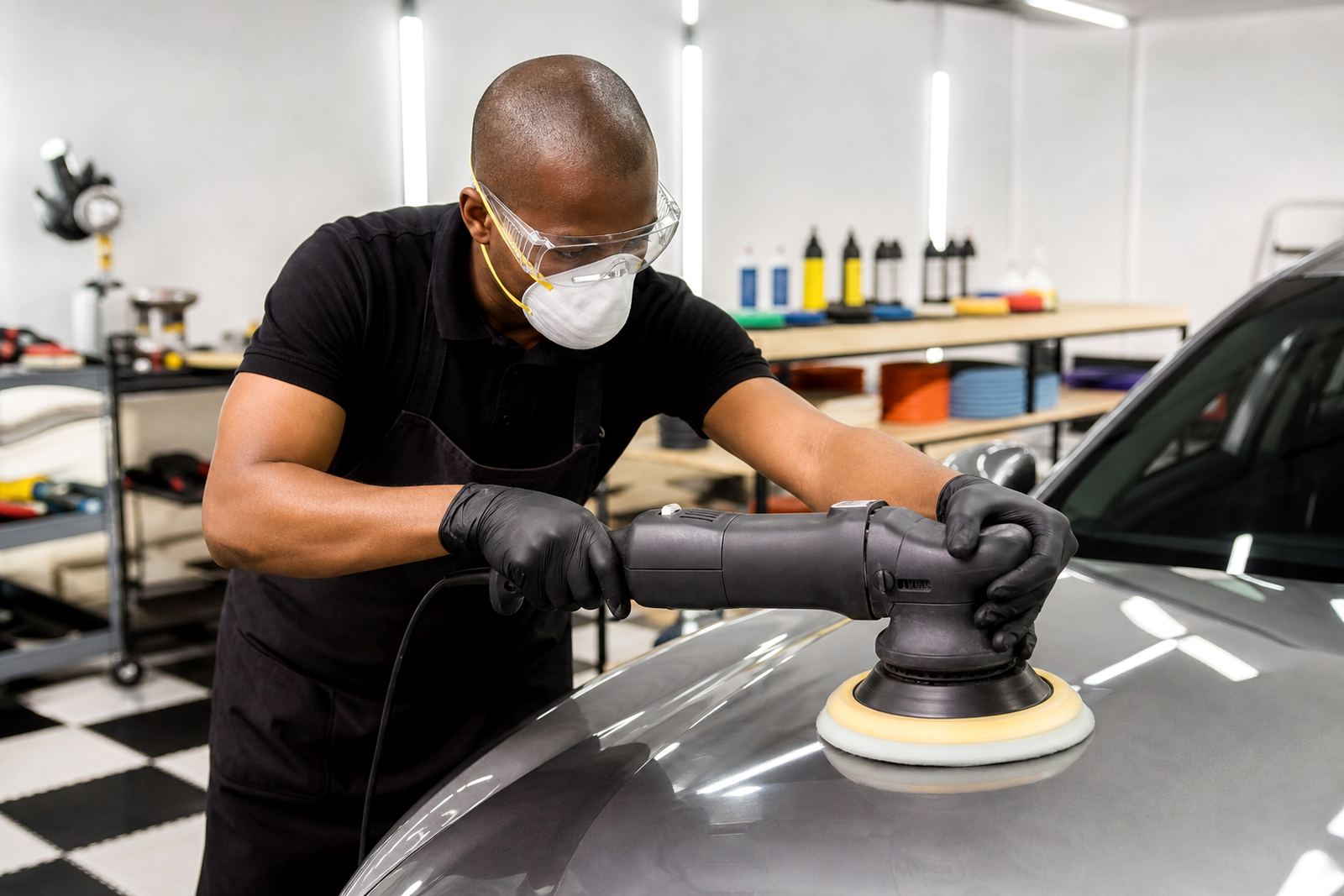
Safety matters just as much as finish quality. Wear eye protection, a dust mask or respirator suited to the material, and gloves that still allow you to feel control of the machine. Keep loose clothing, jewellery and long hair secured. On metal work, fine dust and spent compound can spread quickly, so clean the area regularly and avoid dry sweeping that kicks particles back into the air. On painted panels, watch for residue build up along edges and mouldings.
- Rake the wheel between sessions to remove loaded compound
- Store the buff flat or hung so the face is not crushed
- Keep wheels dry and away from oil, water and grinding grit
- Replace the wheel if stitching loosens or the face becomes uneven
- Use a dedicated wheel for each compound grade where practical
What to Check Before You Order
When ordering a spiral sewn buff, confirm the wheel diameter, bore size, intended machine type and the material you plan to polish. A buff for stainless exhausts is not always the best choice for fine bodywork, and a wheel chosen for aluminium may behave differently on harder steel. If you are working from Germiston, the East Rand or anywhere else in South Africa, it is worth matching the buff to the actual job rather than buying on size alone.
Also check the compound you intend to use, because the wheel and compound need to work together. A firmer sewn buff generally suits a cutting or medium grade compound better than a very soft finishing paste. If you are unsure, ask about pad and compound matching before you place the order. That saves time, reduces trial and error, and helps avoid scuffed surfaces or wasted product.
We also recommend checking your workshop setup. Make sure you have enough bench space, stable power, good lighting and dust control before starting. If you are training staff or setting up a new polishing area, it can help to pair the wheel with basic starter items, machine care guidance and a Safety and PPE briefing so the team works neatly from the start.
Key facts
| Product type | Spiral sewn buff wheel for polishing and compound carrying |
|---|---|
| Use | Intermediate metal polishing and controlled paint refinement |
| Typical sizes | 4 inch, 6 inch, 8 inch and 10 inch |
| Construction | Spiral stitched cotton or blended fibre layers |
| Compatible machines | Rotary polishers and suitable buffing setups with matched arbor size |
| Typical safety notes | Use eye protection, dust control and correct compound loading |