What a sisal buff wheel does in the first cut stage
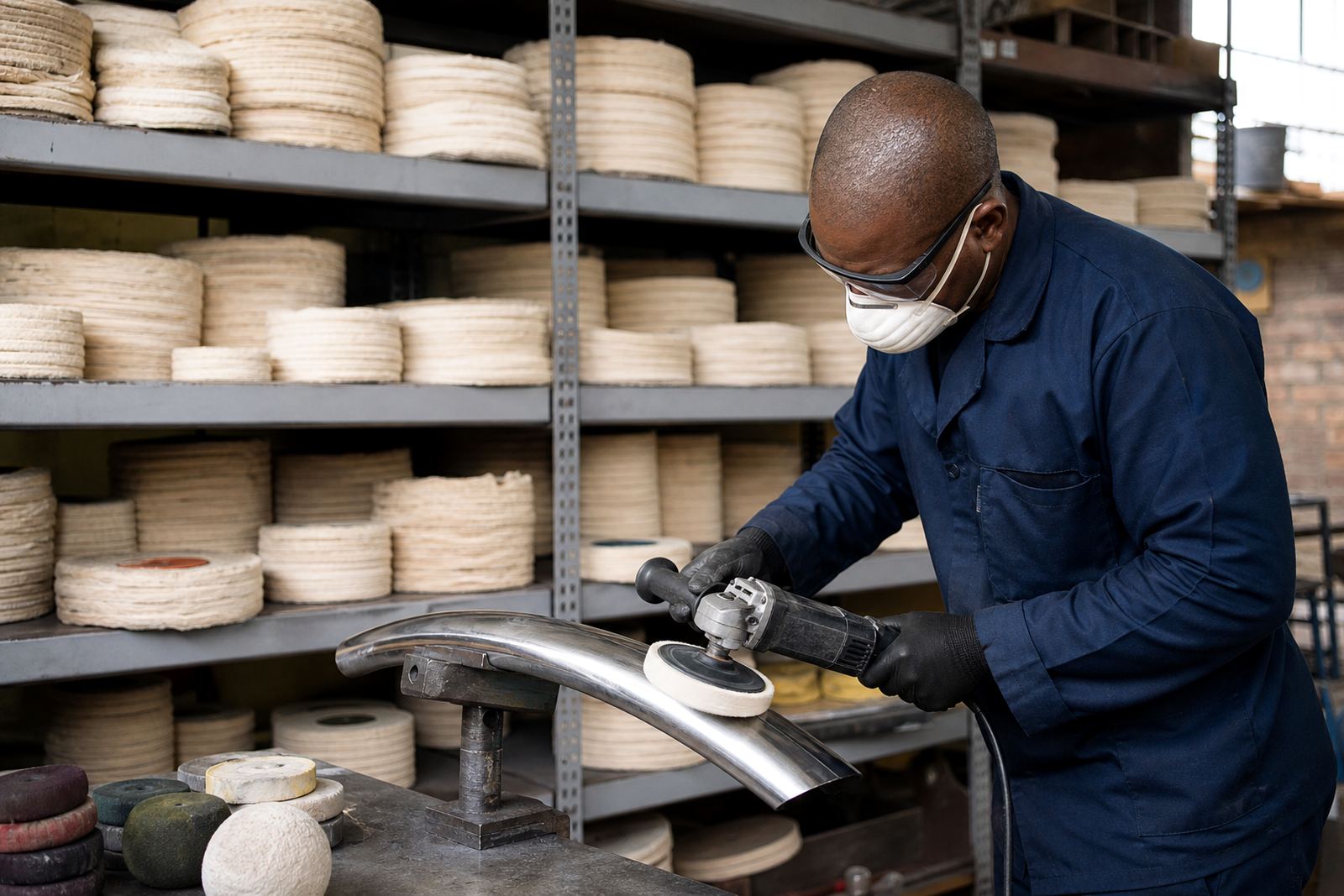
Sisal is a hard natural fibre that holds its shape under pressure, which makes it useful where a firmer bite is needed on metal. It is commonly used before cotton or stitched buffs, especially on welded parts, fabricated brackets, marine fittings, door handles, rims and other items that need the first heavy cutting pass.
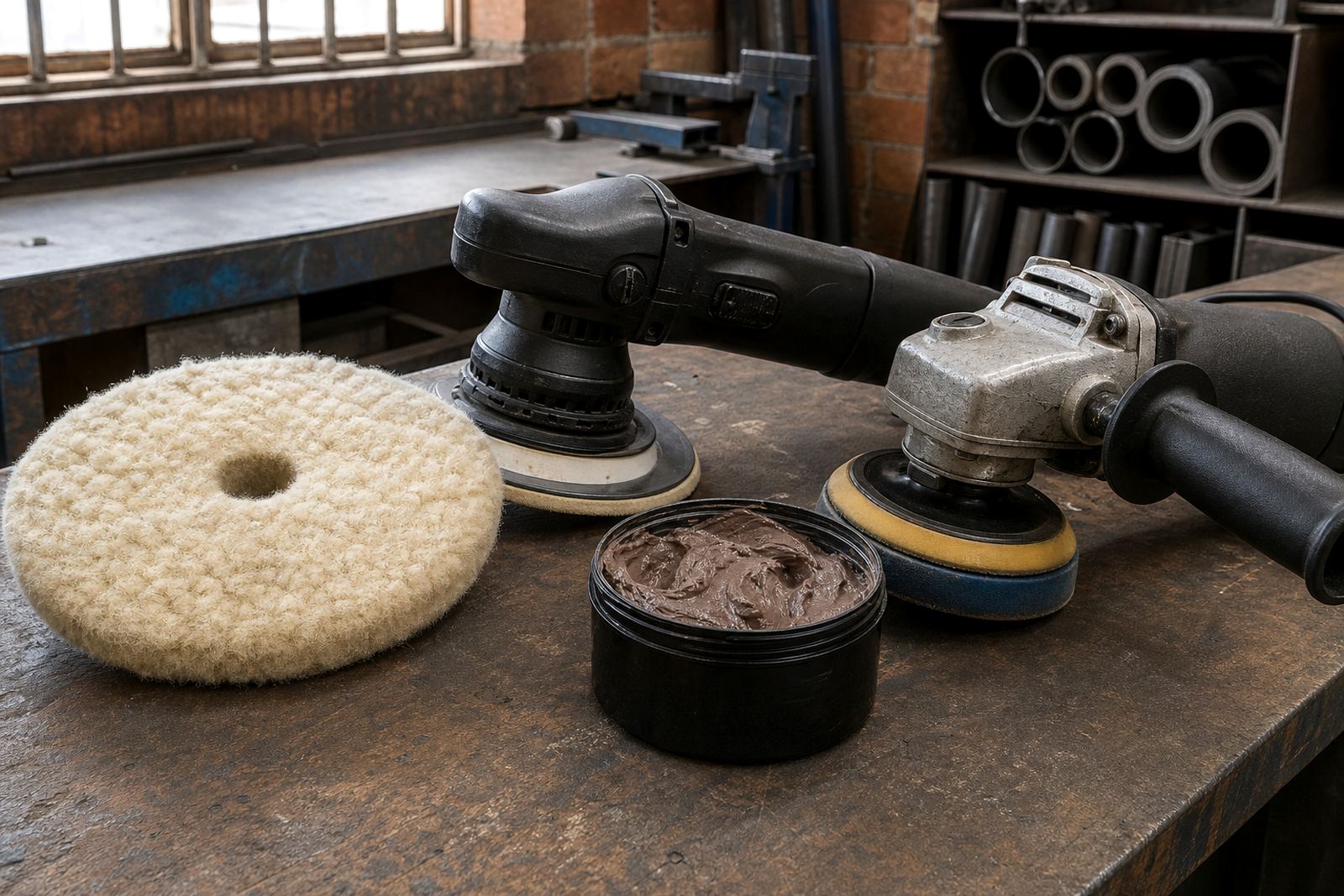
The wheel works best with a suitable cutting compound and a controlled touch. It does not finish the job on its own, and that is the point. It removes the rougher marks first so the next buff can refine the surface properly. On painted parts it is not the first choice, because a stronger cut can burn through clear coat or base coat very quickly if the operator is not careful.
For South African workshops, this matters where time, power stability and dust control all come into play.A worn or clogged wheel will cut poorly and may leave uneven swirls.
Sizes, build options and machine fitment
These wheels are supplied in practical diameters and mounting sizes for bench polishers and handheld machines with the correct spindle support. Choice depends on the machine, the job size and how much surface area you need to cover in one pass. A larger wheel gives broader contact on panels and longer bars, while a smaller wheel is easier to control on corners and tight sections.
- Common sizes: 150 mm, 200 mm, 250 mm and 300 mm
- Mounting bore and adaptor requirements must match the machine spindle
- Single wheel or stacked section format, depending on cutting need
- Suitable for rotary polishing machines with stable speed control
- Not intended for loose fitting on damaged mandrels or bent shafts
The wheel should run true with no wobble. If the mounting is off centre, the vibration increases, the cut becomes uneven and the operator tires faster. A safe setup starts with correct spindle size, a secure flange and enough clearance around the guard or work rest. In busy Gauteng workshops, it is worth checking that the machine stands level on the floor and that the bench does not move during use.
Where a sisal buff wheel suits best
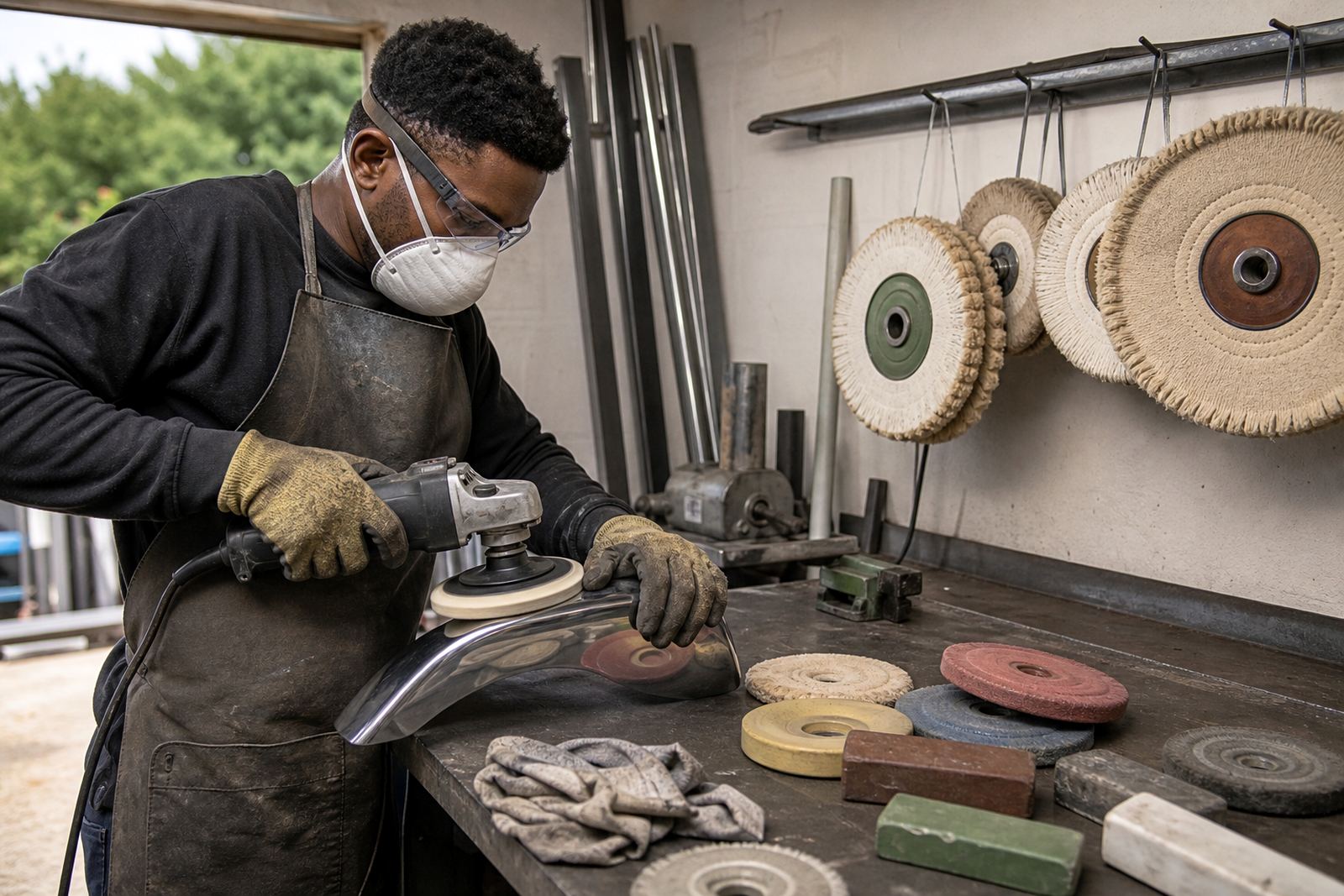
This type of wheel suits heavier cutting on metals that need serious surface preparation before finishing. It is often used on mild steel, stainless steel, brass, copper and similar materials, provided the correct compound and speed are chosen. It can also be used on car parts such as trim, wheels and fittings where the surface has been stripped and needs careful recovery.
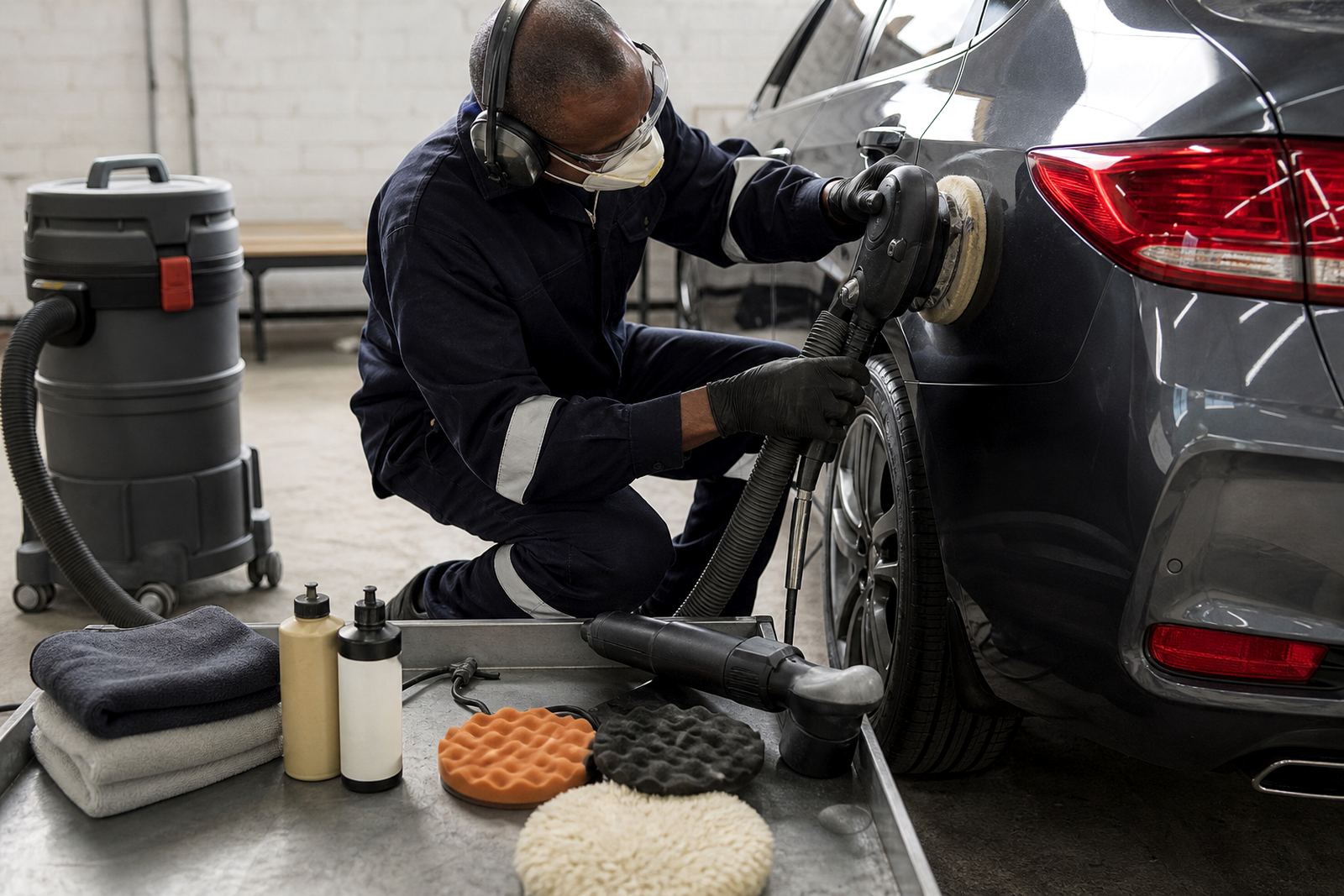
It is less suitable for final gloss work, delicate lacquer, thin plated items or soft plastics. On those surfaces the wheel may cut too aggressively. For paint correction, many technicians use it only on suitable stages and only with the right pad and compound pairing. That is why starter kit advice and technique training are important, because the same wheel can help a job or damage it depending on how it is used.
- Heavier oxidation removal on bare metal
- Pre-polish stage before finer buffs and finishing wheels
- Workshop prep on fabrications, guards, rails and fittings
- Automotive metal parts needing strong initial correction
- Controlled use on stainless and non-ferrous metals where heat is monitored
It is not a miracle wheel and it will not fix pitted metal in one pass. A good result comes from a planned sequence: clean the part, choose the right compound, test a small area, then step through the finish in stages. That saves time and reduces the risk of heat build-up.
Speed, power and safe working practice
A sisal wheel is generally used on a rotary machine with enough torque to keep speed steady under pressure. The machine must be in good condition, with the motor, spindle and guard checked before use. On heavier work, stable speed is more important than pushing the machine hard. If the motor strains or the wheel slows too much, the result becomes uneven and the heat rises.
Use this buffing wheel with a suitable electric polishing machine or workshop buffing setup. Cordless polishers suit mobile work away from plug points, while corded machines are better for longer polishing sessions.
- Wear eye protection, gloves and a dust mask or respirator where dust is generated
- Keep loose clothing, jewellery and tie-backs clear of the wheel
- Do not overfeed compound, as this clogs the fibres and reduces cut
- Use a firm grip and work the wheel off the edge of the job with control
- Stop and inspect the part often to avoid burning or chasing the same patch too long
Dust safety matters. Old compound, metal fines and surface residue can become airborne, especially when the part is dry and the wheel is working hard. Good extraction, a clean floor and regular housekeeping help keep the area safer. Keep children and untrained helpers away from the work zone.
Care, dressing and service life
A sisal buff wheel lasts longer when it is kept clean and not overloaded with compound. After use, knock out loose residue, let the fibres cool and store the wheel away from moisture. Coastal humidity can affect storage, so in Durban and other humid areas it is best to keep wheels in a dry cabinet or sealed tote, not left on the floor.
If the wheel becomes glazed, clogged or uneven, dress it lightly and check that it still runs straight. Frayed edges or loose stitching are signs that replacement may be due. When a wheel is used on rough steel, the fibres wear faster than on light cleaning work, so service life depends on the job mix and how often it is used. A damaged wheel should not be forced back into service.
Do not wash it with harsh solvents unless the compound supplier has confirmed that the cleaner is safe for the fibre and stitching. Harsh treatment can harden the wheel or weaken the bindings. Keep separate wheels for separate jobs where possible, especially if you move between coarse metal work and finer finishing work, because cross contamination can ruin a good finish.
What to check before you order
Before ordering, match the wheel to the machine and the stage of work. The right choice depends on spindle size, wheel diameter, mounting style and whether the job is metal prep or a first stage on automotive parts. If you are unsure, it helps to compare the wheel size against the part size and the room available around the bench. A too large wheel can be awkward on small items and a too small one can slow production down.
- Machine spindle or arbor size
- Wheel diameter and thickness
- Type of job, metal or vehicle part
- Required compound and cutting stage
- Workshop power setup and machine speed range
- Whether you need one wheel, a pair or a starter kit with matching consumables
It is also worth checking whether your team needs training on rotary control, pad and compound matching or a Safety and PPE briefing. A Sisal buff wheel performs best when the operator understands pressure, angle and heat control. That is why beginner support, onsite team demos and workshop setup advice are often as useful as the wheel itself.
Key facts
| Product type | Heavy-cut sisal buff wheel for metal polishing |
|---|---|
| Common diameters | 150 mm, 200 mm, 250 mm, 300 mm |
| Typical use | First cut stage before finer buffing and finishing |
| Compatible machines | Rotary polishing machines with correct spindle fit |
| Material suitability | Steel, stainless steel, brass, copper and similar metals |
| Care | Keep dry, clean regularly and replace when fibres or stitching are worn |