
What a cotton buff wheel does in the finishing sequence
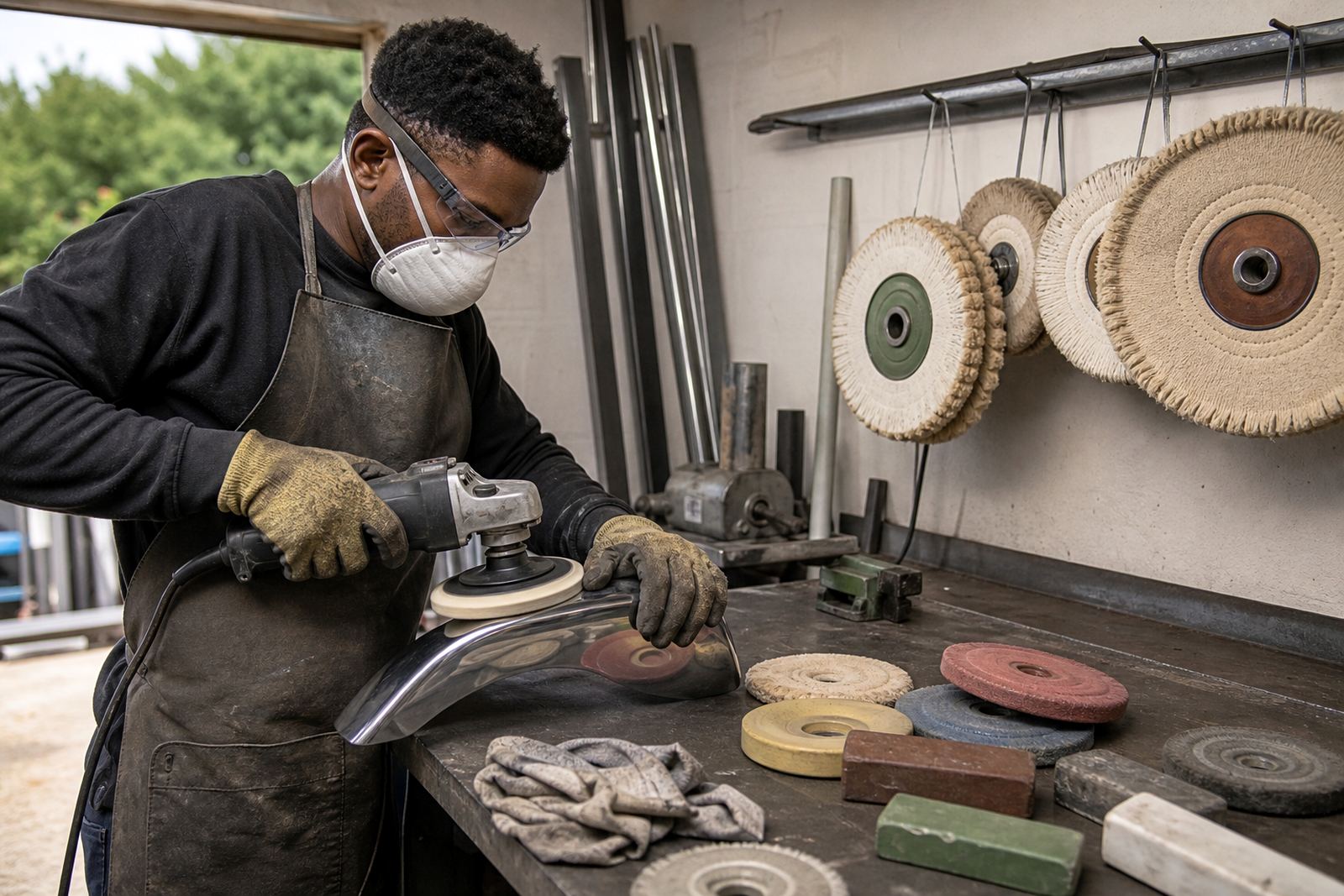
A cotton buff wheel is a soft polishing wheel used after sanding or cutting compounds have already removed heavier defects. It helps bring the surface closer to a clean, even finish by carrying a polishing compound across the workpiece with steady contact and controlled pressure. On bare metal, that can mean less haze, fewer fine scratches and a more uniform look before final hand finishing or another machine stage.
In metal shops around Germiston, Johannesburg and Pretoria, cotton buffs are often used on flat panels, trim, brackets, decorative parts and turned items where a softer wheel is needed than a cutting mop. They are also useful on repair work where heat must be kept under control, because a cotton wheel with the right compound can work efficiently without digging in too hard. Technique still matters, so the operator should keep the wheel moving and avoid lingering on edges.
- Best used after cutting or initial correction
- Suitable for non-ferrous metals and many steel finishing jobs
- Works with a matching compound for the required sheen
- Can be used on bench polishers or suitable hand-held machines
Sizes, build and fitment options to check before you order
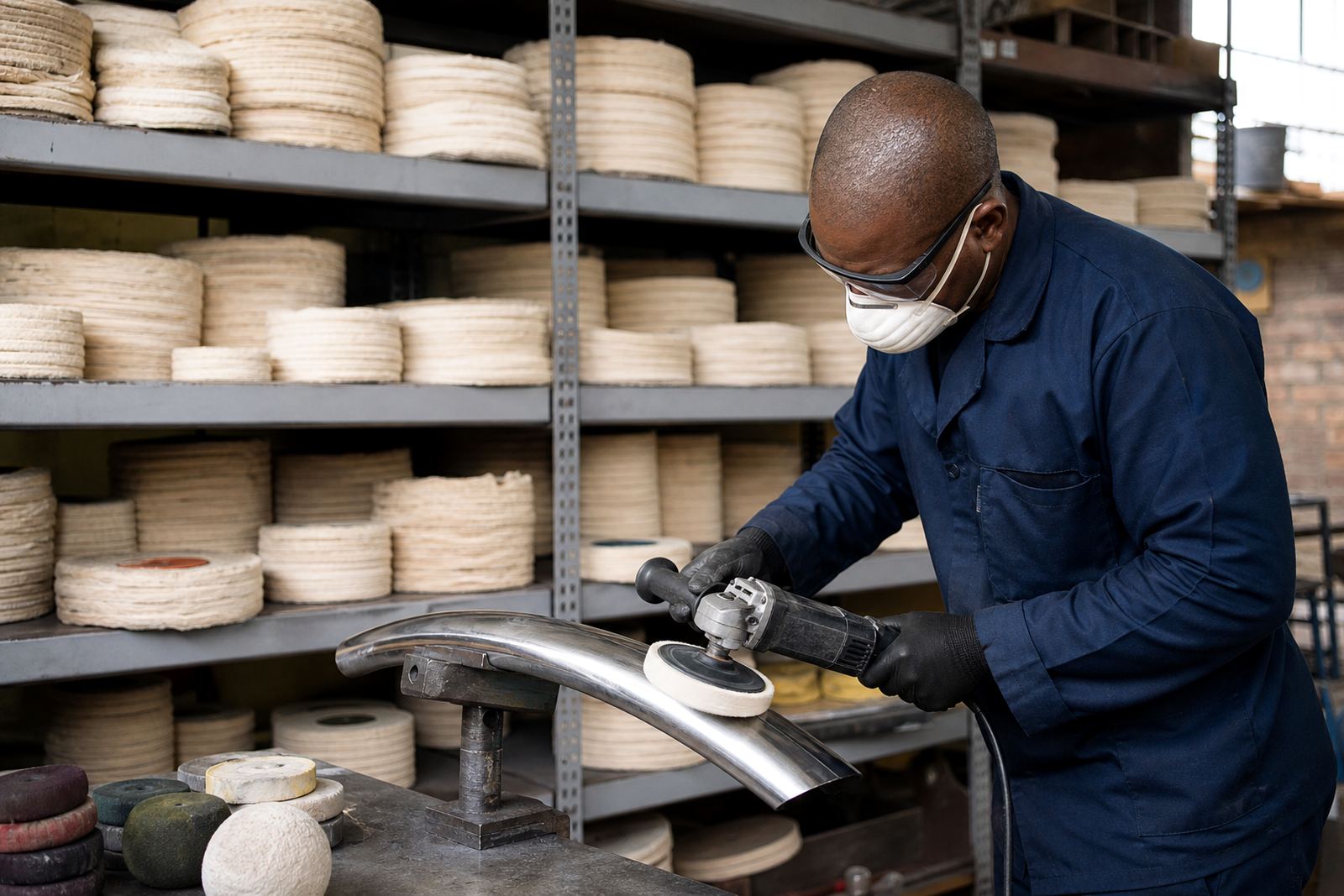
Cotton buff wheels are available in a few practical sizes and constructions, and choosing the right one depends on your machine spindle, the space around the job and the finish you want. Smaller wheels suit detailed work and narrow parts, while larger diameters suit broader surfaces and faster coverage. A stitched wheel is firmer and holds shape well, while a loose cotton wheel gives a softer action for final finishing. The wrong wheel for the wrong job can leave swirl marks or slow the work down.
When ordering, check the bore size, arbor fit and whether your machine runs on a left-hand or right-hand spindle arrangement where relevant. For workshop use in South Africa, also consider whether the wheel will be used on a bench motor, a pedestal unit or a portable machine brought out for site work. A wheel that is too large for the guard or too soft for the task can cause wasteful flexing and uneven results.
- Common diameters: 150 mm, 200 mm, 250 mm and larger workshop sizes
- Common bore and arbor options: machine specific, confirm before fitting
- Wheel style: stitched, loose cotton or layered construction
- Use case: detail polishing, general finishing or final lustre work
Where cotton buffs suit metal and paint finishing work
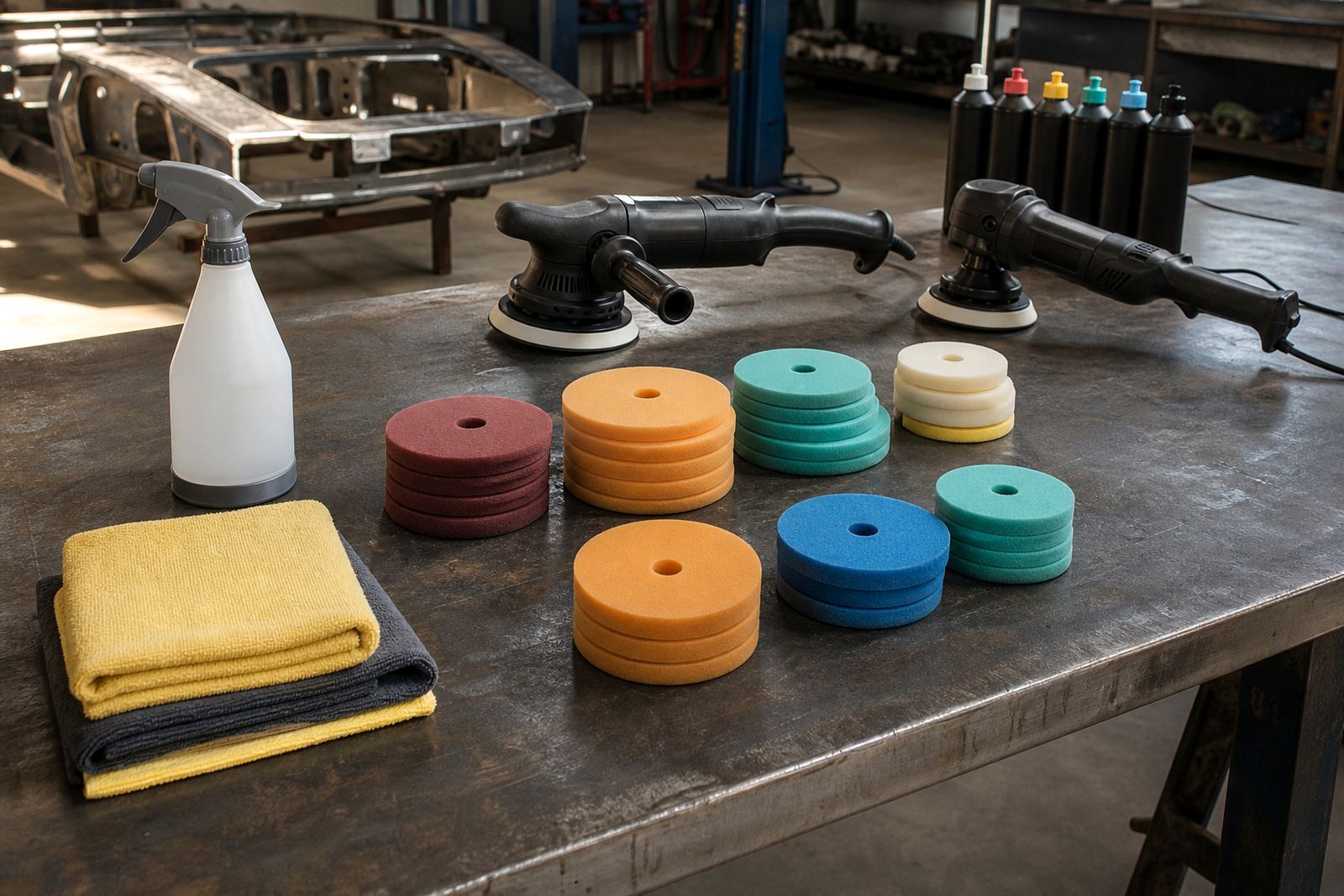
Cotton buff wheels are mainly used on metal, but they can also play a role in paint finishing when used with the correct approach and a compound meant for coated surfaces. On metal, they suit stainless steel, mild steel, aluminium, brass and copper when the operator wants a smoother sheen after the cutting stage. On automotive work, they are more often used for final correction on cured surfaces, but only where the pad, compound and speed are matched carefully.
For car finishing in Durban, Cape Town or along the coast, humidity and airborne dust can affect the result, so the work area must be kept clean and the panel wiped down often. On metal, a cotton wheel can be especially useful for decorative parts, guards, fittings, housings and restoration jobs where a hand finish would take too long. It is not a substitute for proper preparation, because scratches left from earlier stages will still show through if the surface was not cut correctly first.
- Metal polishing on stainless steel, aluminium, brass and mild steel
- Fine finishing on cured paint where suitable compounds are used
- Restoration work, custom fabrication and decorative parts
- Repair work where heat control and surface consistency matter
Machine speed, power and safe operating setup
A cotton buff wheel needs a machine with suitable spindle speed and stable mounting. Too much speed creates heat, burns compound and can mark the surface, while too little speed makes the wheel drag and load up. The exact speed depends on wheel diameter, construction and the compound being used, but the general rule is to start conservatively and increase only as needed. For larger wheels, a lower surface speed is usually better than forcing the job.
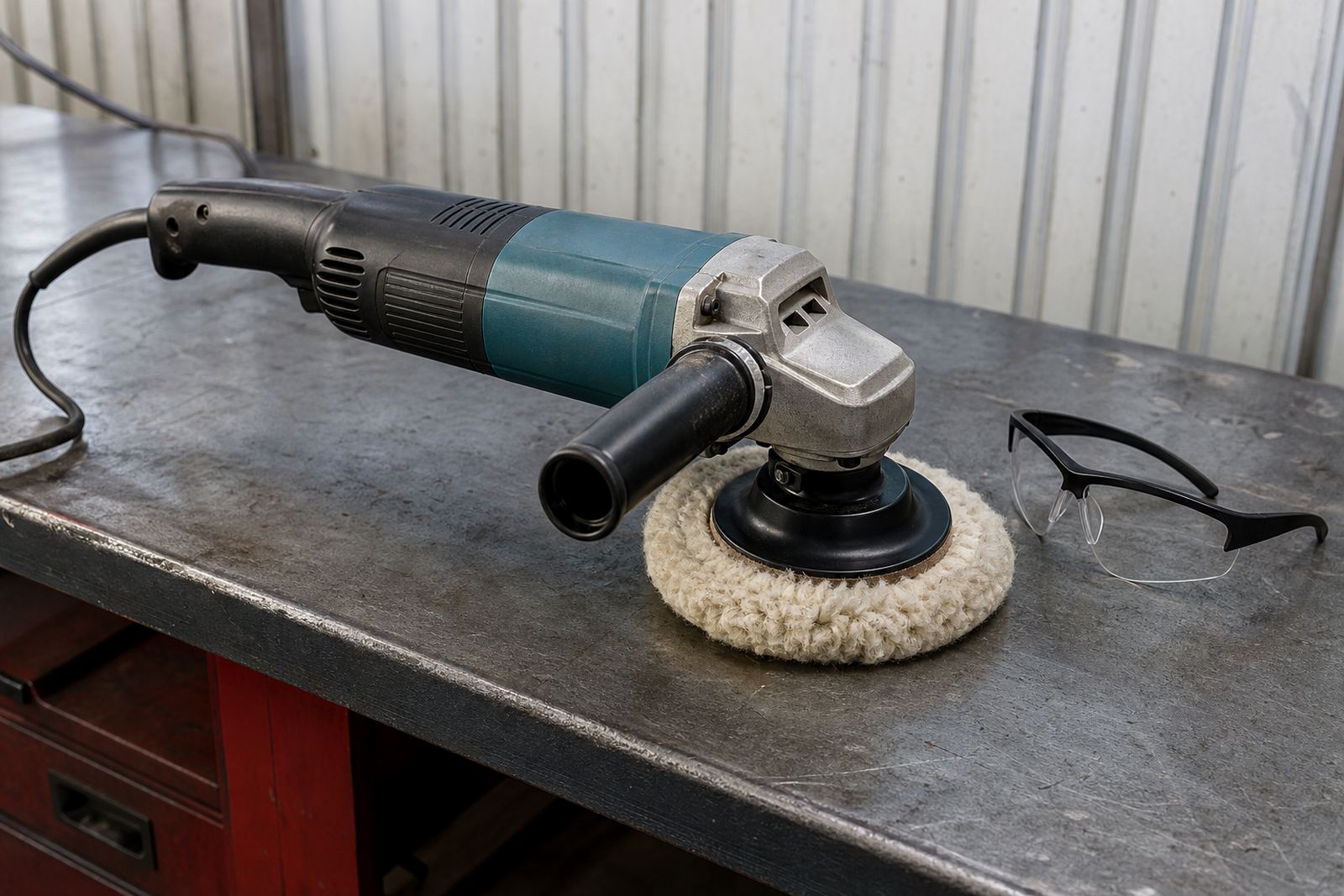
Power requirements depend on the machine, not the wheel itself. Bench and pedestal polishers are often selected for workshops, while portable units suit site work or vehicle finishing. The wheel does not need any gas supply. What matters is a steady electrical feed, sound machine condition and enough room to handle the part safely. Because polishing creates fine residue, dust control and PPE are essential.
- Use with a stable machine and correct spindle fitment
- Mains electricity only, no gas requirement
- Wear eye protection, gloves where appropriate and a dust mask or respirator
- Keep loose clothing, jewellery and long hair secured
How to keep a cotton buff wheel clean and working properly
A cotton buff wheel lasts longer when it is cleaned, dressed and stored properly. Once the wheel starts to load with spent compound and fine residue, it stops cutting evenly and may start smearing instead. That is a common issue on busy shops where multiple metals are polished in the same day. A simple wheel rake or dressing tool can help restore the face, while careful compound choice prevents overloading in the first place.
After use, let the wheel cool before storage and keep it dry. In coastal areas, moisture can affect both the wheel and the machine, so do not leave consumables lying in a damp workshop overnight. Check for frayed stitching, damaged centres and uneven wear. If the wheel starts to wobble, shed fibres or leave inconsistent marks, remove it from service and inspect the fitment and spindle condition before using it again.
- Clean off built-up compound regularly
- Dress the wheel when it starts to glaze or load
- Store in a dry place away from moisture and grit
- Replace wheels with frayed edges, wobble or uneven wear
What to confirm before placing your order
Before ordering a cotton buff wheel, confirm the machine size, spindle type, intended material and the finish you want to achieve. A wheel chosen for final colour on stainless steel may not be the right one for general metal prep, so it helps to match the wheel to the stage of work. If you are setting up a new workshop in Gauteng or supplying teams across South Africa, it also helps to list the machines already in use so the wheel can match them without rework.
We also recommend checking the compound being used, the speed of the machine and the level of operator experience. If the team is new to polishing, a softer wheel and clear guidance on pressure, overlap and edge control will reduce waste.
- Machine type, spindle size and mounting arrangement
- Wheel diameter, thickness and construction style
- Material being polished and stage of the process
- Compound type, operator skill level and workshop conditions
Key facts
| Product type | Cotton buff wheel for polishing and refining metal surfaces |
|---|---|
| Typical sizes | 150 mm, 200 mm, 250 mm and larger workshop sizes |
| Construction | Stitched cotton, loose cotton or layered build depending on finish required |
| Suitable materials | Stainless steel, mild steel, aluminium, brass and copper |
| Power requirement | Use with a suitable electric polisher |
| Use stage | After cutting and before final hand finishing or colour polishing |