
What a Medium-Density Foam Polishing Pad Does
A foam polishing pad sits between heavy cutting and final finishing. This medium-density pad is designed to take out haze, light swirls, sanding marks in the finer range, and minor machine traces left after a more aggressive compound. On a properly prepared surface, it helps bring back a cleaner reflection without leaving the heavy bite of a cutting pad.
It is commonly used on automotive paint, clear coat, gelcoat and coated metal panels where you want controlled correction and a more even gloss. On polished aluminium, stainless steel and similar surfaces, it can help refine the finish after compounding. The key is to work slowly and keep the pad flat, especially on edges and curves where heat can build up quicker than many people expect.
For South African workshop conditions, this matters on hot days in Gauteng and in humid coastal areas where product behaviour can change a bit. A pad that is too hard can leave marks, while one that is too soft may not clear the last step properly. Medium-density foam gives a balanced option for hobby users and professional detailers alike.
Sizes, Fitment Options and Machine Compatibility
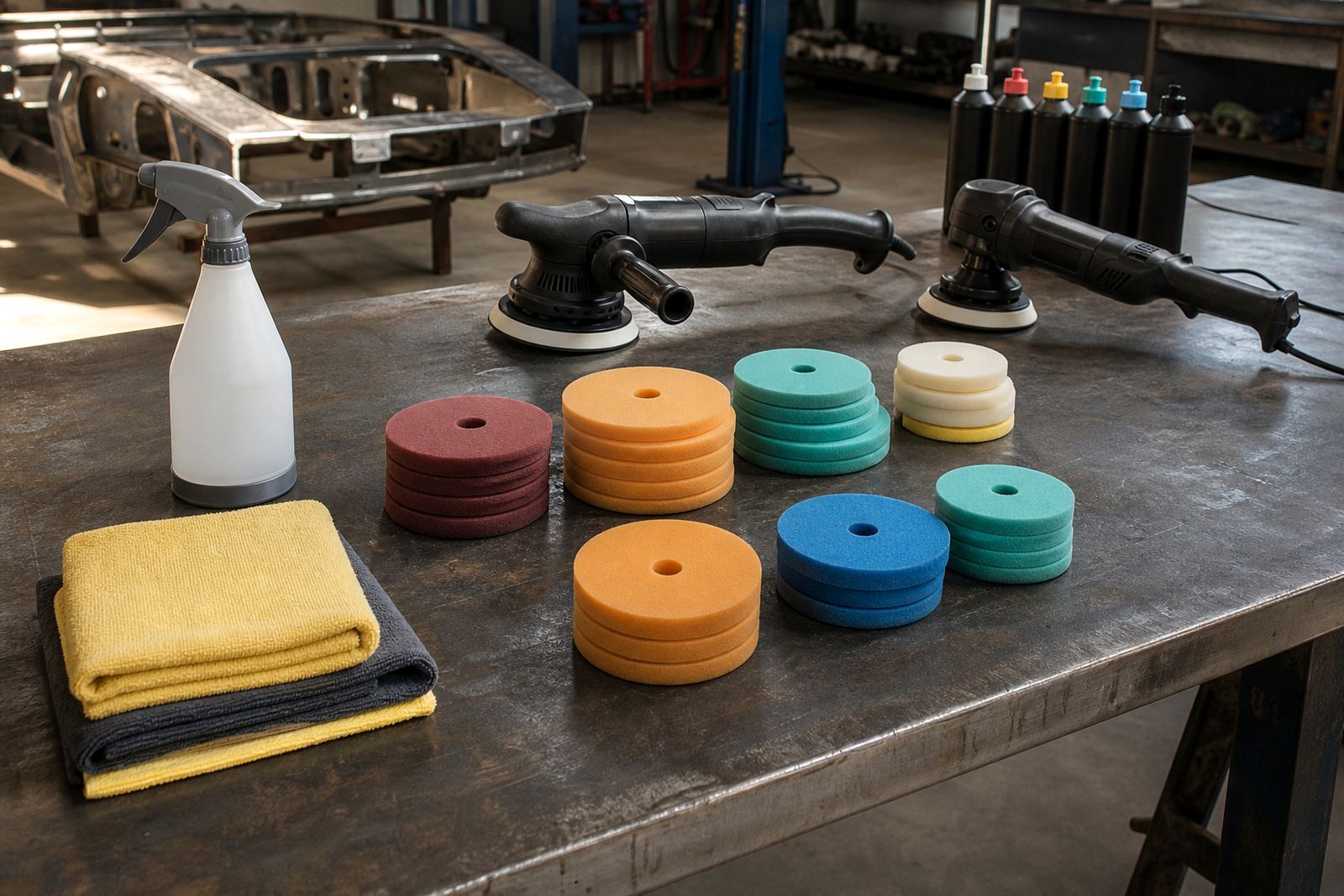
We supply foam polishing pads in common sizes for hand-held machine work and controlled finishing. The right size depends on the panel area, machine backing plate and the level of access around mirrors, door handles, bumpers and body lines. Smaller pads are easier to control on tight panels, while larger pads suit doors, bonnets and flat metal sections where consistent coverage matters.
- Typical sizes: 75 mm, 100 mm, 125 mm and 150 mm working faces
- Backing type: hook-and-loop for quick change use
- Machine use: rotary polishers and dual-action polishers
- Best backing plate match: usually slightly smaller than the pad face for stability
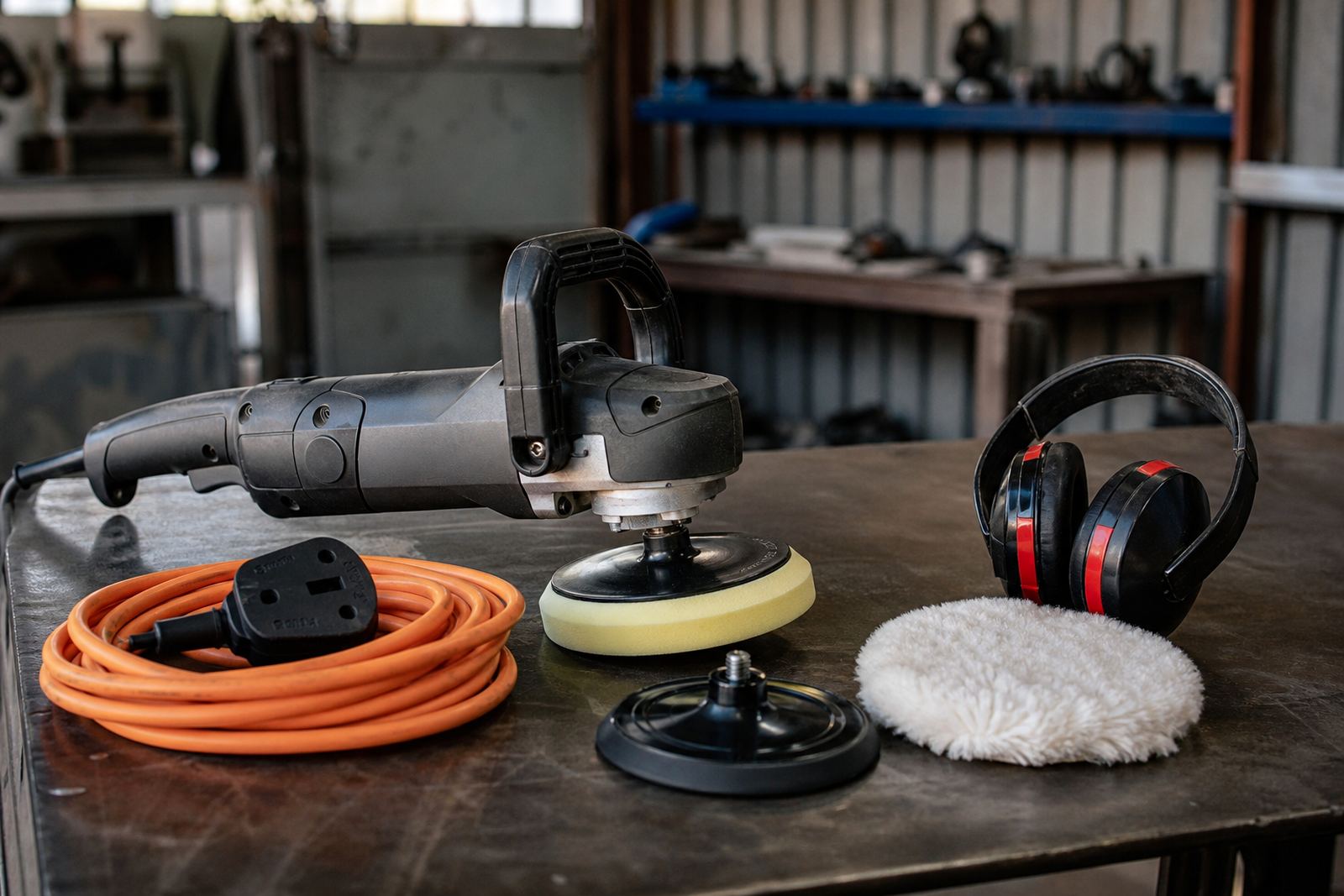
The pad does not draw power or need gas on its own, because it is an accessory used with a polishing machine. What matters is that the machine speed, pad size and compound suit the job. A rotary machine gives a more direct cutting action, while a dual-action machine is often easier for slower, safer correction on paint. If the backing plate is too large or too small for the pad, you can end up with uneven pressure, extra vibration or a poor finish.
Where This Pad Works Best on Paint and Metal
This pad suits paint correction jobs where the first cutting step has already been completed and you want to refine the surface before final finishing. It is also useful on coated metal, powder-coated parts and selected metal finishing work where a cleaner gloss is needed before sealing or protection. On darker colours, it can help reduce visible holograms and dull patches left by an earlier stage, provided the operator uses proper technique.
For car work, it is especially useful on clear coat once deeper defects have been reduced. For metal finishing, it is often part of the shift from cutting compound to a finer compound or polish. In both cases, keep pressure light and movement steady. Too much pressure can create heat, especially on small sections or sharp edges, and that is where marks tend to reappear.
- Good for light swirl removal after compounding
- Suitable for gloss refinement on car panels
- Useful for metal finishing between cut and final shine
- Can be used on coated surfaces where controlled polishing is needed
How to Install and Use It Correctly
Fit the pad squarely to the backing plate and check that the hook-and-loop surface is clean and fully engaged. Before starting, inspect the panel for grit, dried wax or loose contamination. If you polish over dirt, you will scratch the surface rather than improve it. Start with a small amount of compound on the pad, spread it at low speed, then increase speed only as needed for the job.
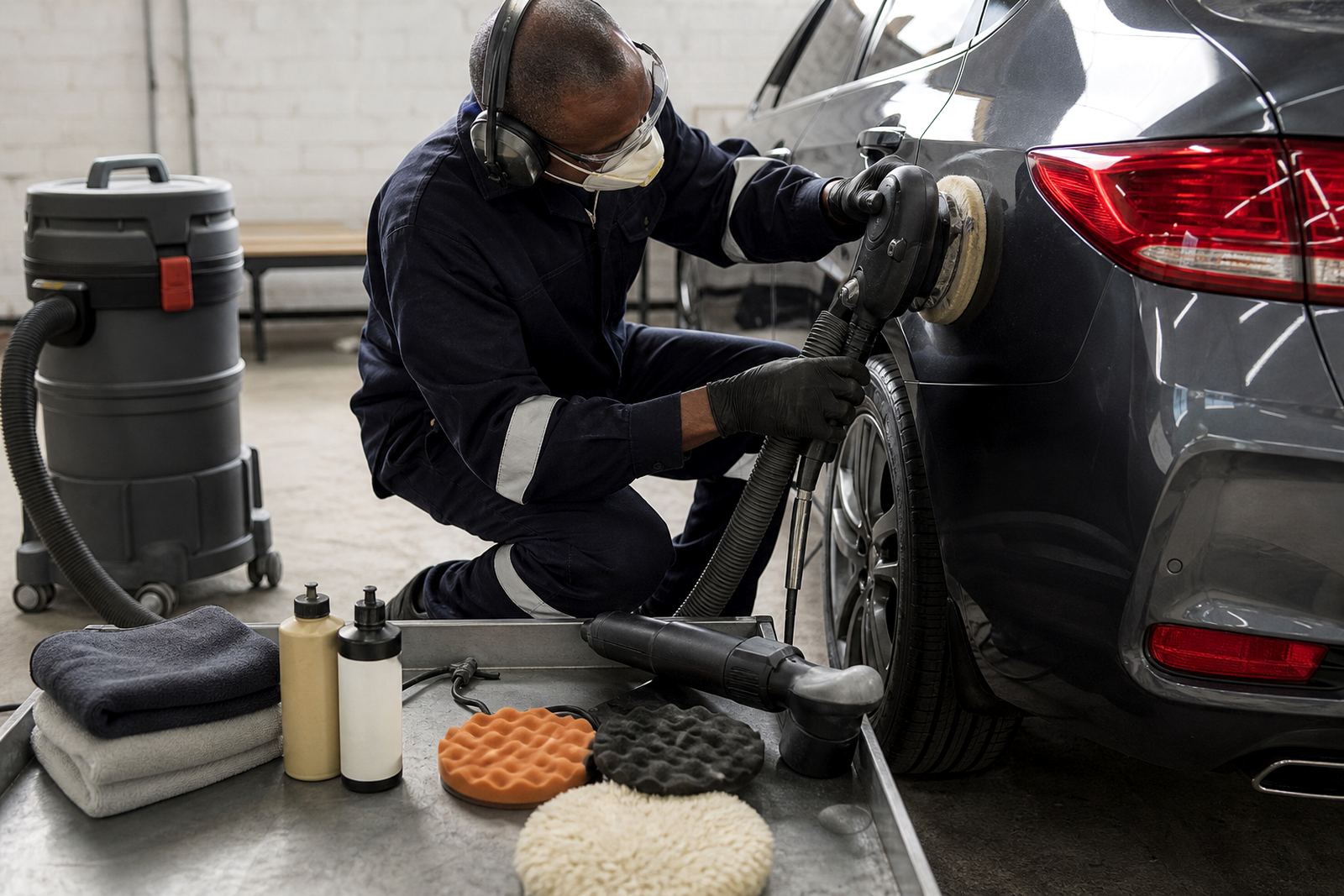
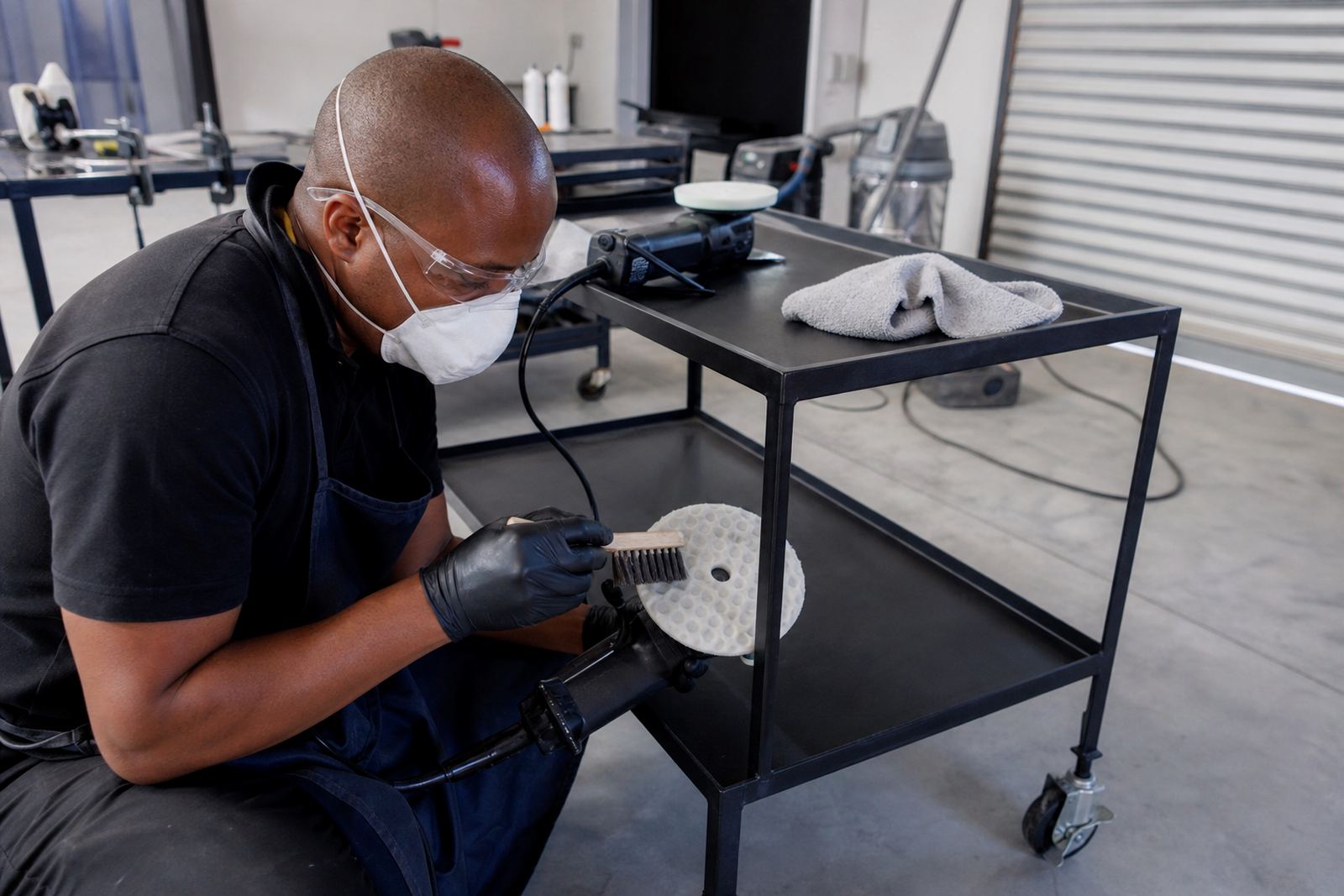
On a rotary polisher, keep the pad flat where possible and avoid tipping the edge into the panel. On a dual-action machine, let the machine do the movement and do not force it to one side. Work in small sections, wipe down often, and check the surface under good light. If the pad starts to drag, glaze over or soak up too much product, stop and clean it before continuing. A quick brush-out between passes often makes the difference between a clean result and a smeared one.
- Use clean microfibre cloths for wipe-downs
- Inspect under white light after each section
- Keep the pad away from trim, badges and sharp edges
- Do not overload the pad with compound
Pad Care, Cleaning and Workshop Lifespan
Foam pads last longer when they are cleaned regularly and stored properly. After use, remove polish residue from the face with a pad brush or compressed air if available. A light wash with mild soap and warm water can be used when the pad is heavily loaded, then leave it to dry naturally away from direct sun or heaters. Do not leave it sitting wet in the boot of a bakkie or in a sealed container, because moisture and heat can deform the foam.
In workshop use, pads should be checked for tearing, edge wear, hard spots and contamination from grit. If the face becomes uneven or the foam starts to split near the centre, replace it. A damaged pad can leave trails or vibrate badly on the machine. Proper care also helps with dust safety, because dry product build-up can release fine residue when handled. Wear PPE, including eye protection and a dust mask where required, especially during dry buffing or when machine cleaning throws off particles.
What to Check Before You Order
When ordering a foam polishing pad, it helps to confirm the machine type, backing plate size and the stage of work you are doing. A pad chosen for finishing will behave differently from one chosen for cutting, so the compound and the surface condition must line up. If you are new to polishing, ask for pad and compound matching advice before you place the order. That saves time and avoids buying the wrong softness for the job.
You should also consider the work environment. For mobile work in Johannesburg, Pretoria, Durban or Cape Town, you may need a setup that is easy to carry and simple to clean between jobs. For workshop use in Germiston, the East Rand or the Vaal Triangle, you may want a few pad sizes to handle mixed vehicles and metal pieces. If you are training staff or setting up a new bay, it is worth checking the quantity, the size mix and whether the pads will suit both rotary and DA machines.
- Confirm pad diameter and backing plate size
- Check whether it is for rotary or dual-action use
- Match the pad to your compound and surface type
- Ask about starter kit options and consumable restocking
Clients across South Africa can reach us through the enquiry form on our contact page for product advice, training support and workshop setup guidance. Our team in Germiston supplies foam polishing pads and related consumables to Johannesburg, Pretoria, Cape Town, Durban and Bloemfontein.
Key facts
| Product type | Medium-density foam polishing pad |
|---|---|
| Use | Refining correction marks and improving gloss |
| Compatible machines | Rotary polishers and dual-action polishers |
| Common sizes | 75 mm, 100 mm, 125 mm, 150 mm |
| Attachment | Hook-and-loop backing |
| Typical applications | Paint, clear coat, coated metal, gelcoat and finishing stages |