What a Wool Cutting Pad Does On Paint and Metal
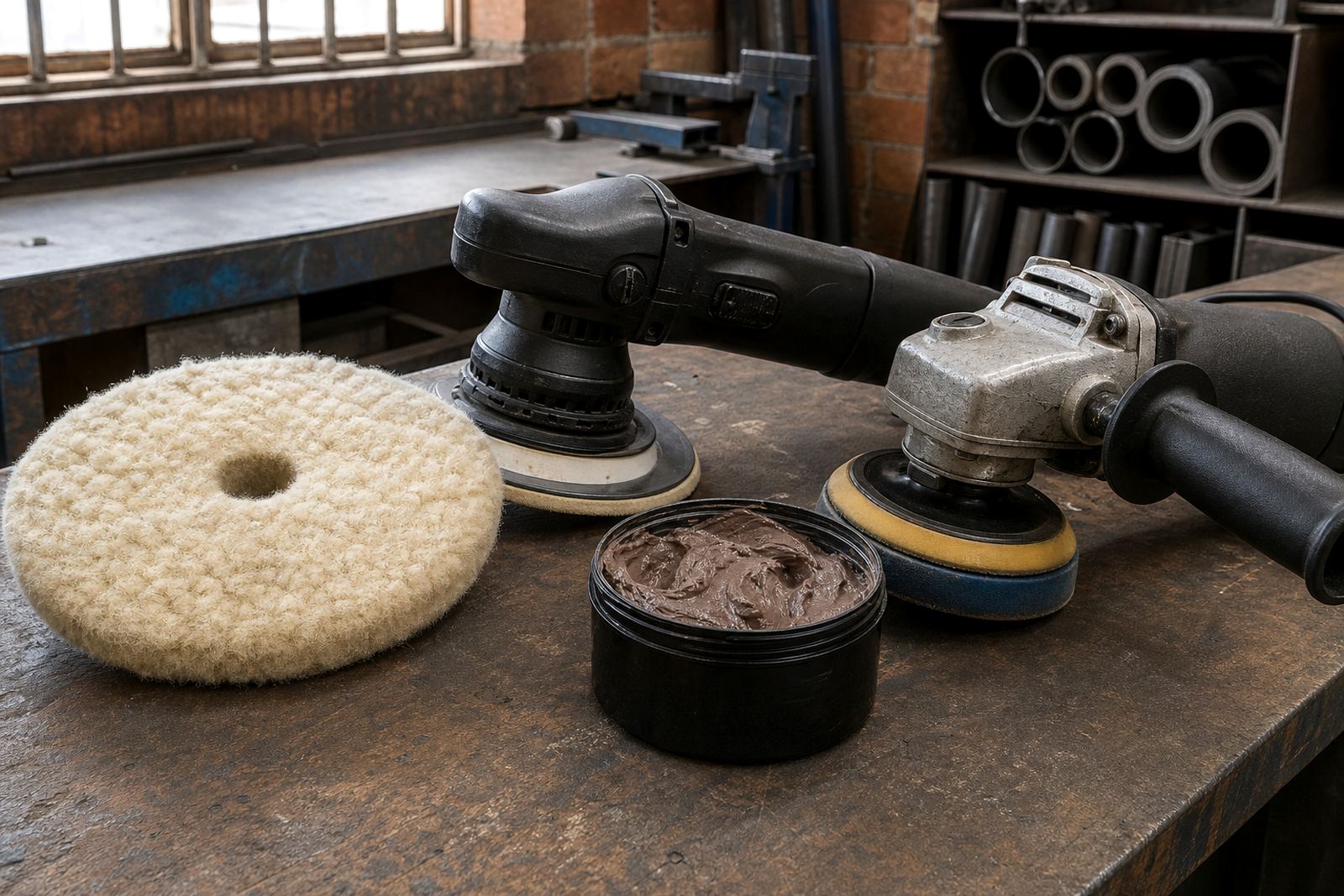
A wool cutting pad uses dense fibre to move compound across the surface with more bite than a foam polishing pad. That makes it useful when a finish has heavy oxidation, sanding haze, wash marks, or dull areas that need a firmer first step before refining.
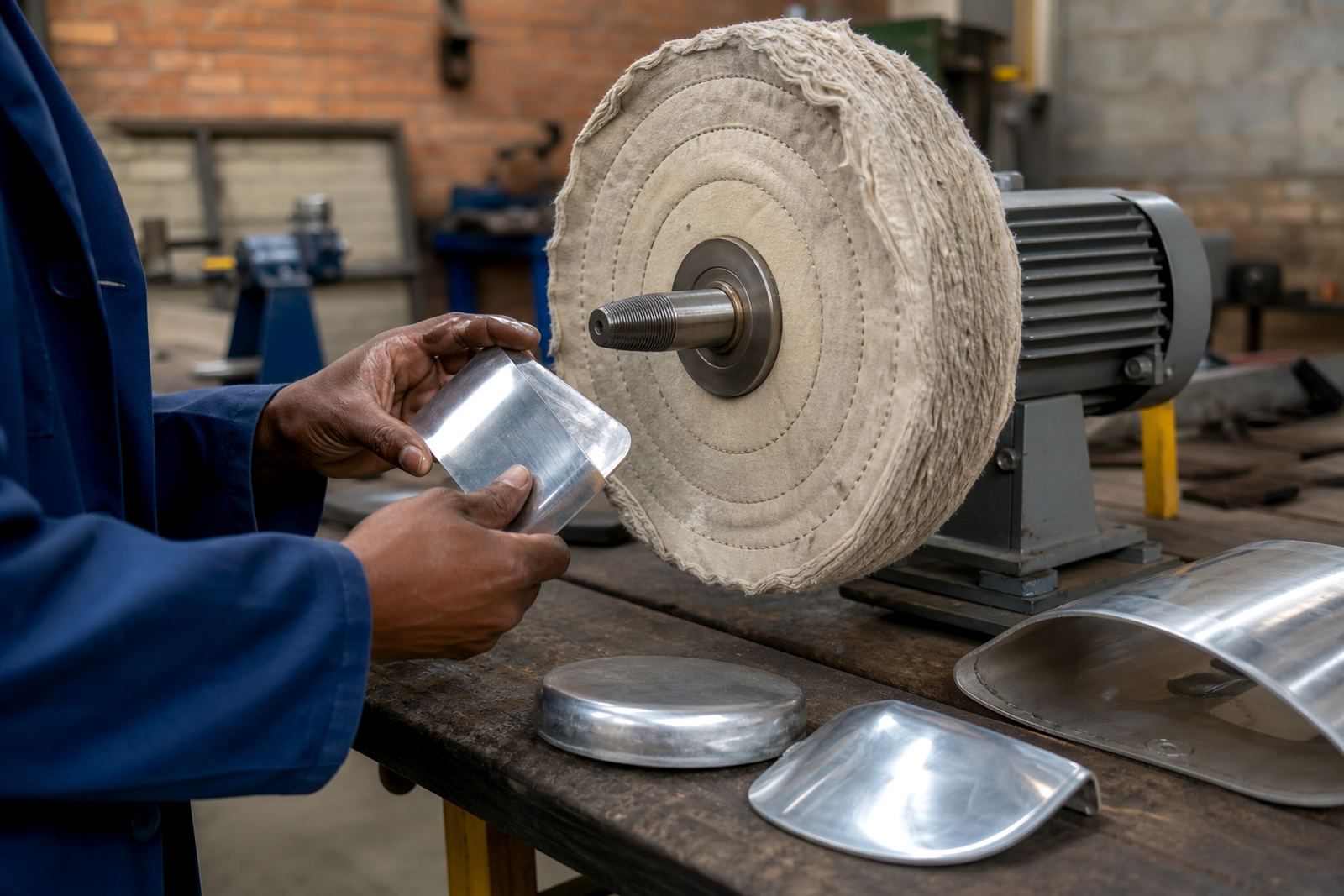
On paint, it is commonly used as a cutting stage rather than a final finishing pad. On metal, it can help with early polishing work on stainless steel, aluminium and similar surfaces, provided the right compound and speed are used. The pad is not for every job. Softer paint, thin clear coat, or delicate edges may need a gentler pad and lower pressure to avoid heat and marking.
For South African workshops dealing with sun-baked paint, coastal humidity, dust, and mixed vehicle conditions, wool is often kept for the heavier correction stage only. It gives the operator more cut, but it also asks for better control and cleaner technique.
Sizes, Backing Options and Machine Fitment
Wool cutting pads are typically supplied in common diameters to suit hand-held polishing machines and backing plates used in bodyshops, detailing bays and metal finishing work. The correct size depends on panel shape, machine balance and the size of the area being worked. Larger pads cover more ground, while smaller pads are easier around mirrors, pillars and curved sections.
- Small pads: Useful for spot work, trims and narrow sections where control matters more than speed.
- Medium pads: A good all-round choice for door skins, bonnets and panel repair areas.
- Larger pads: Better for broad, open panels and larger metal surfaces where heat must still be monitored.
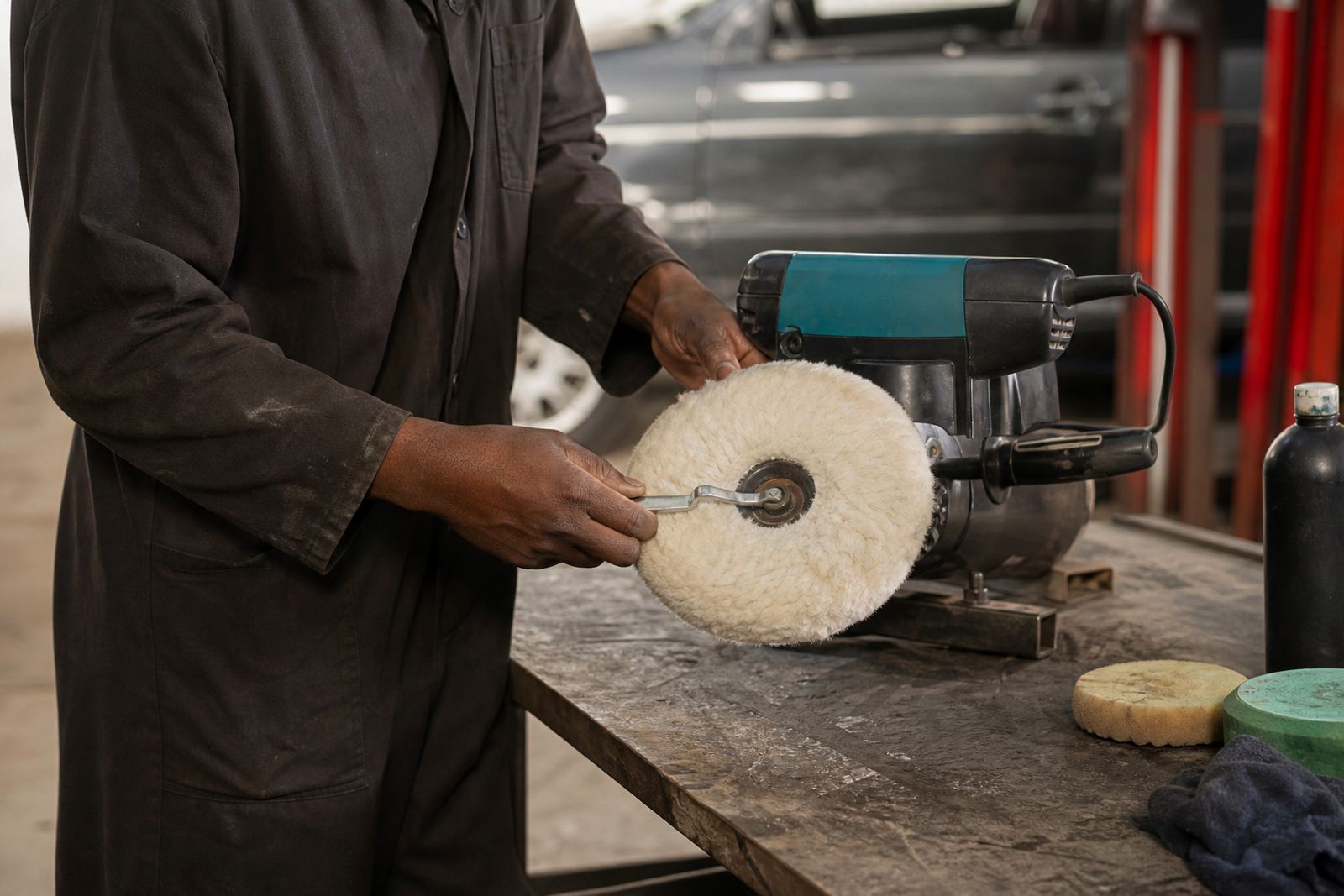
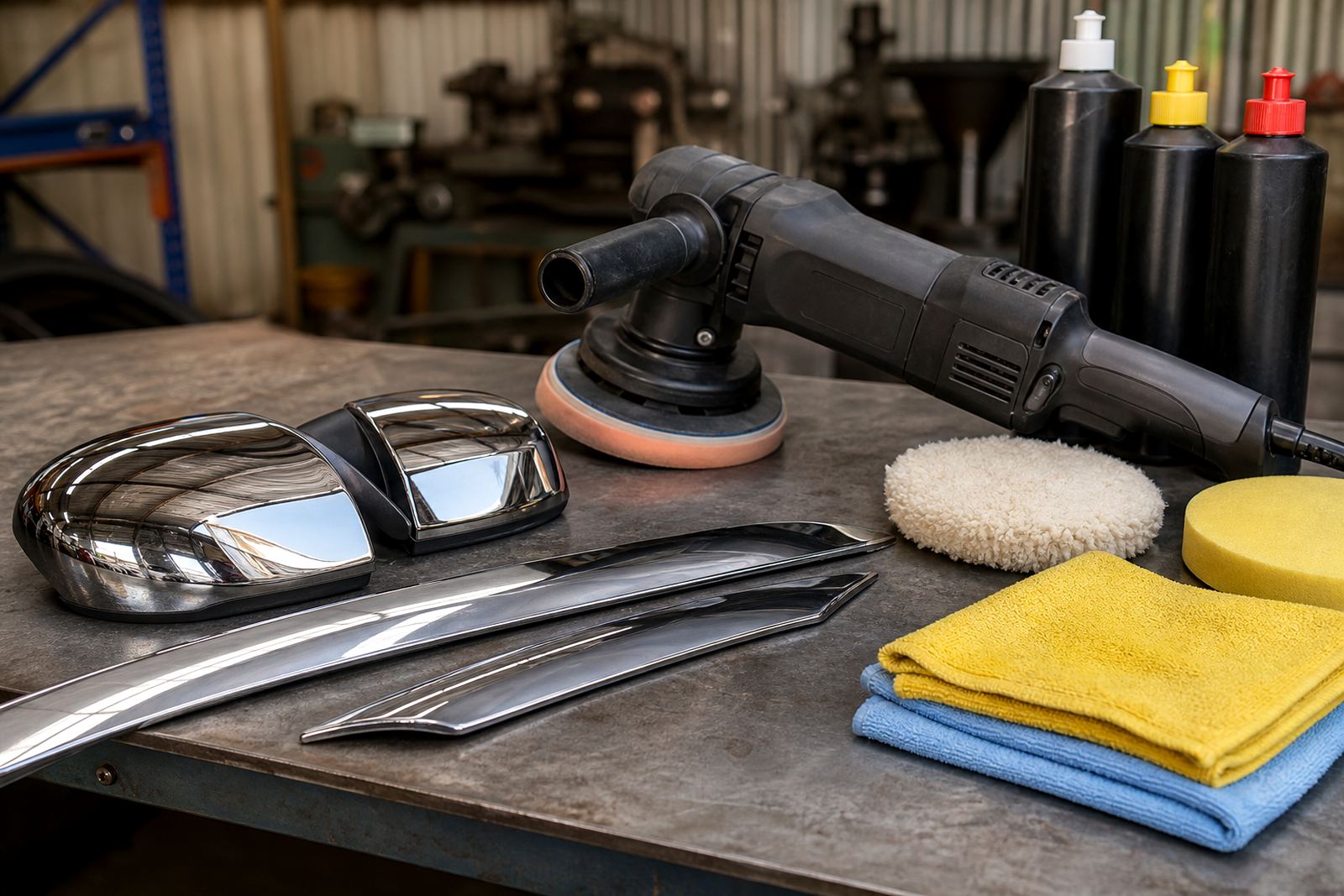
Most wool cutting pads are paired with a hook and loop backing plate. Check that the backing plate size matches the pad properly, because an undersized plate can cause flex and an oversized one can reduce pad contact. For rotary polishers, the wool pad gives direct cut and is often chosen for correction. For dual-action polishers, it can be used with a suitable compound and a machine that has enough orbit and torque to keep the fibres moving cleanly.
When ordering, it helps to confirm the machine type, backing plate size, and whether the job is paint correction, metal buffing, or mixed use. That keeps the pad selection practical instead of guesswork.
Where a Wool Cutting Pad Suits Best
This pad suits work where a stronger cutting action is needed before the finishing step. On vehicles, that can include oxidised panels, older clear coat, scratches that have not broken through, heavy swirl marks, and areas that were sanded during body repair. On metal, it is often used where surface dullness or light marks need to be reduced before a finer buff or finishing compound.
It is especially useful in workshops that handle fleet vehicles, taxis, bakkies, and daily drivers that have been exposed to strong sun or washing marks. In coastal areas like Durban or Cape Town, salt air can leave finishes looking tired faster, so a proper cutting stage can save time before final refinement. In Gauteng, dust and workshop contamination also make clean working habits important.
- Bodyshop correction after sanding and panel repair
- Paint oxidation removal on older vehicles
- Stainless steel and aluminium pre-finishing work
- Workshop demonstration and training sessions
- Controlled cutting before switching to a finishing pad
It is not the best choice for delicate trim, fresh soft paint, or a final mirror finish. Those jobs usually need a softer pad and lighter compound to avoid haze and heat build-up.
How to Install and Run It Safely
Fit the pad centrally onto the backing plate and check that it sits flat before switching on. A wool pad should be used with steady movement, not parked in one spot. Build correction gradually and keep the machine moving so the fibres do not overheat the surface.
Rotary polishers provide direct action and are often chosen for heavy cutting. Dual-action polishers reduce the risk of aggressive marking, but they still need correct pad choice, compound and technique. Always test on a small section first, especially on older paint or unknown refinishes. If the panel is thin, repainted, or sensitive to heat, reduce pressure and work in short passes.
Power needs depend on the machine rather than the pad itself. Most electric polishers need a stable supply and a lead in good condition.For safety, wear eye protection, a dust mask or respirator where needed, gloves if preferred, and keep loose clothing and cables away from the pad.
- Check the backing plate is secure before starting
- Use the right compound for the surface and defect level
- Keep edges, badges and sharp corners away from hard pressure
- Stop regularly to inspect heat and residue build-up
Care, Cleaning and Pad Life
A wool cutting pad lasts longer when it is cleaned during use and stored dry. Build-up from compound and removed paint residue can clog the fibres, lowering cut and increasing dragging. After each session, brush the pad out while it is off the machine and remove loose residue before storage.
Do not soak the pad unless the cleaning method is suited to the fibre type. Excess water can affect the backing and make the pad unpleasant to use on the next job. If the pad becomes matted, uneven, or loses its ability to cut evenly, it should be retired from finer work and kept only for rougher tasks, if still safe to use.
Workshop servicing is usually about simple checks rather than complicated maintenance. Inspect the stitching or backing, confirm the fibres are not burnt at the face, and watch for glue failure at the hook and loop side. A damaged pad can throw off balance on the machine and make the job harder than it should be.
What To Check Before You Order
When ordering a wool cutting pad, the key is to match the pad to the machine, the surface, and the finish you need. A pad that is too aggressive can leave extra work behind, while one that is too soft may waste time on heavy defects.
- Machine type: rotary or dual-action
- Backing plate size and pad diameter
- Job type: paint correction, metal buffing, or mixed use
- Surface condition: oxidation, sanding marks, swirls, or haze
- Operator experience level and training needs
- Whether you need a single pad, a starter kit, or matching advice with compound
For customers in Germiston, Johannesburg, Pretoria, Cape Town, Durban and Bloemfontein, the right advice can save time on site and in the workshop. If you are fitting out a new polishing setup, or putting together consumables for regular work, it helps to check pad size, compound grade, and safety gear together. Polisher also supports Beginner Polishing Training, Rotary Skills Session, DA Skills Session, Metal Buffing Training, Paint Correction Coaching, Pad And Compound Matching, Starter Kit Consultation, Workshop Setup Advice, Consumables Restocking, Machine Care Guidance, Onsite Team Demo, and Safety And PPE Briefing through enquiries on the contact page.
Key facts
| Product type | Wool cutting pad for polishing and buffing |
|---|---|
| Typical use | Heavy cut on oxidised paint, harder coatings and selected metal finishing stages |
| Compatible machines | Rotary polishers and suitable dual-action polishers |
| Mounting | Hook and loop backing plate fitment |
| Common sizes | Small, medium and large diameter options |
| Care | Brush clean after use, store dry, inspect backing and fibre condition |