
What a Loose Leaf Buff Does on Metal
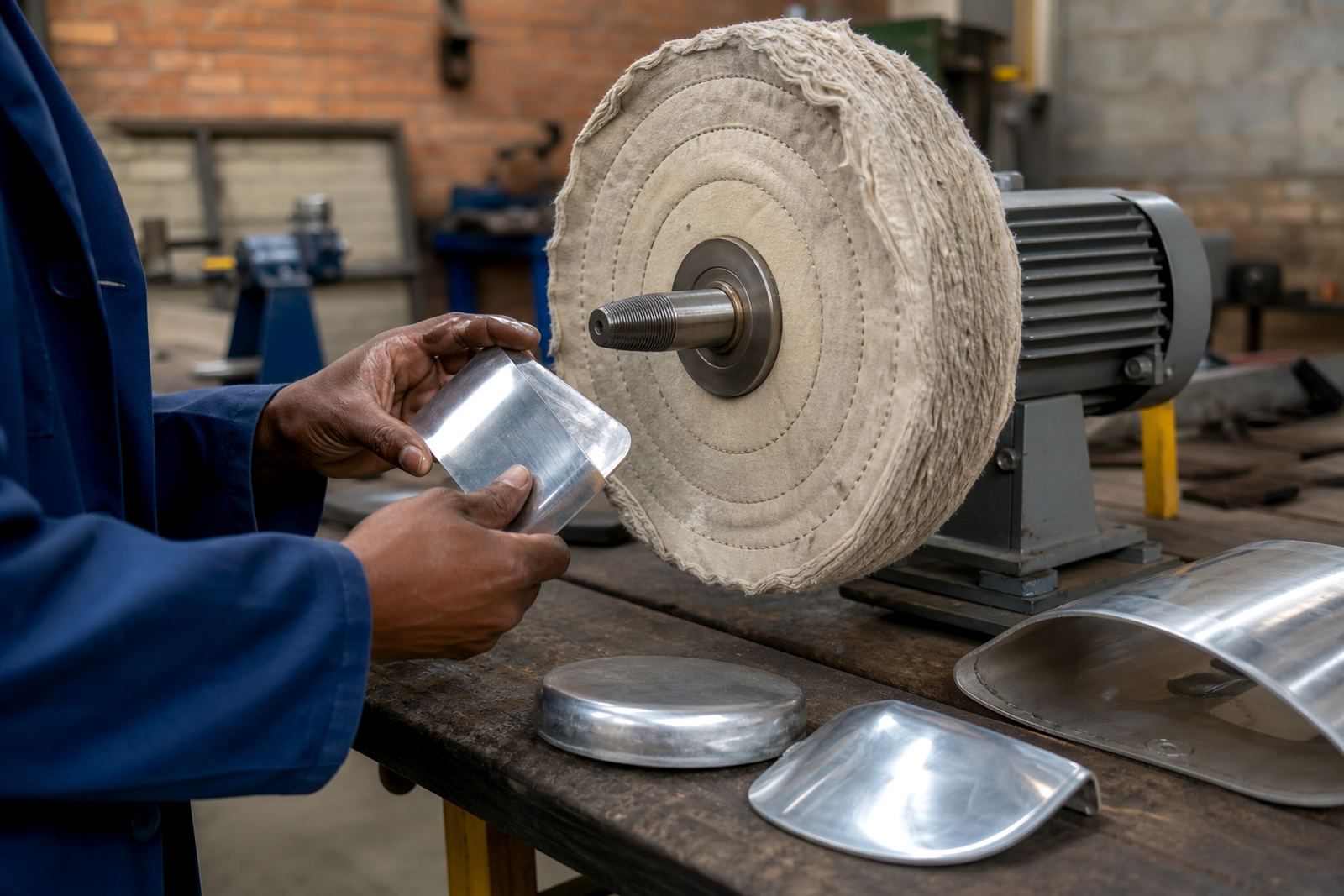
A loose leaf buff is made from layers of cloth that are left free at the edge, so the wheel flexes more softly as it turns. That softer action makes it useful for the last stage of polishing on stainless steel, mild steel, aluminium, brass and other non-ferrous parts where you want to reduce light marks rather than remove deep defects. It is commonly used after cutting and intermediate compounding, when the surface is already prepared and the final pass must be even, smooth and controlled.
Because the wheel is less aggressive, it is easier to work on curved panels, trim pieces, exhaust sections, decorative fittings and smaller metal parts. In car finishing it can support final gloss work on suitable metal trim and carefully prepared paint edges, provided the operator understands the material and keeps the pressure light. The buff is not for heavy stock removal, and it should not be used to force out sanding marks that need a firmer cutting stage first.
- Best for final shine rather than heavy cutting
- Works well on curved and detailed metal sections
- Helps reduce haze left by earlier polishing stages
- Needs a steady hand and light pressure
Sizes, Ply Counts and Wheel Options
Loose leaf buffs are usually chosen by diameter, thickness and ply count. Common workshop sizes include 100 mm, 150 mm, 175 mm, 200 mm and 250 mm wheels, with bore sizes matched to the polishing machine spindle. Smaller wheels give better control on detail work, while larger wheels cover broader surfaces faster. The right choice depends on the machine, the shape of the part and how much access you have around guards, brackets or bodywork.
Ply count affects how the wheel behaves. Lower ply wheels are softer and more forgiving, while denser builds hold shape a bit better on flatter sections. Some users prefer a centre stitched construction for more support near the hub, although the outer face still remains open and flexible. Cotton is common for general finishing, while blended cloth options may be selected for particular surface needs. The important point is to match the wheel to the compound and the stage of work, not just the size.
- Diameter options for detail work and broad panels
- Different ply counts for softer or more controlled action
- Centre and bore sizes must suit the machine spindle
- Cloth type should match the metal and the finishing stage
Where It Suits in Workshop and Field Work
This type of buff is useful in metal fabrication shops, vehicle refinishing bays, restoration workshops and engineering environments where appearance matters as much as function. It can be used on decorative trims, handrails, stainless steel fittings, aluminium housings, motorcycle parts and other items that benefit from a refined last pass. For vehicle work, it is often selected after a rotary cut and before the final inspection, when the goal is to bring out a clear reflection without burning the surface.
In South African conditions, the wheel can be especially handy where dust, coastal humidity or temperature swings affect the way compounds behave. On a humid Durban morning, a softer wheel can help spread finishing compound evenly without loading too fast. In dry Gauteng conditions, dust control matters even more, so clean prep and regular wheel cleaning are part of the job. It is a finishing tool for careful operators, not a brute-force fix.
- Metal restoration and decorative finishing
- Car trim, brightwork and prepared body panels
- Stainless steel, aluminium and brass components
- Workshop use where final presentation counts
Machine Setup, Speed and Power Needs
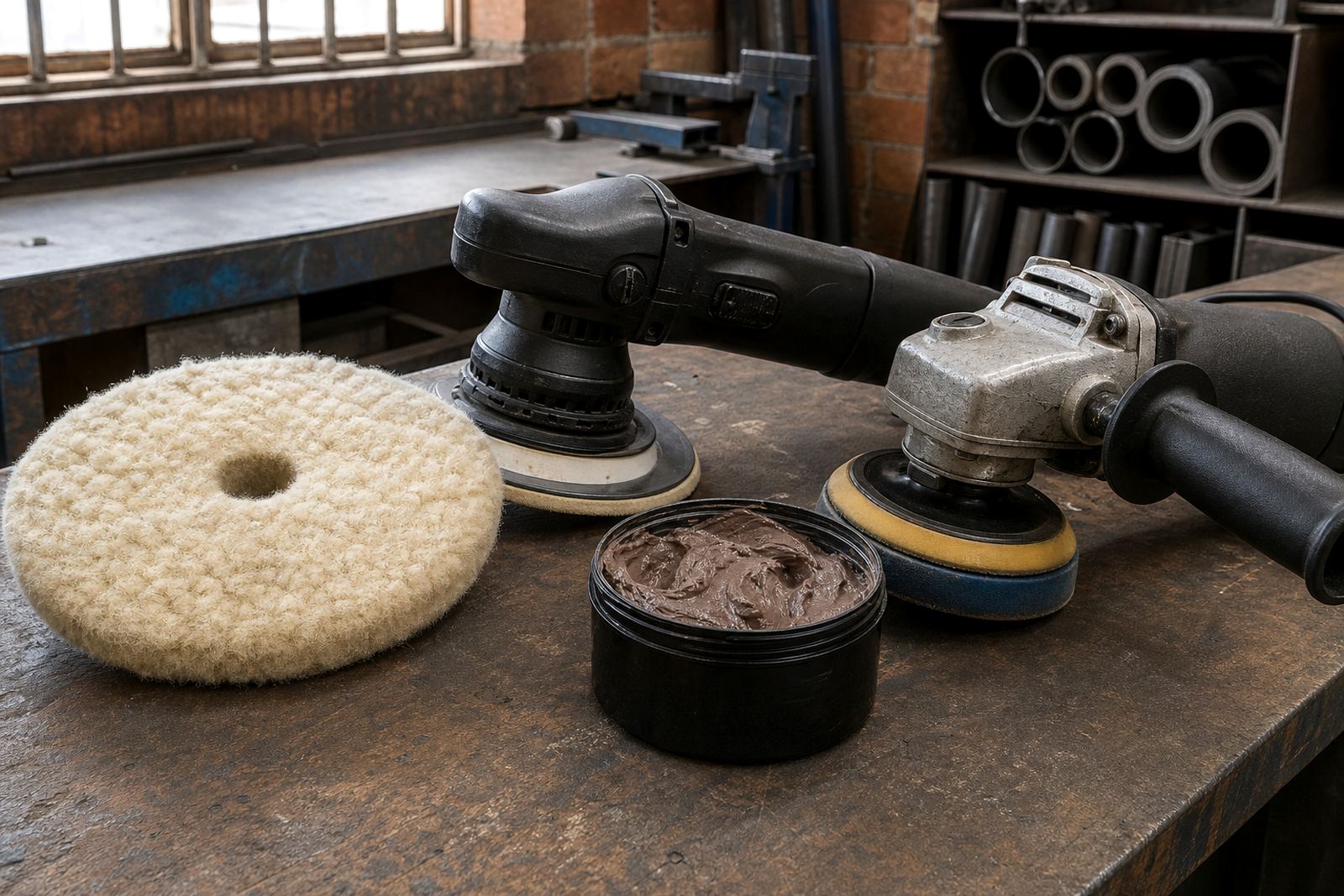
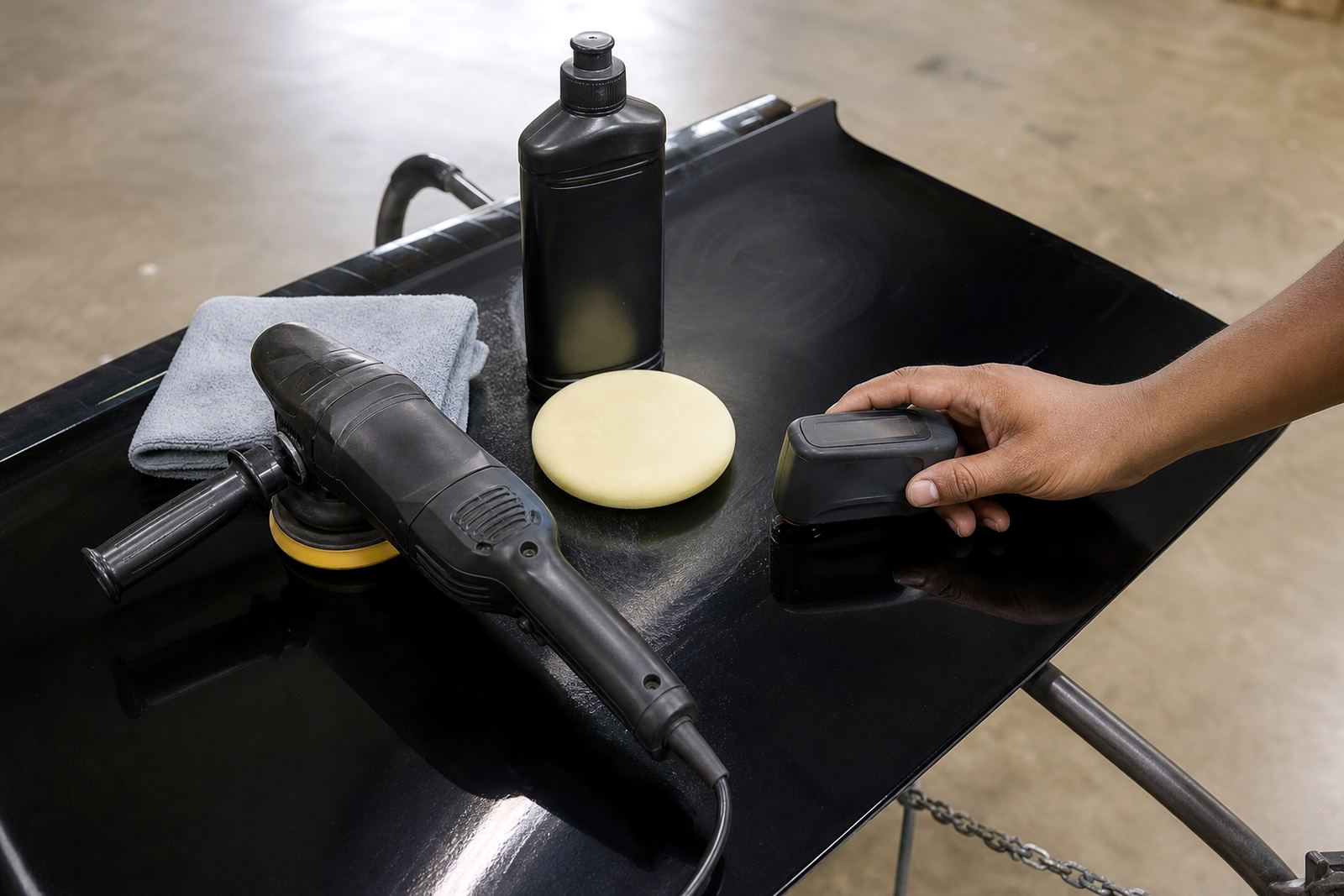
A loose leaf buff is fitted to a rotary polishing machine in most cases, because the wheel needs a consistent spinning action to work evenly. Dual-action machines are better suited to paint correction with foam pads, while loose cloth buffs are generally selected for metal finishing on rotary equipment. The machine must have the correct spindle thread, enough motor strength and a guard setup that does not interfere with the wheel face. If the wheel is oversized for the tool, the result can be wobble, uneven contact or poor finish quality.
For most workshop polishing jobs, a mid-range speed is enough. Running at full speed can heat the metal, throw compound and leave marks on thin sections or edges. Start on a low setting, watch how the compound spreads, then increase the speed only if needed. Choose a corded polisher for longer sessions in the workshop, or a cordless model for mobile work where plug points are not close by.
- Normally used on a rotary polisher
- Check spindle size, thread and wheel balance before fitting
- Medium speed is usually safer for finishing work
- Use a cordless polisher for mobile work away from plug points, or a corded model for longer polishing sessions.
Care, Cleaning and Workshop Safety
Like all polishing media, a loose leaf buff works better when it is kept clean. Tap out spent compound regularly, brush the face lightly and store the wheel in a dry place away from oil, welding grit and grinding dust. A wheel that has become loaded can mark the work or make the surface look patchy, so cleaning during the job is part of proper technique. If the edges start fraying badly or the wheel becomes out of shape, it is usually time to replace it.
Safety matters just as much as finish quality. Wear eye protection, gloves where suitable, hearing protection and a proper dust mask or respirator when working near dry compound or fine metal residue. Loose clothing, jewellery and untied sleeves can catch on a spinning wheel. Workpiece edges can be sharp, so handle them with care. On paint, make sure the surface is fully cured and the technique suits the coating. On metal, be aware that heat builds quickly on corners and raised features, so keep movement steady and do not dwell in one spot.
- Clean the wheel often to reduce loading
- Store dry and away from grinding dust
- Replace if the cloth is torn or badly uneven
- Use PPE and keep hands, sleeves and cords clear
What to Check Before You Order
Before you place an order, check the machine spindle size, the wheel diameter you can safely run, and whether you need a softer or slightly firmer loose leaf build. It also helps to know the metal type, the stage of work and the compound you plan to use. A wheel that suits stainless on a flat panel may not be the best choice for a small curved fitting, so it pays to match the buff to the task rather than buying by guesswork. If you are setting up a new polishing bench, we can also help with starter kit selection and machine care guidance.
When you enquire through the contact page, include the part you are polishing, the finish you want, and whether the job is for metal or a prepared paint surface. That allows our team in Germiston to point you toward the right wheel size, compound pairing and training option. We support users across Johannesburg, Pretoria, Cape Town, Durban, Bloemfontein and the wider East Rand, with practical advice for workshop teams and individual operators alike. For beginners, a brief setup check can save a lot of time, and avoids wasting consumables on the wrong setup.
- Confirm spindle size and machine type
- State the metal, size and finish target
- Check whether the wheel will suit your compound
- Ask about training if you are new to polishing
Key facts
| Product type | Loose leaf cloth buff for fine metal finishing |
|---|---|
| Typical sizes | 100 mm, 150 mm, 175 mm, 200 mm and 250 mm diameters |
| Tool compatibility | Rotary polishing machines with matching spindle and thread |
| Best use | Final shine on stainless steel, aluminium, brass and similar metals |
| Power need | Fits corded bench or pedestal polishers |
| Care | Regular cleaning, dry storage and replacement when frayed or badly loaded |