
What a Microfibre Cutting Pad Does on Paint
A microfibre cutting pad is built for defect removal on painted panels, not for final gloss on its own. The fibres help the compound bite into the surface more evenly than a plain foam pad, which makes it useful on harder clear coats, weathered paint and panels that need a stronger first step before finishing. Used correctly, it can reduce wash marks, haze from old polishing and light sanding trails.
The pad works best when the machine movement stays controlled and the panel is not overheated. On modern passenger cars, and especially on darker colours where every mark shows, the operator needs to keep the pad flat, move slowly and wipe down often to check progress. For metal finishing, this same type of pad can help on coated or painted parts, but the compound choice and pressure must suit the surface.
Microfibre pads are usually chosen for speed and cut rather than finishing. If the paint is thin, soft or already near its limit, the pad may be too aggressive for the whole job and should be followed by a softer foam pad and a finer compound. That is why panel testing matters before committing to a full vehicle.
Sizes, Backing and Machine Compatibility
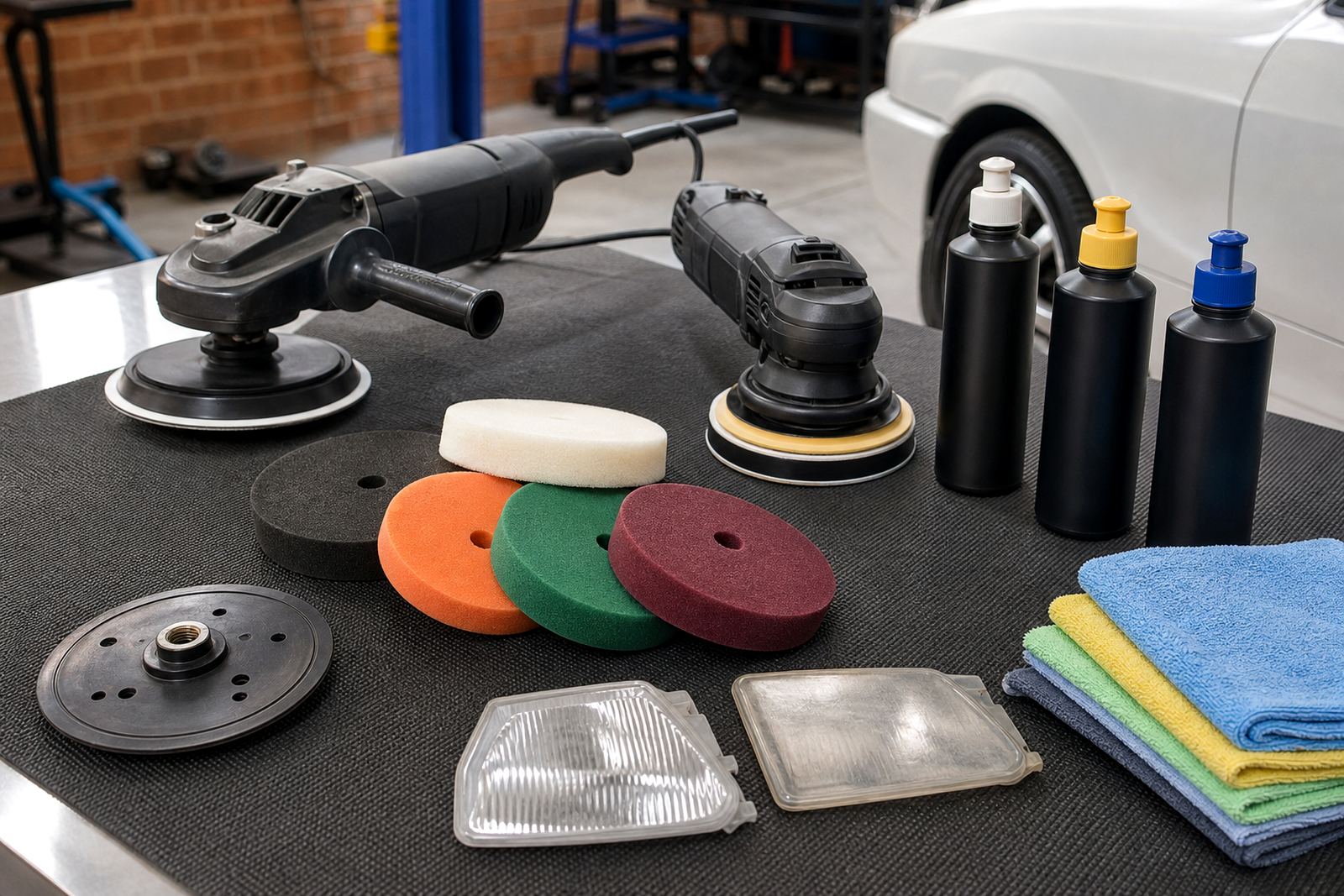
These pads are supplied in common diameters to suit hand-held machine polishers used in South African workshops and mobile setups. The most popular sizes are 3 inch, 5 inch and 6 inch face diameters, with matching hook and loop backing for quick changeover. Smaller pads suit curved bumpers, mirrors and tight areas, while larger pads cover doors, bonnets and roofs more quickly. The backing plate should match the pad size closely so the edge does not overhang too much.
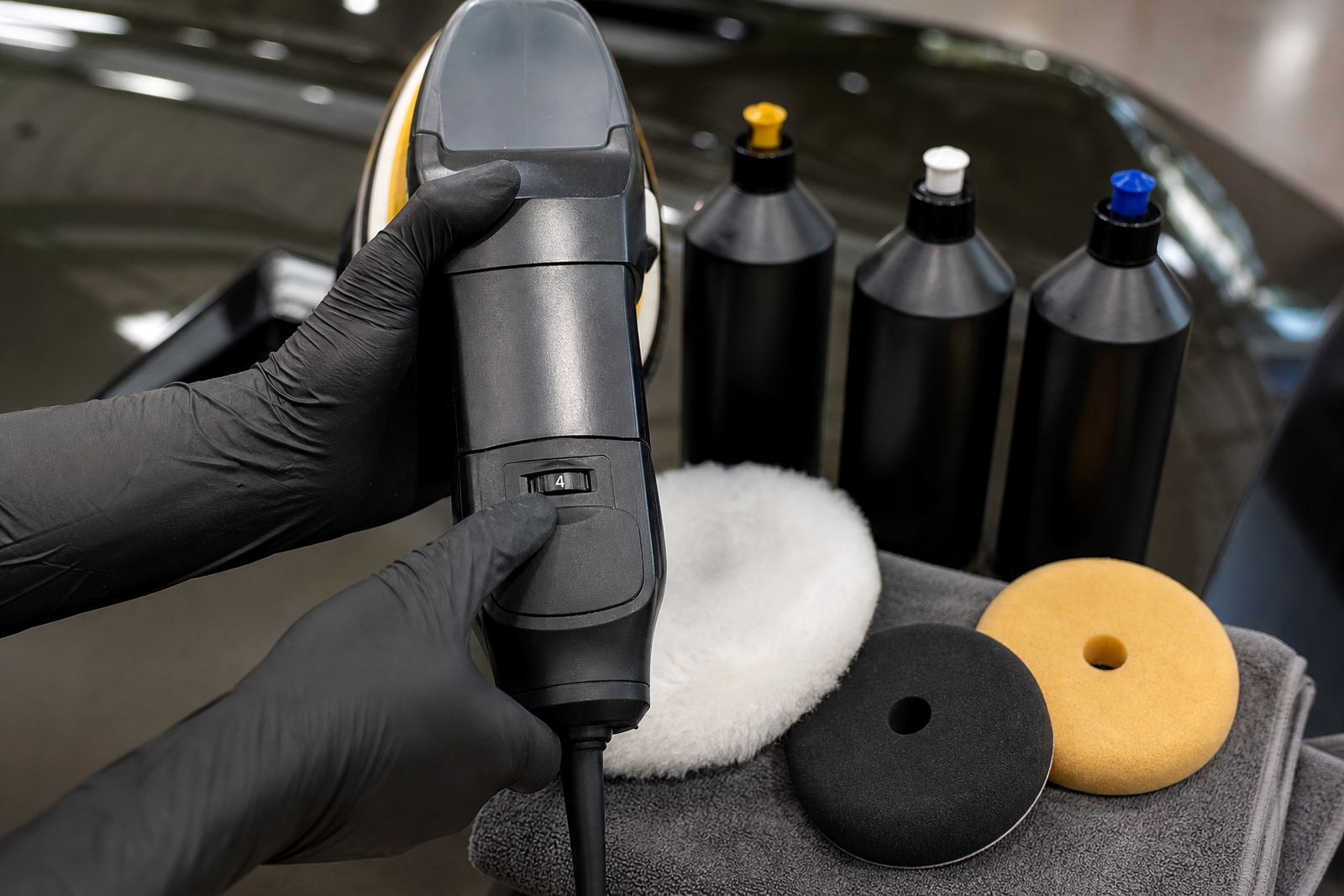
For the best result, match pad size to the machine and the panel shape. A rotary machine gives direct cutting action and is often used where a stronger correction is needed. A dual-action machine is more forgiving and helps reduce the risk of heat spots and heavy haze, which is useful for newer users or for work on softer paint systems. Either type can be used with a microfibre cutting pad, provided the user understands the movement and keeps the pad clean.
- Common face sizes: 3 inch, 5 inch and 6 inch
- Backing: hook and loop for fast pad changes
- Use with rotary or dual-action machine polishers
- Best matched to a compatible backing plate size
Where It Suits Best in Workshop and Detailing Work
This pad is suitable for automotive paint correction, dealer reconditioning, used car preparation and enthusiast work at home. In a busy Germiston workshop, it is often chosen for the first stage of correction before finishing with a softer pad. It also suits paint restoration on fleet vehicles, show cars and panel repairs where the aim is to improve clarity without unnecessary sanding.
It can be used on clear coat, cured refinished panels and many factory paint systems, but the user should always test a small area first. On very soft paint, microfibre can leave its own light haze if the compound or machine speed is too aggressive. On harder finishes, it usually gives stronger defect removal and can save time on larger flat areas. For coastal work in Cape Town or Durban, salt film and humidity can leave stubborn contamination on the surface, so proper wash prep and a clean pad are important before polishing begins.
- Suitable for paint defect removal and first-stage correction
- Useful on clear coat, refinished panels and hardened paint systems
- Can be used on cars, light commercial vehicles and select painted metal parts
- Best when the paint has been washed, decontaminated and dried properly
How to Fit and Run the Pad Safely
Before fitting the pad, check that the backing plate is secure and the machine is unplugged or switched off at the mains. Centre the pad on the plate, press it down evenly and make sure the edge is sitting flat. A pad that is off-centre can vibrate, mark the panel or wear unevenly. When priming the pad, apply a small amount of compound across the working face and work it in lightly before starting on the panel.
No supply is needed. The machine should be kept in good condition, with cable inspection, clean vents and a working switch. If using an extension lead, choose one that can handle the load and keep it away from water, sharp edges and traffic areas in the workshop.
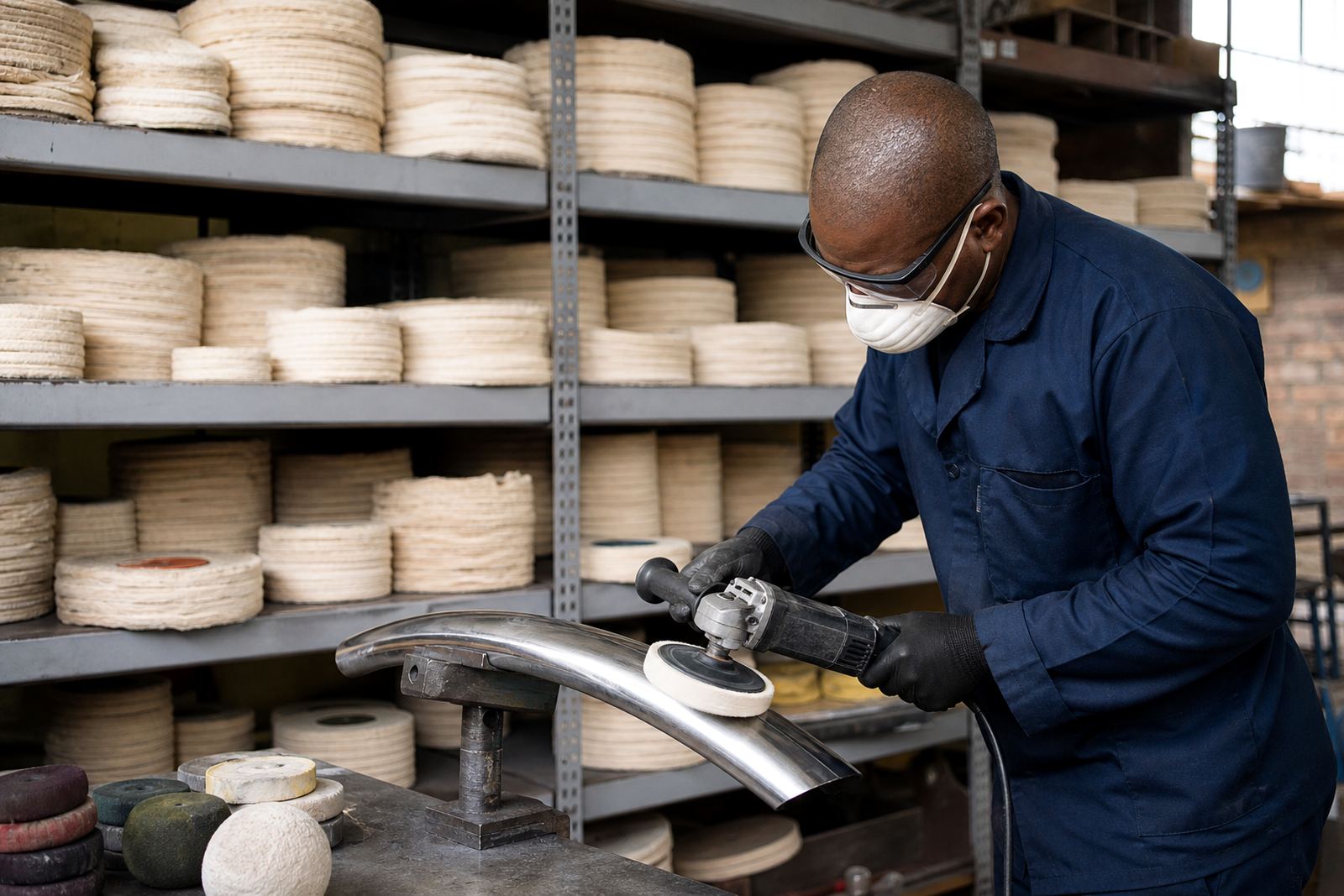
Use PPE during polishing. Eye protection helps against sling and dry compound dust, while a dust mask is sensible when working on older finishes, sanding residue or dry panels. Gloves can help when handling warmed pads and chemicals. Keep the work area ventilated, especially in enclosed premises where dust and compound mist can settle on nearby vehicles.
Care, Cleaning and Pad Servicing Between Jobs
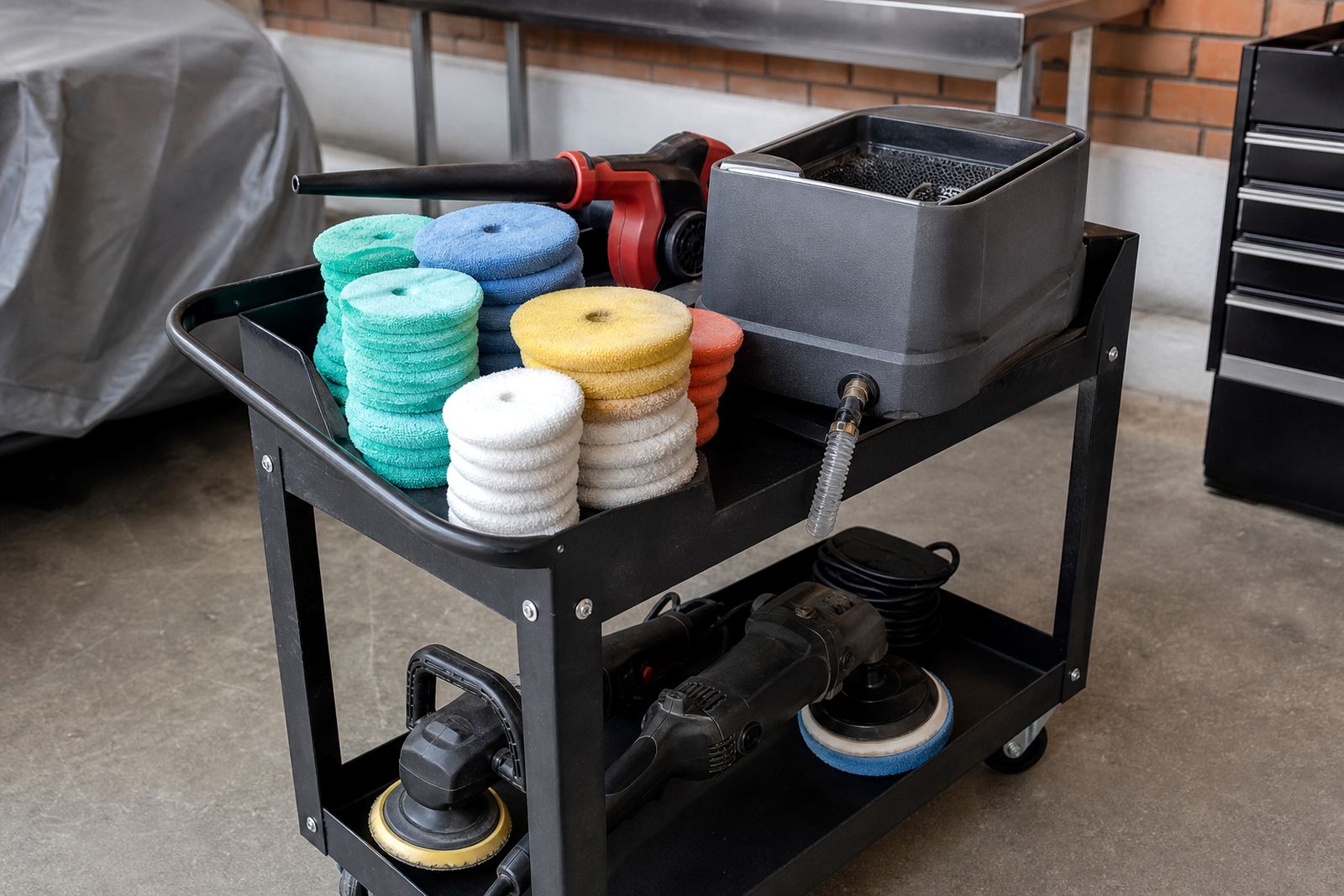
A microfibre cutting pad lasts longer when it is cleaned often during use. After each section, blow out the fibres or use a pad brush to release spent compound and paint residue. If the pad loads up too quickly, its cutting ability drops and it can start smearing instead of cutting. On dark cars this is easy to miss until the panel is wiped down.
After the job, wash the pad according to the cleaner you use in your workshop. A gentle, residue-free wash is best. Do not leave the pad wet in a closed box or toolbox, because moisture can damage the backing and hold bad odour. Let it dry fully before storing. If the fibres are matted, torn or the hook backing is peeling, replace the pad rather than trying to push it for another full day of work.
- Brush or blow out residue during work
- Wash gently after use and dry fully
- Keep away from sharp tools, solvent spillages and hot surfaces
- Replace if the fibres flatten or the backing loses grip
What to Check When Ordering the Right Pad
When ordering, confirm the pad diameter, backing plate size, machine type and the kind of finish you want to achieve. If you are correcting paint on a high-end vehicle, a pad that is too aggressive may remove defects quickly but leave extra finishing work. For a fleet van in Pretoria or a daily driver in the Vaal Triangle, a practical cutting pad and matching compound may be the right balance for time and result.
It also helps to check the paint condition before you choose. Freshly sprayed panels need care and proper curing time. Old paint, oxidised clear coat and panels with prior machine marks can respond differently. If you are setting up a workshop, consider ordering enough pads to rotate through the day so one can cool and be cleaned while another is in use. That reduces downtime and helps keep the finish consistent.
For customers who are still learning, it is worth asking for pad and compound matching advice before the job starts. The same pad can perform very differently depending on the machine speed, pressure, panel temperature and the amount of product used. A little guidance at the start often saves a lot of rework later.
Key facts
| Product type | Microfibre cutting pad for automotive paint correction |
|---|---|
| Available sizes | 3 inch, 5 inch and 6 inch face diameters |
| Backing | Hook and loop backing for machine polishers |
| Compatible machines | Rotary polishers and dual-action polishers |
| Use case | Defect removal, oxidation reduction and first-stage correction |
| Care requirement | Clean during use, wash gently after work and dry fully before storage |