What a foam cutting pad does on paint and metal
A foam cutting pad is made for machine polishing where the job calls for more bite than a finishing pad, but less aggressive action than wool. On vehicle paint, it helps tackle light swirl marks, sanding haze, oxidation and dull patches. On metal, it can support polishing work on stainless steel, aluminium and similar surfaces when used with the right compound and speed.
The pad face is usually firm and open enough to hold compound while still spreading it evenly. That gives you controlled correction and a cleaner finish on curved panels, bonnet edges, bumpers and bodywork with tighter lines. For detail work on show cars or fleet vehicles, this is often a practical middle ground.
In South African workshops, the pad is commonly used with rotary polishers for faster correction, or with dual-action polishers when the operator wants a safer, more forgiving movement. On thin paint, older resprays or heat sensitive areas, the choice of pad, compound and machine speed matters more than pressure. Too much heat can quickly mark the panel, so keep passes steady and allow the compound to break down properly.
Sizes, density and fitting options
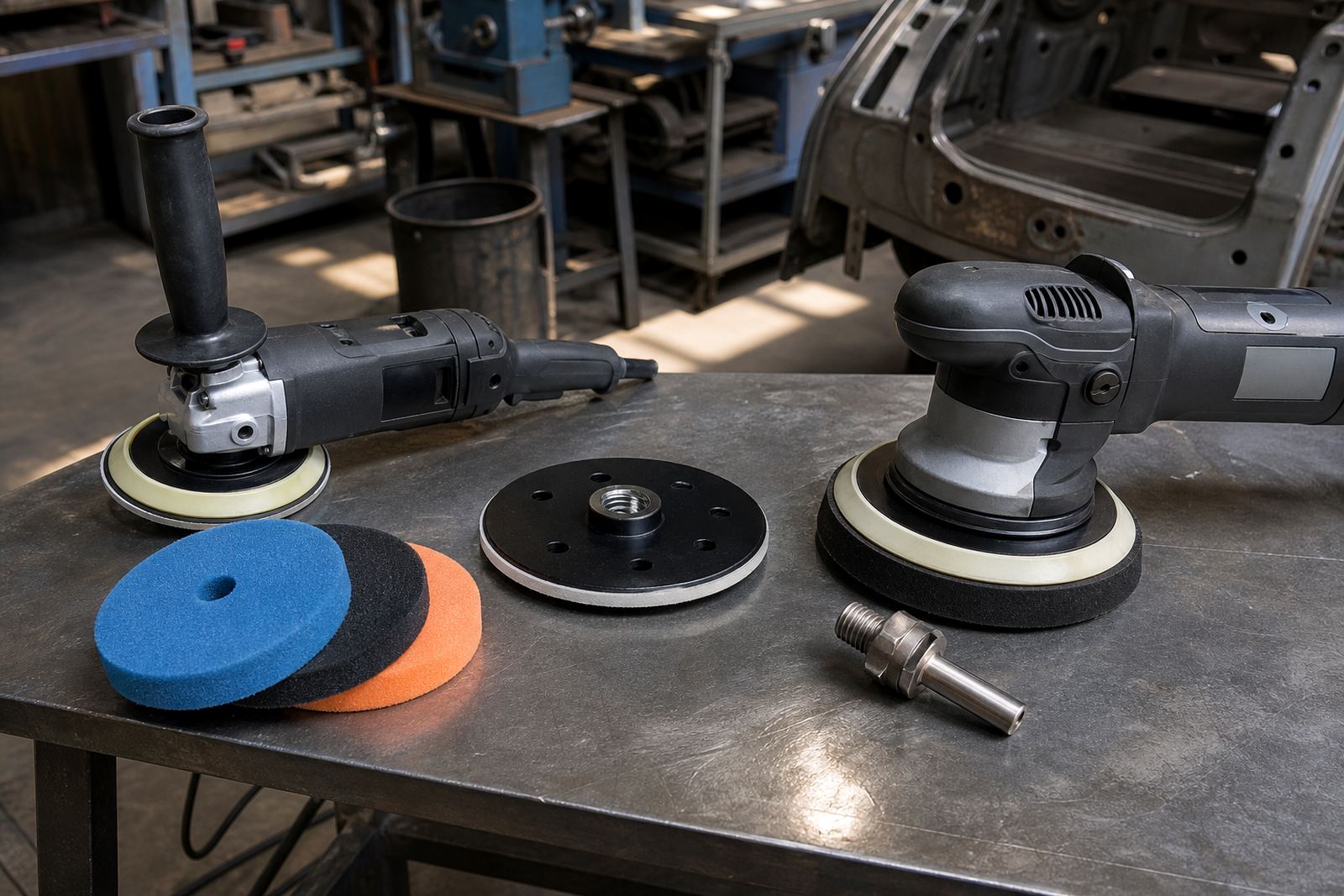
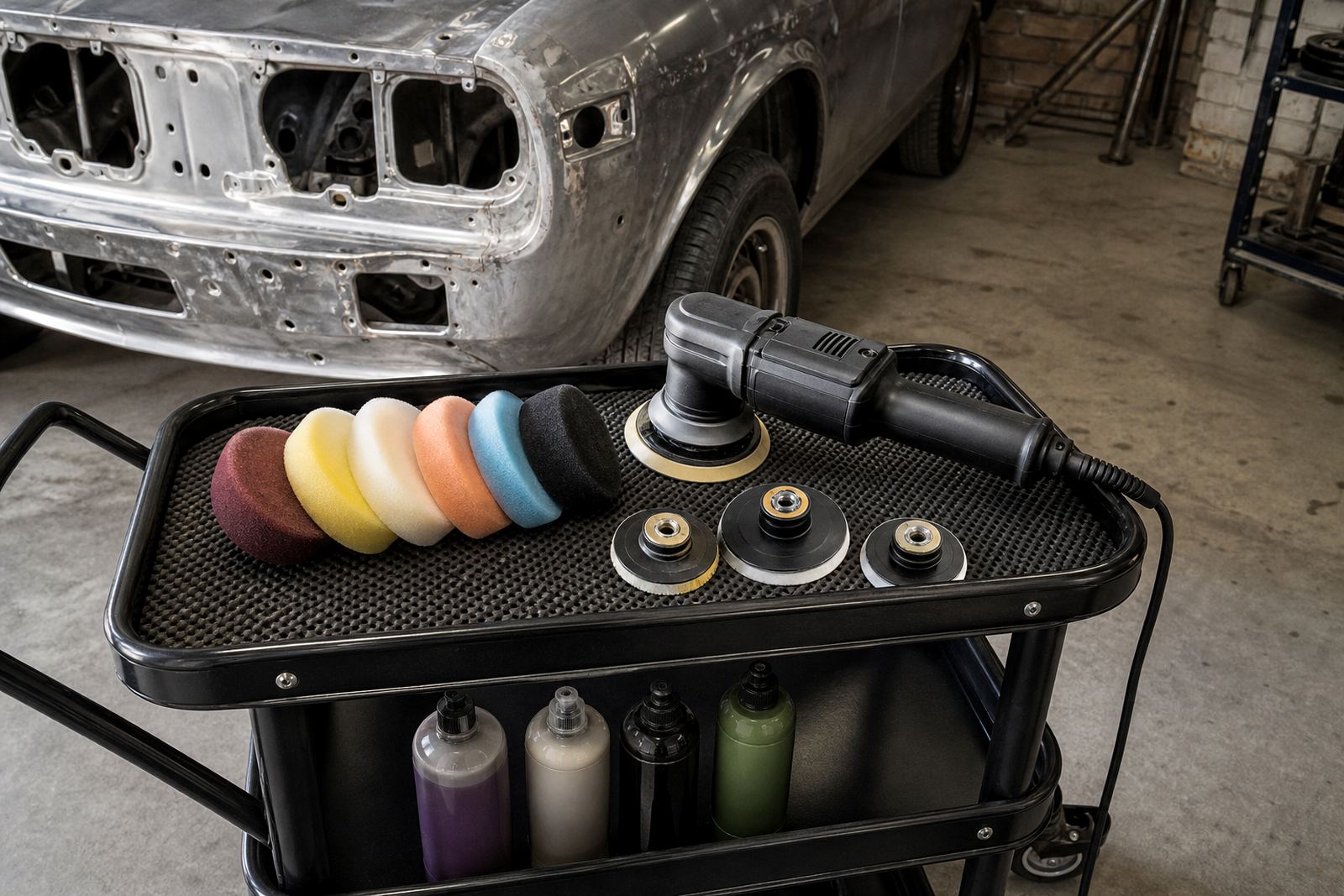
Foam cutting pads are usually selected by backing plate size and machine type. Common workshop sizes include 75 mm for spot work, 125 mm for general panel work and 150 mm for broader sections. Smaller pads are useful around mirrors, pillars, door cups and repair spots. Larger pads cover more area but need better control on curved panels and long runs.
Firmness matters. A denser pad cuts more effectively and keeps its shape under pressure, while a slightly more open foam can run cooler and finish a little finer. The right choice depends on the paint condition, the compound being used and whether you are working on clear coat, single stage paint or bare metal. On coastal vehicles in places like Durban and Cape Town, oxidation can be stubborn, so a firmer pad may be needed at the first stage before stepping down to a softer pad for final refinement.
- 75 mm pads for spot correction and tight areas
- 125 mm pads for doors, guards and bonnet sections
- 150 mm pads for larger panels and workshop throughput
- Hook and loop backing for quick pad changes
- Use with the matching backing plate for stable contact
Where this pad suits best in real workshop work
This pad suits bodyshops, detailers, panel beaters, alloy wheel work and hobby users who want controlled cutting without jumping straight to aggressive wool. It is a good choice for removing light to medium defects on repaint work, preparing panels before a finer polishing step, or bringing dull metal back to a cleaner reflective state.
On cars, it is often used for swirl reduction, oxidation removal and machine polishing after wet sanding. On metal, it can help with buffing stages where you need a flatter, more consistent finish on railings, trims, brackets or decorative pieces. If the surface is badly pitted or covered in heavy contamination, start with proper cleaning and a test area first, then decide whether the pad and compound combination will do the job or whether a more aggressive step is needed.
A dual-action machine gives a safer finish on repainted panels, while a rotary machine can work faster on harder surfaces. Either way, keep the pad clean and do not overload it with compound, because a clogged pad leaves trail marks and wastes time.
How to fit, run and power the pad safely
Before use, check that the backing plate size matches the pad. Centre the pad properly so it runs true, then press it firmly onto the hook and loop face. On a rotary machine, start at low speed and spread the compound before increasing the speed in controlled passes. On a dual-action machine, allow the pad to rotate freely and avoid forcing the head with too much pressure.
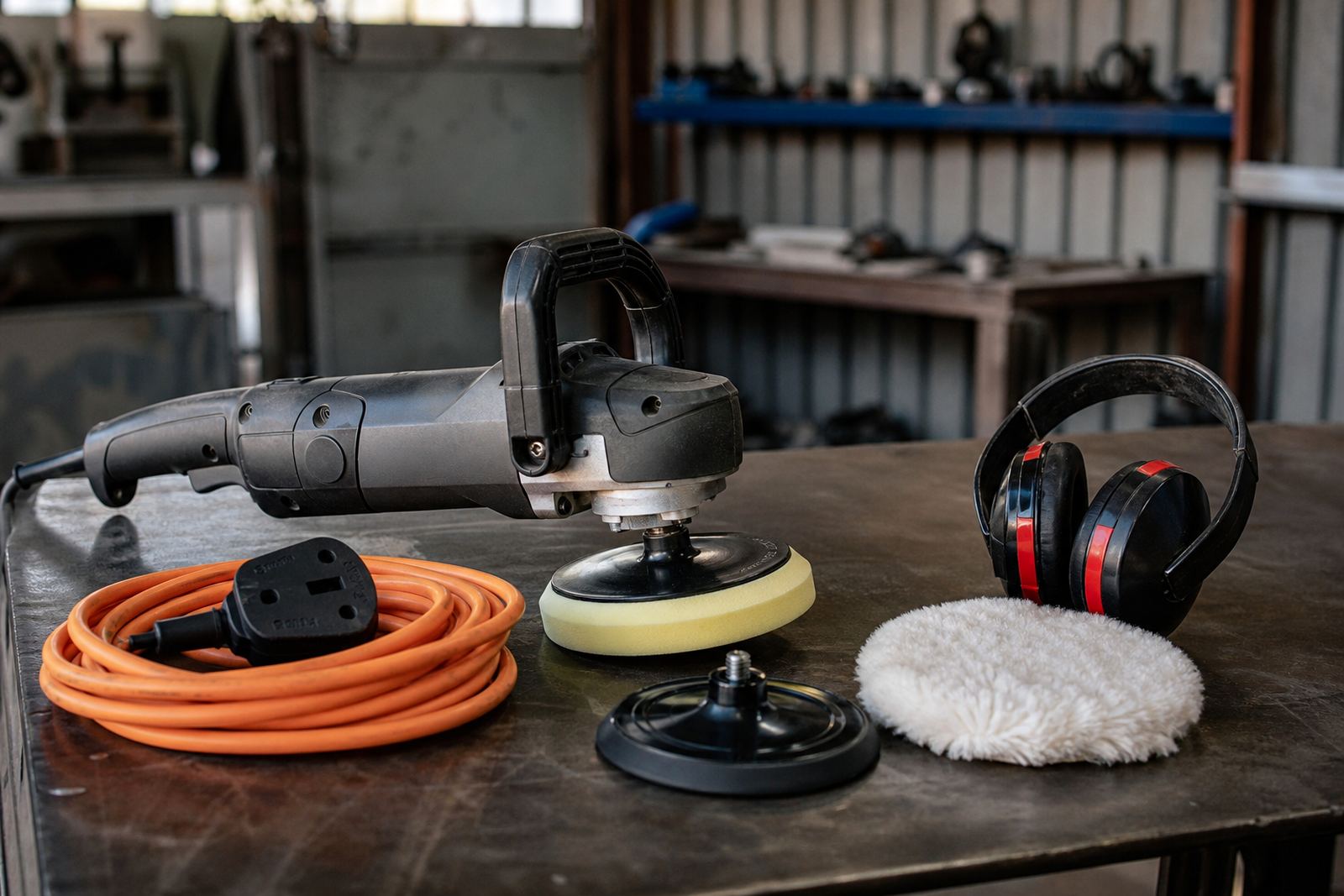
For safe use, the machine must be in good working order with sound cables, guards where fitted and no loose backing plate. Most polishers run from standard mains power, so in South African workshops it is wise to use a stable supply and avoid running damaged extension leads across wet floors. If you are using a generator during outages, make sure the output is suitable for the machine and that the machine can start without strain.
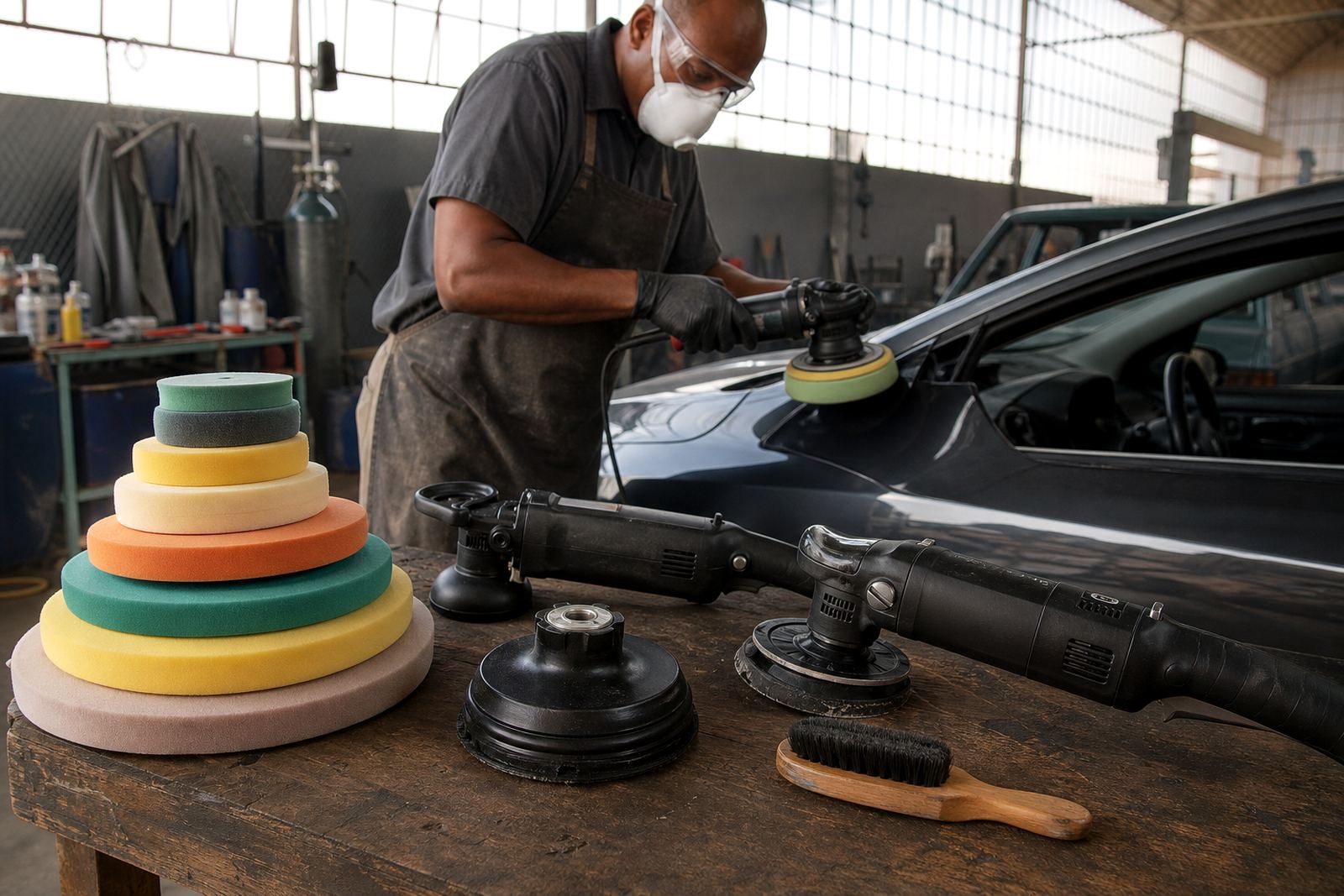
- Wear eye protection and a dust mask when working near dried residue
- Use gloves when handling metal edges, compounds and hot pads
- Keep cords clear of the panel and moving parts
- Work in a ventilated space, especially when polishing old paint or dusty metal
- Stop and cool the pad if the surface or pad becomes hot
Care, cleaning and service life
A foam cutting pad lasts longer when it is cleaned during the job, not only after it is finished. After a few panels, brush the face lightly or use a pad cleaning tool to remove spent compound and paint residue. If the pad has become damp with product, let it dry flat away from direct sun and dust. Do not store it compressed in a toolbox, because that can distort the foam and reduce even contact.
Inspect the pad edges for tearing, splitting or hard spots. Once the foam starts to break down, the pad will leave uneven marks and may run hotter. If you notice chatter, dragging or a patchy finish, it is usually time to replace it. For workshop use, keep different pads separate for different stages so you do not contaminate a cutting pad with finishing product. That small habit saves time and gives more predictable results.
If the pad becomes loaded with metal dust or dried polish, wash it carefully with warm water and a mild cleaner, then rinse well and dry fully before reuse. Never use it while still wet, because moisture changes the cut and can sling compound onto trim, rubber and glass.
What to check before you order
When ordering a foam cutting pad, check the machine type, backing plate size and the work you plan to do. A pad that suits one polisher may not fit another, and the wrong size can make the machine harder to control. Also consider whether you need a single pad for general panel work or several sizes for spot jobs, doors and larger body sections.
It also helps to match the pad to your compound and finish target. A firm pad with a strong cutting compound may be right for heavy oxidation, while a slightly softer pad may be better for paint correction where clarity matters. If you are unsure, ask for pad and compound matching advice before you start, especially if you work on different materials through the week.
- Confirm pad diameter and backing plate size
- Check whether your machine is rotary or dual-action
- State if the work is on paint, clear coat or metal
- Ask about starter kit options if you are building a setup
- Include your location so supply can be arranged across South Africa
Our Germiston base supports customers in Johannesburg, Pretoria, Cape Town, Durban, Bloemfontein, the East Rand and the Vaal Triangle. Enquiries come through the contact page form, and our team can help with training, workshop setup advice and the right consumables for the job.
Key facts
| Product type | Firm foam cutting pad for machine polishing |
|---|---|
| Common sizes | 75 mm, 125 mm, 150 mm |
| Machine use | Rotary polishers and dual-action polishers |
| Best for | Light to moderate correction on paint and controlled polishing on metal |
| Backing | Hook and loop attachment |
| Care | Clean during use, dry fully and store flat |