What A 125mm Backing Plate Does On The Machine
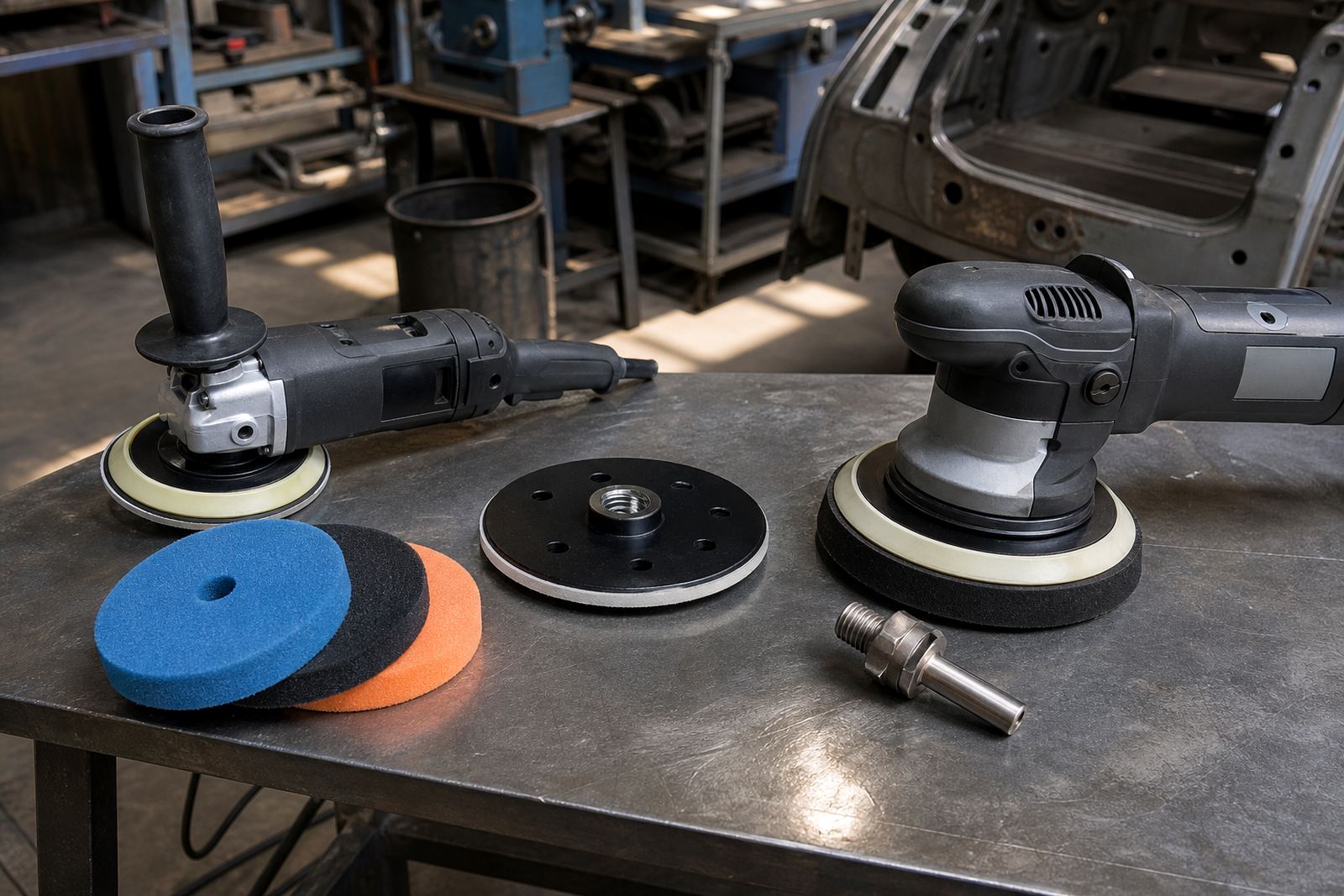
The backing plate is the interface between the polisher and the pad. It spreads the load across the foam, microfibre or wool pad, helping the machine run more evenly while you work on clear coat, single stage paint or metal finishing. With a 125mm plate, you are generally working in the medium pad range, which is useful for doors, bonnets, roof panels and other broad sections.
On a rotary machine, a backing plate needs to stay true because any wobble is felt directly in the pad. On a dual-action machine, it must also suit the orbit and stroke so the pad can move freely without contacting trim or edges too aggressively. If the plate is too large or too small for the pad, the cut and finish can suffer, and the machine may feel less controlled.
Sizes, Pad Fit And Build Details To Look For
This 125mm size is the nominal plate size and is commonly used with matching pads around the same working diameter. Some pads have a hook-and-loop face that grips to the plate, while others are chosen for heavier cutting or finer finishing depending on the compound and paint condition.
- 125mm nominal plate size for medium pad work
- Hook-and-loop face for quick pad changes
- Compatible with suitable rotary or DA machines, depending on thread and spindle type
- Flexible edge profile on many plates to help on curved panels
- Balanced construction to reduce chatter and vibration
When choosing a plate, check whether the centre boss, thread or mounting style matches your machine exactly. A plate that fits loosely can work itself out over time, especially during longer sessions in hot Gauteng conditions or when polishing on coastal vehicles with salt residue.
Best Uses For Paint Correction And Light Metal Work
A 125mm backing plate suits general body panel polishing, machine applied glaze removal, compound stages and finishing passes where a controlled pad footprint is important. It is a practical size for detail work on passenger cars, bakkies and fleet vehicles where access matters but you still need enough pad coverage to keep the job moving.
For metal finishing, the same plate can support suitable pads used with the right compound on stainless steel, aluminium and other polished surfaces, provided the machine and pad choice suit the material. Technique matters here. Start with the least aggressive pad and compound that will do the job, keep the pad flat where possible, and avoid dwelling on edges or sharp folds. On repaint work, always confirm that the panel has cured properly before machine polishing or you may mark soft paint.
This size also works well for learners doing starter kit work because it gives a fair balance between cutting ability and control. It is not the smallest option for tight areas, but it is practical for most general finishing tasks in workshops from Germiston through to Pretoria, Durban and Cape Town.
Installation, Power Needs And Safe Operating Practice
Most 125mm backing plates install directly onto a compatible machine spindle, backing hub or threaded interface. Before fitting, isolate the machine, check the spindle direction if applicable, and make sure the plate is seated squarely. Hand tighten only as required by the machine setup, never force the plate onto the thread. If the machine uses a guard or handle, fit it before starting work so you have better control from the first pass.
These plates do not need gas. Power requirements depend on the polisher itself, whether it is corded electric, battery powered or air driven in specialist cases. For most paint correction work, a stable electrical feed is important. Keep extension leads in sound condition and do not overload circuits.
- Wear eye protection and a dust mask when working on aged paint, sanding marks or metal residue
- Use hearing protection for longer rotary sessions
- Keep loose clothing, jewellery and cuffs clear of the spinning pad
- Do not use damaged backing plates with cracks, torn hook-and-loop or bent centres
- Test on a small area first before full panel work
Key facts
| Product type | 125mm backing plate for polishing pads |
|---|---|
| Nominal size | 125mm |
| Compatible machines | Suitable rotary and dual-action polishers with matching mount |
| Pad interface | Hook-and-loop pad attachment |
| Typical use | Paint correction, finishing, light metal polishing |
| Power requirement | No direct power draw; depends on the compatible machine |