
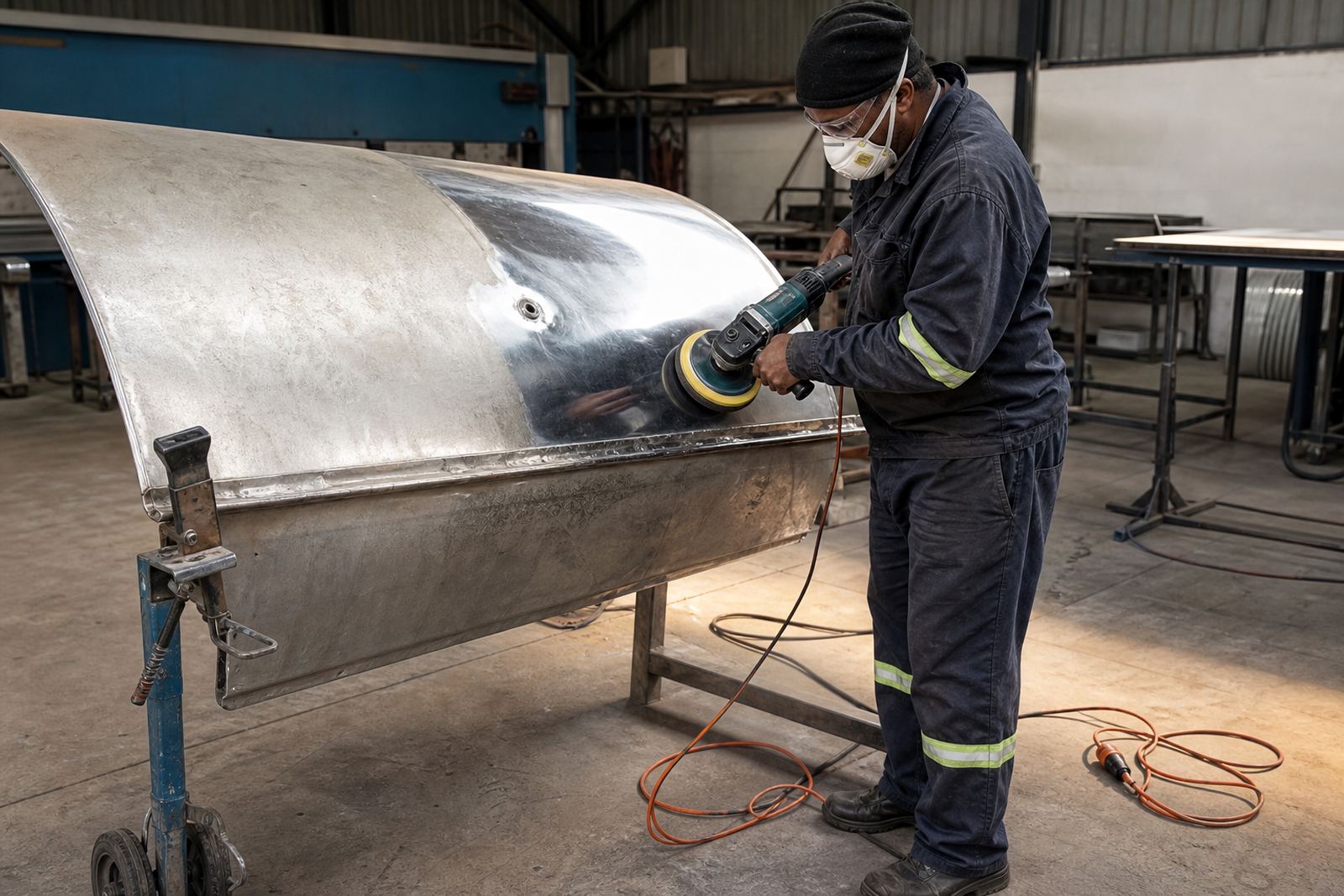
When A Tank Needs A Clean, Even Finish
Tankers and similar large metal sections usually come in once the surface has lost its uniform look, with oxidation, water spotting, welding marks, faint scratches or patchy haze after repair work. On stainless steel, aluminium and painted metal surfaces the goal is not only shine, but a finish that looks even across long panels and curved sections. If the tank is for fuel, food grade liquids, water, chemicals or general transport, the work area also has to stay clean and controlled.
In Germiston and across Gauteng, many jobs start after road grime, diesel residue and coastal salt have been sitting on the shell for months. For Cape Town and Durban work, moisture and airborne grit can make defects stand out faster. On larger units the layout matters as much as the polishing step itself, because a poor sequence leaves swirl marks, patchiness and wasted compound.
Typical Kit For Tank Polishing Jobs
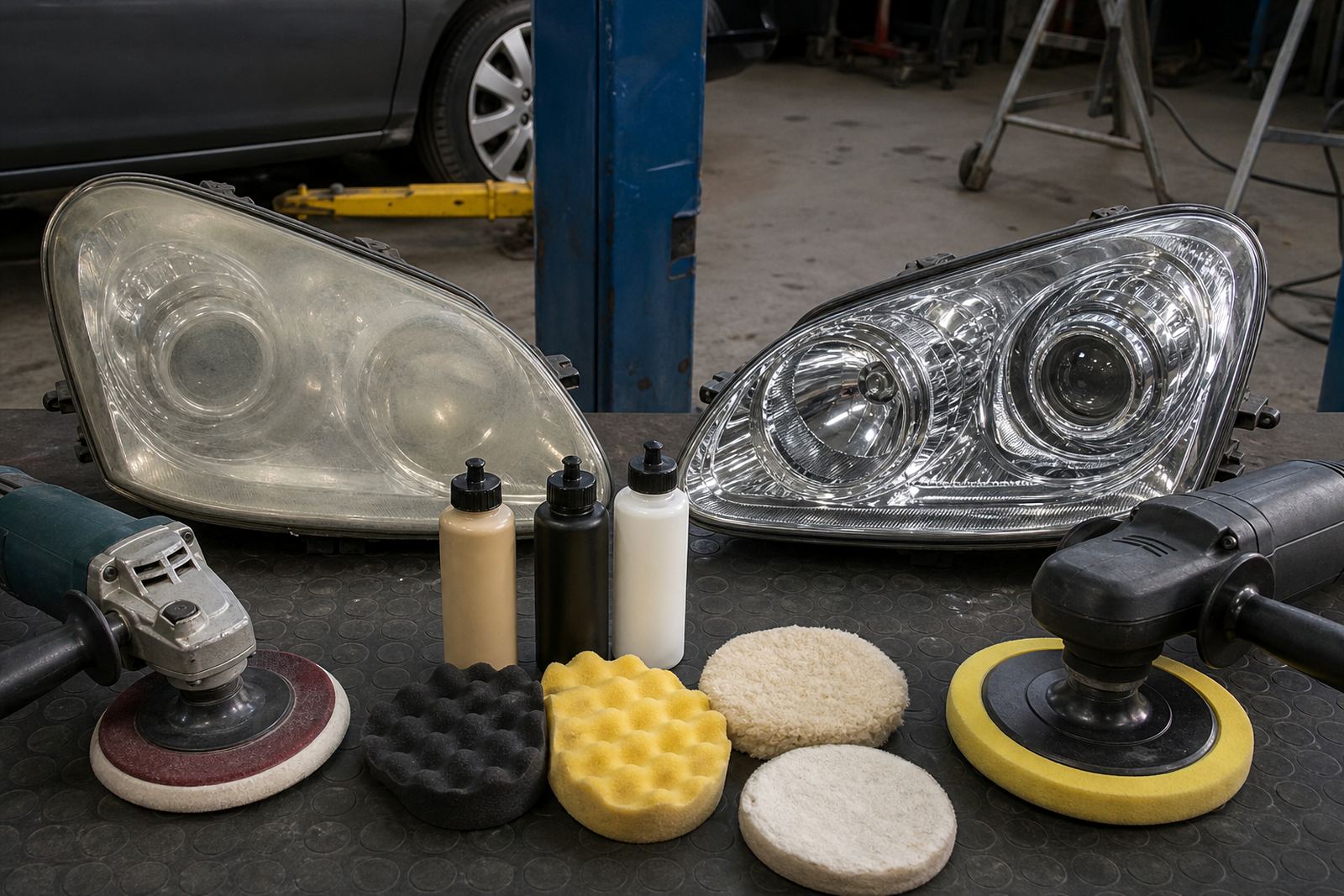
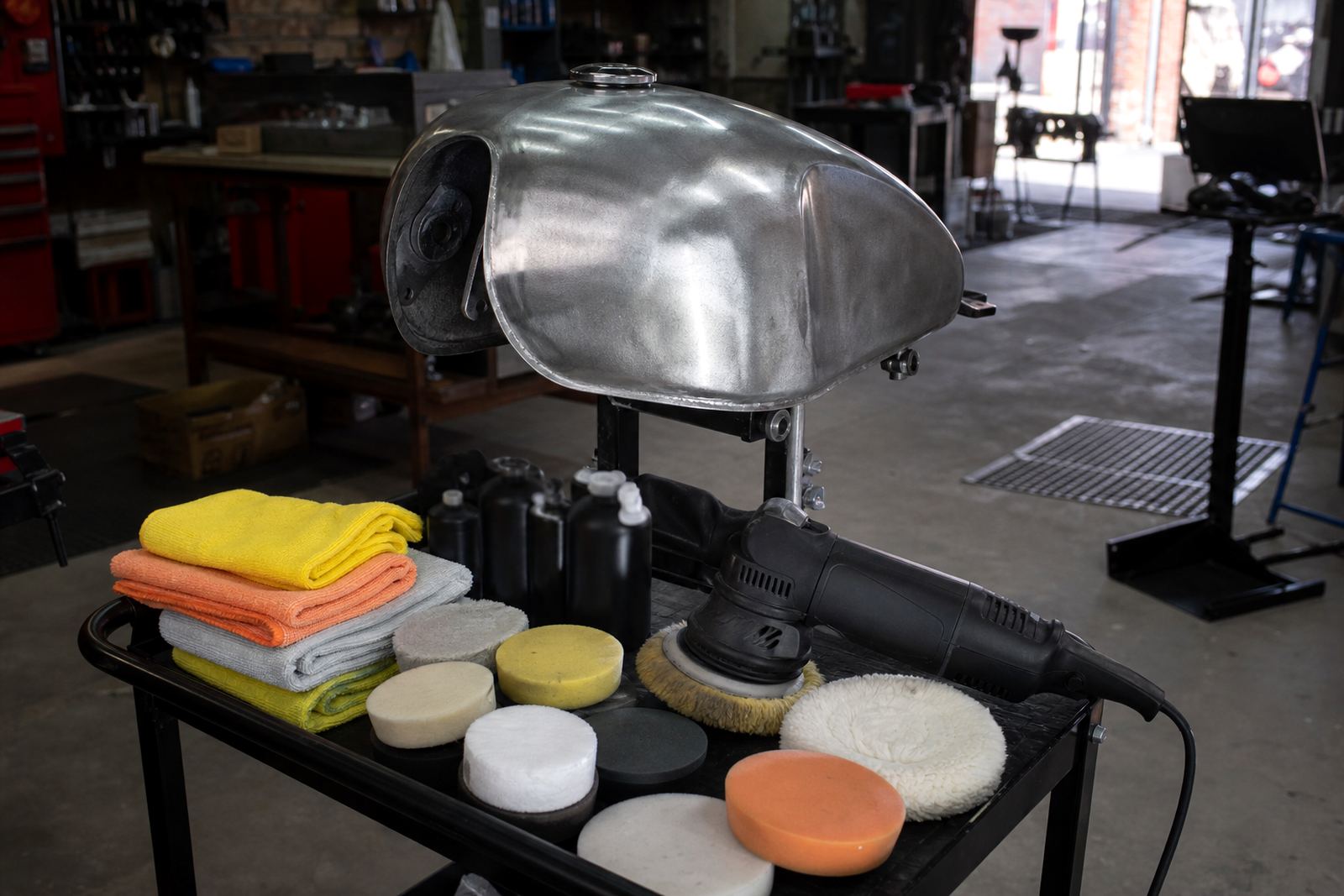
A practical setup for this kind of work is usually a mix of rotary and dual-action polishers, wool or foam buffs, and compounds matched to the metal or coating condition. Rotary machines are often used for heavier correction on hard metal surfaces, while dual-action polishers help reduce risk on painted panels and lighter finishing work. The right pad density, cut level and machine speed make a big difference on curved sections where heat can build quickly.
- Rotary polisher for deeper correction on suitable metal surfaces
- Dual-action polisher for controlled finishing and safer paint work
- Wool, foam and microfibre pads for different stages of cut and gloss
- Cutting compound, medium polish and finishing compound
- Masking tape, clean cloths and panel wipe for section control
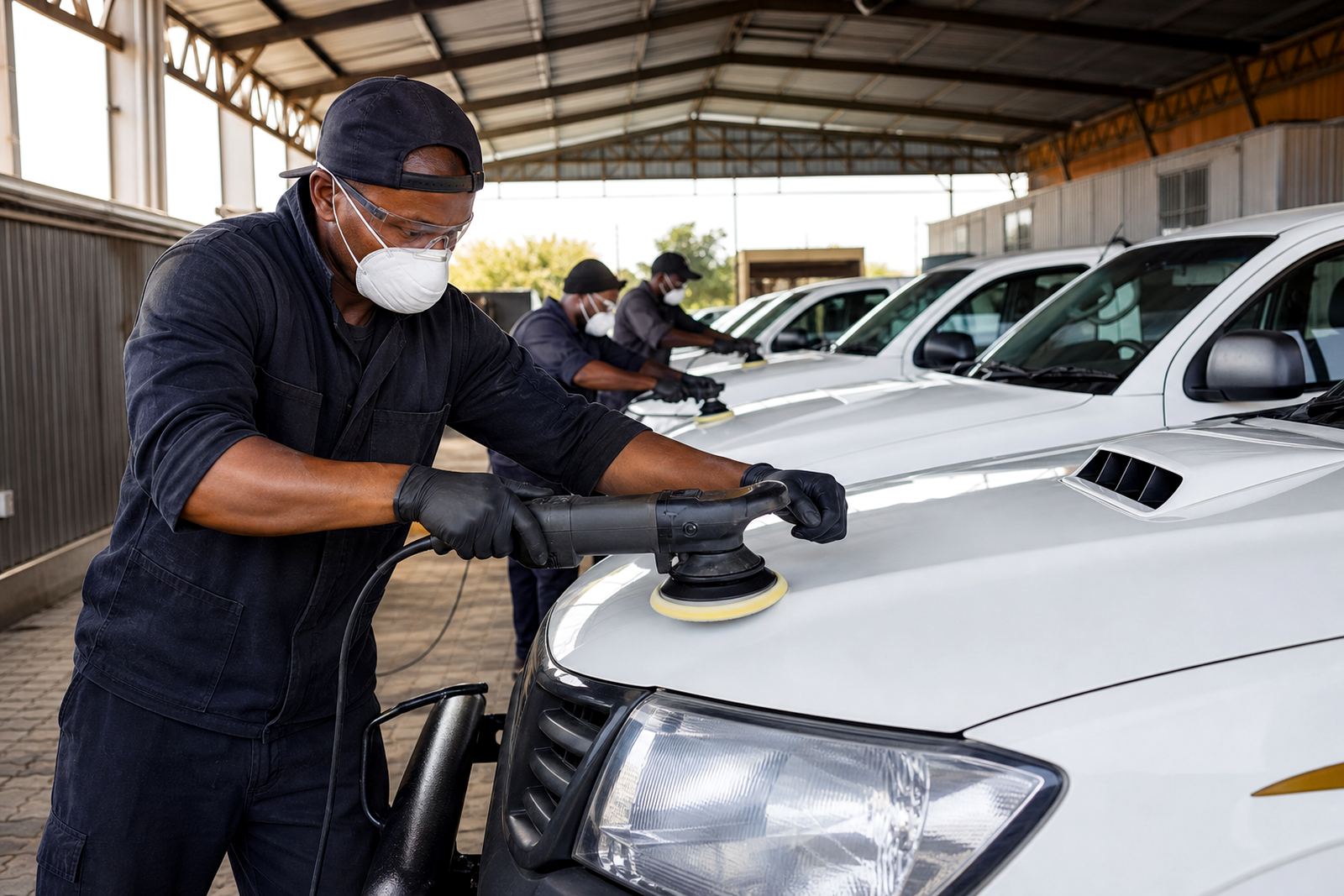
- PPE such as eye protection, gloves, hearing protection and dust mask
For workshop teams, a starter kit should also include pad cleaning tools, extension leads rated for the machine load, and backup consumables for long shifts.
How To Plan The Work On Curved Tank Sections
Large tank surfaces should be broken into small working zones before the machine is switched on. Mark the shell into sections from top to bottom and from front to back, then keep each zone consistent so you can track cut, residue removal and final finish. On rounded tank ends and around seams, use lighter pressure and keep the pad flat as far as possible. If the machine is tilted too much, the finish becomes uneven and the pad can mark the surface.
Access planning is just as important. Ladders, platforms and steps need to be stable, and the working height must suit the operator so they are not overreaching. In busy yards around Johannesburg, Pretoria and the East Rand, you often have to work around parked units and tight bays, so cable routing, hose placement and safe walkways should be sorted before the first pass.
- Start with a full wash and decontamination of the tank surface
- Inspect welds, seams, drain points and repair spots before machine work
- Test one small area first to confirm pad and compound match
- Work in overlapping passes with controlled speed, not long random sweeps
- Wipe down often so residue does not dry on hot metal
- Finish each section before moving to the next to avoid missed marks
Common mistakes that waste time and dull the finish
The most common mistake is using too much speed and pressure in the hope of getting a faster result. On tank surfaces that usually creates heat, haze and visible sling from the compound. Another issue is using a pad that is too aggressive for the condition of the surface. That can leave micro-marring that only shows later in daylight or under workshop lights.
It is also easy to ignore dust and residue management. Old compound, metal particles and surface contamination can be carried from one panel to another if cloths are not changed often. On site work in Bloemfontein or the Vaal Triangle, wind can push grit into open work areas, so good housekeeping matters. PPE is not optional here. Eye protection, gloves and a proper dust mask help reduce exposure when you are dealing with dried residue, metal dust and machine splash.
Training For Teams And Owner-Operators
For a one-person business or a fleet workshop, training makes a practical difference because tank work combines machine handling, surface judgement and safety awareness. Beginner Polishing Training can cover the basics of machine control, pad selection, compound choice and safe starting speeds. Rotary Skills Session and DA Skills Session are useful for staff who need to understand when each machine type is appropriate. Paint Correction Coaching helps when the tank includes coated panels or mixed finishes.
Metal Buffing Training is more suitable where the work involves stainless or aluminium sections, while Pad And Compound Matching helps reduce trial-and-error on a live job. A Workshop Setup Advice session can also help with bench space, consumables storage and cable management. For teams doing regular fleet work, an onsite demo is often the best way to show the sequence in real conditions.
- Use clear role allocation so one person handles prep while another handles machine work
- Keep separate pads for cutting, refining and finishing
- Store compounds out of direct sun and away from dust
- Plan rest breaks on longer jobs to keep workmanship consistent
- Record which pad and compound combination worked best for each surface type
Budget Ranges For Tank Polishing Jobs In Rand
Budget depends on surface size, access, oxidation level, whether the tank is metal or painted, and whether the work is one-off or part of ongoing fleet maintenance. A small starter setup for a workshop can begin with one machine, basic pads, a few compounds and PPE, while a fuller kit for regular tanker work needs backup pads, cleaning tools and stronger consumables stock. If you are setting up from scratch, it is wise to allow for both equipment and training rather than spending only on the machine.
As a practical guide, a lean starter package can sit in the low thousands of Rand, while a more complete working setup for regular panel work and tank finishing can move into the mid thousands and above. Consumables restocking should be budgeted monthly if the team polishes often. Onsite team demo, starter kit consultation and safety and PPE briefing are useful where a depot wants to limit mistakes before sending staff onto customer vehicles. The most expensive job is often the one that has to be redone, so a clear plan saves money in the long run.
Serving Transport Yards Across South Africa
From Germiston, Polisher supports tanker and large-surface polishing work for Johannesburg, Pretoria, Cape Town, Durban and Bloemfontein, with branch and area support across the East Rand and Vaal Triangle. The team includes Mandla Sipho Dlamini, Karen van Wyk, Thabo Ngwenya, Ayesha Mokgatle, Johan Liebenberg and Lerato Hartnick, so customers can get practical guidance on machines, consumables and training before the job starts.
If you need help choosing the right polisher, matching pads and compounds, or planning a safer process for curved metal sections, send an enquiry through the contact page. That is the easiest way to get advice that suits your workshop, your surface type and your work schedule.