Why fleet valets need a repeatable polishing process
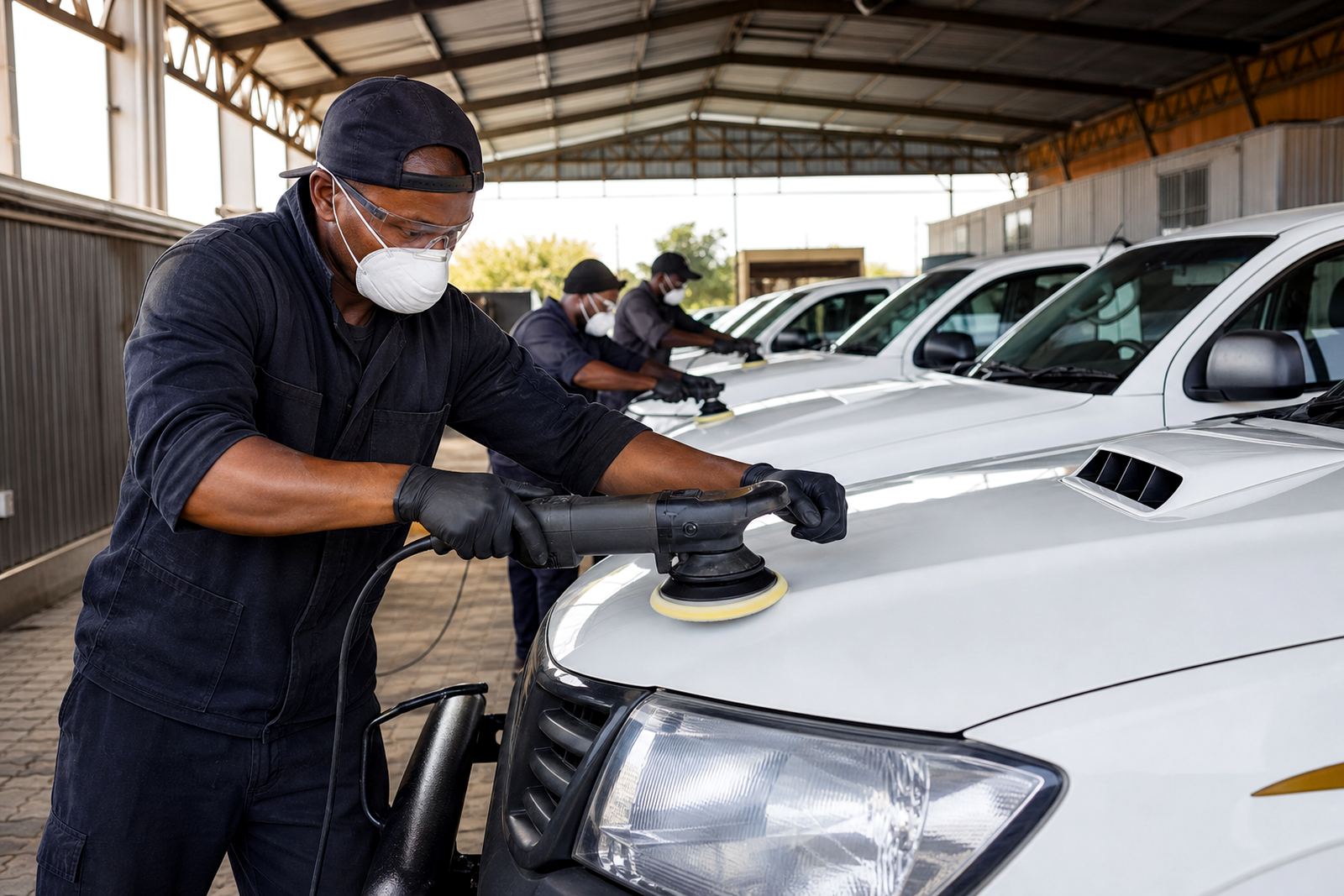
When a fleet carries your logo, every vehicle becomes part of the customer’s first impression. That is true for sales cars, service bakkies, delivery vans and site vehicles. In Germiston and across Gauteng, fleet managers often need a process that can be repeated by different staff, on different days, without each vehicle ending up with a different gloss level or buffer mark pattern.
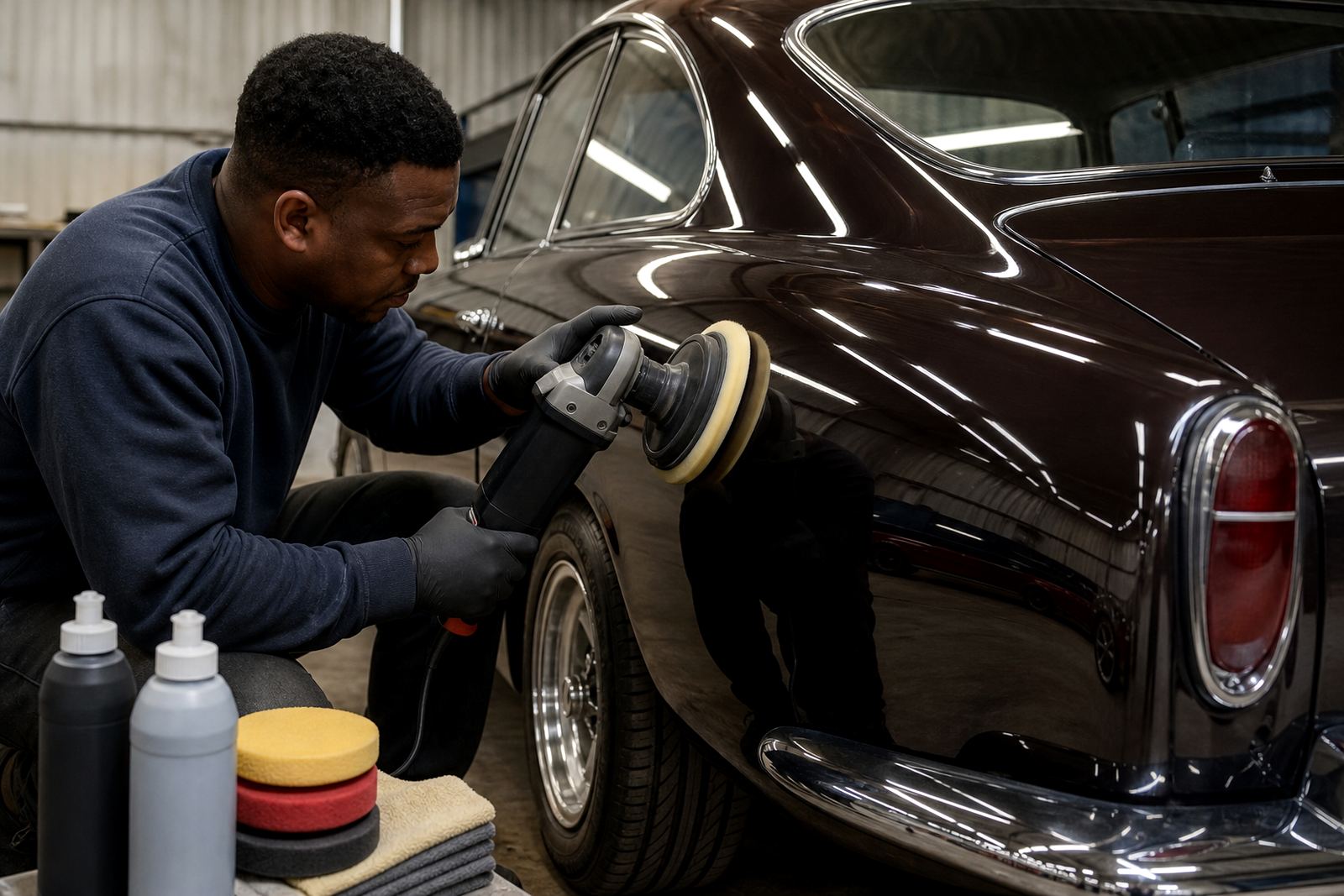
Machine polishing is useful when the finish has light wash marring, haze, oxidation, water spotting or minor staining from road grime and hard water. A rotary polisher gives strong correction when used by an experienced operator. A dual-action machine is slower but easier to control, which makes it a practical choice for regular maintenance valets and mixed-skill teams. The right method depends on paint condition, vehicle size and the time available between bookings.
For fleet work, the aim is not chasing a show-car finish every time. It is about clean correction, tidy edges, safe handling and a result that can be repeated on the next vehicle with the same pad and compound choice. That saves time and reduces comebacks.
Typical machine set-up for car and light commercial fleets
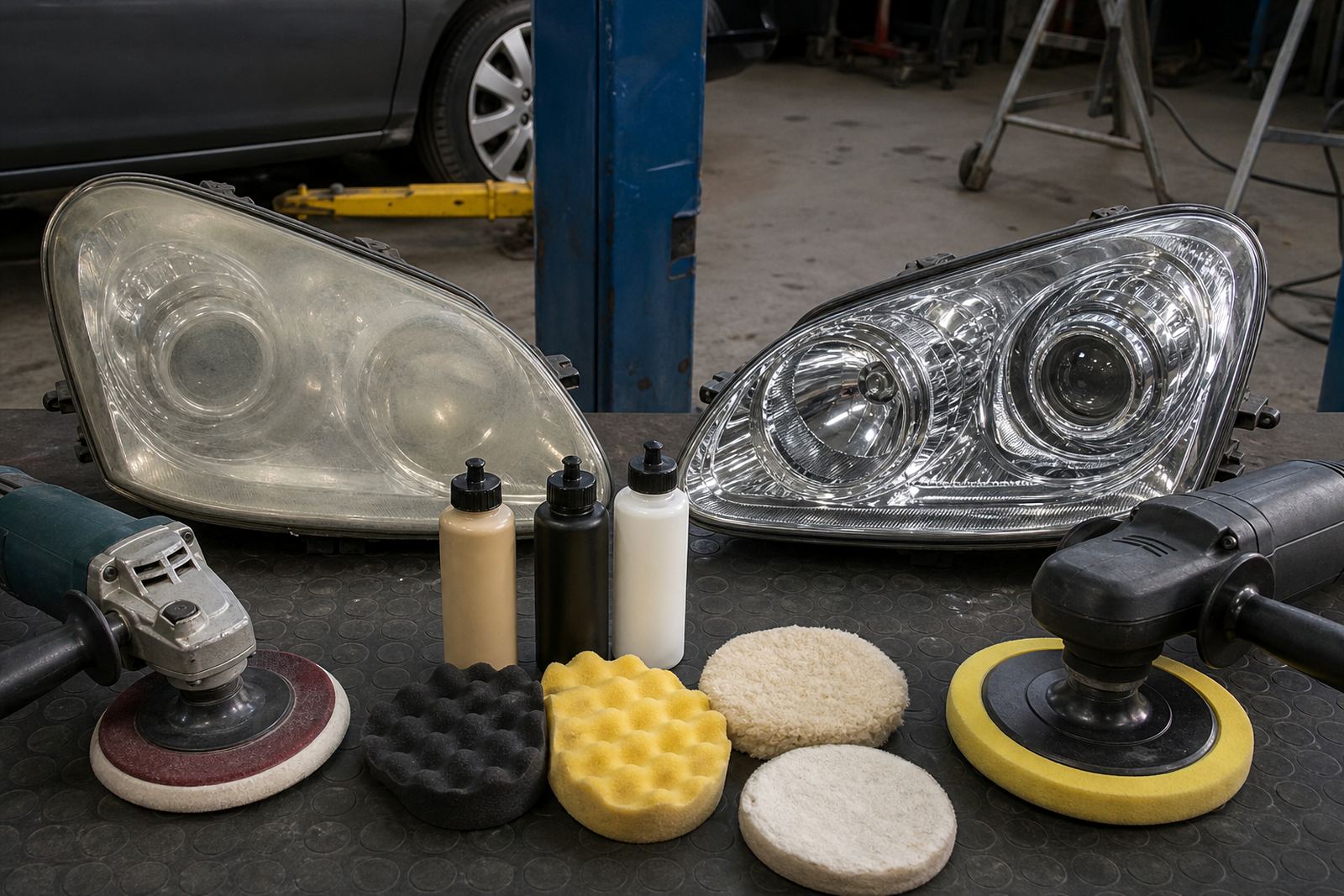
A practical fleet valet set-up usually includes one or two machine types, a few pad grades and compounds for different paint conditions, plus the consumables needed to keep the work moving. On mixed fleets, a DA machine is often used for maintenance polishing, while a rotary is reserved for deeper correction on harder paints or heavier oxidation. For metal finishing on trims, bumpers, canopies or fittings, softer pads and careful heat control matter just as much as the product choice.
Common equipment and consumables include:
- Rotary polisher for controlled correction on harder jobs
- Dual-action polisher for safer maintenance polishing and final finishing
- Foam cutting, polishing and finishing pads in several diameters
- Microfibre cutting pads for heavier swirls or oxidation
- Compounds for cutting, refining and final gloss
- Masking tape for edges, rubbers and badges
- Microfibre cloths, pad cleaning brush and panel wipe
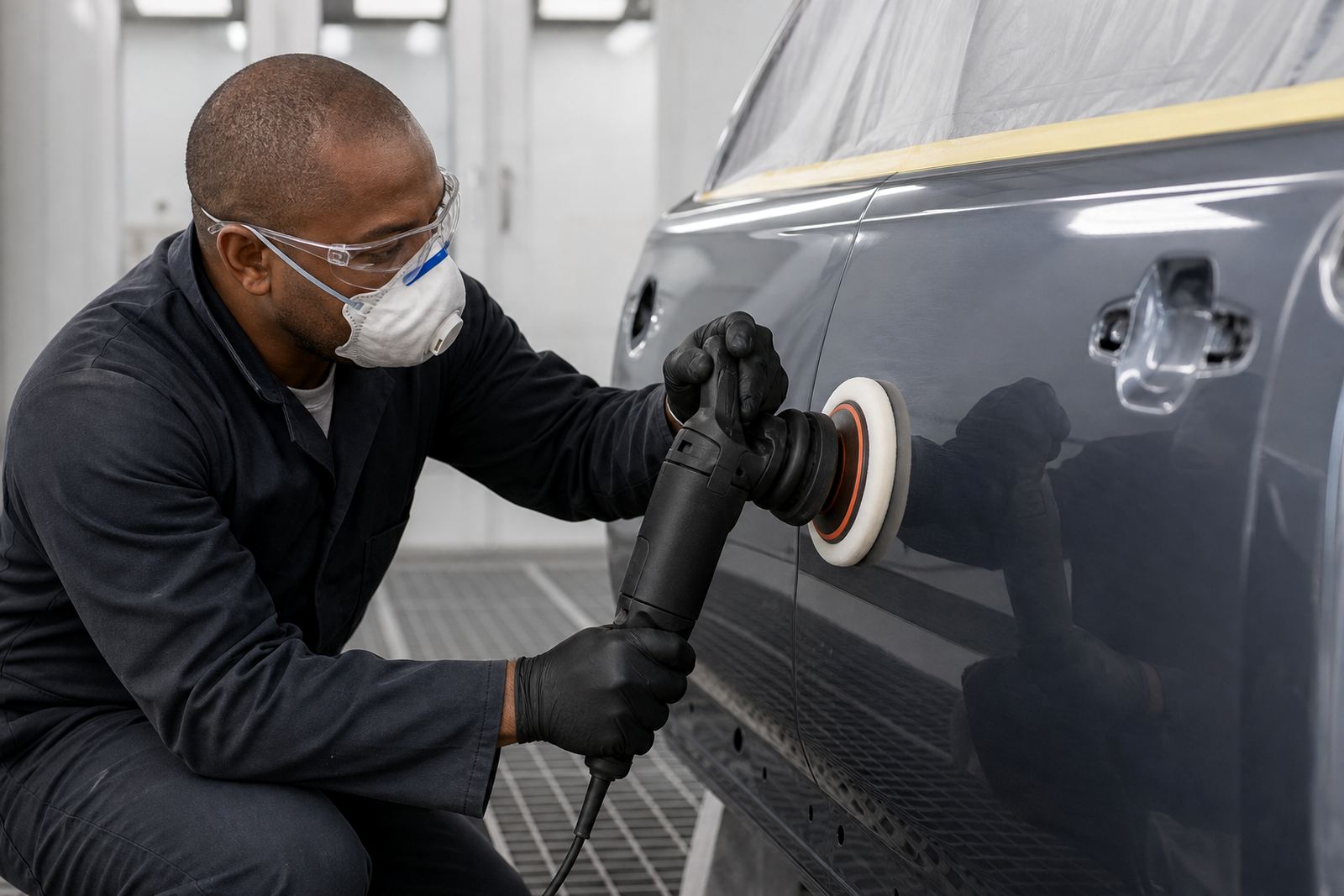
- Respiratory protection, eye protection and gloves where required
In dusty areas around workshop yards, and in windy parts of the Highveld, pad contamination is a real issue. A dirty pad can create fresh marks faster than it removes the old ones. Keeping pads clean between sections is a basic habit that improves results and reduces rework.
Planning a valet bay for faster turnover
A well-planned polishing bay helps a fleet team move from one vehicle to the next without wasting time on setup. The most efficient layout is one where washing, drying, decontamination and polishing happen in sequence, with enough space to open doors, move around mirrors and work the bonnet safely. For larger fleets in Johannesburg, Pretoria or Durban, it helps to plan one bay for initial washdown and another cleaner bay for machine polishing.
Good lighting is essential. Side lighting or movable inspection lights show swirls, sanding marks and missed patches before the vehicle leaves the bay.On coastal sites in Cape Town or Durban, humidity can also slow drying and affect how compounds behave, so the team needs to allow for longer wipe-down and panel inspection times.
For repeat work, keep the same pad and compound pair with each stage, and label them clearly. It sounds simple, but it stops cross-contamination and makes the finish more consistent when different staff members share the same job.
Common mistakes that waste time and dull the finish
Fleet polishing mistakes usually come from rushing. The most common one is starting with too aggressive a pad or compound on paint that only needs light refinement. That can save a few minutes at the beginning, but it often creates extra haze that takes longer to remove. Another mistake is using one pad for too many panels without cleaning it. Once a pad loads up with spent compound and paint residue, cutting drops and the machine starts to drag.
Other problems to avoid include working on hot panels, leaning too hard on the machine, and polishing over dirt that was missed during washdown. With rotary machines, edge burn and holograms are a risk if the operator keeps the pad in one place or lifts the machine too quickly. With DA machines, the most common issue is underworking the product, which leaves a dull finish that looks acceptable indoors but fails in daylight.
- Do a proper wash, decontaminate and dry before polishing
- Check paint condition under strong light before choosing a pad
- Work smaller sections so the compound breaks down properly
- Keep edges, plastics and badges masked where needed
- Use PPE and dust control, especially when correcting oxidised or dry surfaces
Dust safety matters more than many crews realise. On older fleet vehicles, dried contamination can become airborne during machine work, so it is better to wear a suitable mask and keep the area as clean as practical. Good habit on the floor saves trouble later.
Budget ranges for fleet polishing set-ups in Rand
Fleet budgets vary depending on whether the team is doing light maintenance work or deeper correction. A small in-house setup for basic presentation work will usually cost less than a full correction bay fitted for heavier machine polishing. It also depends on whether you need one machine for a small service fleet, or a broader kit for multiple valets working across several branches.
As a general planning guide, a starter fleet polishing kit may include a machine, a few pad sets, compounds, masking materials, panel wipe and basic PPE. Mid-range setups add a second machine type, more pad sizes and better lighting. Larger workshop kits include training, spare consumables and enough equipment to handle several vehicles in sequence.
- Starter maintenance kit: about R4 500 to R10 000
- Practical mixed-fleet kit: about R10 000 to R25 000
- Workshop-ready set-up for higher turnover: about R25 000 and up
Training is worth budgeting for alongside tools. A machine is only as good as the operator, and the cost of one damaged badge, burned edge or over-polished panel can wipe out the saving from buying cheap consumables. For fleet teams, the better approach is to match the kit to the paint condition and the team’s skill level, then build up from there.
Training the team for consistent fleet finishes
Fleet polishing works best when the whole team understands the same process. A new hand on the wash side should know how contamination affects the polish stage. A valeter on the machine should know how to read paint, choose the right pad and stop before the surface becomes too warm. Supervisors should be able to check work under good lighting and spot when a panel needs a second pass or a finer finishing stage.
Polisher supports beginner polishing training, rotary skills sessions, DA skills sessions, pad and compound matching, starter kit consultation and workshop setup advice. We also help with consumables restocking, machine care guidance, onsite team demos and safety and PPE briefings. That support is useful for fleets based in Germiston, the East Rand, Johannesburg, Pretoria, Cape Town, Durban, Bloemfontein and the Vaal Triangle, where the same business may run different vehicle types from one site to another.
For fleet managers, the best outcome is simple. The vehicle leaves the bay looking clean, even and professionally presented, and the next vehicle can be finished the same way without guesswork.
How fleet managers usually start with Polisher
Most fleet clients begin with one of two needs. Either the vehicles need a tidy-up before client visits, audits or handovers, or the team wants a better in-house process so the external wash and valet spend can be reduced over time. In both cases, the first step is usually an enquiry about the vehicle mix, the condition of the paint and how much time is available per unit.
From there, we can advise on the right combination of rotary and DA machines, buff pads, compounds and training. If the fleet includes both painted panels and metal components, the advice should cover both surfaces, because the same approach does not always suit each one. Some jobs need more cut, others need more finish, and the goal is to keep the process practical for South African workshop conditions.
Clients reach us through the enquiry form on our contact page, and we use that conversation to match the kit and training to the work at hand, not to overcomplicate it.