
When the finish must look right under bright light
Show car finishing is for the jobs where every reflection counts. That can mean a restored classic, a display vehicle, a freshly painted panel or polished metal trim that must hold up under close inspection at an event or showroom. The aim is not only shine, but clarity, depth and consistency across the whole surface.
In South Africa, many customers work in mixed conditions. One week it is a small garage in Germiston, the next week a mobile detail setup in Pretoria or a bodyshop in Cape Town with coastal humidity to deal with. Good planning matters because paint can soften with too much heat, metal can haze if compounds are wrong, and dust from a nearby floor can ruin the final pass. A clean layout and proper PPE are part of the job, not an afterthought.
For show work, close visual checks under strong lighting are standard. That means looking for holograms, buffer trails, dry compound residue and missed edges before the vehicle leaves the bay.
Typical kit for paint and metal finishing
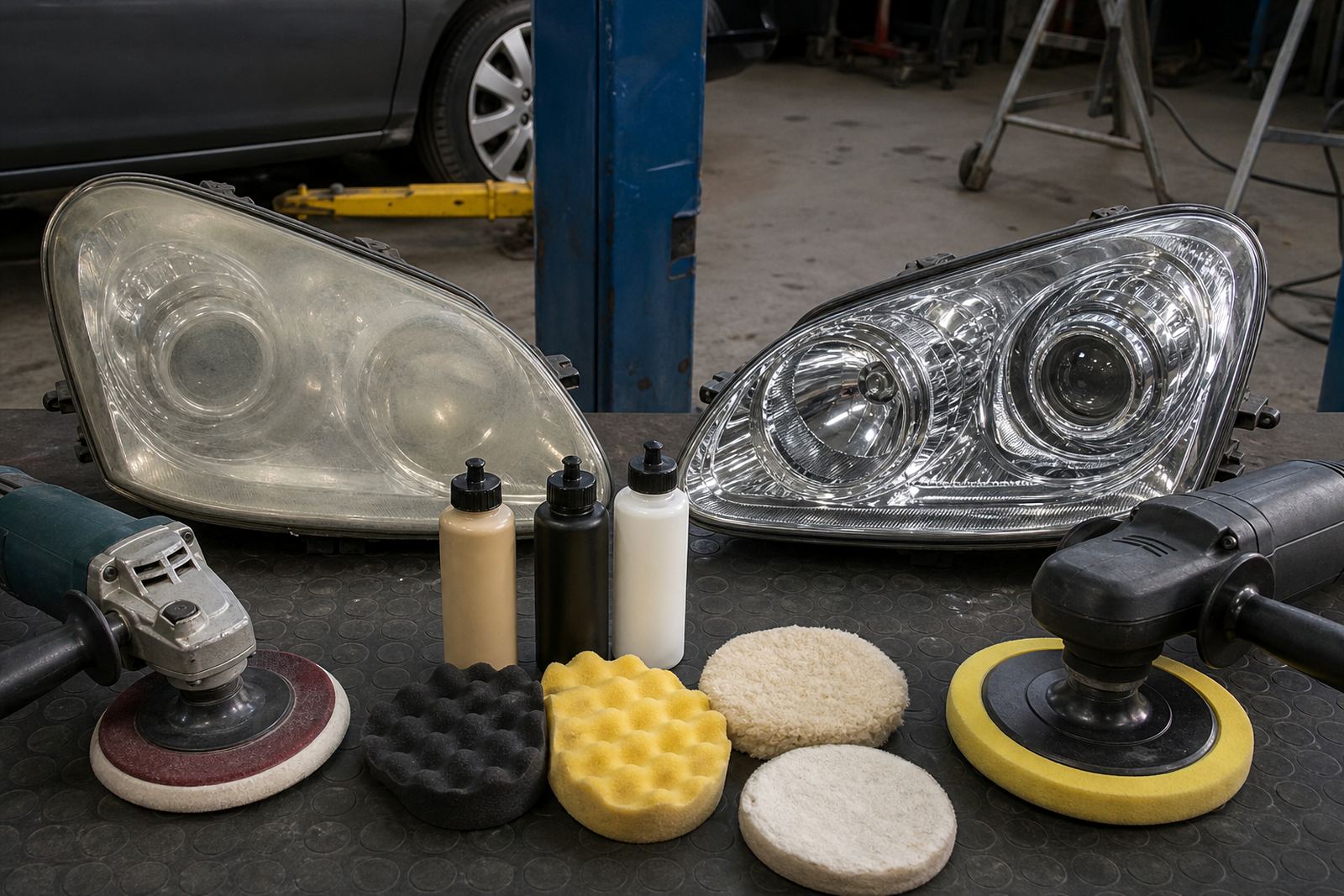
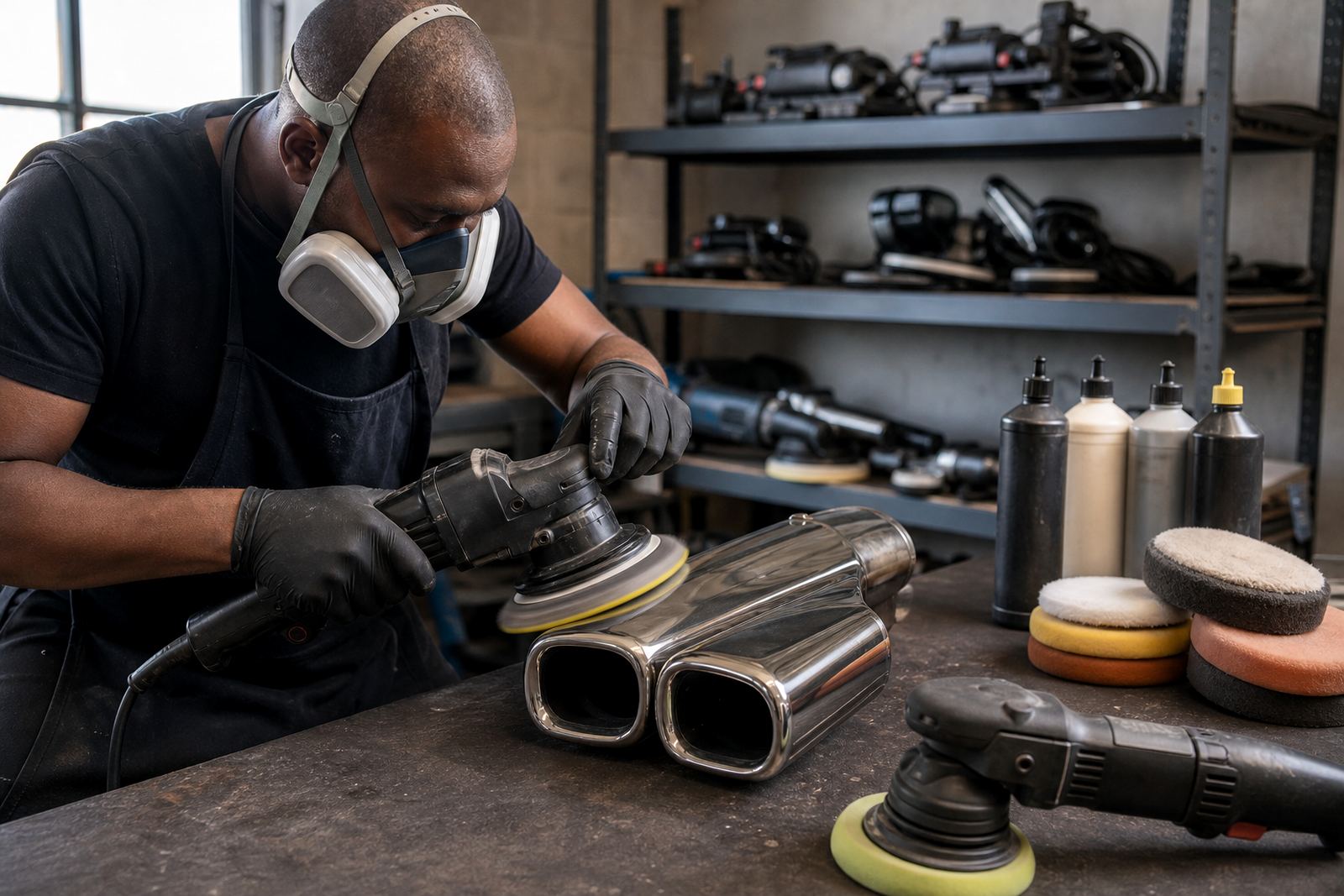
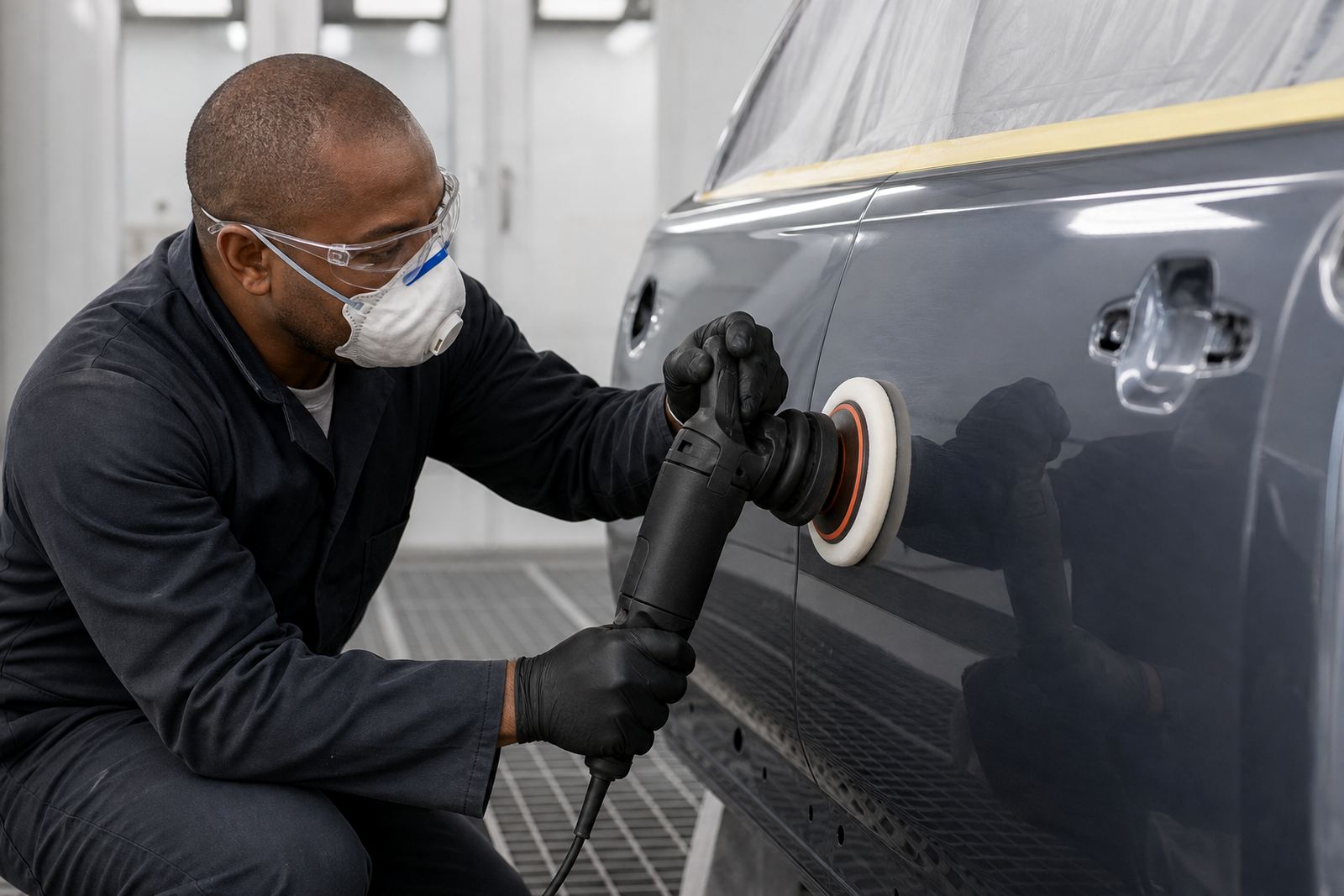
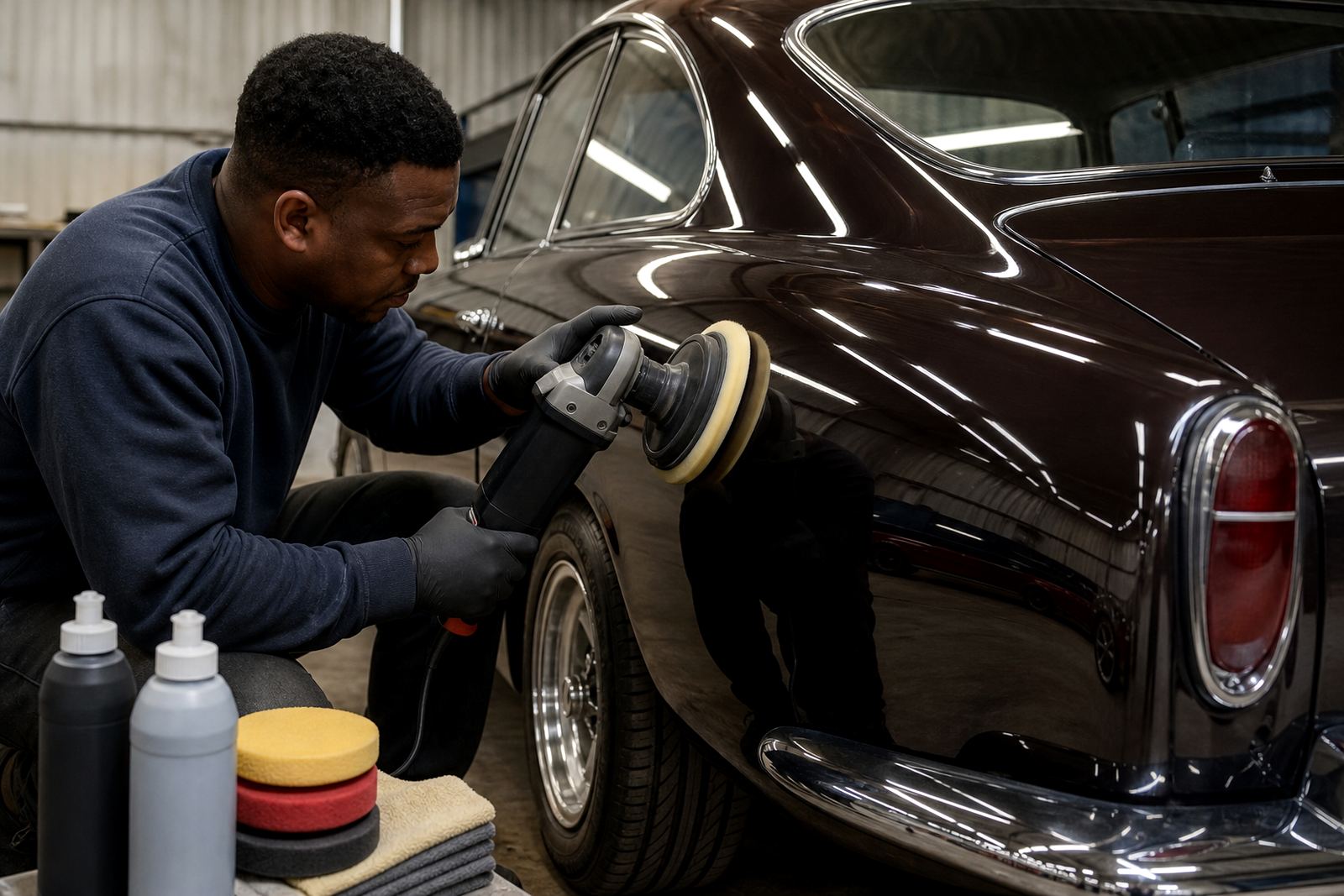
A proper show finishing kit is usually built around a rotary polisher, a dual-action polisher, pads or buffs in different densities, and compounds matched to the surface. Rotary machines suit corrective cutting and metal work when used carefully. Dual-action machines are often preferred for refining paint, maintaining control, and reducing the risk of burning edges or leaving visible machine marks.
Metal finishing often needs more aggressive cut at first, then a finer pass to bring up the reflection. Painted panels usually need a gentler start with the correct pad and compound pairing. On both types of work, the operator should test a small area before committing to the full panel.
- Rotary polisher for controlled cutting and metal buffing
- Dual-action polisher for paint refinement and final gloss
- Foam pads, microfibre pads and sewn buffs for different stages
- Cutting, polishing and finishing compounds
- Masking tape, inspection light, clean cloths and pad cleaner
- Respirator, eye protection, gloves and dust control gear
We also help with starter kit choices so a beginner does not overspend on gear that is too aggressive or not suited to the actual work being done.
Planning the bay for clean results
The best results come from sensible layout. You need enough room to move around the vehicle, store pads cleanly, and keep compounds away from dust and overspray. A good bay should have strong lighting from more than one angle, because scratches that look gone in one light can still show up under another.
Power stability is another issue.Good airflow helps, but dusty fans can also create problems if they are not maintained.
- Park or position the vehicle so you can work all around it without overreaching
- Keep finishing pads separate from cutting pads to avoid cross contamination
- Use clean tables, shelves or sealed boxes for compounds and cloths
- Mark out a safe zone for power leads and extension cords
- Have a washdown or cleaning routine before final inspection
For mobile teams, a compact trolley setup works well. For bodyshops and detail centres, a fixed layout with a prep area, polishing area and inspection point is better.
Common mistakes that show up straight away
The most common mistake is chasing shine too fast. Too much pressure, the wrong pad, or a compound that is too coarse for the stage can leave haze or micro-marring. Another common issue is polishing over contamination. If the surface has grit, old wax or sanding residue, the finish will never read clean.
Heat control matters as well. Edges, raised body lines and repainted sections can mark quickly if the machine is left in one spot. On metal, too much speed can load the buff and make the surface go patchy. On paint, dry buffing and old pads often cause swirls that only show under inspection lights.
We also see people ignore safety. Fine dust, compound residue and spent pads should be handled properly. PPE is not only for paint dust or metal residue, it also protects the eyes and lungs when working in enclosed workshops or on site.
Budget ranges for a proper setup
Budgets vary depending on whether the work is occasional, semi-professional or a full workshop service. A sensible starter setup for a hobbyist can be built without unnecessary extras, while a trade setup should allow for spare pads, back-up consumables and more than one machine type.
As a guide, many customers plan for around R2 500 to R6 500 for a basic starter kit with one machine, a small pad set and compounds. A more complete trade kit can sit between R8 000 and R20 000 depending on machine choice, extra buffs, inspection lights and consumables. Workshop scale setups with multiple machines, more pad stock and training time can run higher, especially if the team is working across paint and metal jobs.
The point is to match the kit to the work. Buying a powerful machine without the right pads or technique usually costs more in rework than it saves on day one.
Training for better control on real jobs
For show finishing, training matters because the margin for error is small. Our sessions cover beginner polishing, rotary skills, DA skills, metal buffing, paint correction coaching, pad and compound matching, starter kit consultation, workshop setup advice, consumables restocking, machine care guidance, onsite team demo and safety and PPE briefing.
That support is useful for single operators, small detail shops and bodyshops that want a cleaner process. Mandla Sipho Dlamini leads the business from Germiston with help from Karen van Wyk, Thabo Ngwenya, Ayesha Mokgatle, Johan Liebenberg and Lerato Hartnick. Clients reach us through the enquiry form on our contact page, and we work with customers across Johannesburg, Pretoria, Cape Town, Durban, Bloemfontein, the East Rand and the Vaal Triangle.
Whether the job is a polished show car panel or a bright metal trim piece, the same rules apply: prepare well, use the right machine, keep the pad clean and inspect before you call it done.