
When a Tank Needs Careful Polishing
Motorcycle tanks usually show marks in a way that larger body panels do not. The curve catches light, so swirls, sanding haze, oxidised paint and small scratches stand out fast. On a used bike, the clear coat may already be thin around badge edges, knees pads and filler caps, which means the polish method matters as much as the machine.
For painted tanks, the aim is usually to refine the finish, not to force a heavy cut into the surface. That means starting with the least aggressive pad and compound that will do the job, then checking the result under good light. In humid coastal conditions like Durban, water spots and residue can show up quickly. In Gauteng, dust from open workshops can settle on a sticky panel and mark it again, so clean preparation is important.
- Assess the tank for repaint lines, stone chips, old burn marks and edge wear before starting.
- Work out whether you need defect removal, gloss restoration, or just a clean finish after washing.
- Mask sharp edges, decals and plastic parts if the polish will run close to them.
Choosing the Right Machine and Pads
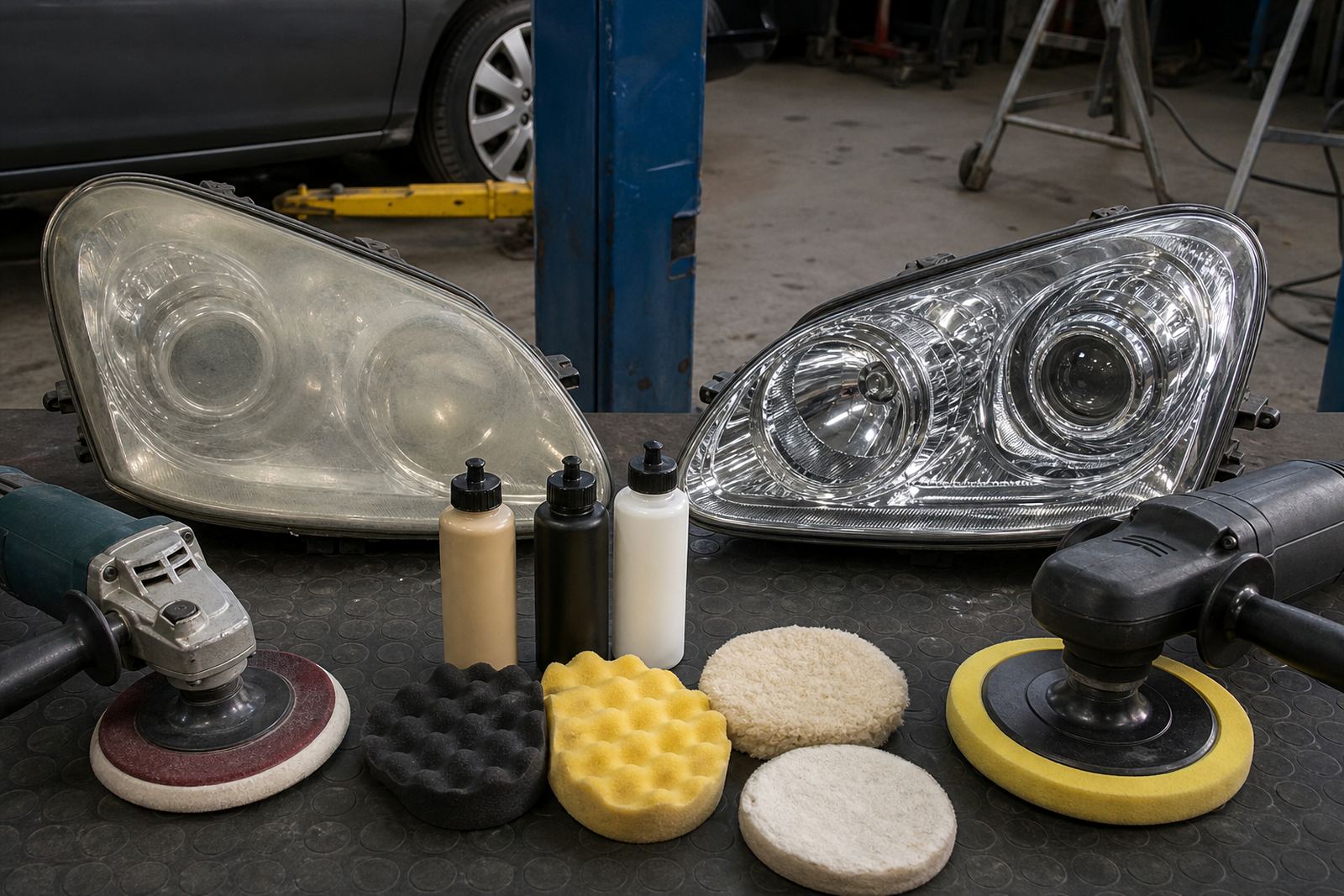
For motorcycle tanks, a smaller machine or a compact backing plate often makes the work easier. A rotary polisher gives direct cutting action and is useful for experienced users who need to remove heavier marks on stable paint. A dual-action polisher is safer for many jobs because the movement reduces heat build-up and lowers the risk of holograms, especially on curved surfaces.
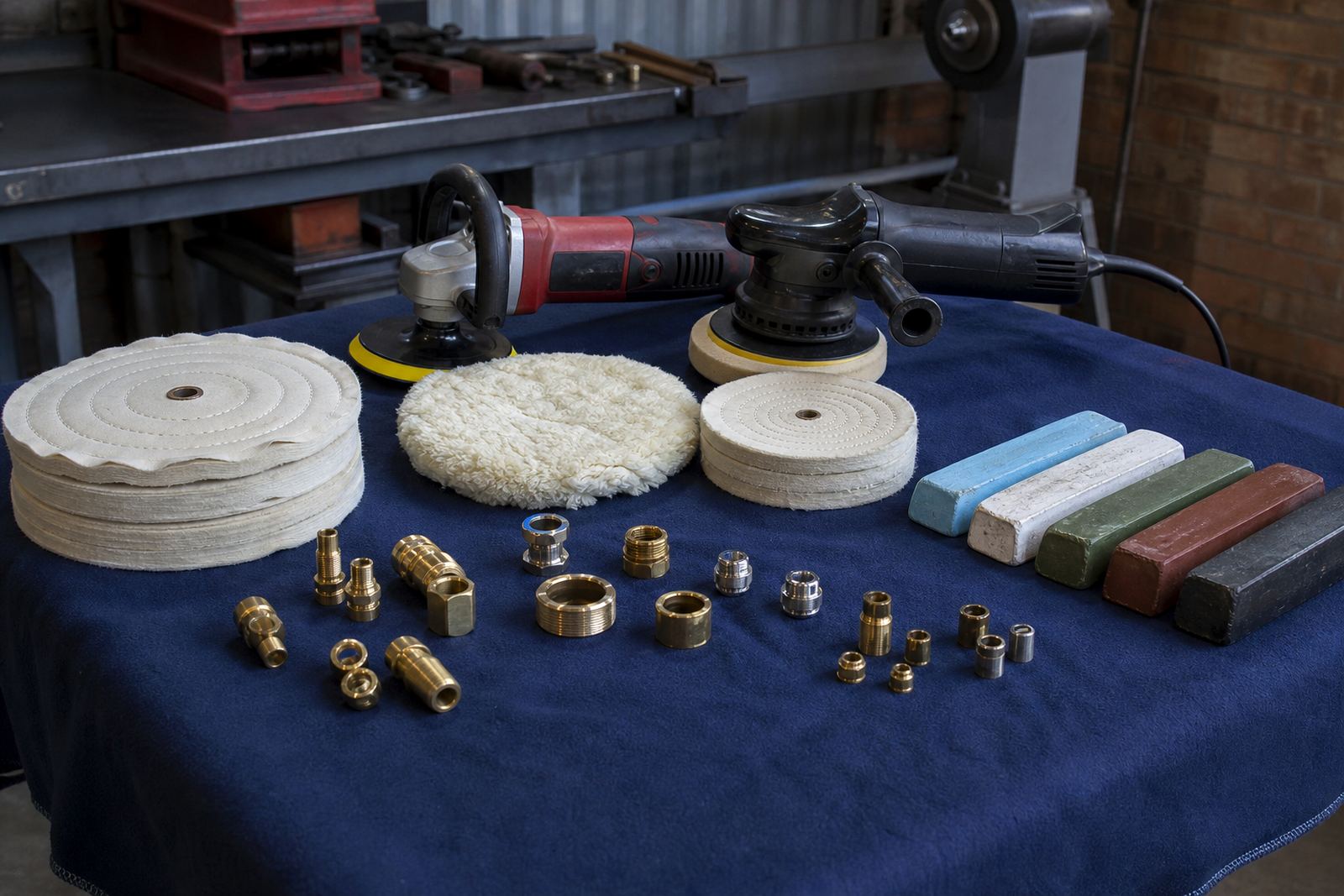
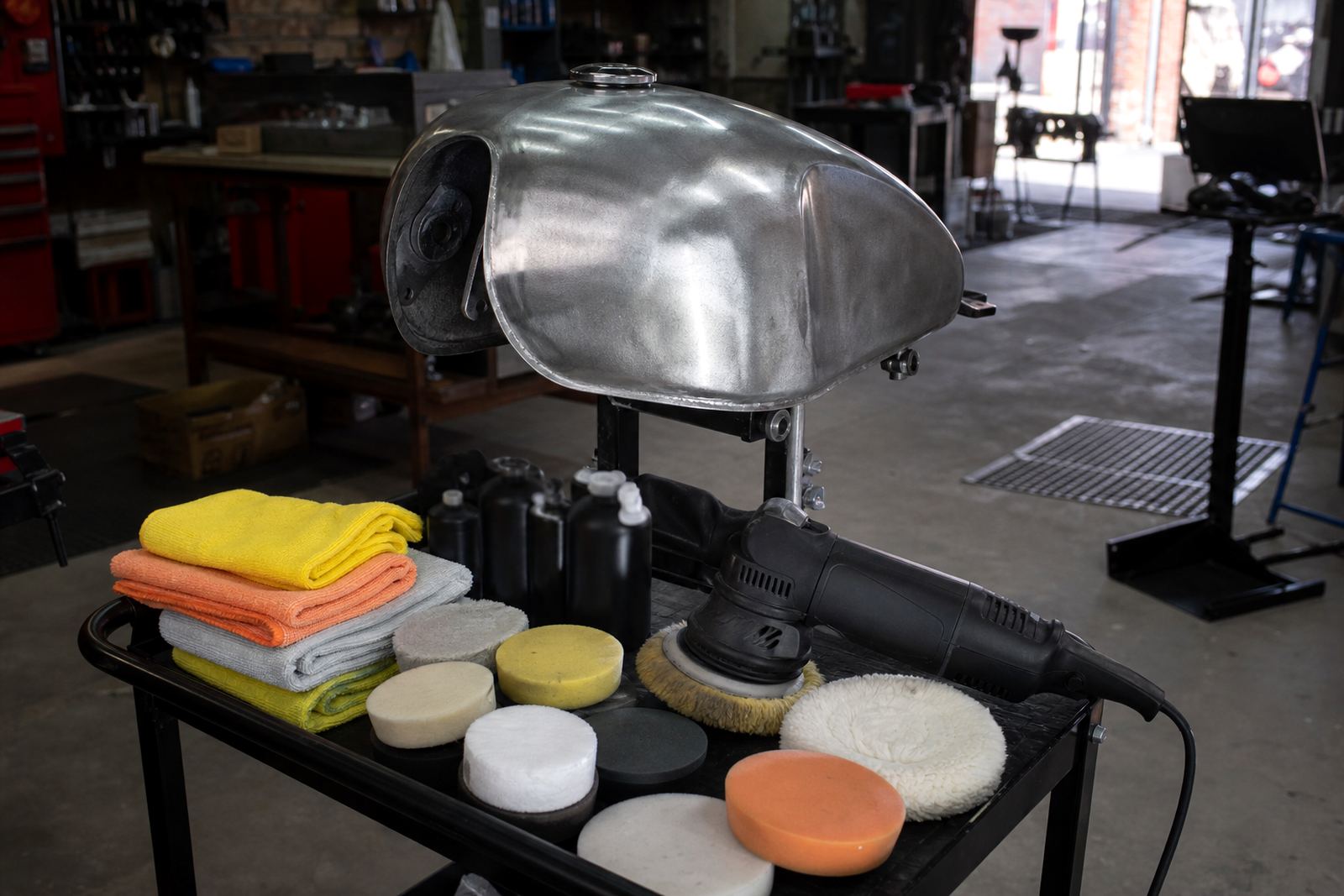
Pad size matters a great deal. A 3 inch or 4 inch pad is often more practical than a large pad because it follows the tank shape better and reaches into tighter areas near the neck and side edges. Foam pads are common for paint finishing, while microfibre pads can cut faster but need more control. Wool buffs can be used on metal parts or for heavier correction, although they are not always the first choice on painted motorcycle panels.
- Dual-action machine for safer finishing work and light to medium correction.
- Rotary machine for skilled users handling deeper marks or metal parts.
- Small foam cutting pad, medium foam polishing pad and a finishing pad for gloss work.
- Clean microfibre cloths, panel wipe, masking tape and a soft brush for pad cleaning.
Compounds and Technique That Suit Curved Panels
The compound should match the paint condition and the correction level. A heavier compound can remove sanding haze or deeper swirls, but it may leave its own marks if the pad and speed are wrong. A finishing polish cleans up the surface and brings back clarity. On a tank with fresh paint, always allow the coating to cure properly before polishing, because uncured paint can drag, smear or soften under heat.
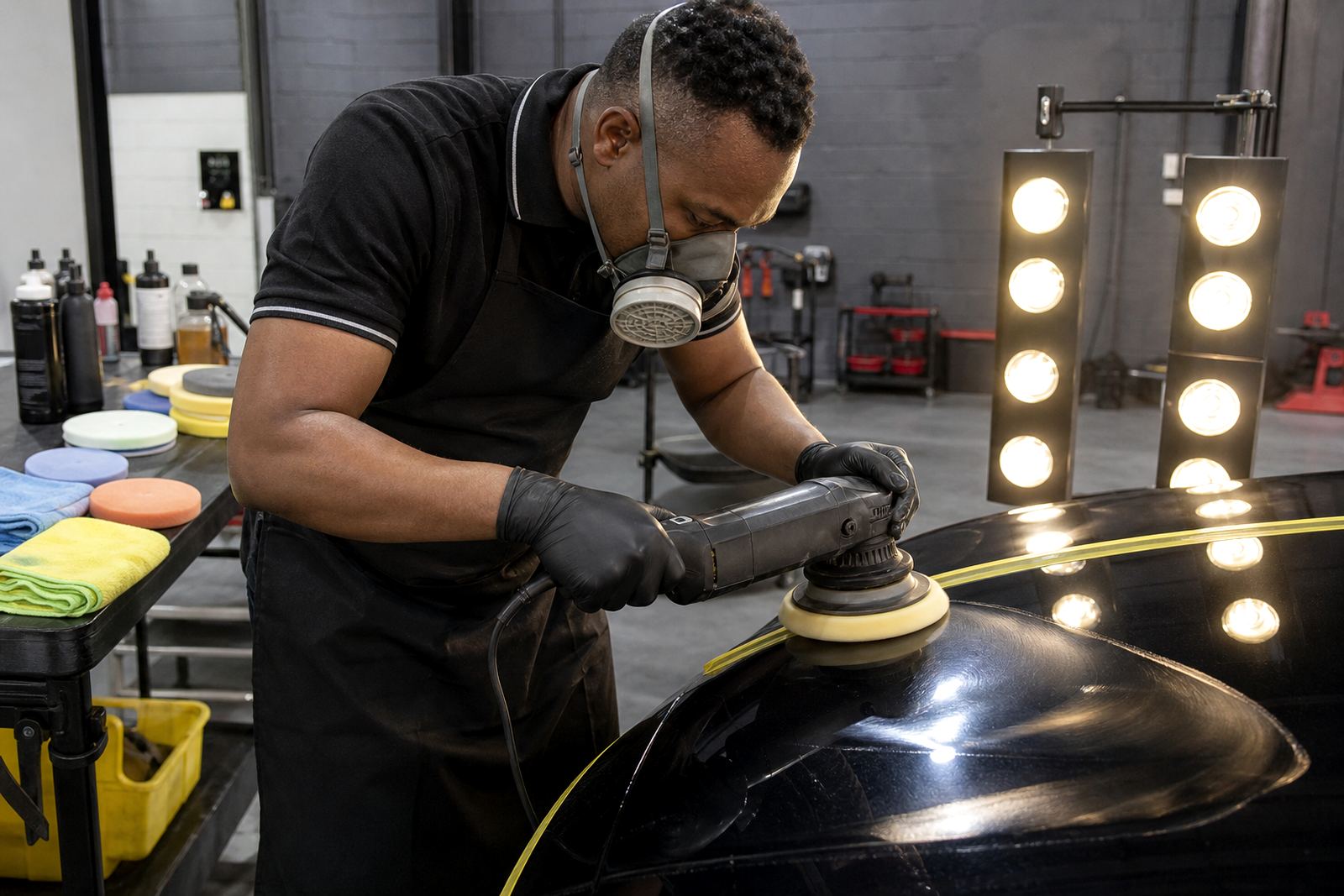
Technique is about pressure, speed and movement. Keep the pad flat where possible, use moderate pressure and move slowly enough for the compound to work, but not so slowly that the paint overheats. On a tank spine or a curved shoulder, keep the machine under control and avoid tipping the pad on an edge. Small sections are better than trying to do the whole panel in one pass. Wipe residue often and inspect under strong light from a few angles.
- Use a test spot first so you do not overwork the full tank.
- Keep the pad clean and primed, because a clogged pad can scour the finish.
- Reduce pressure as the surface improves and switch to a finer polish for the last pass.
- Do not polish over dirt, grit or dried compound dust.
Layout and Planning for a Motorcycle Job
A proper setup makes motorcycle tank polishing easier and safer. The bike should be stable, the workspace well lit and the panel free from loose dust. If the tank is still fitted to the bike, protect nearby plastic, rubber and painted parts from sling and accidental contact. For panels removed from the bike, place them on clean stands or soft supports so you can reach the full surface without rocking the part.
Good planning also helps with timing.If the job is for a custom bike or a full restoration, map the sequence: wash, decontaminate, inspect, mask, cut, refine and final wipe. That order saves time and reduces the chance of missing a defect.
- Use strong, movable lighting to check swirl marks and buffer trails from different angles.
- Keep cables clear so they do not drag across the tank or scratch the side cover.
- Separate dirty rags from finishing cloths and keep compounds closed when not in use.
Common Mistakes on Tanks and Covers
The most common mistake is using a pad that is too large for the panel. That leads to poor control near badges, seams and tight edges. Another frequent problem is too much speed or pressure on a rotary, which can leave heat marks or thin the clear coat on the high points of the tank. People also overapply compound, then chase residue for longer than needed. A little product goes a long way on these smaller parts.
Skipping dust control is another issue. On motorcycle work, small panels show every speck. If the surface is not wiped properly between stages, the finish can end up with fresh marks that were not there at the start. The same applies to poor pad choice. A heavy cutting pad used too late in the process can leave micro-marring that is visible in direct sun. Patience matters more than force.
- Do not polish across sharp edges at full pressure.
- Do not assume one compound will handle every stage.
- Do not leave residue near filler caps, seams or pinstripes.
- Do not rush inspection between passes, it usually costs more time later.
Starter Budgets and Training in Rand
For a hobby rider or small detailing setup, a basic motorcycle tank polishing kit can be built without overspending. A starter combination of a compact machine, a small pad set, a cutting compound, a finishing polish, masking tape and cloths may sit around R1 500 to R3 500 depending on what you already have. If you need a better quality machine, extra pads and a fuller consumables pack, a practical working budget can move into the R4 000 to R8 500 range.
For workshop use, especially where you handle repeated jobs, budget for spare backing plates, more than one pad type and proper machine care. Training is worth including from the start because a well set-up operator wastes less product and causes less rework. Our team in Germiston supports beginners and working detailers with Rotary Skills Session, DA Skills Session, Starter Kit Consultation, Pad And Compound Matching, Safety And PPE Briefing and Workshop Setup Advice. We also help with Consumables Restocking and Onsite Team Demo across Johannesburg, Pretoria, Cape Town, Durban and Bloemfontein.
Customers use the enquiry form on our contact page when they need advice on the right pad size, the right compound cut, or a safer workflow for tight motorcycle panels. That way you can match the kit to the job before the first pass, instead of correcting avoidable mistakes later.