When Stainless Railings Need More Than a Wipe Down
Stainless steel railings on staircases, balconies, shopfronts and factory walkways often pick up fingerprints, weld staining, adhesive residue, water spotting and fine scratches. In coastal areas such as Durban or Cape Town, salt in the air can leave the surface looking tired quicker than most owners expect, while inland dust around Germiston, Johannesburg and Pretoria can settle into the grain and make the finish look uneven.
For this kind of work, a cloth and general cleaner are rarely enough. A proper polishing approach uses controlled abrasion, the right compound and the correct pad or buff so the surface becomes brighter without going too far and creating a wavy or over-polished look. The aim is not mirror shine on every railing, but a clean, even, professional finish that suits the installation and the setting.
On site, the condition of the railing matters. New installations may only need weld clean-up and blending. Older railings may need stain removal, oxidation correction and a final hand finish. The right approach depends on whether the stainless is brushed, satin or already partly polished.
Typical Tools For Railings And Balustrades
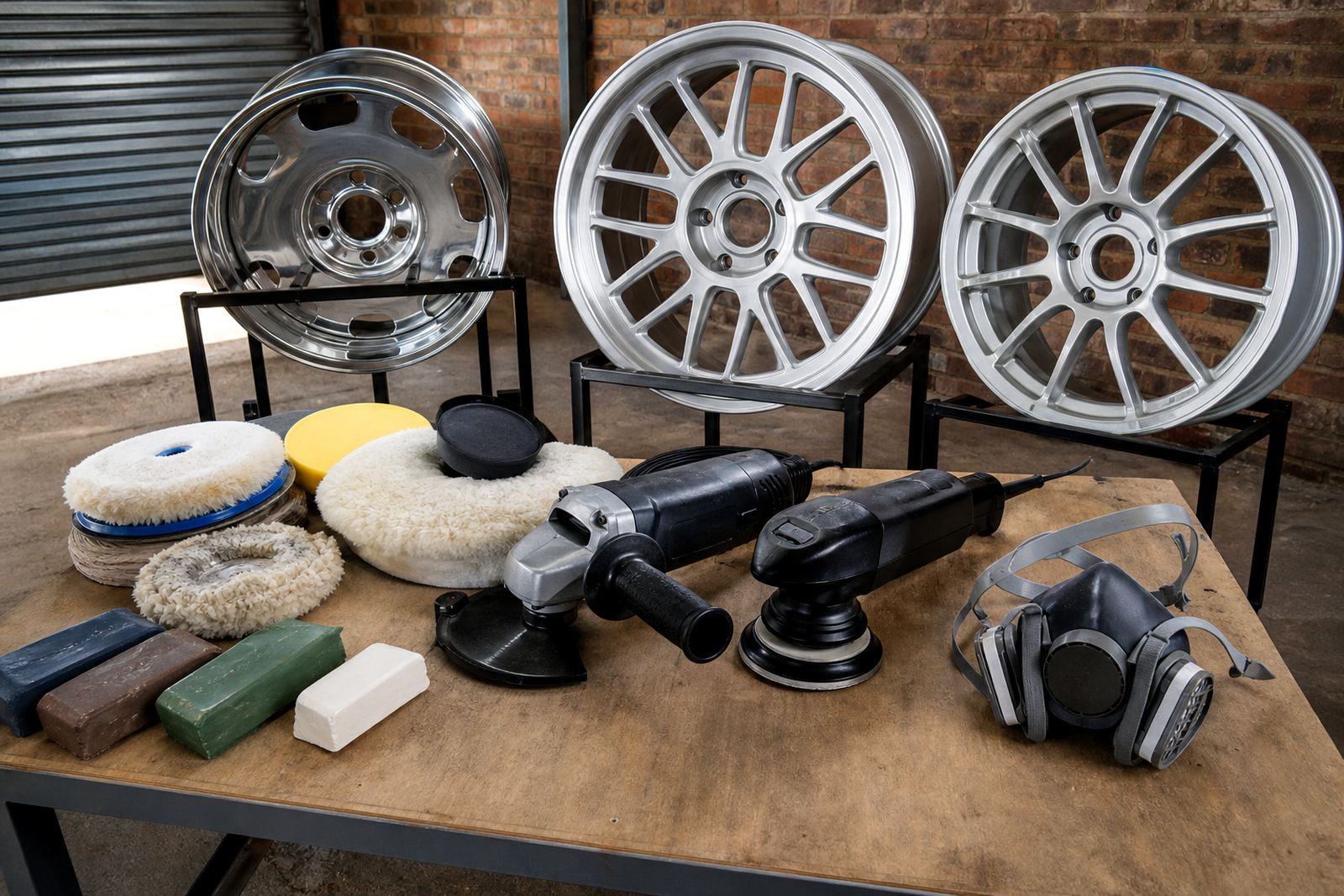
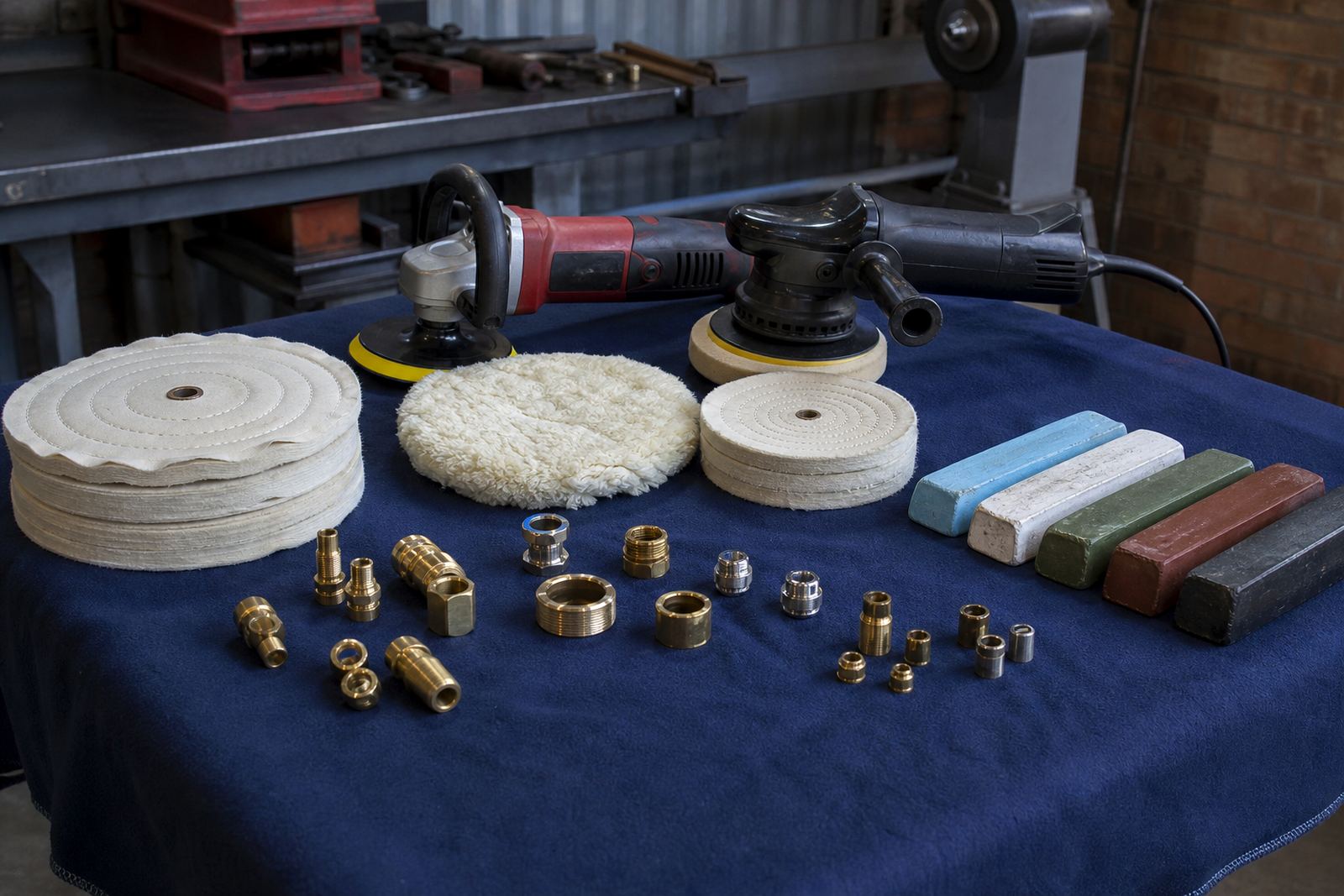
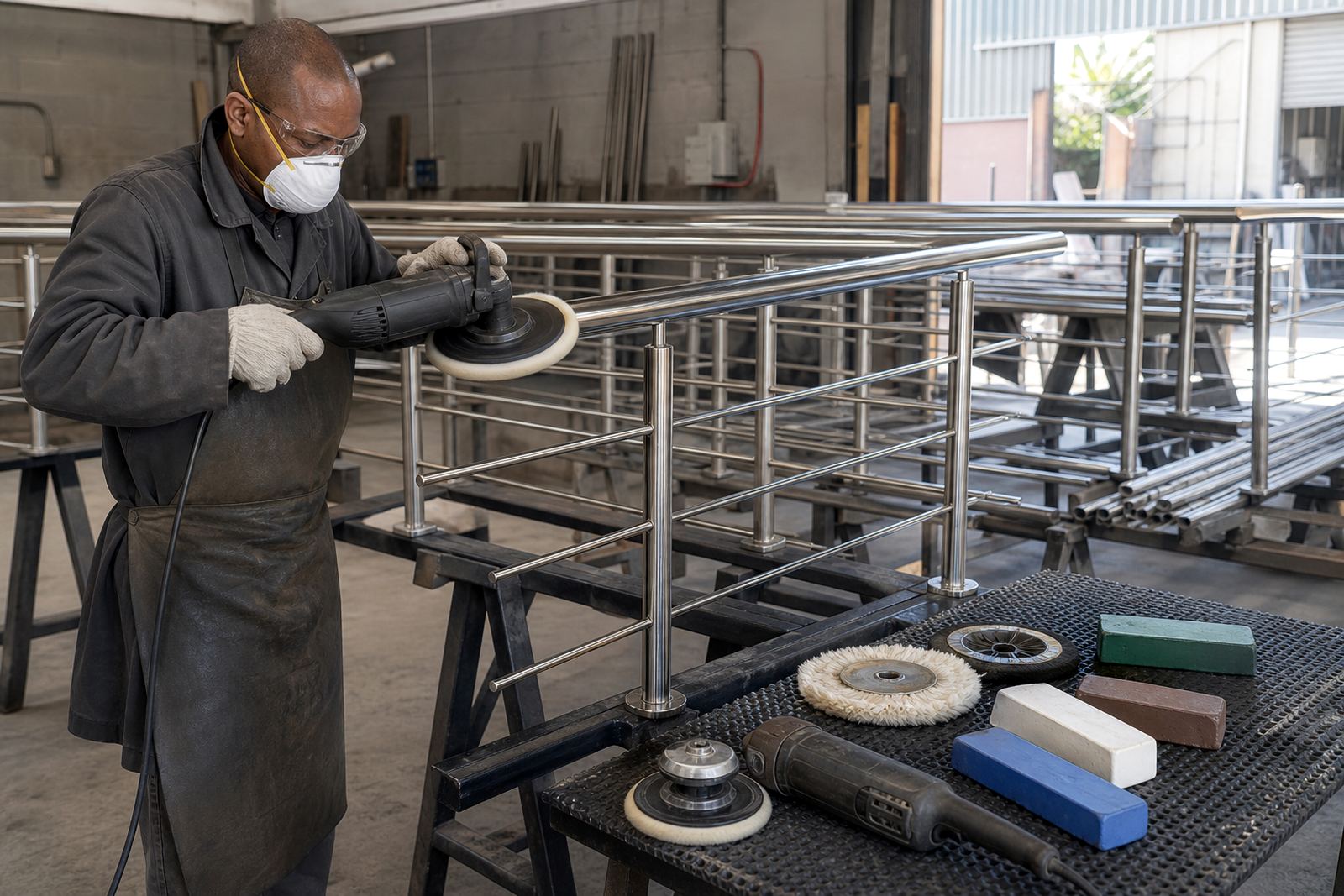
For stainless railing work, the usual equipment set is simple but must be matched carefully to the job. A rotary polisher gives direct cutting action and is useful for heavier marking, weld blend work and faster correction on flat or accessible sections. A dual-action polisher is slower but more forgiving, which makes it useful for lighter finishing, maintenance work and operators who want a safer learning curve.
- Rotary polisher for heavier correction and controlled cutting
- Dual-action polisher for lighter finishing and safer surface control
- Buffs and pads in different densities for cutting, refining and finishing
- Compounds suited to stainless steel and fine surface correction
- Microfibre cloths for wipe down and residue removal
- Masking tape for glass, powder coat, timber and painted sections nearby
- PPE including gloves, eye protection and a dust mask or respirator where needed
Good results also depend on keeping the machine, pad and compound clean. A clogged buff or overloaded pad can drag residue across the metal and leave haze, which means more work later. For railings with tight corners or many vertical posts, smaller pads and careful hand work often give a better result than trying to force a large pad into every space.
Planning The Job Before The Machine Switches On
Layout and planning save time on railing projects, especially where there are multiple levels, long runs or public access areas. Measure the linear metres first, note the height and check whether the work is inside a home, at a body corporate property, at a retail site or on an industrial platform. This helps with access planning, cord routing and deciding whether the rail can be polished in place or should be sectioned off.
Before starting, protect nearby finishes. Glass, painted balustrade brackets, timber caps and tiled floors can all be marked by slurry or sling off from the buff. On busy sites in Johannesburg or Pretoria, it is also worth planning around foot traffic so the area can stay safe while you work. If the job is outdoors, avoid direct midday sun on hot stainless because the compound can dry too fast and become harder to control.
For long railings, divide the job into manageable sections. Work one side, then the next, and keep a consistent direction on the final finish. That helps prevent obvious patch lines and gives a more uniform appearance across the full length.
Common Mistakes That Leave Stainless Looking Worse
Stainless railings can be damaged by over-enthusiastic polishing. A common mistake is using too much pressure, which overheats the surface and can create discolouration or uneven marks. Another is selecting a compound that is too aggressive for the finish required, especially on brushed or satin stainless where the goal is to clean and refine, not remove too much material.
- Using a pad that is too hard for the finishing stage
- Holding the machine in one place for too long
- Skipping the test area and starting on the most visible section first
- Polishing across grain direction when the surface should be followed with the grain
- Leaving residue in corners, around clamps or under handrail brackets
- Working without gloves, eye protection or proper dust control
Another issue is assuming all stainless behaves the same. Some railings carry welded repairs, some have mixed finishes, and some have been maintained with household cleaners that leave a film. Testing a small section first helps prevent surprise results and gives you a chance to match pad and compound before the whole railing is touched.
Budget Ranges For Railing Polishing In Rand
For clients planning a stainless railing project, budget is usually shaped by the size of the run, the level of marking and whether the work is maintenance polishing or full correction. Small touch-up jobs and starter kits for a homeowner or site team may sit in the lower hundreds to low thousands of Rand, depending on the machine choice and accessories needed. A proper workplace setup with a rotary or dual-action machine, pads, compounds and PPE will naturally cost more.
For handrail and balustrade polishing on larger sites, the practical budget often depends on labour time, access equipment and the amount of correction required. Straightforward maintenance may be manageable with a modest consumables spend, while heavy weld blending or very dull stainless can increase both time and material use. If the site needs training as well, budgeting for a session before the job starts can reduce wastage and rework.
Polisher helps customers choose a sensible starting point rather than buying random products that do not suit the metal or the finish. That includes advice on starter kits, consumables restocking and machine care so the same equipment keeps performing after the first railing is done.
Training Support For Teams Working On Stainless
Stainless railing polishing is one of those jobs where technique matters as much as the equipment. A team can have a good machine and still leave swirl marks or dull patches if the operator does not understand pressure, pad movement, grain direction and compound choice. That is why practical training makes sense for fitters, maintenance teams, shopfitting crews and small business owners who handle balustrades and handrails regularly.
Polisher offers support for beginners and working teams through beginner polishing training, rotary skills sessions, DA skills sessions, metal buffing training and safety and PPE briefings. The focus is on correct handling, surface control, and what to do when the finish changes from one section to the next. We also advise on workshop setup, onsite team demos and machine care guidance, which helps keep equipment in use instead of sitting idle after a difficult job.
For stainless railings, the most useful support is often straightforward: what to use, what to avoid and how to keep the finish consistent across the full run. That saves time on site and helps the result hold up better in South African conditions, from inland dust to coastal humidity.
Choosing The Right Finish For The Property
Not every stainless railing should be polished to the same level. In a private home, a brighter finish may be wanted on staircase rails and balcony rails for a clean appearance. In commercial or industrial settings, a controlled satin finish may be better because it hides wear and fingerprints more easily. The right choice depends on use, cleaning habits and the look the owner wants to maintain.
If the railing is part of a public-facing space, think about upkeep too. A highly polished surface can show every touch mark. A refined satin finish can be easier to maintain with regular wiping and careful cleaning products. For many projects, the best outcome is a balanced finish that looks neat in daylight and does not demand constant attention.
Clients across Germiston, Johannesburg, Pretoria, Cape Town, Durban and Bloemfontein can contact us through the enquiry form on our contact page for practical guidance on the right machine, pad and compound combination for their stainless railing work.