
When Alloy Wheels Need Freshening Up
Aluminium rims take a beating from brake dust, road grime, salted coastal air and kerb marks. In places like Johannesburg and Pretoria the problem is often baked-on dust and winter grime, while in Cape Town and Durban the air can push oxidation along much faster. If the wheel still has sound metal under the surface, polishing can improve the finish without needing replacement.
Typical clients include detailers, tyre fitment shops, panel beaters, restoration teams and owners of older vehicles with bare or lacquered alloy wheels. The main question is whether the rim needs a light refresh, a full correction, or careful hand work around the spokes and bead area. If there is deep pitting or clearcoat failure, polishing can still help but the job must be planned properly or the finish will look patchy.
- Light oxidation on machined or bare aluminium rims
- Brake dust staining around spoke edges and valve areas
- Kerb rash that needs sanding before polishing
- Dull clearcoat that must be stripped before metal polishing
The Equipment Set That Makes Sense
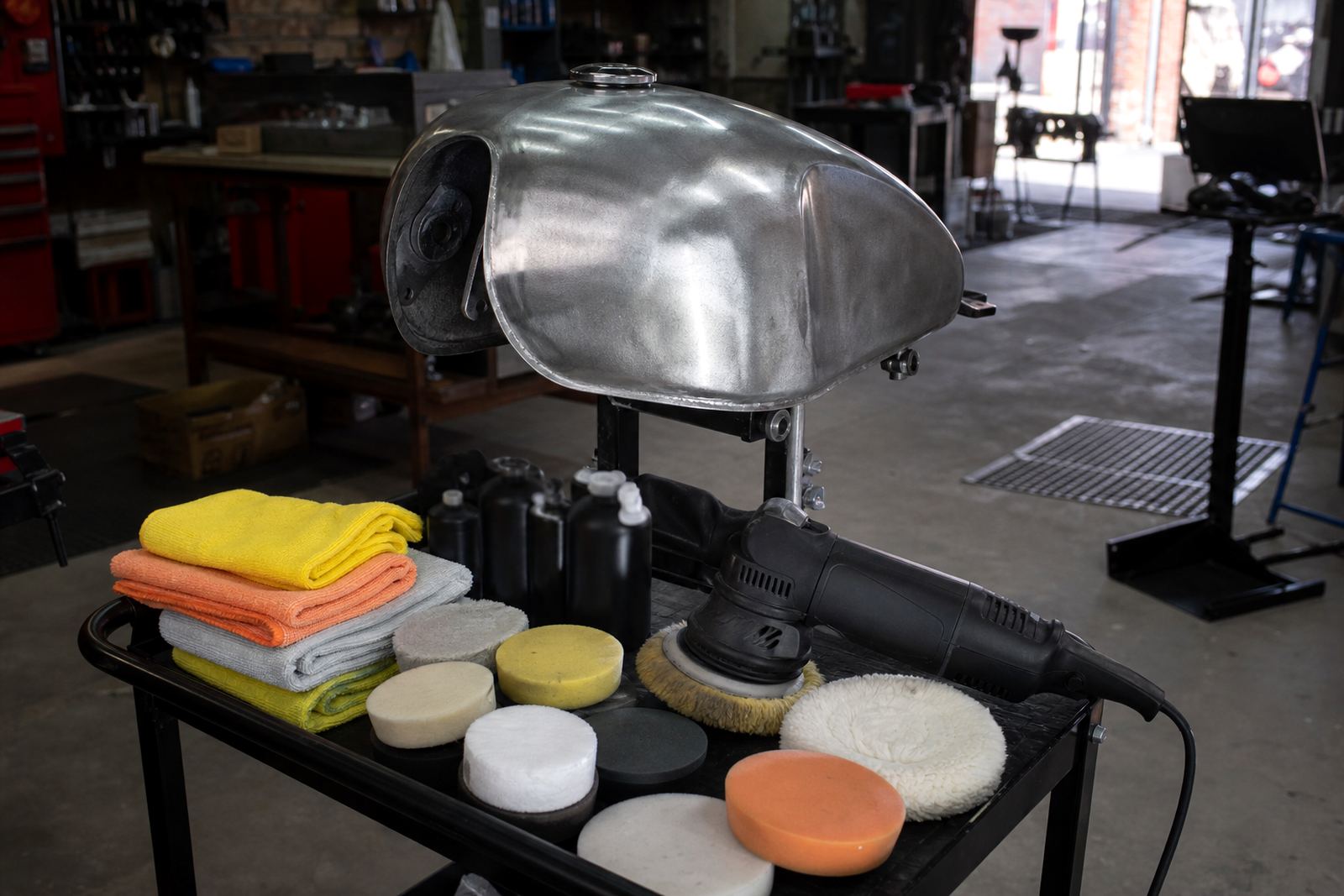
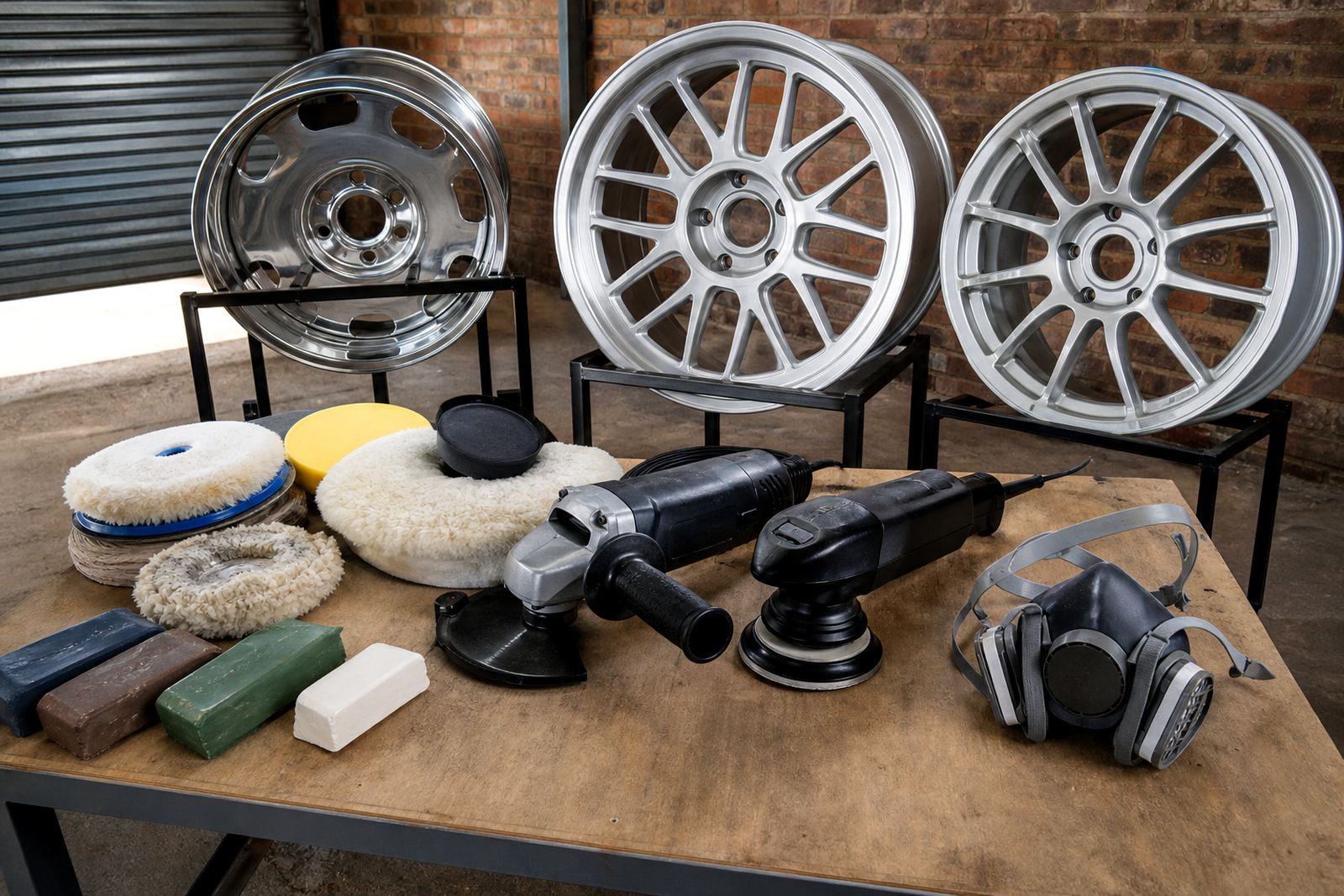
For rim work, a mixed kit is usually better than relying on one machine. A rotary polisher gives the cutting control needed for metal, while a dual-action polisher is useful for finishing, safer training and keeping heat down on more delicate surfaces. Small backing plates, foam and wool pads, hand applicators and tapered accessories help you reach inside the wheel without missing tight spots.
Compound choice matters just as much as the machine. A coarse cutting compound can remove oxidation and sanding marks, then a medium or finishing compound can bring up clarity and reduce haze. For many aluminium jobs you will also need sanding discs in several grades, microfibre cloths, masking tape and panel wipe. On a busy workshop floor, good lighting and a clean air line help you spot defects before they get locked in.
- Rotary polisher for controlled cutting on metal surfaces
- Dual-action polisher for safer finishing and training sessions
- Wool and foam pads in different densities
- Cutting, refining and finishing compounds
- Wet and dry paper, masking tape, microfibre cloths and PPE
Planning The Job Before The First Pass
Good rim polishing starts with a proper inspection. Check for cracks, buckle damage, blistered lacquer, corrosion around lug holes and any previous repair marks. If the wheel is not structurally sound, polishing should stop there. Once the surface is cleared for work, wash the wheel thoroughly and decontaminate it so grit does not get dragged across the face.
Layout also matters. If you are polishing a set of four or more wheels, it helps to organise the work into stages: strip or clean, sand, cut, refine and finish. Keep each wheel separate so you can track what grit was used and where the high spots are. In a workshop or mobile setup, allow space for a stable stand, good cable management and a clean area for towels and compounds.
Technique For A Cleaner Aluminium Finish
Metal polishing is not about pressing harder. It is about controlled passes, correct pad choice and keeping the surface cool enough to work safely. On aluminium, too much heat can smear the metal or leave a cloudy finish. Start with the least aggressive method that will do the job, then move up only when needed. If the rim has sanding marks, remove those first before going to compound.
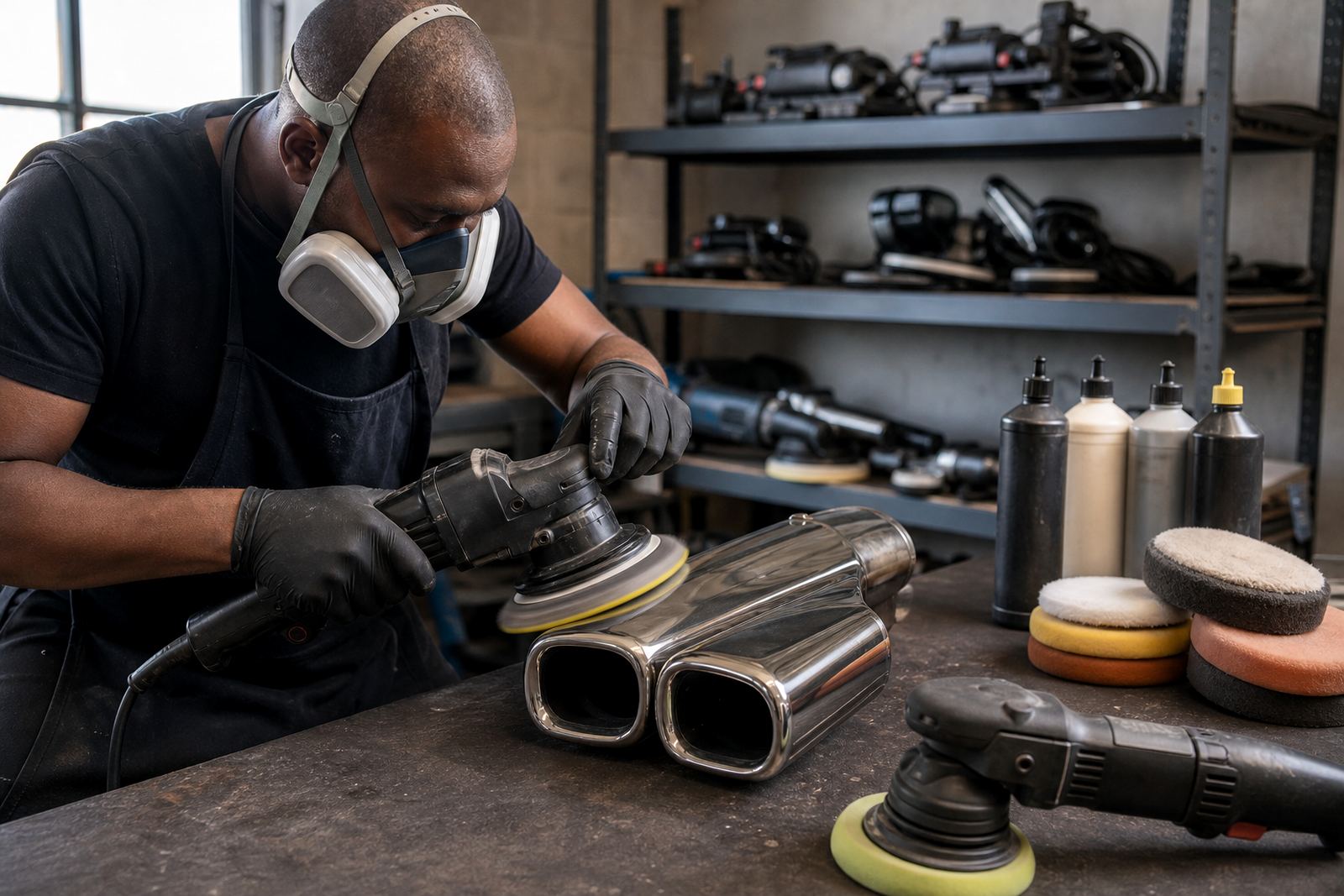
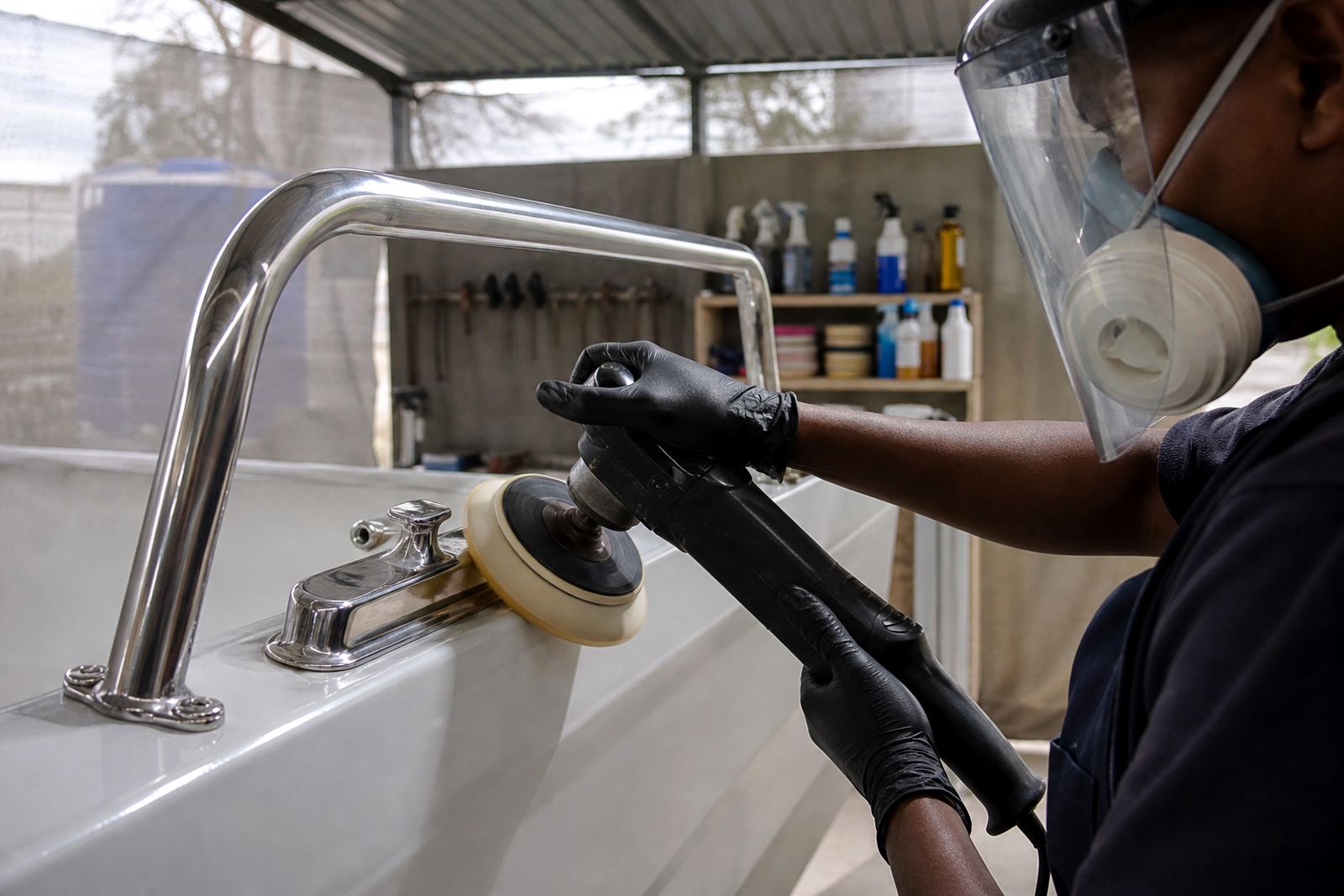
For curved spokes and lip sections, keep the machine moving and work in small sections. The operator should use eye protection, gloves and a dust mask or respirator, especially when dry sanding or working on older coatings. Aluminium dust should not be breathed in, and sanding residue must be cleaned up properly. One missed edge can ruin the finished look, so patience pays off here more than speed.
- Use light to medium pressure and overlap each pass
- Keep pads clean so dried compound does not scratch the rim
- Work from coarse to fine, not the other way around
- Mask rubber, painted areas and valve stems where needed
- Stop and cool the wheel if the surface starts getting hot
Common Mistakes That Waste Time And Material
Most rim polishing problems come from rushing the prep. If a wheel is not cleaned well, the pad loads up quickly and starts pushing dirt around the face. Another common mistake is using one heavy compound for every stage. That can leave swirls, dull edges and an uneven shine, especially on brushed or machined sections.
New operators also tend to chase shine before the sanding marks are removed. On aluminium that usually means going back a step, which costs time and material. Heat is another issue. A rotary machine on high speed, used on a small area for too long, can create streaks or leave the finish looking burnt. It helps to train hands on a test section first, then move to the full wheel once the pattern is understood. We often see better results when teams slow down, check their lighting and keep their pads organised.
Budgeting For A Wheel Polishing Setup
Budgets depend on whether you are setting up a small home kit, a mobile detailing rig or a workshop that handles several sets a week. A starter package with one machine, a few pads, compounds, sandpaper and basic PPE can be kept fairly lean if you are only doing occasional work. For more regular rim polishing, it is worth spending more on spare pads, better lighting and backup consumables so the job does not stop midway.
For South African customers, a practical starting budget for entry-level rim work often begins around R2 500 to R6 000 for basic tools and consumables. A more complete setup with rotary and dual-action machines, pad ranges, compounds, sanding materials and safer workshop accessories can move into the R8 000 to R20 000 range depending on how much work you plan to do. Training and starter kit advice can save money, because it reduces wasted product and prevents damage on the first few jobs.
- Entry kits for hobby use: roughly R2 500 to R6 000
- Workshop-ready setup: roughly R8 000 to R20 000
- Extra budget for PPE, masking and cleaning products
- Allow for replacement pads and consumables if you work often
Training And Support From Germiston
Our base in Germiston, Gauteng supports customers across Johannesburg, Pretoria, Cape Town, Durban, Bloemfontein, the East Rand and the Vaal Triangle. Whether you are polishing a single set of alloy wheels or teaching a team how to handle metal finishing, the right advice helps you choose the proper pad, compound and process for the surface in front of you.
We assist with beginner polishing training, rotary skills sessions, dual-action skills sessions, metal buffing training, paint correction coaching, pad and compound matching, starter kit consultation, workshop setup advice, consumables restocking, machine care guidance, onsite team demos, and safety and PPE briefing. Clients reach us through the enquiry form on our contact page, and we use that to match the right support to the job. With the right method, aluminium rims can go from tired to tidy without unnecessary trial and error.