
When a Jewellery Bench Needs Careful Buffing
Small metal items behave differently from larger panels and housings. A ring shank, pendant back, clasp or bracelet link can catch a wheel quickly, so the operator needs steady hands, clear lighting and a tidy bench layout. The aim is to remove light marks, refine the surface and prepare the piece for a final polish without rounding edges or pulling detail out of shape.
For jewellers, repair shops and small manufacturing benches, the work often includes silver, brass, stainless steel, plated items and mixed metal fittings. A rotary machine gives speed and control for form work, while a dual-action machine is more common on larger flat surfaces and paint work. For jewellery, the rotary bench approach is usually the better fit because the operator can use smaller buffs and finer compounds with more direct pressure.
At this scale, dust control matters as much as finish quality. Fine metal dust, compound residue and lint from mop wheels can build up quickly. Good extraction, regular cleaning and PPE reduce the risk of breathing in particles or getting debris in the eyes. A face shield or safety glasses, a dust mask where needed, snug gloves when suitable, and no loose clothing near the wheel all help keep the bench safe.
Typical Setup For Small-Scale Metal Finishing
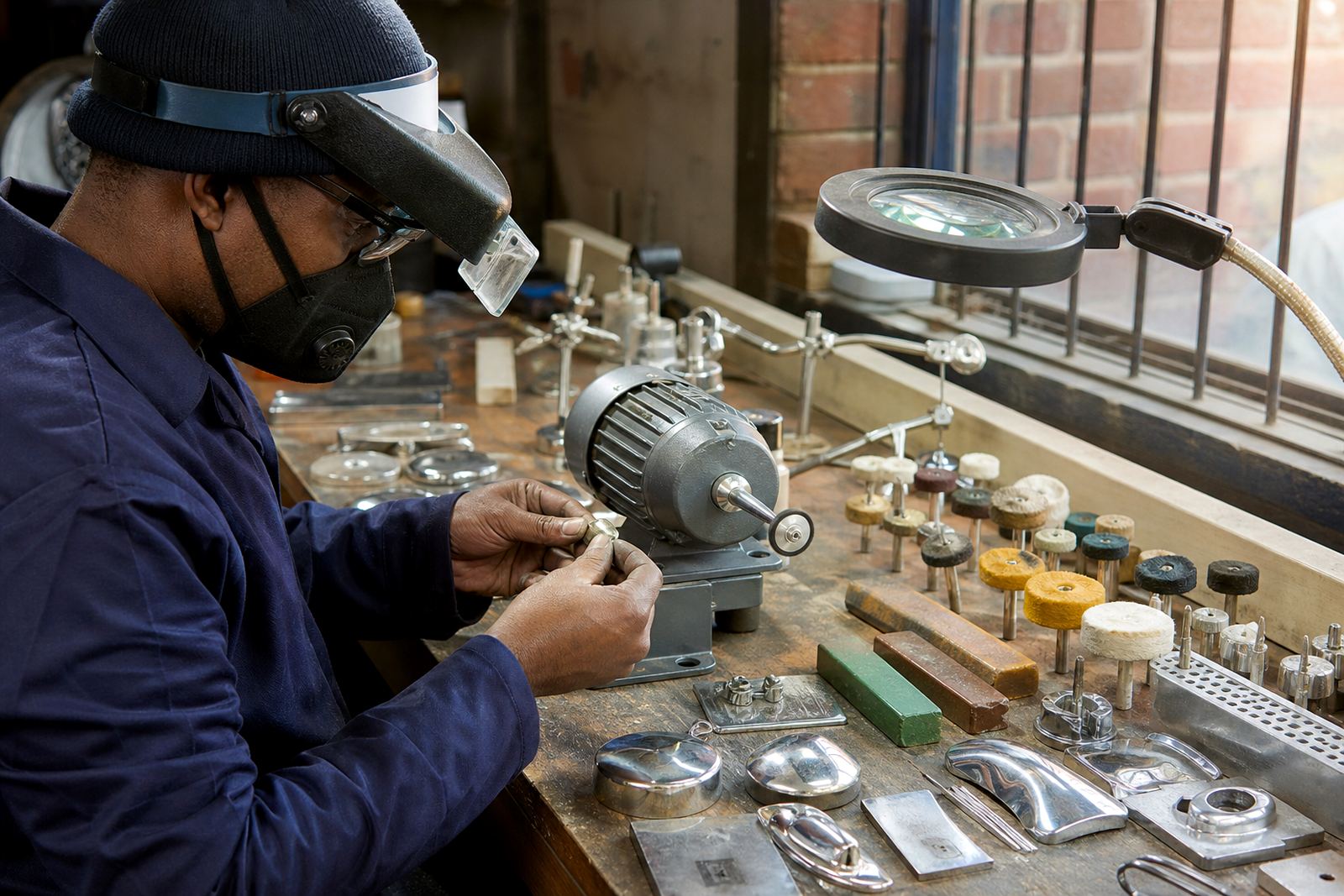
A practical jewellery buffing station does not need to be complicated. It needs a stable bench, a machine with enough power for steady speed and the right range of buffs and compounds for the work at hand. A separate clean area for inspection, wiping and final presentation also saves time and prevents fingerprints from undoing the finish.
- Compact rotary polisher or bench buffer for controlled wheel work
- Small cotton, felt or stitched buffs for different stages
- Cutting compound for heavier marks and a finer compound for final colour
- Soft cloths, cleaning solvent suitable for the metal and a parts tray
- Eye protection, dust control and a bench light positioned over the work
- Small vice, holding tools or jig fixtures for awkward pieces
For parts with delicate settings, textured surfaces or thin sections, it helps to keep the machine speed moderate and use lighter pressure. Too much pressure can heat the metal fast, smear compound into crevices and leave a patchy finish. A slow pass, a clean wheel and frequent inspection usually gives better results than trying to force the shine in one go.
Layout Advice For A Clean Bench And Better Finish
Set out the bench to limit cross contamination. Keep rough sanding, buffing and final cleaning in separate zones where possible. Move the piece from coarse work to fine work in one direction only. Once a finer compound is in use, do not take the job back to a dirty wheel or to a surface with loose grit. That is where many scratches reappear.
Good lighting is essential. Small scratches, orange peel on plated items and stray compound marks are easier to spot under a bright lamp aimed from the side. A light-colour bench top also helps when checking residue. In humid coastal conditions such as Durban or Cape Town, store buffs and compounds in sealed containers so they do not absorb moisture and go hard. In Gauteng workshops, dust from cutting, grinding and general shop traffic can travel onto the buffing bench, so cover or separate the station where possible.
Planning should also include power, machine position and safe reach. Keep the wheel at a comfortable working height to avoid shoulder strain. Make sure the cable route is clear, the work piece cannot fall into the machine, and the operator can step away quickly if the item snatches. For shared workshops, label the compounds and buffs so one operator does not use the wrong wheel by mistake.
Common Mistakes That Ruin Small Metal Work
Jewellery bench buffing is unforgiving when the process is rushed. The most common problems are overheating, overloading the wheel with compound and using one buff for every stage. A dirty wheel can transfer grit straight into the final finish. A wheel that is too aggressive can blur edges, flatten engraving and pull solder joints apart.
- Using too much pressure and burning the surface
- Running the wheel too fast on thin or plated pieces
- Mixing cutting and final polish on the same buff
- Skipping inspection between stages
- Ignoring loose sleeves, hair or jewellery on the operator
- Forgetting extraction, dust masks and eye protection
Another common issue is poor handling of mixed metals. Different alloys and plated items do not all react the same way to the same compound. A finish that works on brass may be too harsh for a soft plating layer. If a piece has stones, adhesives or hidden seams, the approach must be even more careful. Our training sessions cover how to test on a hidden area first and how to recognise when a part should be hand finished instead of machine buffed.
Budget Ranges For A Start-Up Bench In Rand
For a small jewellery or repair bench, the spend can be kept practical if the setup is chosen with the actual workload in mind. A basic entry-level station with a compact polisher, a few buffs, compounds and PPE can often be assembled from about R4,500 to R12,000 depending on machine size and the number of consumables included. That range suits light bench work and starter practice.
A more complete setup for regular workshop use, with stronger dust control, more wheel options, better lighting and extra consumables, may sit from around R12,000 to R35,000. If the bench needs dedicated extraction, improved holding fixtures and multiple operators using the station through the day, the total can move higher. The key is to buy for the type of metal work you actually do, not for the biggest possible job.
For ongoing costs, plan for replacement buffs, fresh compound, cleaning materials and PPE top-ups. Workshops in Johannesburg, Pretoria, Germiston, Cape Town, Durban and Bloemfontein often find that consumables restocking is a bigger long-term cost than the machine itself. A well-run bench with the right tools will save time, reduce rework and give a cleaner result without wasting material.
Training Support For Better Results At The Bench
Polishing small metal work is a skill that improves quickly when the operator understands pressure, wheel speed, compound choice and piece handling. Beginners usually need help with the basics first, then short guided practice on real parts. That is why starter kits, machine care guidance and hands-on training can make a real difference in day-to-day output.
We offer beginner polishing training, rotary skills sessions, metal buffing training, pad and compound matching, starter kit consultation, workshop setup advice, consumables restocking, machine care guidance, onsite team demo and safety and PPE briefing. For jewellery work, the focus is on clean stages, controlled movement and avoiding damage to fine edges or mounted details. Mandla Sipho Dlamini and the team in Germiston support customers who need practical advice before they commit to a full setup, and we work with enquiries from across South Africa through the contact page form.
If you are setting up a small bench for repairs, light finishing or neat presentation work, the right advice at the start can save a lot of frustration later. Good buffing is not about pushing harder. It is about using the correct wheel, the right compound and a tidy process from start to finish.